50 Shades of Green: A Climate Group Podcast
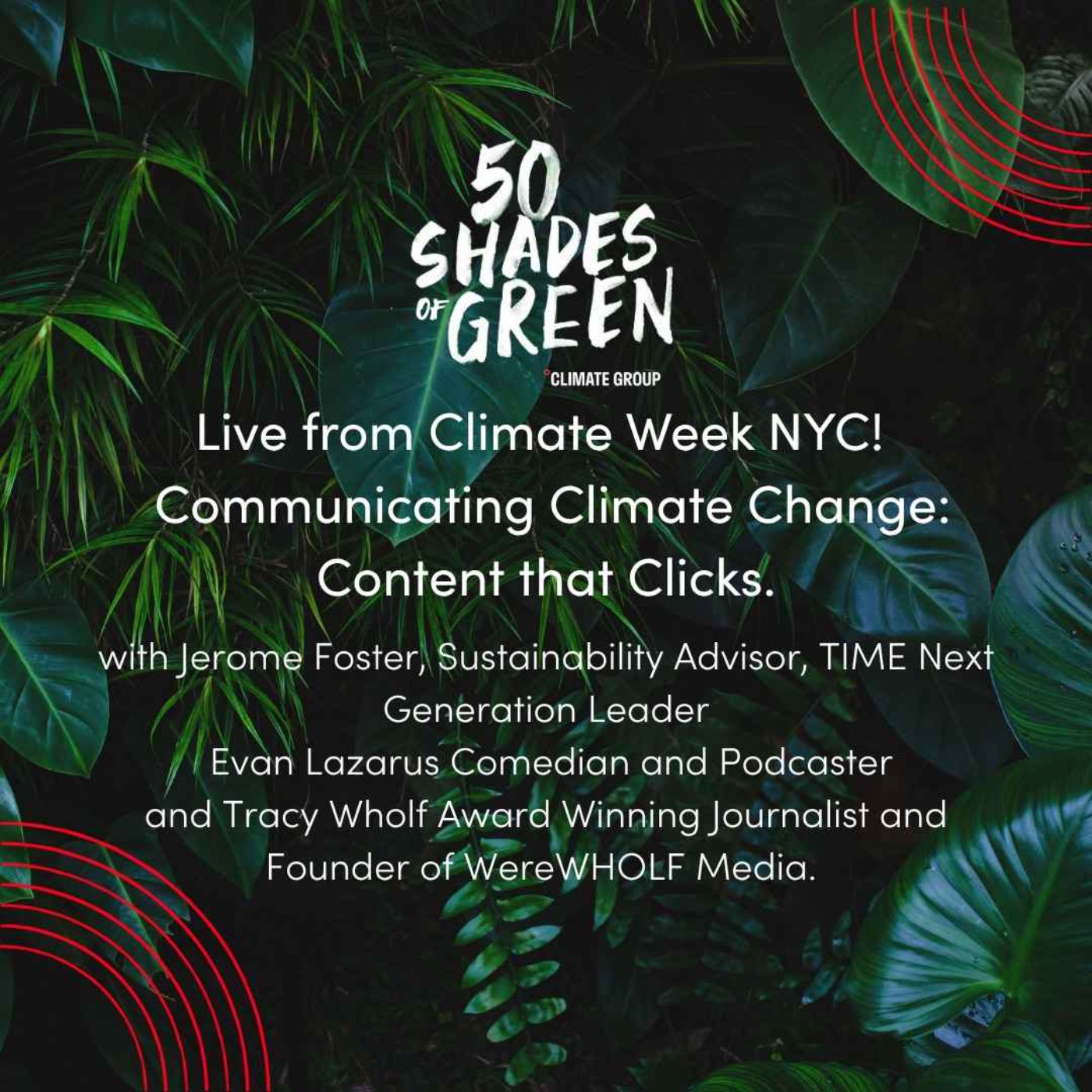
Live Episode: Content that Clicks
One week after Climate Week, hosts Adam Lake and Katie Lanegran drop their second live episode, recorded on stage with three sharp voices reshaping how climate stories actually reach people: comedian and content creator Evan Lazarus, veteran journalist-turned-independent producer Tracy Wolf (WereWHOLF Media, formerly of CBS and ABC News climate units), and activist-consultant Jerome Foster, a former Biden environmental justice advisor. The conversation starts with Evan’s viral TikTok theory that the escalating chaos on The Real Housewives of Salt Lake City might be linked to the evaporating Great Salt Lake releasing heavy metals into the air. The clip is funny, specific, and unexpectedly serious. It reached a PhD student who began researching the psychological effects of those emissions. That moment becomes the episode’s thesis: climate content that clicks often doesn’t look like climate content at all. It sneaks in through reality TV, restaurant recaps, comedy, and the platforms people already scroll. Tracy describes leaving shrinking network newsrooms that treat climate as “service journalism” they can cut when ad dollars tighten. She argues the old 6 p.m. news model no longer owns the conversation; audiences now control what they watch, when they watch it, and who they trust. Independent creators can sometimes move the needle faster and cheaper than a $20,000 network package that airs once. Jerome focuses on turning awareness into action. Most people already know the crisis exists. The job is making them feel they belong in the story—small, concrete next steps (vote, plant, show up, follow the money) instead of another lecture. Authenticity consistently beats polished messaging. Entertainment is not a betrayal of the science; it is often the only way exhausted audiences stay in the room. The panel covers the death of the press-release-to-journalist pipeline, the ethics of brand deals versus audience-funded work, why newsrooms keep slashing climate desks, and the messy personal paths that brought each of them here—middle-school Earth Day light-offs, python hunts in the Everglades, Friday school strikes that grew into policy wins. A rapid-fire round bans words like “ambition” and “net zero,” debates hope versus urgency, and lands on the same practical advice: be concise, stop pretending every story is good news, and let people hear a real voice. The episode is both a dispatch from the front lines of climate communications and a how-to for anyone trying to make the issue land with people who are not already living and breathing it. Content that clicks does not shout “climate.” It meets people where they already are and gives them a reason to stay. Hosted on Acast. See acast.com/privacy for more information.