Aging-US
Mini-GRID Radiotherapy Reduces Senescence While Preserving Growth Inhibition in Glioma Cells
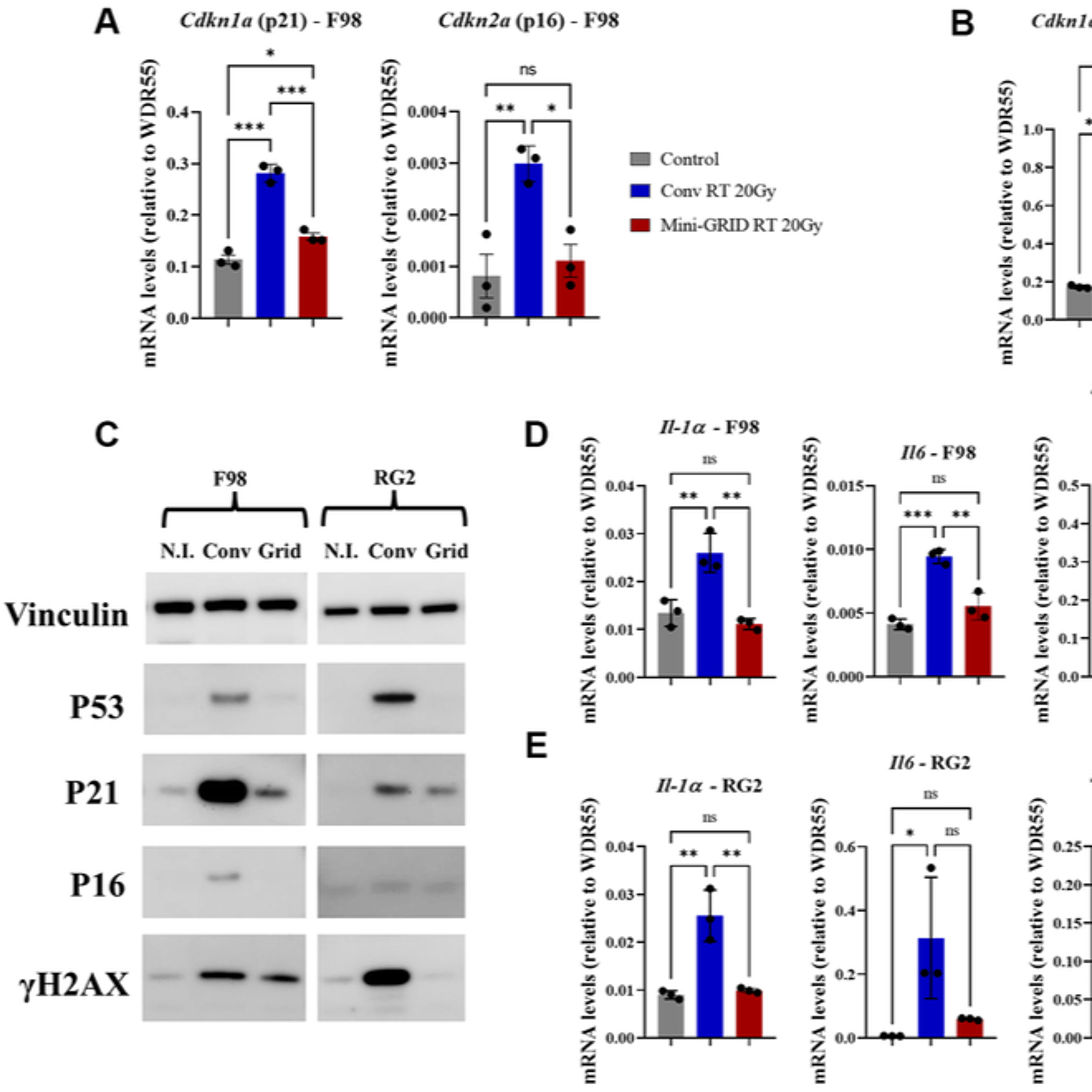
BUFFALO, NY — October 6, 2026 — A new #research paper was recently #published in Volume 18 of Aging, titled “Spatially fractionated mini-GRID radiotherapy differentially modulates radiation-induced senescence in murine glioma and normal cells.” The study found that spatially fractionated mini-GRID radiotherapy reduced several features of radiation-induced cellular senescence in two glioma cell lines while maintaining an antiproliferative effect comparable to conventional radiotherapy. In non-tumor cell models, however, the two radiation approaches produced similar senescence responses. The research was led by equal-contributing first authors M. Isabel Acuña and Miguel Ángel Prados, both affiliated with the University of Santiago de Compostela. Corresponding authors Manuel Collado and Yolanda Prezado are also affiliated with the University of Santiago de Compostela. Collado is additionally affiliated with the National Centre for Biotechnology (CNB-CSIC), while Prezado is additionally affiliated with the Oportunius Program of the Galician Agency of Innovation (GAIN), Xunta de Galicia. Radiotherapy remains a cornerstone of cancer treatment, but it can also push surviving cells into senescence, a state of persistent cell-cycle arrest. Senescent cells can develop a senescence-associated secretory phenotype (SASP), releasing inflammatory and other signaling molecules that affect surrounding tissues and the tumor microenvironment. Although senescence can restrict tumor-cell proliferation, persistent therapy-induced senescence may also contribute to inflammation, treatment resistance and other adverse effects. Spatially fractionated radiotherapy (SFRT) differs from conventional radiotherapy by delivering radiation in a deliberately non-uniform pattern, creating high-dose “peaks” separated by lower-dose “valleys.” The researchers investigated whether mini-GRID, a form of SFRT, produces different senescence responses from conventional uniform irradiation. The study compared the two approaches in F98 and RG2 rat glioma cells, immortalized rat astrocytes and primary mouse embryonic fibroblasts. Cells received single radiation doses ranging from 5 to 20 Gy and were evaluated seven days later using morphological, biochemical and molecular measures of senescence. Full press release - https://www.aging-us.com/news-room/mini-grid-radiotherapy-reduces-senescence-while-preserving-growth-inhibition-in-glioma-cells DOI - https://doi.org/10.18632/aging.206410 Corresponding authors - Manuel Collado - manuel.collado@usc.es, and Yolanda Prezado - yolanda.prezado@usc.es Abstract video - https://www.youtube.com/watch?v=iIzScBgEELo Sign up for free Altmetric alerts about this article - https://aging.altmetric.com/details/email_updates?id=10.18632%2Faging.206410 Subscribe for free publication alerts from Aging - https://www.aging-us.com/subscribe-to-toc-alerts Keywords - aging, cellular senescence, spatially fractionated radiotherapy, mini-GRID radiotherapy, conventional radiotherapy, cancer cells To learn more about the journal, please visit https://www.Aging-US.com and connect with us on social media at: Bluesky - https://bsky.app/profile/aging-us.bsky.social ResearchGate - https://www.researchgate.net/journal/Aging-1945-4589 X - https://twitter.com/AgingJrnl Facebook - https://www.facebook.com/AgingUS/ Instagram - https://www.instagram.com/agingjrnl/ LinkedIn - https://www.linkedin.com/company/aging/ Reddit - https://www.reddit.com/user/AgingUS/ Pinterest - https://www.pinterest.com/AgingUS/ YouTube - https://www.youtube.com/@Aging-US Spotify - https://open.spotify.com/show/1X4HQQgegjReaf6Mozn6Mc MEDIA@IMPACTJOURNALS.COM