
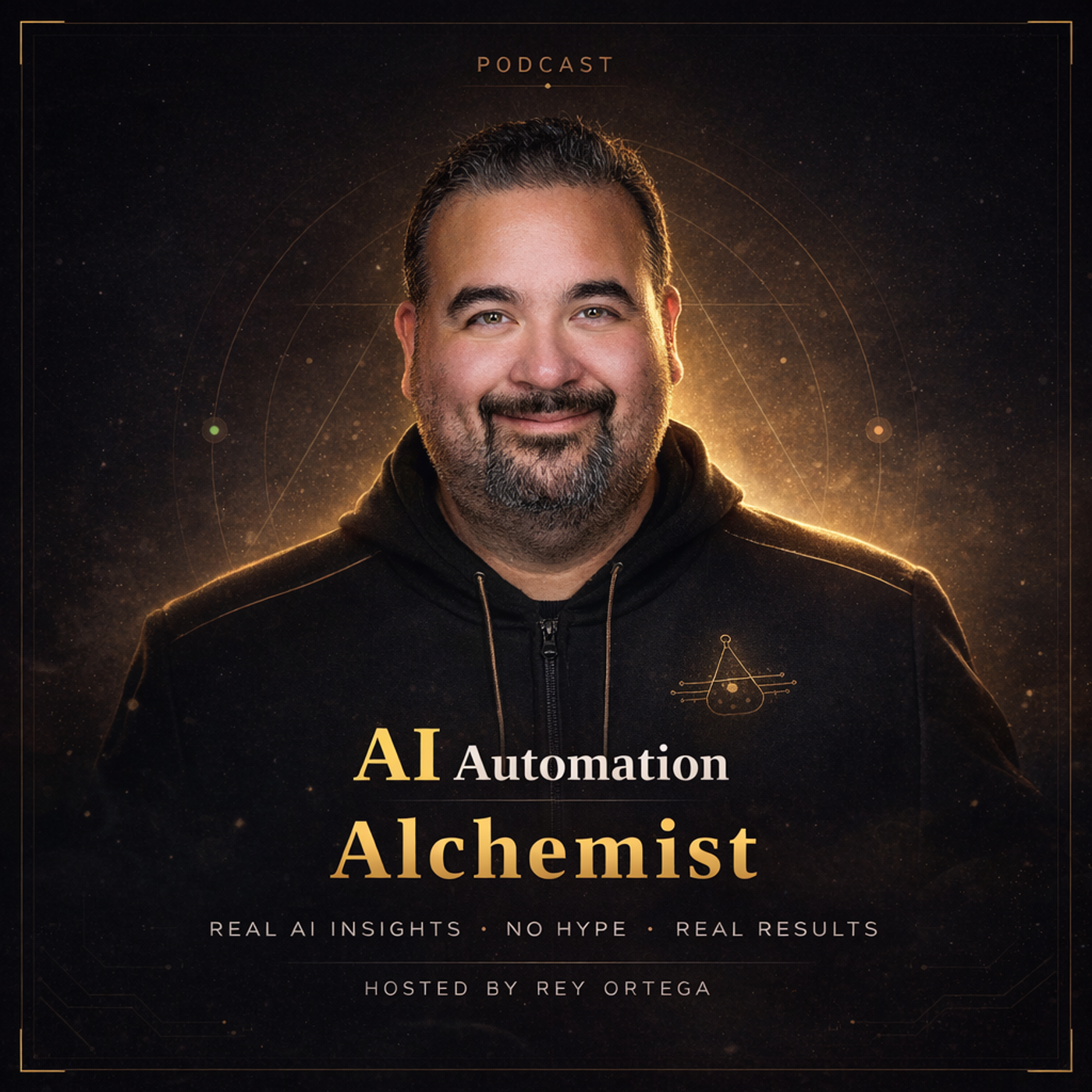
Episode #24
Two Stages, One Week, AI News and More...
Two stages, one week, AI news and more Rey Ortega breaks down a packed week that moved from live AI news to two very different stages, one in healthcare and one for entrepreneurs. The episode matters because it connects current AI product shifts with real-world lessons about data access, culture, security, and how small businesses can actually use AI without the hype. In this episode, Rey shares what he learned from an AI Med panel, a Built to Win Summit presentation, and a due diligence process that revealed how investors evaluate AI-built businesses. He also covers recent AI product updates from Anthropic, OpenAI, and Meta, then closes with a practical reminder that business owners should treat themselves as the brand. 00:00 - Going live and setting up the episode 02:43 - One week, two stages, and why the lessons matter 04:39 - Anthropic backs off a Sonnet 5 price hike 06:20 - Why long session access is a security risk 08:44 - Meta AI as an ad analyst for businesses 10:23 - AI Med Conference: the panel and the room 11:37 - Dr. Anthony Chang and the case for medical AI 12:11 - Digital twins and using lifelong medical data 15:19 - Why Rey is cautious about AI-only diagnosis 17:22 - AI vision and pattern recognition beyond text 19:21 - The panel dynamics and healthcare data ownership 21:14 - Why culture and EHR control slow healthcare innovation 22:52 - Small businesses, Fortune 500s, and technical capability 25:29 - Venture panel: wearables are saturated 27:27 - Built to Win Summit and the napkin idea 29:29 - Jeff Hoffman and blue sky meetings 30:01 - Josh Pies on AI video and knowing the customer 31:46 - Running into an old professor and the lesson of self-promotion 37:39 - Who Not How and shifting from execution to leverage 40:25 - A mastermind connection turns into a real opportunity 44:22 - Due diligence, investor skepticism, and AI-generated documents 47:11 - Why not knowing your own system is a deal breaker 49:04 - Enterprise AI contracts, data retention, and liability 50:19 - Open weight models, quantization, and response speed 52:32 - Imposter syndrome and why experts need to speak up Reevaluate whether your business is overusing AI-generated documents without human validation. Check whether your AI tools are being used through enterprise contracts where data retention and training limits are clearer. If you use AI in marketing, define the target customer before creating content or video. Look for one task you should delegate to a “who” instead of forcing yourself to be the “how.” Show up more consistently with your expertise, even if imposter syndrome makes that feel uncomfortable.
