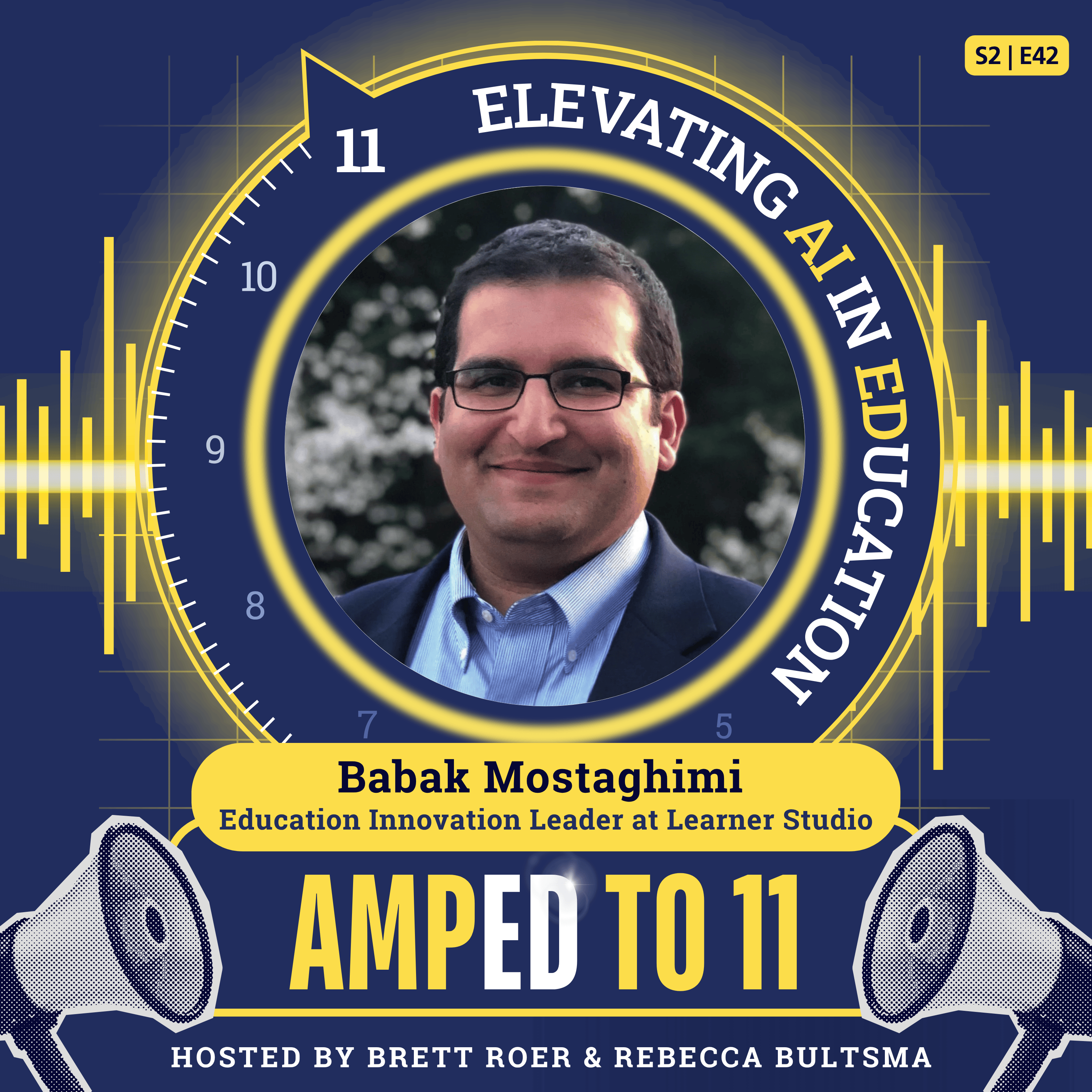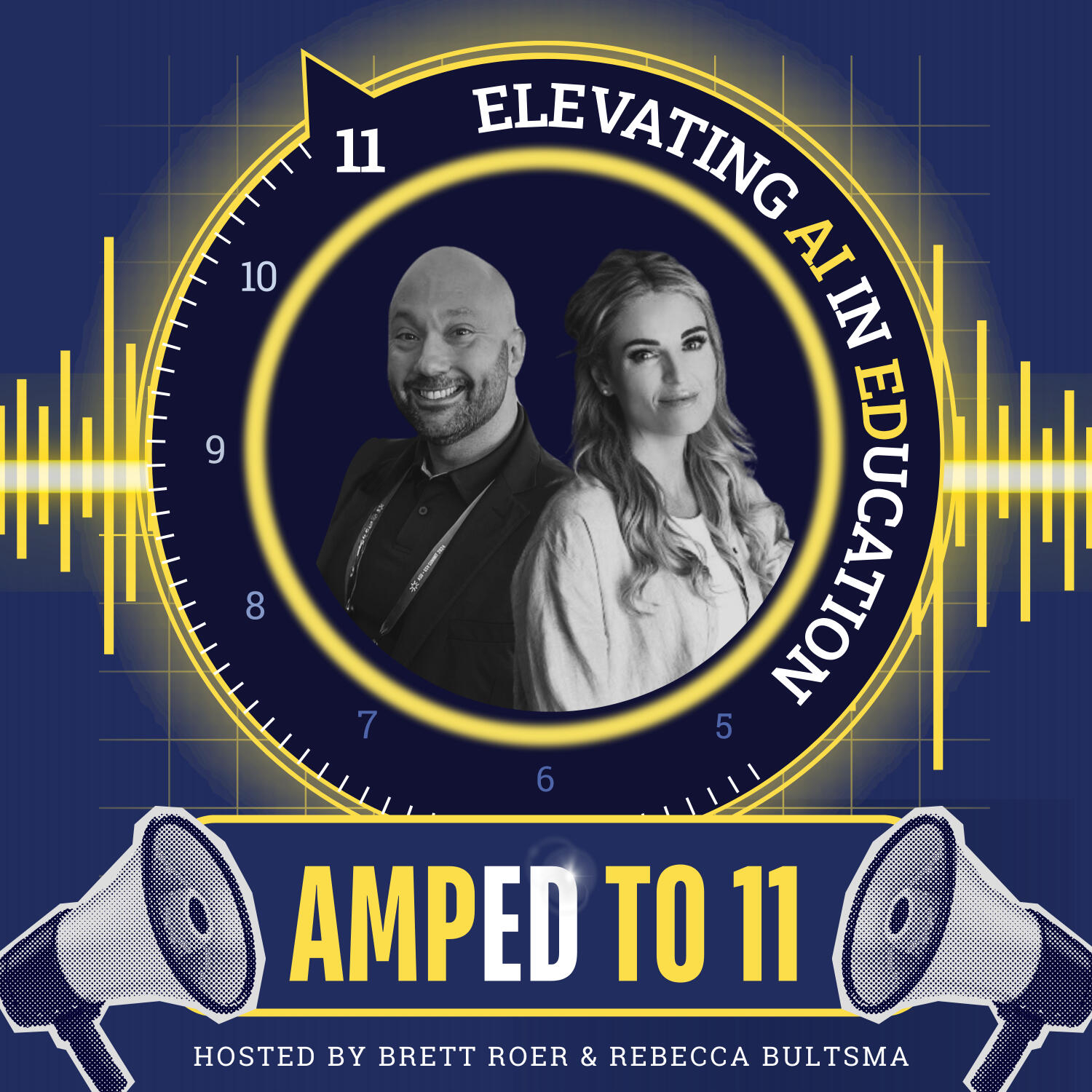
Elevating AI in Education Welcome to AmpED to 11 , the podcast where AI, education, and technology collide to reshape the future of learning. Hosted by EdTech experts Brett Roer and Rebecca Bultsma, AmpED to 11 brings you the latest insights, trends, and strategies in AI-powered education. We believe that education should never settle for "good enough." Each episode is packed with cutting-edge news, expert interviews, and actionable insights that will keep you ahead of the curve in the rapidly evolving world of EdTech. Whether you're an educator, administrator, or EdTech professional, AmpED to 11 equips you with the tools to integrate AI into education and drive innovation. What You Can Expect: AI in Education: Stay up-to-date with the latest AI tools and trends that are transforming classrooms and educational technology. Expert Interviews: Brett leads in-depth conversations with top educators, innovators, and policymakers to explore how AI is shaping the future of learning. Tech Updates: Rebecca delivers the latest news and updates in AI and education, providing insights into new developments and practical applications for educators. Actionable Tips: Get real-world strategies and tools that you can immediately apply in your classroom or EdTech business to enhance learning outcomes. Why Listen? In each episode of AmpED to 11 , you’ll: Learn how AI is revolutionizing education and how you can stay ahead. Gain practical insights from leaders in education and technology. Discover AI-powered tools and strategies to implement in your classroom or EdTech business. Meet the Hosts: Brett Roer is an EdTech visionary who excels at uncovering powerful stories in education and building connections with innovators. He’s committed to bridging the gap between technology and educators to enhance learning. Rebecca Bultsma is an educator and tech strategist with a talent for breaking down complex ideas into actionable insights. She helps educators integrate the latest technology and AI into their teaching, improving engagement and outcomes. Who Should Listen? AmpED to 11 is perfect for: Educators and administrators looking to integrate AI into their teaching. EdTech professionals seeking the latest industry trends and tools. Tech enthusiasts interested in the role of AI in the future of education. Join Brett and Rebecca as they turn the dial on education and AI, bringing you inspiring conversations and actionable advice to drive innovation in the classroom. Stay informed, stay inspired, and stay ahead of the curve with AmpED to 11 .
Pitch Analysis
Required Pod Score for this show. PitchCentric checks your profile against host openness, topical fit, and audience signals before you generate a pitch.
Contact path
Public web form
Booking probability
30%
Guest openness
Selective
80/100
Required Score
Sign up to generate a grounded pitch for AmpED to 11.
AmpED to 11 is a education podcast hosted by Unknown Host, with 43 episodes on record and a Required Pod Score of 80. PitchCentric scores this show on Booking Probability, Listen Score, and live audience signals refreshed every 24 hours.
About the host
Unknown Host hosts AmpED to 11, a education show with 43 episodes published.
Our AI reads these to draft pitches. Use them as grounding for a pitch that cites a real guest and a specific topic.
Episode #40
Relationships, rigor, and where AI actually belongs in class with Mike Taubman
Aug 3, 20261h 6mS2
What if the best way to teach students about AI is to hand them the keys and let them learn to drive? Mike Taubman has spent two decades at North Star Academy Washington Park High School in Newark, New Jersey, where he now serves as teacher, program director, and AI innovation lead at Uncommon Schools. He joined North Star in 2005 as a founding English teacher, and a sabbatical years later spent auditing Jal Mehta's "deeper learning" class at Harvard reshaped how he thinks about mastery, creativity, and identity in the classroom. That thinking became Summit, the purpose and career exploration course he built for juniors and seniors, and this past spring it grew into an AI literacy pilot with his colleague Scott Kern that landed on the front page of The New York Times and on The Daily podcast. In this conversation, Mike walks through the framework he built with students: AI as a car, something humans made, something we drive, something that comes with rules of the road. He shares how his students wrote their own AI Declaration of Independence, why he caps AI use at 20 percent of a class period, and why the relationship with a student always comes before the tool. What you'll learn: The AI as a car framework : why treating AI as something humans built and drive, not a force to simply accept, changes how students engage with it. The AI Declaration of Independence : how Mike's students defined their own principles for what AI should and shouldn't do. The 20/80 rule : why AI should never be more than a fifth of a class period, and what fills the rest of the time. Relationship before rubric : why knowing a student's name by Friday matters more than any AI feedback tool. A $20 experiment : Mike's simple suggestion for any educator wondering where to start this summer. Brett and Rebecca sit with Mike to talk through what it looks like to stay in the driver's seat instead of becoming a passenger to this technology. Tune in, subscribe, and share if you're ready to turn up the volume on what's possible in education.
Coaching, Time, and the Limits of General-Purpose AI with Paul Bambrick-Santoyo
Jul 20, 20261h 1mS2
AI can help school leaders save time. But saved time is only valuable if leaders know where to spend it. This week on AmpED to 11, Brett is joined by Paul Bambrick-Santoyo, founder and dean of the Leverage Leadership Institute and author of Leverage Leadership 3.0 . Paul has spent twenty-five years studying the habits, systems, and leadership moves that help schools improve, and his answer keeps returning to the same place: the moments when leaders are directly helping teachers get better. In this episode, Paul brings a grounded perspective to one of the biggest questions in education right now. If AI can reduce the administrative burden on school leaders, how do we make sure those recovered hours go toward coaching, observation, feedback, and the kind of instructional leadership that actually changes outcomes? The conversation explores what makes teacher development different from evaluation, why excellent practice needs to be seen before it can be replicated, and why AI tools trained on the average of everything may not be enough for schools trying to become exceptional. It is a thoughtful, practical episode for anyone thinking seriously about AI, leadership, and school improvement. Rebecca is away this week, so there is no AI Tip or News segment. Listen to the full episode to hear how AI could help leaders refocus on the work that changes schools.
What the Canvas Breach Revealed About Student Data Privacy with David Bowman
Jul 6, 20261h 20mS2
Rebecca hosts solo this week for a timely conversation with David Bowman, cybersecurity director for one of Utah’s largest K-12 districts, a member of the State of Utah Cyber Commission, and chair of the Statewide K-12 Cybersecurity Council. David brings a clear, practical view of what student data privacy really means inside schools, beginning with a classroom exercise where he showed students just how much information about them could be gathered, connected, and exposed. From there, the episode moves into the recent Canvas breach, the third-party analytics tools quietly embedded in EdTech platforms, and the difficult questions district leaders need to ask before trusting vendors with student information. At the heart of the conversation is David’s argument that the greatest threat to student data is not always the outside hacker. Often, it is the company already inside the district’s ecosystem, collecting more information than schools or families realise. Rebecca and David discuss how districts can create stronger privacy expectations, build data protection into procurement, communicate more clearly with parents, and hold vendors accountable when their practices do not match the responsibility of serving children. David also explains why privacy cannot sit separately from teaching, leadership, or purchasing decisions, and why schools need the confidence to “vote with your data” as well as with their budgets. Tune in for a grounded, accessible conversation about cybersecurity, student privacy, vendor accountability, and the leadership choices that shape trust in K-12 education.
How to Adopt AI Without Losing What Makes Education Human with Amy Dujon
Jun 15, 202650 minS2
What are today's superintendents actually facing, and why AI alone won't fix it. Brett Roer sits down with Amy Dujon, VP of Education Brands at ARC Network, who sees patterns across hundreds of districts. With 27 years in education, from classroom teacher to principal to district leadership, Amy brings a rare vantage point on the unprecedented challenges school leaders are navigating right now. Key Topics: The simultaneous, interconnected crises superintendents are holding (mental health, teacher retention, chronic absenteeism, AI adoption) Why leaders aren't lacking ideas about AI, they're lacking time, policy cover, and bandwidth The critical shift: using AI to reduce operational friction so humans have more space for connection What must stay human: relationship building, mental wellness, and the connections only educators can provide How district leaders can adopt AI thoughtfully without replacing the heart of education If you lead a school, district, or education organization, this conversation reframes the AI debate and offers a clearer path forward. Subscribe for weekly episodes exploring how education leaders solve real problems.
29 Schools, 29 Positions on AI: Bill Bass on Managing the Impossible Divide
Jun 1, 202657 minS2
What does it mean to prepare students for a world where the tools keep changing? Bill Bass has been wrestling with that question for over two decades. As Innovation Coordinator for Parkway School District, serving 18,000 students across 29 communities, and former president of ISTE, he's seen every wave of edtech come and go. And he's still here, still asking the hard questions. In this episode of AmpED to 11, Bill joins Brett and Rebecca to talk about the very real tension schools are navigating right now: parents who want AI kept out of classrooms, and students who will step into a world where it's everywhere. He pushes back on the idea that removing technology protects kids, challenges the myth that any of this is neutral, and makes the case for letting students make mistakes with AI while the stakes are still low. He also gets honest about what edtech gets wrong about schools, how he manages innovation across 29 communities with 29 different opinions, and why digital literacy isn't a destination, it's a moving target. This is one of the most grounded, clear-eyed conversations we've had on the show. If you work in education or care about where it's heading, this one's for you. Subscribe to AmpED to 11 for conversations that move education forward.
Every question we get asked before someone starts their trial.
If you have a concern about deliverability, AI quality, data privacy, or whether this will actually work for your specific situation, it's probably answered below.
What is the difference between Founder Solo and Founder Pro?
Founder Solo gives you 50 AI pitches per month using the credit model (Standard pitches cost 1 credit, Enriched pitches cost 2). Founder Pro raises that to 200 credits per month and adds full Booking Probability access, unlimited Magic Match, Apollo enrichment credits, and data export capabilities. Both plans use the same credit system, so you can stretch your monthly budget further by using Standard-mode drafting.
How do agency tiers work?
Agency tiers have no base fee. You pay per managed client and per talent profile. Agency Standard is $199 per client per month; Agency Pro is $399 per client per month. Both add $39 per talent profile per month. Your own team's user seats are always free.
What is a talent profile?
A talent profile represents one person (founder, executive, or spokesperson) you are booking onto podcasts. It includes their bio, topics, headshots, and outreach history. Team plans include 5 profiles; agency plans are pay-as-you-go.
Can I switch plans later?
Yes, at any time. Upgrades take effect immediately; downgrades apply at the end of the current billing period. Contact support if you need help migrating between plan families.
Do you offer a free trial?
Every paid plan includes a 15-day free trial. Your card is saved at signup but you will not be charged until day 16. Cancel any time from your dashboard.
What happens if I cancel?
You keep access until the end of your current billing period. No charges after that. Your data is retained for 30 days in case you reactivate.
Is the 20% annual discount automatic?
Yes. Select Annual on the pricing toggle and the discounted price is applied automatically at checkout. The annual price shown is the full year cost.
What if I have more than 50 profiles or 20 clients?
That is our Enterprise tier. Contact our sales team and we will build a custom plan with volume pricing, a dedicated account manager, and SLA guarantees.