Episode #76
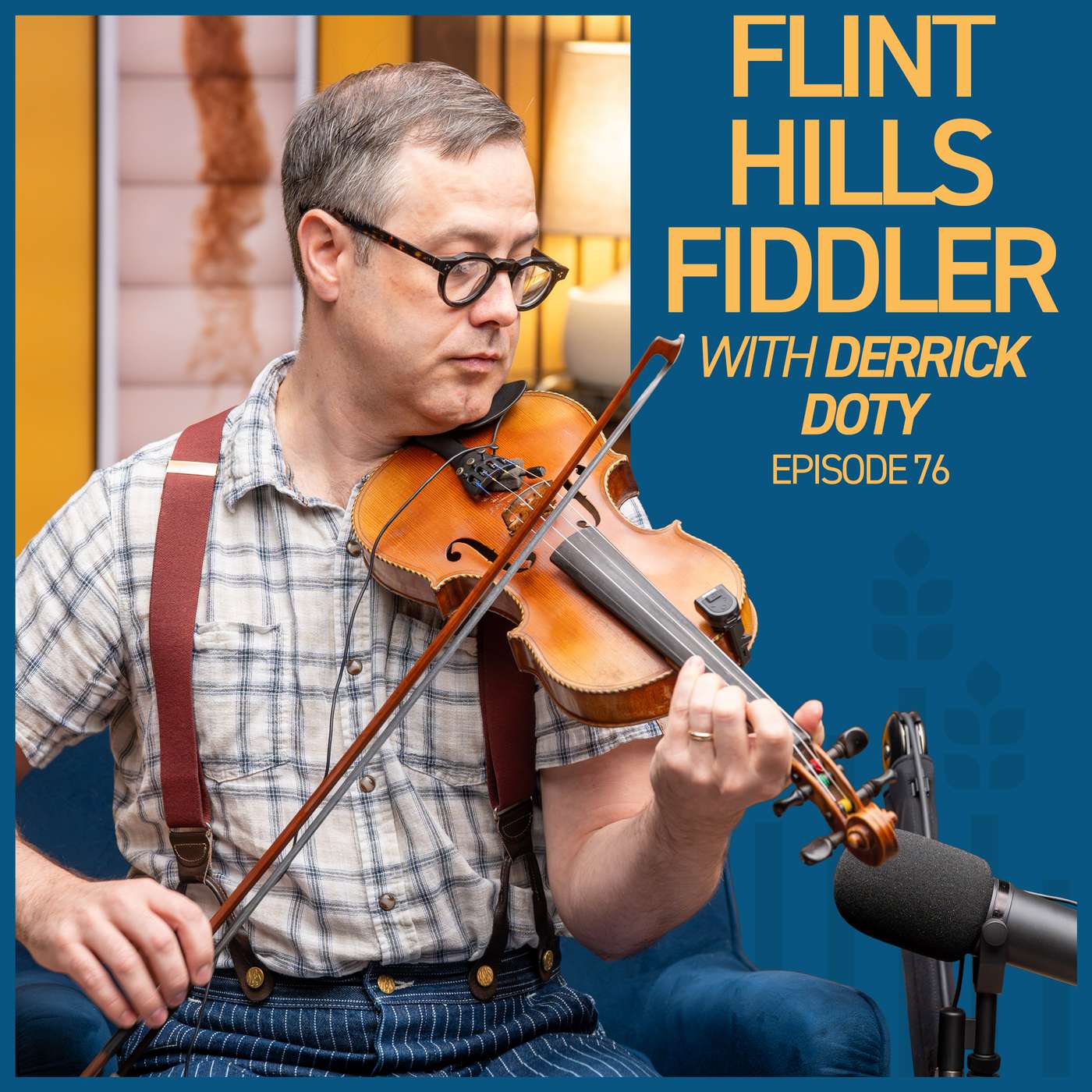
The Flint Hills Fiddler: The Melodies of Kansas with Derrick Doty | Kansas Fiddler
Ever wonder what the difference between a fiddle and a violin actually is — or why Kansas has such a rich but largely undocumented fiddling tradition? We sit down with Derrick Doty, the Flint Hills Fiddler, a musician, historian, and music teacher based in Manhattan, Kansas. Derrick is the 2023 Kansas State Banjo Champion, a former barber in Council Grove who turned barbershop stories into historical research, and — perhaps most unexpectedly — a coffin builder. He treats us to live fiddle and banjo performances, shares the story of a John Henning banjo from 1880s Emporia that may be the first built for steel strings, and even serenades us with a Pete Seeger song updated with his own modern verses. Along the way we explore Kansas's musical history from territorial Free-Staters singing "The Kansas Immigrant" to the tune of Auld Lang Syne, the Exoduster banjo players who toured the state, and why traditional music still matters today. Highlights Derrick explains the real difference between a fiddle and a violin (spoiler: it's mostly about how you use the word, not the instrument itself) The story of how "Flint Hills Fiddler" started as an email address and became a persona Derrick's great-grandfather fiddled for barn dances in Osage County, inspiring him to take up the instrument decades later Live fiddle performance on the podcast — a first in nearly 80 episodes Why Derrick uses black horsehair on his bow instead of white (it grabs the string better and costs less) The Kansas Immigrant: a poem by John Greenleaf Whittier set to the tune of Auld Lang Syne that became the anthem of Free-Staters traveling to Kansas How 12 years of cutting hair in Council Grove turned a fiddler into a historical researcher Derrick is the 2023 Kansas State Banjo Champion, winning with "classic banjo" style instead of the more common bluegrass or clawhammer styles The story of Link and Perry Lowery, Exoduster banjo players from Emporia who toured Kansas in the 1880s and '90s A rare John Henning banjo from 1880s Emporia with its fifth-string tuner on the tailpiece and a steel brace running through the neck — possibly the first banjo built for steel strings Three ensembles: Tallgrass Express String Band, Bodark (an old-time trio named after the Osage orange tree), and Grandpa Snazzy (a mandolin club recreation with a banjorine) Derrick builds handmade coffins — it started with a doll coffin replica from the 1850s and grew into a full-fledged side business A live performance of Pete Seeger's "What Did You Learn in School Today?" with Derrick's own updated verses about AI data centers and senators Maude Wagner of Emporia: the United States' first known female tattoo artist, born in Kansas in 1877 Chapters 0:00 — Auction Bass Case Mystery 2:14 — Today's Guest 4:01 — Meet the Flint Hills Fiddler 5:26 — Fiddle vs Violin Explained 7:03 — Kansas Roots and Learning Fiddle 10:26 — Fiddle Tradition and Dance Culture 12:47 — Derrick Plays the Fiddle 14:28 — Instrument Story and Bow Hair 18:42 — Music History in Kansas 21:18 — Barber Shop to Historian 22:53 — Banjo Champion Origins 25:19 — Banjo History in Kansas 27:01 — Banjo Performance and Gear Talk 30:47 — Teaching Roots and Routine 32:32 — Tallgrass Express Origins 33:48 — Bodark Old Time Trio 34:33 — Grandpa Snazzy Mandolin Club 36:10 — Mandolin Orchestra Revival 36:56 — Weirdest Gig Stories 38:13 — How He Builds Coffins 40:16 — Why Handmade Coffins 42:08 — Pete Seeger Song Performance 45:06 — Future of Traditional Music 46:44 — Episode Reflection 48:28 — Kansas Tattoo Pioneer Tale 52:11 — Kansas Would You Rather 54:16 — Bridge Counting Challenge 54:59 — Credits Resources An Occurrence at Owl Creek Bridge John Greenleaf Whittier Pete Seeger Humanities Kansas Flint Hills Academy of Music Tallgrass Express String Band Fili Creative Everyday Lights Forge Podcast Learn more about the podcast at askakansan.com ! This show is part of the ICT Podcast Network, for more information, visit ictpod.net