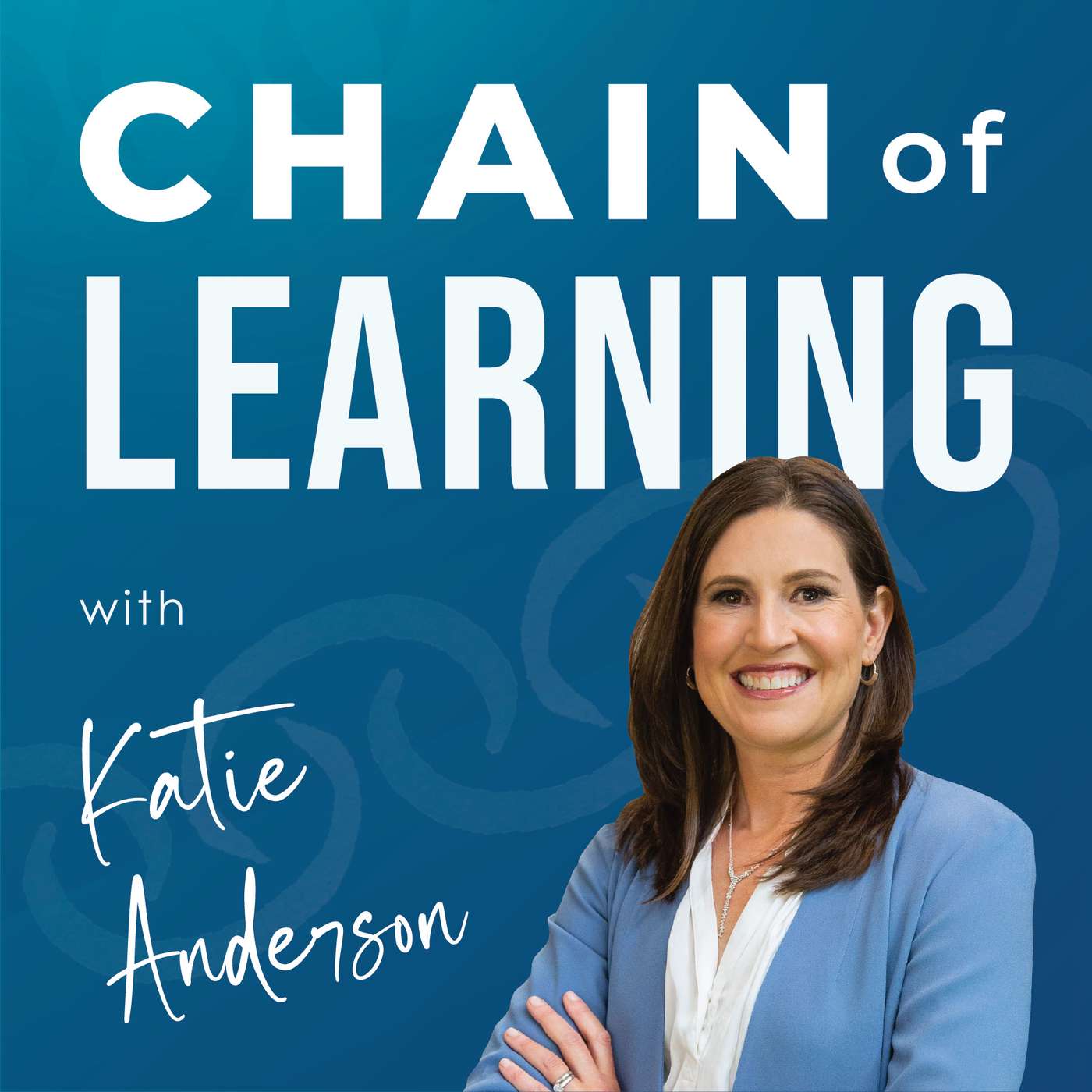
Chain of Learning® is the leadership podcast for leaders and change practitioners who believe that people, not tools, are the foundation of lasting results.If you're working to transform your organization's culture, develop leaders at every level, and build teams that are capable, confident, and empowered to solve problems and innovate, this podcast is for you.Hosted by Katie Anderson, award-winning author of "Learning to Lead, Leading to Learn" and globally recognized expert in people-centered leadership, Chain of Learning explores how leaders break free from the Doer Trap™, and create the conditions in their organization for success and build a vibrant culture where impact is exponential.Each biweekly episode offers practical insights, reflective questions, and real-world examples to help you:- Develop leaders at scale, not just one at a time- Build high-performing cultures of continuous learning, grounded in psychological safety, trust, and empowerment, that thrive and grow
Pitch Analysis
Required Pod Score for this show. PitchCentric checks your profile against host openness, topical fit, and audience signals before you generate a pitch.
Contact path
Verified email
Booking probability
34%
Guest openness
Selective
Verified email on file
80/100
Required Score
Sign up to generate a grounded pitch for Chain of Learning: Leadership Strategies for Transforming Culture, Developing People, and Getting Results.
What is Chain of Learning: Leadership Strategies for Transforming Culture, Developing People, and Getting Results?
Chain of Learning: Leadership Strategies for Transforming Culture, Developing People, and Getting Results is a business podcast hosted by Katie Anderson, with 85 episodes on record and a Required Pod Score of 80.
About the host
Katie Anderson hosts Chain of Learning: Leadership Strategies for Transforming Culture, Developing People, and Getting Results, a business show with 85 episodes published.
Our AI reads these to draft pitches. Use them as grounding for a pitch that cites a real guest and a specific topic.
Chain of Learning: Leadership Strategies for Transforming Culture, Developing People, and Getting Results
85| It's Not the Workload, It's the Thoughtload: Move from Overwhelm to Focus [with Liane Davey]
Sep 30, 202642 min
Enter for your chance to win a copy of "Thoughtload" by Liane Davey : http://chainoflearning.com/85 Giveaway ends October 9th at 11:45pm Pacific Time. Your team isn't resisting change. They don't have room for it. It's not just workload that's overwhelming us, it's what Liane Davey calls our "thoughtload": the invisible tax on our performance and presence. Liane is an organizational psychologist who works with CEOs and executive teams leading organizational transformation. In her latest book she uncovers how complexity, decisions, and emotional weight are draining us, leaving us feeling like there's too much to do and no space left to think. We bring home what's weighing on us at work, and what we're worried about comes to the next meeting with us. We end up half-present, consumed by what's going on inside, not what's in front of us. Liane shares how to lighten the noise inside your head to focus your attention, work through what you're carrying emotionally, and get your energy back. Urgency, constant change, and the pressure to deliver aren't going away. But thoughtload is something you can manage, before it turns into leadership burnout for you or your team. You’ll Learn: Why the person pushing back on your organizational change isn't a resistor, and what is actually going on inside their brain Why we've become intolerant of iteration, and how to position a decision so that correcting course doesn't land as flip-flopping How your team can be busy, productive, and still not moving toward the outcome How a heavy thoughtload keeps you from having a hard conversation, and how avoiding productive conflict makes your load heavier What it means to "metabolize your thoughtload", and why filling every walk and commute with input leaves no room to think IMPORTANT LINKS: Full episode show notes: ChainOfLearning.com/85 Connect with Liane Davey: linkedin.com/in/lianedavey Purchase a copy of Liane's book: thoughtload.com Learn more about Liane: lianedavey.com Follow me on LinkedIn: linkedin.com/in/kbjanderson Subscribe to my newsletter: KBJAnderson.com/newsletter Check out my website for resources and working together: KBJAnderson.com Join us on the Japan Leadership Experience: KBJAnderson.com/JapanTrip TIMESTAMPS FOR THIS EPISODE: 03:00 Why it’s not the workload—it’s the thoughtload 06:00 How thoughtload undermines team performance 08:00 Why overwhelm shifts leaders from reflection to reaction 11:00 Three ways to manage your thoughtload 12:00 Why being productive doesn’t mean you’re effective 16:45 The problem with having too many priorities 19:00 How leaders can lighten their team’s thoughtload 20:45 Why your brain needs space to process, not more input 23:00 What change leaders miss about resistance 24:30 Why labeling people “change resistors” gets it wrong 29:30 How avoiding conflict makes your thoughtload heavier 32:30 Why managing thoughtload means saying no to good things 36:15 When changing direction is learning—not flip-flopping 37:25 What deserves to be in your thoughtload? Enter for your chance to win a copy of "Thoughtload" by Liane Davey : http://chainoflearning.com/85 Giveaway ends October 9th at 11:45pm Pacific Time.
Chain of Learning: Leadership Strategies for Transforming Culture, Developing People, and Getting Results
83| Keep Ownership at the Right Level: How to Sustain Organizational Transformation [with Anna Pessah]
Sep 2, 202641 min
Overstepping ownership rarely looks like overstepping. It looks like moving things along. You know how something could be improved, so you give your suggestion. Work gets done, progress is visible, but the person you were there to develop doesn't build the capability they need, and the improvement doesn't sustain. Every change leader, manager, and executive does this at some point. And when we take on ownership of what isn't ours, we end up the bottleneck. As a transformational change leader at Kaiser Permanente, Anna Pessah watches this play out every day with the internal consulting team she leads, and with the physician and operational leaders she supports. We break down this challenge and share the practices to use instead. Leaders don't need to stop helping or teaching. It's about getting clear about what each person owns, and adjusting how you help based on what that leader needs in the moment. When ownership sits in the right place, people grow, improvements hold, and you have the space to do what is actually yours to do. You’ll Learn: How to make ownership explicit from the start, by contracting up front and saying out loud which hat you're wearing, coach or consultant or teacher Why leaders learn good coaching practices best by being coached, and how making your own practice visible lets others model it Why the pull to step in gets stronger the more you care about the outcome Why a new practice often swings too far one direction at first, and how to find the middle without abandoning it When asking coaching questions stops being helpful, and how to be directive without taking over the thinking ABOUT MY GUEST: Anna Pessah leads the internal consulting team that oversees the operating system at the North Valley Service Area of Kaiser Permanente, where she coaches physician and operational leaders on strategy, management systems, and the behaviors that support a culture of improvement. She is an industrial engineer from the University of Michigan and an ICF-certified coach. Anna brings a blend of systems thinking, operational improvement, and leadership development to help leaders generate insight, turn goals into action, and build habits that stick. IMPORTANT LINKS: Full episode show notes: ChainOfLearning.com/83 Connect with Anna Pessah: linkedin.com/in/anna-pessah Follow me on LinkedIn: linkedin.com/in/kbjanderson Subscribe to my newsletter: kbjanderson.com/newsletter Check out my website for resources and working together: KBJAnderson.com TIMESTAMPS FOR THIS EPISODE: 03:16 Why change leaders struggle to keep ownership with leaders 05:22 When helping starts creating dependence 06:15 Building capability instead of becoming the bottleneck 07:12 Why doing more can make your job harder 09:23 Getting explicit about roles and ownership 11:25 Why new practices require reflection and adjustment 13:17 Making your leadership practices visible 16:03 How to give direction without taking over 22:16 What happens when leaders operate at the wrong level 24:05 The personal cost of staying in the weeds 25:30 Why helping can turn into overstepping 27:43 When coaching questions aren’t helpful 31:25 The power of listening—and leaving space 36:46 Why humility is essential to learning 38:18 Recognizing your own pull to control 39:06 Simple practices for keeping ownership where it belongs Learn more and apply for the November 2026 cohort of my Japan Leadership Experience : https://kbjanderson.com/japantrip/
Chain of Learning: Leadership Strategies for Transforming Culture, Developing People, and Getting Results
82| Connect the Parts, Focus on People: Inside the Toyota Economic System [with Olivier Larue]
Aug 19, 202657 min
Profit or cash. Efficiency or flexibility. Speed, or doing it right. Leaders feel like they have to make trade-offs like these all the time. But the choice often isn't real. Some contradictions are unavoidable. Others only look that way until you understand the real problem. The most effective organizations realize they don't have to pick a side if they can resolve the underlying tension. Olivier Larue has spent three decades helping companies do this, which he's documented in his three-book series The Toyota Economic System : a philosophy about people and society, the technical design that turns it into results, and the management practices that keep it alive through continuous learning. The real breakthrough is never the tools, optimizing one part of the system, or making unnecessary tradeoffs. It's how every part connects, and understanding the real problem to solve, so people remain the focus and results last. You’ll Learn: How to tell a contradiction that's real from one that only looks real, so you stop choosing between things you can't afford to lose Why an economic lens, not an operational one, changes where you look for the answer Why the number and order of Toyota's seven wastes aren't arbitrary, and why the first one drives how you understand the rest Why declaring people "empowered" means nothing without the conditions that let them act on it How respect for people extends to avoiding layoffs even in downturns, and why that matters in a world of AI and supply chain disruptions ABOUT MY GUEST: Olivier Larue was trained by Toyota Motor Corporation and has spent thirty years helping Fortune 500 companies design and implement industrial manufacturing solutions, including more than a decade as a consultant with TSSC, the Toyota Production System Support Center, and hands-on work in the biopharmaceutical industry. He is the founder and president of Ydatum, and the author of the three-book series The Toyota Economic System . IMPORTANT LINKS: Full episode show notes: ChainOfLearning.com/82 Connect with Olivier Larue: linkedin.com/in/olivierlarue Purchase a copy of The Toyota Economic System (three-book series): https://www.amazon.com/Toyota-Economic-System-Environmental-Stewardship Learn more about Ydatum: ydatum.com Follow me on LinkedIn: linkedin.com/in/kbjanderson Subscribe to my newsletter: kbjanderson.com/newsletter Check out my website for resources and working together: KBJAnderson.com Join us on the Japan Leadership Experience: KBJAnderson.com/japantrip TIMESTAMPS FOR THIS EPISODE: 02:43 How a NUMMI experience shaped Olivier years later 05:14 Why call it the Toyota Economic System? 09:42 Profit vs. cash: the trade-off companies get wrong 12:32 Why Just-in-Time doesn’t mean zero inventory 16:30 What happens when company values and work conflict 20:20 Why leaders have to “earn” how they manage 21:42 Why Toyota’s seven wastes are in a specific order 23:38 The hidden cost of human waiting 27:20 Why leadership skills alone aren’t enough 30:05 Why organizations keep repeating the same problems 31:26 What Andon actually means for empowerment 35:17 The leadership response that makes problems safe to surface 39:16 Why Toyota can avoid layoffs during downturns 44:30 The unanswered question about AI and economic growth 48:30 How enthusiasm turns pull into push 50:44 Why isolated improvements don’t transform systems 54:35 Refusing the either/or trade-off Learn more and apply for the November 2026 cohort of my Japan Leadership Experience : https://kbjanderson.com/japantrip/
Chain of Learning: Leadership Strategies for Transforming Culture, Developing People, and Getting Results
81| Adapt How You Lead: Situational Leadership in Practice [with Suzie Bishop]
Aug 5, 202639 min
Your leadership style isn't the problem. Your default is. The gap between how you're leading and what the person in front of you actually needs is one of the most common and most invisible places leaders get stuck. Most of us default to one mode and don't notice the mismatch until something breaks down. Suzie Bishop has spent over a decade at the Center for Leadership Studies helping leaders close that gap and strengthen their leadership effectiveness. Her new book, Situational Leadership , puts nearly sixty years of research into a practical framework for reading the situation, building leadership flexibility, and adapting your approach. Suzie walks through the four leadership styles, how to read what someone needs in a given situation, and how to adapt your approach to coach, develop leaders, and lead through influence. The best leaders don't pick one style and commit. They pause, assess the situation, and flex to have the impact you intend. You’ll Learn: Why "leadership is influence" reframes how you lead, and why influence has nothing to do with manipulation or control How to diagnose what someone needs, and why one person can require four different approaches in the same conversation How leadership flexibility and adaptability differ—and why knowing the styles isn't the same as knowing when to use them Why only asking coaching questions can leave people stuck, and how to know when to step in with more directive leadership How the "power of the pause" helps you move from reacting out of habit to adapting with intention ABOUT MY GUEST: Suzie Bishop is VP of Product Development at The Center for Leadership Studies. She's a Certified Professional in Training Management, a Stakeholder Centered Coach, and a Marshall Goldsmith 100 Coach. Suzie is co-author of Situational Leadership: The Model for Leading Others, Navigating Change and Unlocking Performance and is currently writing her next book, Match: How to Meet Leaders Where They Are , with Marshall Goldsmith. IMPORTANT LINKS: Full episode show notes: ChainOfLearning.com/81 Connect with Suzie Bishop: linkedin.com/in/suzie-bishop Purchase a copy: Situational Leadership: The Model for Leading Others, Navigating Change and Unlocking Performance by Suzie Bishop and Sam Shriver Match: How to Meet Leaders Where They Are by Suzie Bishop and Marshall Goldsmith (November 2026) Learn more about The Center for Leadership Studies: situational.com Follow me on LinkedIn: linkedin.com/in/kbjanderson Subscribe to my newsletter: kbjanderson.com/newsletter Check out my website for resources and working together: KBJAnderson.com Join us on the Japan Leadership Experience: KBJAnderson.com/japantrip TIMESTAMPS FOR THIS EPISODE: 02:52 Why leadership is influence, not control 04:43 Creating the conditions without controlling 06:51 What Situational Leadership looks like in practice 07:35 Flexibility vs. adaptability: the critical difference 07:48 The four Situational Leadership styles 11:41 How to recognize your natural leadership tendency 13:08 When asking questions isn’t effective coaching 16:46 How to be directive without taking away ownership 17:37 The cost of not adapting how you lead 21:37 Why organizations need a common leadership language 24:05 Creating the conditions for people to ask for help 25:24 The leadership challenge even top executives struggle with 29:06 How to give direction without taking over 30:33 Influence versus control when you have authority 31:06 Three types of power that shape your influence 32:51 Why trust is your most important source of power 36:02 The difference between flexibility and adaptability 37:08 Practice an intention pause before you respond Enter for your chance to win a copy of Suzie Bishop's book "Situational Leadership" before August 14th at 11:45pm Pacific Time.
Chain of Learning: Leadership Strategies for Transforming Culture, Developing People, and Getting Results
80| Bad News First: How a Leader's Response Builds a Culture of Learning [with Isao Yoshino]
Jul 22, 202644 min
Learn more and apply for the November 2026 cohort of my Japan Leadership Experience : https://kbjanderson.com/japantrip/ How many problems are actually visible in your organization? Research shows senior leaders see just 4%. The other 96% stay hidden — invisible, yet still there. And some aren't even recognized by employees as problems anymore, because they have become the norm. We all say we want psychological safety. But you don't get it by saying you want it. People-centered leadership is about creating conditions for people to speak up and highlight issues by how you, and leaders across your system, respond. Recorded live with a group of global leaders participating in my Japan Leadership Experience in May 2026, this special episode celebrates the sixth anniversary of Learning to Lead, Leading to Learn. You'll hear Isao Yoshino, a 40-year Toyota leader and the subject of my book, reflect on three of the book's most talked-about stories. These examples bring two of Toyota's mottos to life, "bad news first" and "no problem is a problem," and show why a leader's response is what turns problems into a culture of improvement: How his manager's response to a huge paint-shop mistake in his first months at Toyota shaped how he saw a leader's role How andon — signaling a problem and stopping the line — changed the culture at NUMMI How he found the courage to highlight his failing water ski boat business to President Fujio Cho Whether on the front line or in the boardroom, creating the conditions where bad news comes first, and support follows, is what builds a culture of excellence. You’ll Learn: Why a leader's response to a mistake is fundamental to effective leadership and matters more than the mistake itself The two actions behind a bad-news-first culture: respond down to help, not blame, and signal up when something's off course Why andon is a leadership practice, not just a factory signal, that works from the shop floor to the executive suite What the NUMMI turnaround shows about culture change: people adopt a better way when they discover it, not when they're told Why "thank you for this mistake" is the keystone move for building psychological safety ABOUT MY GUEST: Isao Yoshino spent forty years at Toyota, from the late 1960s to the early 2000s, where he helped shape the people-centered learning culture the company is known for today. He was a key leader in the Kan-Pro senior-management development program and led the training of the American managers at NUMMI, the Toyota-GM joint venture, where he hired John Shook. He is the subject of Katie Anderson's Shingo Publication Award-winning book, Learning to Lead, Leading to Learn. IMPORTANT LINKS: Full episode show notes: ChainOfLearning.com/80 Order your copy of Learning to Lead, Leading to Learn: LearningToLeadLeadingToLearn.com Follow me on LinkedIn: linkedin.com/in/kbjanderson Subscribe to my newsletter: kbjanderson.com/newsletter Check out my website for resources and working together: KBJAnderson.com Join us on the Japan Leadership Experience: KBJAnderson.com/japantrip TIMESTAMPS FOR THIS EPISODE: 02:18 Andon: Why a leader's response matters 03:16 The paint mistake that shaped Mr. Yoshino's leadership 05:28 Why Mr. Yoshino was thanked for his mistake 09:34 The leadership lesson that lasted 40 years 11:22 Why Toyota starts every leader on the front line 12:18 Inside the early days of NUMMI 17:13 Why workers were afraid to stop the line 23:34 What changed the culture at NUMMI 24:40 Why leaders only see 4% of problems 25:16 Responding down instead of blaming 25:50 Asking for help at the leadership level 28:43 Why President Cho flew to a failing business 34:17 The power of bad news first 35:54 Mr. Yoshino's biggest leadership regret 38:19 When doing it yourself becomes the problem 39:05 The response that creates culture 40:28 The two behaviors every leader needs 42:02 Two questions to reflect on this week Learn more and apply for the November 2026 cohort of my Japan Leadership Experience : https://kbjanderson.com/japantrip/ Purchase a copy of "Learning to Lead, Leading to Learn" or gift a copy to your team: http://learningtoleadleadingtolearn.com/
Recent guests on Chain of Learning: Leadership Strategies for Transforming Culture, Developing People, and Getting Results. Study who booked and why before you pitch.
Every question we get asked before someone starts their trial.
If you have a concern about deliverability, AI quality, data privacy, or whether this will actually work for your specific situation, it's probably answered below.
What is the difference between Founder Solo and Founder Pro?
Founder Solo gives you 50 AI pitches per month using the credit model (Standard pitches cost 1 credit, Enriched pitches cost 2). Founder Pro raises that to 200 credits per month and adds full Booking Probability access, unlimited Magic Match, Apollo enrichment credits, and data export capabilities. Both plans use the same credit system, so you can stretch your monthly budget further by using Standard-mode drafting.
How do agency tiers work?
Agency tiers have no base fee. You pay per managed client and per talent profile. Agency Standard is $199 per client per month; Agency Pro is $399 per client per month. Both add $39 per talent profile per month. Your own team's user seats are always free.
What is a talent profile?
A talent profile represents one person (founder, executive, or spokesperson) you are booking onto podcasts. It includes their bio, topics, headshots, and outreach history. Team plans include 5 profiles; agency plans are pay-as-you-go.
Can I switch plans later?
Yes, at any time. Upgrades take effect immediately; downgrades apply at the end of the current billing period. Contact support if you need help migrating between plan families.
Do you offer a free trial?
Every paid plan includes a 15-day free trial. Your card is saved at signup but you will not be charged until day 16. Cancel any time from your dashboard.
What happens if I cancel?
You keep access until the end of your current billing period. No charges after that. Your data is retained for 30 days in case you reactivate.
Is the 20% annual discount automatic?
Yes. Select Annual on the pricing toggle and the discounted price is applied automatically at checkout. The annual price shown is the full year cost.
What if I have more than 50 profiles or 20 clients?
That is our Enterprise tier. Contact our sales team and we will build a custom plan with volume pricing, a dedicated account manager, and SLA guarantees.