Episode #143
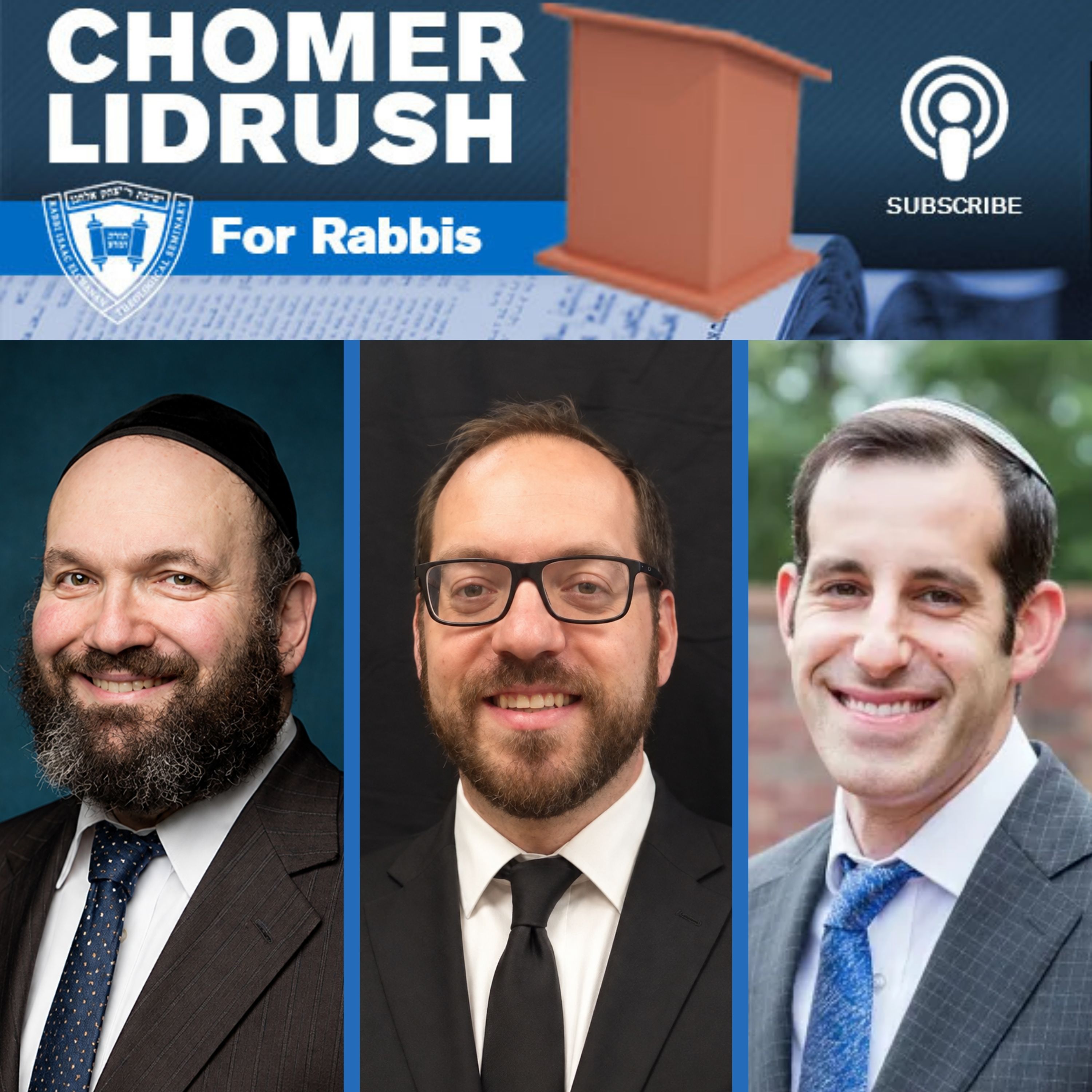
Yamim Noraim Chomer Lidrush Recording 5787 – R’ Baruch Simon, R’ Shmuel Ismach & R’ Reuven Brand
Featuring R' Baruch Simon, R' Shmuel Ismach and R' Reuven Brand Dedicated by Rabbi Shimon and Hennie Wolf in memory of Shimon’s father, Rabbi Dr. Ephraim Wolf zt”l – הרב אפרים ראובן בן נחום חיים ( Read More ) Contacts: R' Simon - cell (917) 803-1588 R' Ismach - sismach@gmail.com R' Brand - rbrand@torahchicago.org Download Handouts: R' Simon: Rosh Hashana Yom Kippur R' Ismach: Word Doc PDF R' Brand: PDF Summary: In case it can be helpful, here is an AI summary of the ideas shared on the recording. We have quicky reviewed them but there still might be slight errors in citation that we missed so you may want to double check the citations. Rabbi Shmuel Ismach 1) The Mesiras Nefesh of Restraint: Avraham Avinu and Rachel Imeinu Sources: Midrash Tanchuma, Vayera 23; Midrash Rabbah, Eichah (Petichta 24); Gemara Chullin 89a; Story of Rav Chaim Shmulevitz in the Six-Day War. Description: Classic mesiras nefesh is measured by difficult actions taken. However, the 2nd Day Rosh Hashanah leining (Akeida) and Haftarah ( Kol Beramah Nishma ) highlight a different form of mesiras nefesh : restraint—what we choose NOT to do/say. In Midrash Tanchuma, Avraham’s ultimate plea to Hashem is based on his own silence: he had logical questions ("Yesterday You said ki b’Yitzchak yikarei lecha zara ..." ), yet Avraham held his tongue (v'chavashti es yitzri v'lo heshivsicha). He asks Hashem to show that same restraint when Yitzchak's children sin. In Eichah Rabbah, Rachel Imeinu recounts giving the signs to Leah and hiding under the bed to speak for her. She asks Hashem: If I, basar v’dam, suppressed my jealousy and restrained myself, why are You jealous of meaningless idols? Hashem immediately relents ( "For you, Rachel, I return Israel to their border" ). Gemara Chullin 89a states: "The world endures only in the merit of one who restrains himself during a quarrel (she'bolem es atzmo b'she'as meriva), as it says 'Toleh eretz al belima'" . Can connect to the Shalom for Charlotte story that many people have probably heard, about a person who accidentally ran over his chavrusa’s daughter and she passed away. But the friend completely forgave him and used it as a platform to create shalom globally. See shalomforcharlotte.com . Practical Application: Remind congregants that our strongest claim for divine mercy on Rosh Hashanah comes from our own willingness to swallow our pride, hold back an angry email or comment, and practice self-restraint in personal, familial, and communal disputes. 2) Authentic Leadership: Leading by Example Sources: Tosefta Berachos 4:16; Sotah 37a and Mechilta, Beshalach (Nachshon); Shmuel I 1:1–2:10 (Haftarah of 1st Day Rosh Hashanah); Yalkut Shimoni, Shmuel I, remez 77; Talmud Yerushalmi, Berachos 9:5. Description: True leadership ( malchus ) is defined by personal example rather than words. In the Tosefta, R’ Akiva presses the zekeinim on why Yehuda merited malchus and rejects each answer they offer, settling on anavah; the parallel sugya in Sotah 37a credits Nachshon ben Aminadav, who proved leadership by jumping into the Red Sea first. Elkana (in the Haftarah) led the entire nation to Shilo not by giving speeches, but by taking his entire family on pilgrimage, sleeping in town squares, and inspiring onlookers through action ( ve'haisa ha'medina mirageshes ). Hashem promised him a son (Shmuel) who would similarly tilt Israel to the merit side. Practical Application: Challenge leaders and parents to realize that silent, active role-modeling (e.g., picking up a fallen sefer, prioritizing family over public honor) communicates values far more powerfully than any spoken sermon. 3) The Power of Simple Tefillah: The Ovrei Drachim and Tefillas Mincha Sources: Gemara Yoma 53b; Gemara Berachos 6b; Bereshis 24:63 ( Vayeitzei Yitzchak lasuach basadeh ); Melachim I 18 ( Eliyahu at Har HaCarmel ). Description: In Yoma 53b, the Kohen Gadol’s concise prayer upon exiting the Kodesh HaKodashim concludes with: "Let not the prayer of travelers (ovrei drachim) enter before You" . This is what the Kohen Gadol is worried about?! How is it possible that a simple traveler praying for dry roads could hold back the rain an entire region needs? This reveals the raw, formidable power of a simple person praying with complete sincerity. In Berachos 6b, Eliyahu Hanavi was answered only at Tefillas Hamincha . Mincha represents stopping right in the middle of a busy workday—between the boardroom and coffee room—to check in with Hashem. Practical Application: Encourage congregants on Yom Kippur to shed sophistication and pray like the Oveir Darech —with raw, vulnerable, and sincere belief that Hashem is involved in every detail of daily life. 4) Drawing Red Lines: The Meaning of Ayeka Sources: Bereshis 3:8–9; Targum Yerushalmi (Bereshis 3:9); Bereshis Rabbah 19:9; Eichah Rabbah 1:1. Description: Rav Schwab explains that Hashem’s question of Ayeka to Adam didn't mean "where are you physically," but "what have you become?" ( "Yesterday you were of My mindset, and now you follow the serpent?" ). Rabbi Ismach notes that spiritual decline happens gradually via trench warfare ( nekudas habechira ); red lines slowly erode over time. Sandy Koufax’s decision not to pitch on Yom Kippur was impactful because to him, it wasn't even a debate or calculation—it was an absolute, non-negotiable red line. Story of Rabbi Rosenbaum (R’ Beni Krohn’s grandfather) about prioritizing family over his own shul : his first grandchild’s bris fell on Rosh Hashanah, and he left a note on every congregant’s seat explaining that he would be at the bris rather than in his shul because of the importance of family. Practical Application: Urge congregants on Yom Kippur to establish at least one absolute, non-negotiable red line for the upcoming year (in Kashrus, Shabbos, or family time) to protect themselves from becoming an unrecognizable version of themselves by next year. Rabbi Baruch Simon 1) Mituk Hadin and Fighting Satan on Rosh Hashanah Through Torah She’be’al Peh Sources: Tikkunei HaZohar (quoted on p. 2 of handout); Drashos Chasam Sofer (p. 6); Zechariah 3:1–2 / Haftarah Roni V’Simchi (p. 8); Midrash Tanchuma, Parshas Noach 3. Description: On Rosh Hashanah that falls on Shabbos, we do not blow the shofar. The shofar’s primary purpose is mituk hadin (sweetening harsh judgment) and l’arveiv es hasatan . Rabbi Simon explains that when shofar blowing is suspended on Shabbos, this sweetening is achieved through Torah She’be’al Peh . The Tikkunei Zohar notes that the word תרועה contains the letters תורה ע'—representing the 70 facets of the Oral Law (shivim panim l’Torah). While Torah She’bichsav represents strict din (e.g., ayin tachas ayin ), Torah She’be’al Peh provides the mituk and mercy (e.g., monetary compensation). This concept is also embedded in Zechariah, where Hashem rebukes Satan by referring to Himself as "Habocher B'Yerushalayim" —Yerushalayim being the seat of the Sanhedrin and Torah She’be’al Peh , which acts as the ultimate shield against Satan's kitrug and prosecution. Practical Application: Highlight to congregational members that even when we lack the physical shofar on Shabbos, engaging in and committing to the study and sweetening force of Torah She’be’al Peh provides the exact protection and mituk needed for the New Year. 2) Shabbos as the Source of Teshuva Me’ahava and Yiras Shamayim Sources: Devash L’fi (Chida) quoting the Arizal; Gemara Shabbos 86b–87a; Beirach Moshe; Gemara Yoma 86b; Imrei Noam of Dzikov on Parshas Nitzavim (p. 20–21); Talmud Yerushalmi, Demai 4:1. Description: The Arizal defines Teshuva as an acronym for ת ענית ש ק ו אפר ב כיה ה ספד. The Chida notes that for modern generations, an alternate...