Conservation and Science
Holiday Break
Subscribe to Tommy's Outdoors: Conservation and Science Newsletter Support the Podcast and Buy Me a Coffee . Follow Tommy's Outdoors on Bluesky , Instagram or YouTube

Loading…

science
Hosted by Tommy's Outdoors · science · EN · 253 episodes
Are you tired of one-sided narratives about nature and conservation? Simplified takes that ignore the nuance and complexity of matters? This show brings you diverse perspectives on environmental stories, examining their ecological, social and political dimensions. Listen and become a well-rounded voice, empowered to foster dialogue and create change.I'm Tommy Serafinski and this is the Conservation and Science podcast, where we take a deep dive into topics of ecology, conservation and human-wildlife interactions (which, in most cases, means human-wildlife conflict). I talk with world-class scientists, members of environmental organisations, practical conservationists, farmers, nature writers, and last but not least, hunters and anglers. My conversations cover biodiversity, conservation, hunting and fishing, rewilding and more.Start with the acclaimed episode 163, “The EU Review of Wolf Protection Status.” It’s the perfect introduction to what this podcast has to offer.
Required Pod Score for this show. PitchCentric checks your profile against host openness, topical fit, and audience signals before you generate a pitch.
Contact path
Verified email
Booking probability
36%
Guest openness
Selective
Sign up to generate a grounded pitch for Conservation and Science.
Signup to Generate a PitchConservation and Science is a science podcast hosted by Tommy's Outdoors, with 253 episodes on record and a Required Pod Score of 85. PitchCentric scores this show on Booking Probability, Listen Score, and live audience signals refreshed every 24 hours.
Tommy's Outdoors hosts Conservation and Science, a science show with 253 episodes published.
Our AI reads these to draft pitches. Use them as grounding for a pitch that cites a real guest and a specific topic.

Conservation and Science
Subscribe to Tommy's Outdoors: Conservation and Science Newsletter Support the Podcast and Buy Me a Coffee . Follow Tommy's Outdoors on Bluesky , Instagram or YouTube

Conservation and Science
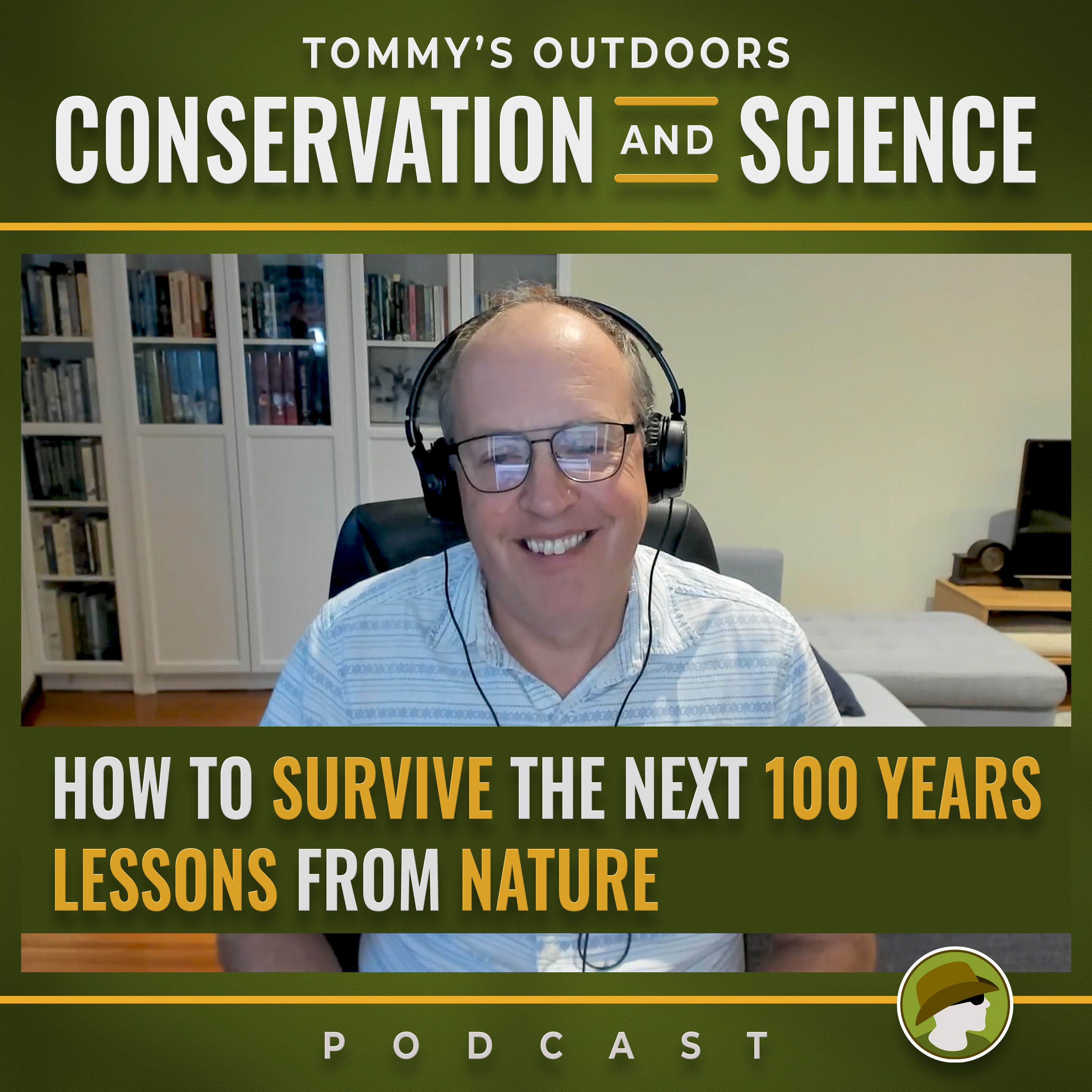
Why do we feel so hopeless about the future of the natural world? Is nature really collapsing everywhere we look or have we simply been told a one-sided story? And what if our lack of control over ecosystems turns out to be our greatest strength? In this episode I welcome back expert ecologist and author Simon Mustoe to talk about his new book, ‘ How to Survive the Next 100 Years: Lessons from Nature ’. It picks up where his previous book left off, building on the idea that we are not separate from nature but central to it. Simon explains how we sit right in the middle of the trophic pyramid and depend entirely on the animals around us to keep energy moving through the systems that sustain life. It is a perspective that quietly reframes how we think about our place on this thin, living veneer of the planet. Much of our conversation focuses on balance, both in nature and in how we talk about it. Simon points to a reanalysis of the Living Planet Index suggesting the picture is closer to fifty-fifty than the widely reported three-quarters decline, with many animals, including large ones like humpback whales, recovering on their own. We get into why bad news spreads so easily while good news gets buried and how our understanding of the world often lags decades behind reality. From novel ecosystems and so-called invasive species to the misuse of words like 'pest' and 'overabundance', Simon makes the case for caution, humility and a kind of Hippocratic oath for conservation: first, do no harm. He argues that forcing outcomes rarely works, because the forces shaping ecosystems are far more powerful than we are. We also explore why blanket solutions so often fail, using examples from Australian farming, koala conservation and a single burrowing animal that increased the profitability of a sheep farm. Simon believes communities, not top-down policy, hold the key to lasting change, and that real progress comes from enabling people to act locally rather than shouting at politicians or each other. He leaves us with simple, practical advice: get outside, pay attention to the nature on your own doorstep, support what others are doing nearby, and step back from the relentless flow of negative news. It is a refreshingly balanced, middle-of-the-road conversation that gives you something rare these days, a genuine sense of agency. Subscribe to Tommy's Outdoors: Conservation and Science Newsletter Support the Podcast and Buy Me a Coffee . Follow Tommy's Outdoors on Bluesky , Instagram or YouTube

Conservation and Science
<p>What if the environmental movement has badly underestimated our ability to solve the climate crisis? Could renewable energy grow so fast that we are out of fossil fuels within a decade? And once emissions fall away, how do we deal with the carbon already in the atmosphere? In this episode I'm joined by Benoit Lambert, author of the book titled ‘Biogeotherapy: nature-based climate solutions, life as a geological healing force’. Benoit has a rich and varied background, from planting four million trees by hand across five Canadian provinces to spending eighteen years in Geneva, where he completed a PhD and...

Conservation and Science
<p>Why are red deer populations in Germany growing in number and antler size yet sitting in deep genetic trouble? What is the difference between census population size and effective population size, and why does it matter? And how can a satirical award for the worst-built wildlife crossing draw attention to the issue of habitat fragmentation? In this episode, I sit down with Frank Zabel, a wildlife biologist, campaigner, and co-host of the award-winning JAGDcast podcast. Frank also runs the nonprofit RotWildes Deutschland (Non-profit Society for Wildlife Biology & Sustainable Use) and authored the 2022 deer management plan focused on corridors and...

Conservation and Science
<p>What has shifted in rewilding over the past five years? Why do recovery of species like lynx, beavers and wolves trigger reactions that go far beyond the animals themselves? And what is the real obstacle to bringing lynx back to Scotland, the ecology, the bureaucracy, or something much harder to name? In this episode, our returning guest is Peter Cairns, co-founder and former Executive Director of SCOTLAND: The Big Picture, board member of Trees for Life, public voice for the Lynx to Scotland partnership, wildlife photographer, and now host of the new podcast 'At the Edge'. Peter last appeared...
Recent guests on Conservation and Science. Study who booked and why before you pitch.
Sponsor detection runs nightly. Check back soon.
Based on semantic analysis of episode topics and host coverage, this show is a strong guest fit for executives in:
Industry fit is computed by PitchCentric using vector embeddings of the show's episode catalog.
Is this podcast yours and you'd like to remove or correct details? Request removal or email privacy@pitchcentric.com.
FAQs
If you have a concern about deliverability, AI quality, data privacy, or whether this will actually work for your specific situation, it's probably answered below.
Founder Solo gives you 50 AI pitches per month using the credit model (Standard pitches cost 1 credit, Enriched pitches cost 2). Founder Pro raises that to 200 credits per month and adds full Booking Probability access, unlimited Magic Match, Apollo enrichment credits, and data export capabilities. Both plans use the same credit system, so you can stretch your monthly budget further by using Standard-mode drafting.
Agency tiers have no base fee. You pay per managed client and per talent profile. Agency Standard is $199 per client per month; Agency Pro is $399 per client per month. Both add $39 per talent profile per month. Your own team's user seats are always free.
A talent profile represents one person (founder, executive, or spokesperson) you are booking onto podcasts. It includes their bio, topics, headshots, and outreach history. Team plans include 5 profiles; agency plans are pay-as-you-go.
Yes, at any time. Upgrades take effect immediately; downgrades apply at the end of the current billing period. Contact support if you need help migrating between plan families.
Every paid plan includes a 15-day free trial. Your card is saved at signup but you will not be charged until day 16. Cancel any time from your dashboard.
You keep access until the end of your current billing period. No charges after that. Your data is retained for 30 days in case you reactivate.
Yes. Select Annual on the pricing toggle and the discounted price is applied automatically at checkout. The annual price shown is the full year cost.
That is our Enterprise tier. Contact our sales team and we will build a custom plan with volume pricing, a dedicated account manager, and SLA guarantees.