If you are a grower or owner looking to optimize your existing or new cultivation facility or anyone looking to cultivate more in less space, then this is the show for you. Each week, join Host Michael Williamson as he travels across the country, to explore the world of vertical farming and the future of cannabis and food production through his conversations with leading industry operators, growers and executives who are demonstrating success and resilience as growers and cultivators. Each episode provides stories and key insights that will inspire and show you first-hand, how each of these companies have overcome challenges, and found their own path to success. Brought to you by Pipp Horticulture. This podcast uses the following third-party services for analysis: Podtrac - https://analytics.podtrac.com/privacy-policy-gdrp
Pitch Analysis
Required Pod Score for this show. PitchCentric checks your profile against host openness, topical fit, and audience signals before you generate a pitch.
Contact path
Verified email
Booking probability
32%
Guest openness
Selective
Verified email on file
80/100
Required Score
Sign up to generate a grounded pitch for Cultivation Elevated - Indoor Farming, Cannabis Growers & Cultivators - Pipp Horticulture.
What is Cultivation Elevated - Indoor Farming, Cannabis Growers & Cultivators - Pipp Horticulture?
Cultivation Elevated - Indoor Farming, Cannabis Growers & Cultivators - Pipp Horticulture is a business podcast hosted by Unknown Host, with 53 episodes on record and a Required Pod Score of 80. PitchCentric scores this show on Booking Probability, Listen Score, and live audience signals refreshed every 24 hours.
About the host
Unknown Host hosts Cultivation Elevated - Indoor Farming, Cannabis Growers & Cultivators - Pipp Horticulture, a business show with 53 episodes published.
Our AI reads these to draft pitches. Use them as grounding for a pitch that cites a real guest and a specific topic.
Episode #31
Cyclospora and the Value of Indoor Growing
Aug 14, 202634 minS2
Subscribe & Watch on YouTube Episode Description Recent Cyclospora concerns have brought food safety in fresh produce back into the spotlight. But what role can controlled environment agriculture (CEA) play in reducing contamination risk? In this episode of Cultivation Elevated , Michael Williamson sits down with Danielle Will, Product Manager at Pipp Horticulture with a background in biological engineering, to explore the connection between Cyclospora, food safety, and indoor growing. The conversation breaks down what makes Cyclospora different from common bacterial pathogens, why prevention is more important than simply washing produce, and how indoor farms and greenhouses can reduce exposure to environmental contamination pathways. Michael and Danielle also dive into water systems, recirculation, biofilm, sanitation validation, facility design, employee hygiene, documentation, and operational discipline. The key takeaway? CEA isn't automatically food safe. Its value comes from giving growers greater visibility and control, but only when that technology is supported by thoughtful facility design, validated sanitation procedures, trained employees, and consistent execution. Whether you're designing a new facility or evaluating your current food-safety program, this episode offers a practical framework for thinking about contamination prevention from the ground up. Key Takeaways 00:00 — Introduction: Why Cyclospora Matters 01:12 — CEA Can Reduce Risk, But It Doesn't Eliminate It 02:23 — What Is Cyclospora? 04:06 — Why Prevention Is Critical 05:34 — The Environmental Variables CEA Can Help Control 06:25 — Indoor Doesn't Mean Contamination-Proof 07:17 — Does Hydroponics Eliminate Microbial Risk? 08:20 — Designing Equipment With Food Safety in Mind 10:09 — Water Systems & Recirculation 10:58 — Why Closed-Loop Doesn't Automatically Mean Safer 13:27 — Biofilm: The Hidden Challenge 15:25 — Validate Your Sanitation Process 16:29 — Designing Out Microbial Niches 17:16 — Facility Design Is Part of Food Safety 18:20 — Don't Overlook Drainage & Condensate 20:00 — Waste Handling Can Create New Problems 21:25 — Accessibility Makes Sanitation Possible 23:54 — Operational Discipline & Employee Training 25:43 — Building Better Employee Hygiene Practices 26:34 — Don't Forget the Smartphone 28:42 — Documentation Is More Than an Audit Requirement 30:16 — Five Areas Operators Should Prioritize 31:44 — Find the Root Cause, Not a Band-Aid 32:08 — The Real Value of CEA 33:04 — Final Takeaway Connect With Pipp Pipp Horticulture Website - https://pipphorticulture.com/ Pipp Horticulture YouTube - https://www.youtube.com/channel/UC4nNnNCiwS5k5GX7BaXIrbA Pipp Horticulture - Facebook - https://www.facebook.com/pipphorticulture Pipp Horticulture Instagram - https://www.instagram.com/pipphorticulture/ Pipp Horticulture LinkedIn - https://www.linkedin.com/company/18333737/ Pipp Horticulture Pinterest - https://www.pinterest.com/pipphorticulture/ ️ Podcast Production by FullCast This podcast uses the following third-party services for analysis: Podtrac - https://analytics.podtrac.com/privacy-policy-gdrp
Schedule III: The Biggest Win or the Biggest Misunderstanding in Cannabis?
May 1, 202627 minS2
<p>Licensed medical cannabis has officially moved from Schedule I to Schedule III, but most operators still don't fully understand what changed, what didn't, and where the real risks and opportunities are. In this episode of Cultivation Elevated, host Michael Williamson sits down with cannabis attorney Christine Seney for a no-fluff breakdown of what rescheduling actually means on the ground, financially, operationally, and strategically.</p><p>Christine works directly with MSOs, investors, and executive teams on licensing, compliance, deal structure, and capital strategy across multiple state markets. This is not outside commentary. This is real-time legal strategy.</p><p>Timestamps:<...
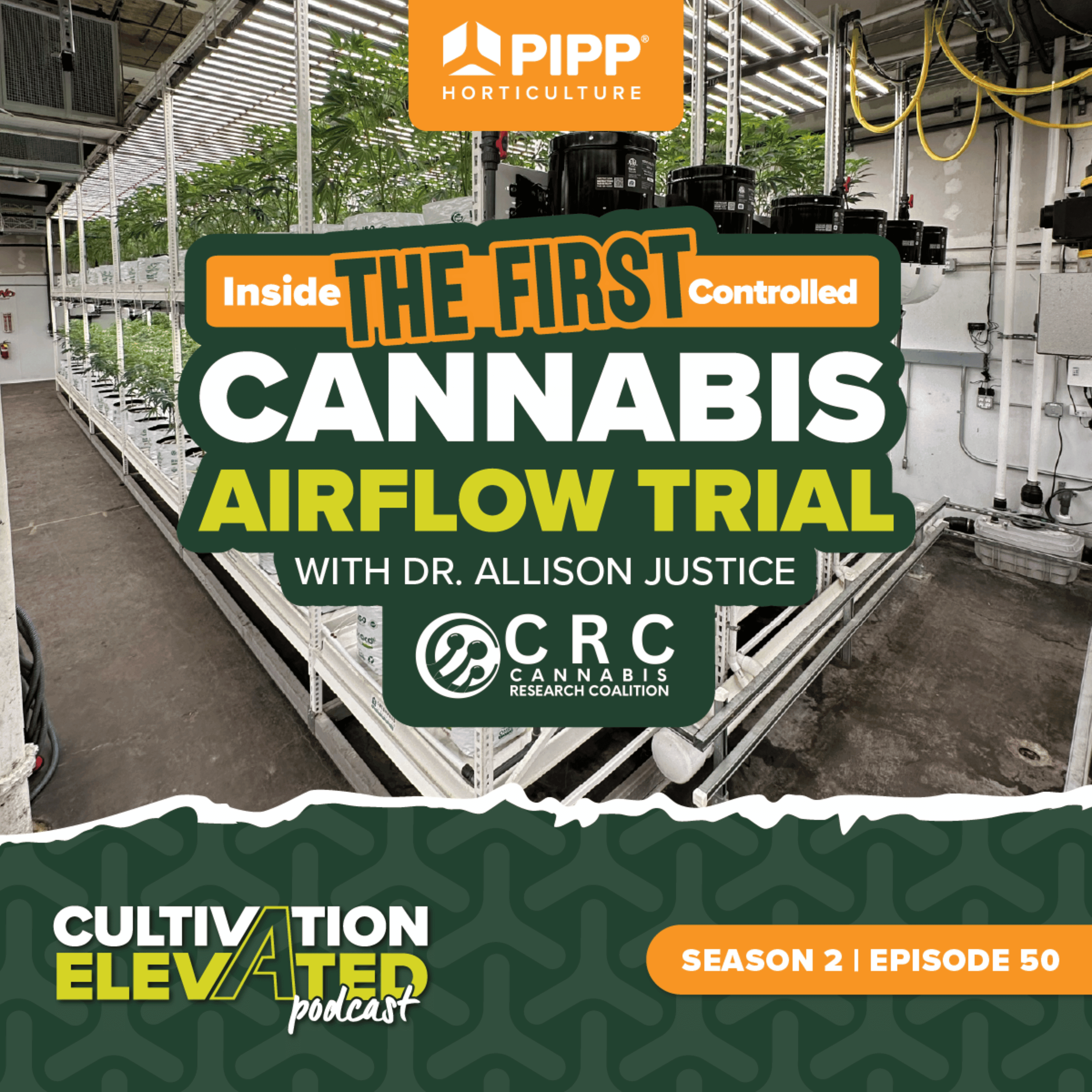
050: Inside the FIRST Controlled Cannabis Airflow Trial
Mar 18, 202638 minS2
<p>📺 Subscribe & Watch on YouTube</p><p>Airflow has long been treated as a background variable in cannabis cultivation, something growers assume is “good enough” if the leaves are moving. But what if airflow is actually one of the most powerful tools for increasing yield and optimizing plant performance? In this episode of Cultivation Elevated, host Michael Williamson sits down with Dr. Allison Justice to discuss findings from one of the first controlled airflow studies conducted in commercial cannabis cultivation.</p><p>By isolating airflow as a variable and measuring canopy-level air velocity across controlled environments, the research team explored how air...
049: What Schedule III Really Means for Cannabis: A Lawyer’s Unfiltered Take
Dec 24, 202537 minS2
<p>📺 Subscribe & Watch on Youtube</p><p>In this episode of Cultivation Elevated, Michael Williamson is joined by cannabis attorney Devon Baxter to cut through the noise around cannabis rescheduling and explain what the shift to Schedule 3 actually means for operators. They break down why rescheduling is not legalization, how 280E tax relief really plays out in practice, why banking access remains limited, and where compliance, lab testing, and enforcement risks are often underestimated. The conversation also explores the impacts on MSOs versus craft operators, the evolving relationship between hemp and cannabis, potential pharmaceutical involvement, and what disciplined operators should pri...
048: Inside Non-Cannabis CEA: Engineering Systems That Actually Work
Dec 18, 202550 minS2
<p>📺 Subscribe & Watch on YouTube</p><p>The episode goal: Introduce Danielle to Pipp’s audience, showcase her background in greenhouse system engineering and product development, and bridge her experience from greenhouse CEA to indoor CEA.</p><p>Listen to learn:</p><p>How greenhouse and indoor CEA truly differ</p><p>Why some high-tech vertical farms failed — and what today’s winners get right</p><p>How to design systems around the crop, not the technology</p><p>Key engineering considerations for multi-tier indoor farms</p><p>What product development looks like across strawberries, lettuce, cannabis, seedlings & more</p><p>Why mod...
Every question we get asked before someone starts their trial.
If you have a concern about deliverability, AI quality, data privacy, or whether this will actually work for your specific situation, it's probably answered below.
What is the difference between Founder Solo and Founder Pro?
Founder Solo gives you 50 AI pitches per month using the credit model (Standard pitches cost 1 credit, Enriched pitches cost 2). Founder Pro raises that to 200 credits per month and adds full Booking Probability access, unlimited Magic Match, Apollo enrichment credits, and data export capabilities. Both plans use the same credit system, so you can stretch your monthly budget further by using Standard-mode drafting.
How do agency tiers work?
Agency tiers have no base fee. You pay per managed client and per talent profile. Agency Standard is $199 per client per month; Agency Pro is $399 per client per month. Both add $39 per talent profile per month. Your own team's user seats are always free.
What is a talent profile?
A talent profile represents one person (founder, executive, or spokesperson) you are booking onto podcasts. It includes their bio, topics, headshots, and outreach history. Team plans include 5 profiles; agency plans are pay-as-you-go.
Can I switch plans later?
Yes, at any time. Upgrades take effect immediately; downgrades apply at the end of the current billing period. Contact support if you need help migrating between plan families.
Do you offer a free trial?
Every paid plan includes a 15-day free trial. Your card is saved at signup but you will not be charged until day 16. Cancel any time from your dashboard.
What happens if I cancel?
You keep access until the end of your current billing period. No charges after that. Your data is retained for 30 days in case you reactivate.
Is the 20% annual discount automatic?
Yes. Select Annual on the pricing toggle and the discounted price is applied automatically at checkout. The annual price shown is the full year cost.
What if I have more than 50 profiles or 20 clients?
That is our Enterprise tier. Contact our sales team and we will build a custom plan with volume pricing, a dedicated account manager, and SLA guarantees.