
Loading…

Loading…
Business
Hosted by Unknown Host · Business · EN · 232 episodes
Interviews featuring a mix of investigative journalists, affecting writers, economics, geopolitics, explorers and fascinating life stories. Check out the 'Starter Packs' I put together for the best place to start with the pod... https://curiousworldview.notion.site/Curious-Worldview-Podcast-Guide-412b6a244ebe42b4b46994ed9e4823b5 Subscribe to the Substack: https://curiousworldviewpod.substack.com/subscribe Whether it's the supply chain of semi-conductors, a 25 year cold-war CIA veteran, negotiation with Chris Voss, Warden of Sweden's biggest prison, Lawrence Krauss and the universe, Cricket with the GOAT Gideon Haigh, Taiwan, China, the great adventurers and explorers the list goes on...
Required Pod Score for this show. PitchCentric checks your profile against host openness, topical fit, and audience signals before you generate a pitch.
Contact path
Verified email
Booking probability
36%
Guest openness
Selective
Sign up to generate a grounded pitch for Curious Worldview.
Signup to Generate a PitchCurious Worldview is a business podcast hosted by Unknown Host, with 232 episodes on record and a Required Pod Score of 80. PitchCentric scores this show on Booking Probability, Listen Score, and live audience signals refreshed every 24 hours.
Unknown Host hosts Curious Worldview, a business show with 232 episodes published.
Our AI reads these to draft pitches. Use them as grounding for a pitch that cites a real guest and a specific topic.

Episode #232
Andrea Wulf was born in India to German parents, grew up in Hamburg, and became a writer through pure serendipity... She has since become one of the finest narrative historians today: The Brother Gardeners , Founding Gardeners , Chasing Venus , then The Invention of Nature , her life of Alexander von Humboldt, which won fifteen international awards including the Costa Biography Award, the Royal Society Science Book Prize and the LA Times Book Prize, followed by Magnificent Rebels and now her new book, and the subject of our interview today, The Traveler , which brings alive George Forster, the man Humboldt himself credited with making him an explorer, and the most open mind of the 18th century. Link To 'The Traveler' Link To 'Curious Worldview Substack' Leave a review on Apple or Spotify ( nothing does more to help grow the show ) It’s an enormous pleasure to have spoken with Andrea, we discussed... Fernweh — the German word for the ache for the distance, and why it's Andrea's "main condition of being" Living voyeuristically through the subjects of her books, and why she had to write about a traveller again after Magnificent Rebels in the pandemic Who was George Forster: the wunderkind who taught himself to read off book spines, was a working botanist on a Russian expedition at ten, and translated a Russian history book into English at twelve. Why Forster was unique among explorers: Columbus's "green" and "naked" vs Forster painting Antarctica in blue, purple and green Dying at thirty-nine in disgrace — written out of history in Germany as a traitor, in Britain as a critic of empire — and the East German rediscovery of the 1950s James Cook's moral ledger: firearms as display of power, even-handed punishment of crew and islanders, the property concept he couldn't see past, and his genius as navigator and scientist Forster and religion: what he actually grasped of Māori and Tahitian cosmology, the Lutheran upbringing, the Rosicrucian detour, and the Bible as "a book of oriental fantasy" Serendipity: the borrowed London house that made her a writer Curious Worldview (catalogue connections to this ep) The Fernweh thread — the ache for the distance that opens this episode is the same force behind Tim Cope's 10,000km ride in the shadow of Genghis Khan , Robyn Davidson's camel trek and life of nomadism , Colin Thubron's half-century of crossing borders , Levison Wood's life in adventure and Chris Arnade walking the world . Why we travel at all — Andrea's distinction between slow travel in an explorer's footsteps and photo-stop tourism picks up exactly where Ash Bhardwaj's 'Why We Travel' left off. The forgotten traveller — Forster joins James Holman, the Blind Traveller, in the catalogue's gallery of history's misplaced adventurers, from the Bryan Bashin episode . The great explorers — Cook, Columbus and the moral spectrum of the age of exploration, ground first surveyed with Scott Rank on the great and famous explorers of history . Colonial reckoning — Cook's contested legacy and the darkness Forster's attitude shines out of run straight back to Adam Hochschild on King Leopold's Ghost and Tim Butcher's Blood River journey through the Congo . Narrative non-fiction masters — Andrea name-checked alongside David Grann, the GOAT of narrative non-fiction , in the conversation itself. The serendipity question — asked now some 300 times, a thread first unspooled with Christian Busch on inviting serendipity into your life . Timestamps... 00:00 — Fernweh : the ache for the distance, the word that opens the episode and defines her whole career 02:37 — Living voyeuristically through her subjects; writing Magnificent Rebels during the pandemic; why she had to return to a traveller 09:41 — Why Forster was unique: Columbus who could only say "green" and "naked" vs the storyteller who painted Antarctica in colour; neither idealising (Rousseau) nor demonising 13:34 — The six weeks that changed him: Dusky Sound's "art and industry to these savages" to Queen Charlotte Sound's "we bring death and disease" 15:48 — Dead at 39, a traitor; written out of history in Germany and Britain; the East German rediscovery 20:15 — The Humboldt imprint: A Voyage Round the World , the 1790 journey through Europe, shovelling sand in revolutionary Paris 23:33 — Cook's morality: firearms, even-handed punishment, what Cook couldn't see about Tahitian property that Forster could 31:09 — Science aboard an imperial expedition; the real treasure Forster brought home: all humans are one species 36:53 — The wunderkind: a working botanist at ten, translating Russian history into English at twelve 40:00 — The breadfruit deduction: seedless trees to a correct theory of Polynesian migration 43:43 — Forster and religion: what he actually understood of the Māori cosmos, the Rosicrucian years, the Bible as "oriental fantasy" 48:27 — Do modern explorers exist? Polymaths, the deep ocean, E.O. Wilson 56:37 — The resurrected question: witness any conversation in history → Forster and Humboldt in a carriage through revolutionary France 57:58 — Serendipity...

Episode #231
Ed Cowan is an Australian test cricketer, investor, podcaster and author. He’s one of those people whose name I jotted down 6 years ago when I started the show earmarked as a ‘dream guest’. He played in a golden era of Australian cricket and did so at a time when I was obsessed with the sport myself (I had delusions about being a test cricketer) and therefore like the music of your youth those cricketers you grew up with leave a certain impression. I've since been a long time listener of his 'Scaling Up' podcast series and tune in weekly for the ABC Cricket Podcast where he is a co-host. Ed has an occasionally controversial, but always influential voice on the Australian cricketing landscape. It's an absolute pleasure to have recorded this with him. He had 32 test innings for Australia across 18 matches, scored one test hundred and over 1000 runs in total. You’ll find a link to both his book and his podcast here. Leave a review on Apple or Spotify ( nothing does more to help grow the show ) It’s an enormous pleasure to have spoken with Ed, we discussed... How Ed always kept a foot in multiple worlds, even though it came at a cost. The transition out of professional sport and why so many athletes struggle with it. His mentor Peter Roebuck Mental health in cricket and how the culture has shifted. His Test career: the debut hundred, the weight of expectation, homework-gate, and his illness that coincided with the Ashes and the end of his international career. Ed’s views on IPL money, BBL privitisation and governance. The business of cricket: how he'd restructure Cricket Australia, player pay, and bringing patient, evergreen capital into the Big Bash. And, as always, the role serendipity has played in his life, to which, as an opening batsman, he had the perfect answer. Timestamps... 00:00 — Realising a cricket career was possible 02:17 — Under-19s in Sri Lanka, surrounded by future Test players 07:38 — The transition myth: why it's a decade, not twelve months 14:08 — Do athletes have too much free time? 17:03 — Travel, brooding, and the Matthew Talbot shelter that shifted his perspective 27:02 — The Cricinfo depression piece 33:31 — NSW's logjam of talent and the fresh start in Tasmania 36:30 — Called up to Australia; the left-handed-opener mystery 39:36 — Peter Roebuck: discipline, mangoes, and the debut century dedicated to him 44:43 — The 18 innings: expectation, emotional regulation, homework-gate 50:42 — The Ashes, falling ill, and his final Test 54:00 — Resentment, selection, and "perception is reality" 55:12 — Death of a Gentleman , the IPL, and cricket's governance crisis 1:00:23 — Ambitions in cricket; the ABC podcast as a public service 1:08:08 — Privatising the Big Bash and bringing in patient capital 1:13:55 — Serendipity, Gideon Haig, and "I was an opening batsman" Some choice snippets from the conversation. On transition out of sport "A lot of sportspeople think transition is your last twelve months of playing and your first twelve months of the real world. That's only a tiny speck of what it actually looks like. You come out of sport and you're at the bottom of the next mountain — you've got the tools to climb it, but that's another journey in and of itself." On identity "One of the thresholds is: do you still think of yourself as a cricketer? It's not part of my identity anymore at all. Some people say, 'You're the guy who used to play cricket.' Yeah, that was me. But that takes a while." On the perspective that pulled him out of a funk (volunteering at the Matthew Talbot shelter) "Here I was brooding over nicking one to second slip the day before. And here are guys who hadn't made any bad choices — they were just out of luck." On the chip on his shoulder "You think I'm not training hard enough? I'll beat you in the beep test. You think I'm not preparing properly? I'll get a hundred on the weekend." On why cricket breeds brooders "The output's objective. There's nothing subjective about getting a twenty-ball duck. And the time lag from error to atonement is long — it can be two days, and you're doing nothing.""The key to good mental health in cricket is celebrating your teammates' success. That's rarer than you'd think." On the fresh start in Tasmania "The joy of a fresh start is you can be whoever you want to be the moment you walk in the door. There's no judgment about what school you went to. You're judged from day one only." On luck (the serendipity close) "Two more centimetres of Morne Morkel's size-fourteen boot behind the line, and I'm out for forty-eight. No one remembers Ed Cowan, Test century.""The harder you work, the luckier you get. Luck can come and find you — but it's up to each individual to make that lucky moment count." On the business of cricket "Our best players probably don't get paid enough, and our worst players get paid too much.""An IPL owner's incentive is not to grow the Big Bash. It's to pillage the Big Bash so the IPL gets stronger." Podcast Starter Packs Investigative Journalists Offshore Finance/Kleptocracy & Money Laundering Geopolitics/Economics/Economic Development Explorers & Adventurers Leave a review on Apple or Spotify ( nothing does more to help grow the show )

Episode #230
Tim Marshall is back for a fourth time. We've now done a show for every book: Prisoners of Geography , The Power of Geography and The Future of Geography . Now the book that started a whole genre has turned 10 years, and Tim has gone back and rewritten the entire thing. So the question writes itself: how do you update a guide to how geography explains the world when the geography itself hasn't moved? Tim's answer is that we remain prisoners of it but the case is nuanced, he is quick to deny geographic determinism. In this episode we go region by region, the Strait of Hormuz and pipelines through Oman's mountains, China's escape from its "Malacca Dilemma," Europe's reckoning as America pivots to Asia. The surprise thread is Venezuela, which Tim argues is about Cuba, semiconductors and squeezing China out of Latin America far more than oil. From there: the global populist wave, and his sharpest reframing of the hour arguing that multi-ethnicity was never the problem; badly-done multiculturalism is. We close on the Indo-Pacific as the new centre of the world, on Taiwan and on what it all means for little old Australia — AUKUS, Pine Gap, and Tim's blunt verdict that we matter more to American strategy than even the UK. If this is your first geography episode, start where it began with Tim's very first appearance back in 2021 — or sit it alongside Robert Kaplan on a world in permanent crisis, Sam Roggeveen on the Echidna Strategy, and Robyn Davidson , whom I quote here on Modi's India. The 10th anniversary edition of Prisoners of Geography is out now. Links Tim Marshall Books Curious Worldview Substack Podcast Starter Packs Investigative Journalists Offshore Finance/Kleptocracy & Money Laundering Geopolitics/Economics/Economic Development Explorers & Adventurers Leave a review on Apple or Spotify ( nothing does more to help grow the show )
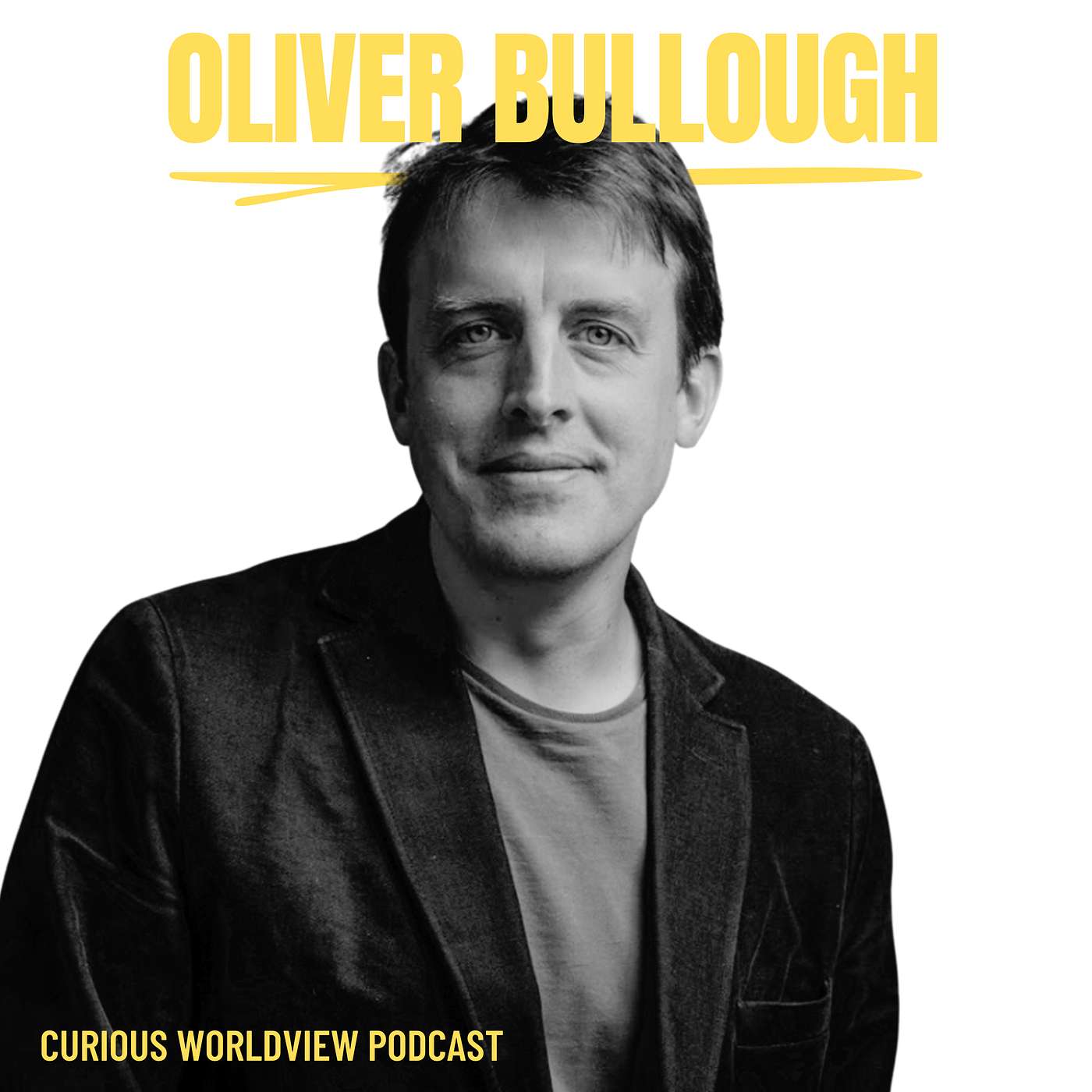
Episode #229
<p>Four years ago, almost to the day of recording, Oliver Bullough was a guest on this show for the first time to discuss his concept of 'Moneyland'. This borderless virtual country where the wealthy go to keep their wealth beyond the reach of any government, any tax office, any voter. Between then and now, I've maintained interest on this thread. Nicholas Shaxson discussed on the pod the cancerous plumbing of the offshore world in Treasure Islands. John Christensen showed how that plumbing quietly corrodes culture and politics. Bill Browder shows where the abstraction becomes violence. Nathan Lynch showed how...
Sponsor detection runs nightly. Check back soon.
Based on semantic analysis of episode topics and host coverage, this show is a strong guest fit for executives in:
Industry fit is computed by PitchCentric using vector embeddings of the show's episode catalog.
Is this podcast yours and you'd like to remove or correct details? Request removal or email privacy@pitchcentric.com.
FAQs
If you have a concern about deliverability, AI quality, data privacy, or whether this will actually work for your specific situation, it's probably answered below.
Founder Solo gives you 50 AI pitches per month using the credit model (Standard pitches cost 1 credit, Enriched pitches cost 2). Founder Pro raises that to 200 credits per month and adds full Booking Probability access, unlimited Magic Match, Apollo enrichment credits, and data export capabilities. Both plans use the same credit system, so you can stretch your monthly budget further by using Standard-mode drafting.
Agency tiers have no base fee. You pay per managed client and per talent profile. Agency Standard is $199 per client per month; Agency Pro is $399 per client per month. Both add $39 per talent profile per month. Your own team's user seats are always free.
A talent profile represents one person (founder, executive, or spokesperson) you are booking onto podcasts. It includes their bio, topics, headshots, and outreach history. Team plans include 5 profiles; agency plans are pay-as-you-go.
Yes, at any time. Upgrades take effect immediately; downgrades apply at the end of the current billing period. Contact support if you need help migrating between plan families.
Every paid plan includes a 15-day free trial. Your card is saved at signup but you will not be charged until day 16. Cancel any time from your dashboard.
You keep access until the end of your current billing period. No charges after that. Your data is retained for 30 days in case you reactivate.
Yes. Select Annual on the pricing toggle and the discounted price is applied automatically at checkout. The annual price shown is the full year cost.
That is our Enterprise tier. Contact our sales team and we will build a custom plan with volume pricing, a dedicated account manager, and SLA guarantees.
