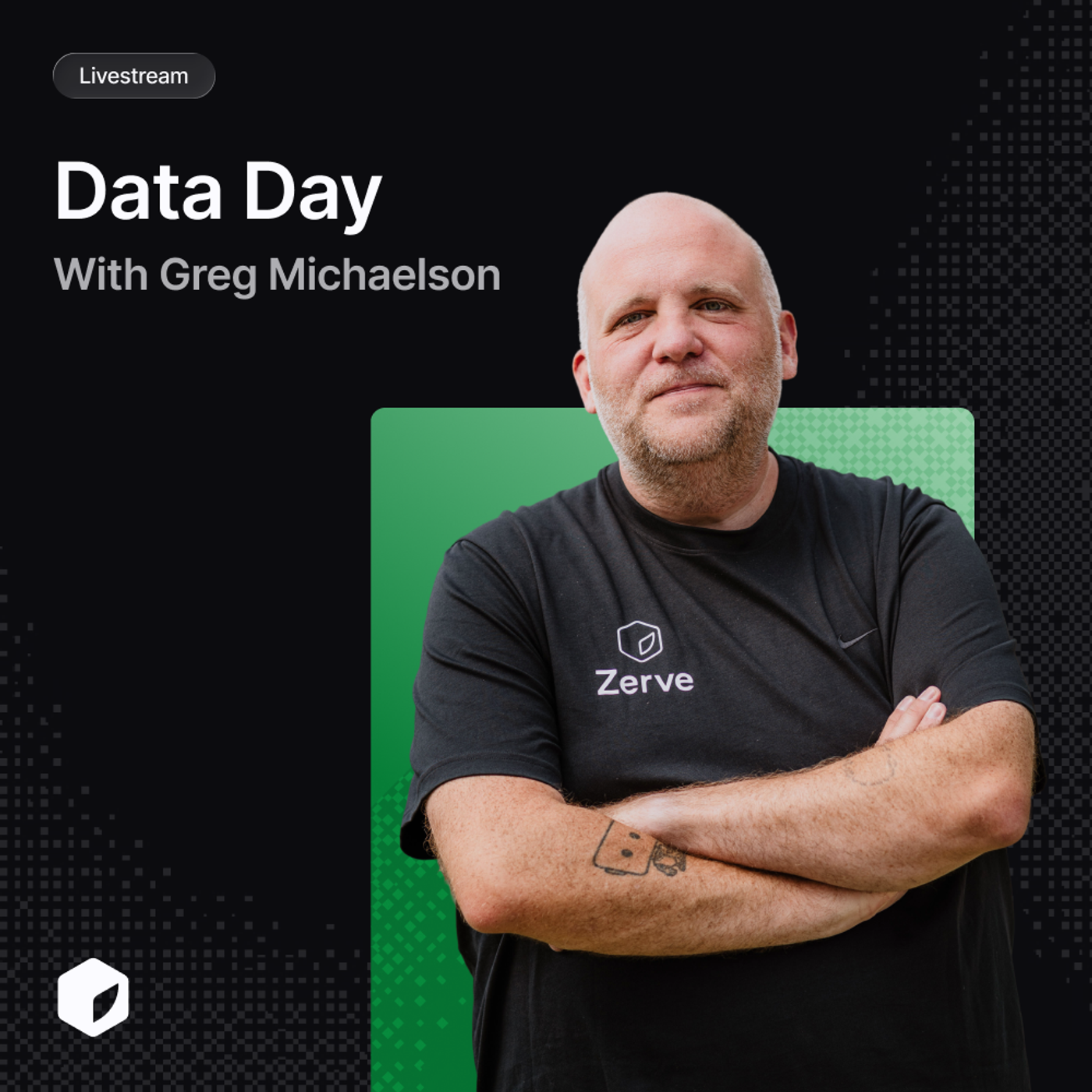
DataDay with Greg Michaelson is a podcast about the real lives of people who work with data and AI every day. Not the polished conference-talk version, but the messy, clever, practical, human side of analytics work. Each episode sits down with someone who’s in the trenches building models, shipping dashboards, wrangling pipelines, or experimenting with agentic AI to get actual work done. Host Greg Michaelson digs into how these practitioners think, how they solve problems, and the quirks that make each of them unique. Learn about the shortcuts they swear by, the habits they can’t break, the tools they love, the ones they avoid, and the weird constraints that shape their day-to-day. You’ll hear stories about debugging agents at 2AM, designing workflows that survive contact with real users, navigating organizational chaos, and figuring out how to stay curious while the field changes under your feet. It’s a practical, grounded conversation about doing data and AI wor
Pitch Analysis
Required Pod Score for this show. PitchCentric checks your profile against host openness, topical fit, and audience signals before you generate a pitch.
Contact path
Verified email
Booking probability
31%
Guest openness
Selective
Verified email on file
80/100
Required Score
Sign up to generate a grounded pitch for Data Day with Greg Michaelson.
Data Day with Greg Michaelson is a business podcast hosted by Greg Michaelson, with 27 episodes on record and a Required Pod Score of 80. PitchCentric scores this show on Booking Probability, Listen Score, and live audience signals refreshed every 24 hours.
About the host
Greg Michaelson hosts Data Day with Greg Michaelson, a business show with 27 episodes published.
Our AI reads these to draft pitches. Use them as grounding for a pitch that cites a real guest and a specific topic.
Episode #28
William Morgan and The Future of AI Infrastructure: Kubernetes, Open Models & What Comes Next
Aug 11, 202643 minS1
William Morgan, founder and CEO of Buoyant and creator of Linkerd, joins Greg Michaelson to talk about how modern software infrastructure is changing in the age of AI. William breaks down Kubernetes and service meshes in plain English, shares lessons from helping scale Twitter during its early years, and explains why Buoyant built Linkerd as an open-source project. They also dig into how AI is changing software development, where AI-generated code can—and absolutely cannot—be trusted, and why the next major shift may be companies running powerful open-weight AI models inside their own infrastructure rather than relying entirely on external model providers. Topics include Kubernetes, Linkerd, service meshes, platform engineering, open-source business models, AI-assisted coding, local AI inference, open-weight models, GPUs, and the future of enterprise AI infrastructure.
Chris Nyhuis - Inside the Mind of a Cyber Defender
Jul 28, 202648 minS1
Most cyberattacks never make the news—but they happen every day. In this episode, Greg Michaelson sits down with Chris Nyhuis, CEO of Vigilant, to explore how modern attackers infiltrate organizations, why most companies don't detect breaches for months, and how Vigilant has reduced that window to just four hours. They discuss supply chain attacks, AI-powered cybersecurity, critical infrastructure, ransomware myths, protecting your home network, and Chris's remarkable work fighting human trafficking through technology.
Derek Crager: Why AI Should Think With People, Not Replace Them
Jul 21, 202641 minS1
In this episode, Greg sits down with Derek Crager, founder of Practical AI and creator of the Human-First AI philosophy. Derek shares his journey from industrial construction to Amazon, where he built the company's highest-rated employee training program and helped reduce technician attrition from over 80% to around 30%. The conversation explores why most enterprise AI initiatives fail, how voice-based AI mentors can preserve critical workforce knowledge, why specialized AI models outperform general-purpose chatbots for many tasks, and what it really means for AI to augment—not replace—human expertise.
<p>Greg Michaelson sits down with Yagub Rahimov, founder and CEO of Polygraph AI, to explore the emerging field of AI security. They discuss why traditional cybersecurity is breaking down in the age of large language models, how Polygraph uses specialized small language models (SLMs) to monitor both human and AI behavior in real time, and why contextual security—not pattern matching—is the future. The conversation also covers prompt injection, data sovereignty, enterprise AI adoption, edge computing, and what every CISO should be thinking about as AI agents become part of the workforce.</p>
Greg Michaelson sits down with Yagub Rahimov, founder and CEO of Polygraph AI, to explore the emerging field of AI security. They discuss why traditional cybersecurity is breaking down in the age of large language models, how Polygraph uses specialized small language models (SLMs) to monitor both human and AI behavior in real time, and why contextual security—not pattern matching—is the future. The conversation also covers prompt injection, data sovereignty, enterprise AI adoption, edge computing, and what every CISO should be thinking about as AI agents become part of the workforce.
Every question we get asked before someone starts their trial.
If you have a concern about deliverability, AI quality, data privacy, or whether this will actually work for your specific situation, it's probably answered below.
What is the difference between Founder Solo and Founder Pro?
Founder Solo gives you 50 AI pitches per month using the credit model (Standard pitches cost 1 credit, Enriched pitches cost 2). Founder Pro raises that to 200 credits per month and adds full Booking Probability access, unlimited Magic Match, Apollo enrichment credits, and data export capabilities. Both plans use the same credit system, so you can stretch your monthly budget further by using Standard-mode drafting.
How do agency tiers work?
Agency tiers have no base fee. You pay per managed client and per talent profile. Agency Standard is $199 per client per month; Agency Pro is $399 per client per month. Both add $39 per talent profile per month. Your own team's user seats are always free.
What is a talent profile?
A talent profile represents one person (founder, executive, or spokesperson) you are booking onto podcasts. It includes their bio, topics, headshots, and outreach history. Team plans include 5 profiles; agency plans are pay-as-you-go.
Can I switch plans later?
Yes, at any time. Upgrades take effect immediately; downgrades apply at the end of the current billing period. Contact support if you need help migrating between plan families.
Do you offer a free trial?
Every paid plan includes a 15-day free trial. Your card is saved at signup but you will not be charged until day 16. Cancel any time from your dashboard.
What happens if I cancel?
You keep access until the end of your current billing period. No charges after that. Your data is retained for 30 days in case you reactivate.
Is the 20% annual discount automatic?
Yes. Select Annual on the pricing toggle and the discounted price is applied automatically at checkout. The annual price shown is the full year cost.
What if I have more than 50 profiles or 20 clients?
That is our Enterprise tier. Contact our sales team and we will build a custom plan with volume pricing, a dedicated account manager, and SLA guarantees.