
Required Pod Score for this show. PitchCentric checks your profile against host openness, topical fit, and audience signals before you generate a pitch.
Contact path
Verified email
Booking probability
36%
Guest openness
Selective
Verified email on file
80/100
Required Score
Sign up to generate a grounded pitch for Deep into Sleep.
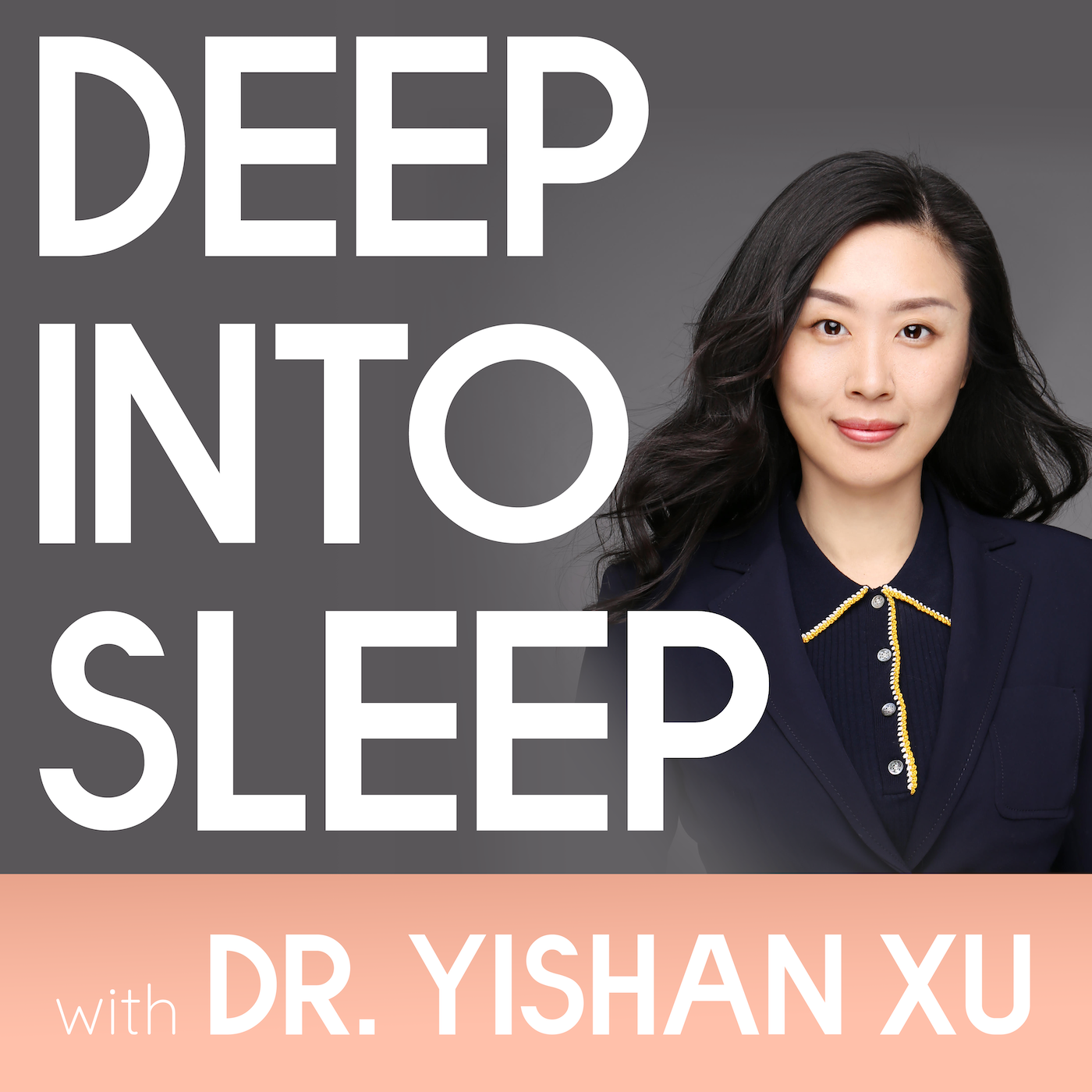
Deep into Sleep is a health podcast hosted by Yishan Xu, PhD, DBSM, with 221 episodes on record and a Required Pod Score of 80. PitchCentric scores this show on Booking Probability, Listen Score, and live audience signals refreshed every 24 hours.
About the host
Yishan Xu, PhD, DBSM hosts Deep into Sleep, a health show with 221 episodes published.
Our AI reads these to draft pitches. Use them as grounding for a pitch that cites a real guest and a specific topic.
Episode #214
Ep214 - Tonight's Sleep Started This Morning — Dr. Brad Wolgast on "Camping In" and Why Trying Harder Backfires
Aug 8, 202636 min
What if better sleep isn't about trying harder, but about living differently? In this episode, Dr. Yishan welcomes back Dr. Brad Wolgast, PhD, CBSM, DBSM, a board-certified behavioral sleep medicine psychologist and author of the new book "Gold Medal Sleep." Together, we explore why modern life works against our natural sleep rhythm, and why the harder you chase sleep, the further it runs. Dr. Wolgast shares the story behind his book, from a childhood spent unable to breathe through his nose to a summer guiding backpackers who all slept like rocks by night three. We dig into his central idea of "camping in" — how to bring the restorative power of the outdoors into your everyday life — plus why exhaustion isn't the same as sleepiness, why your brain needs "freewheeling" time during the day, and the small, practical changes that make the biggest difference. Gold Medal Sleep (published July 2026): https://goldmedalsleep.com/ Dr. Wolgast's practice, Center for Healthy Sleep: https://helpmesleep.org/ Key Takeaways: The enemy of sleep isn't wakefulness — it's effort. The harder you try to sleep, the further you push it away. Your night's sleep starts the moment you wake up, not when you get into bed. Humans used to spend 4-6 hours a day outdoors; today the average American gets 30 minutes to an hour. "Camping in" means bringing the outdoors home: dim the lights two to three hours before bed, eat lunch by a window, take a walk after dinner. Exhausted is not the same as sleepy — exhaustion usually means your brain is overtaxed, not that you're ready for sleep. Your brain needs "freewheeling" downtime during the day, or it will take that time the moment your head hits the pillow. A consistent wake-up time seven days a week is the single most powerful thing you can do — pair it with sunlight within 10 minutes of waking. Live somewhere dark in winter? A 10,000-lux light box (about $20-25) for 15 minutes each morning tells your brain the sun is up. Bronze, silver, or gold — there's no one right way to do this. Pick what fits your life tonight. RESOURCES Are you so sleepy that you cannot focus? Are you tired of getting through the day drinking coffee? Are you worried how your poor sleep may impact your health? Checkout Dr. Yishan Xu's Insomnia Treatment Course! Connect with Dr. Yishan Instagram LinkedIn TikTok YouTube Newsletter and Download Free Sleep Guidance E-Book CBT-I Courses: English and Chinese Podcast Links: Apple Podcast Google Podcast Stitcher Spotify iHeartRadio Support our Podcast Leave us a Rating If you're interested in learning more about psychological testing and the services offered at the MindBodyGarden make sure to visit their website at mindbodygarden.com/AssessmentClinic.

Ep 213 - 90% Effectiveness Without Medication? — Dr. Elahi on TMS, Brain Mapping & the Future of Mental Health
Jul 11, 202642 min
Research 1 https://doi.org/10.1007/s12013-013-9529-4 Research 2 https://doi.org/10.1016/j.brs.2018.05.016 Research 3 https://doi.org/10.1176/appi.ajp.2019.19070720 Research 4 https://doi.org/10.3988/jcn.2016.12.1.57 This episode explores a rapidly growing area of brain science that is transforming how we treat depression, anxiety, insomnia, OCD, and even cognitive decline — without relying on medication. Dr. Yishan welcomes Dr. Elahi, an ABPN board-certified neurologist and founder of NeuroSpa Brain Rejuvenation Center, to discuss Transcranial Magnetic Stimulation (TMS) — a non-invasive technology that uses electromagnetic fields to stimulate specific regions of the brain. We dive into how TMS works, why personalized brain mapping is the key to achieving 90%+ effectiveness, how it compares to traditional medications and ECT, and what the latest research shows about its impact on insomnia, memory disorders, and treatment-resistant depression. 🔑 Key Takeaways: TMS uses electromagnetic fields to stimulate targeted regions of the brain — non-invasively, with no anesthesia, and while the patient is fully awake. For treatment-resistant depression, personalized TMS with MRI navigation and EEG biomarkers achieves 90%+ effectiveness — compared to ~20% for medication alone. TMS is FDA-approved for depression (since 2008) and is being used to treat anxiety, insomnia, OCD, tinnitus, ADHD, and memory disorders including Alzheimer's. Every brain is unique like a fingerprint — one-size-fits-all protocols produce only ~40% effectiveness, while individualized treatment jumps to 90%+. TMS can both excite and inhibit neurons depending on the protocol, making it versatile for different conditions. Research shows TMS can significantly improve insomnia scores (44% improvement) and may work synergistically with CBT-I. TMS is one of the safest medical treatments available — with a seizure risk lower than many commonly prescribed antidepressants. Insurance currently covers TMS only for severe, treatment-resistant depression — but the long-term cost savings from effective treatment far outweigh the upfront investment. RESOURCES Are you so sleepy that you cannot focus? Are you tired of getting through the day drinking coffee? Are you worried how your poor sleep may impact your health? Checkout Dr. Yishan Xu's Insomnia Treatment Course! Connect with Dr. Yishan Instagram LinkedIn TikTok YouTube Connect with Dr. Kendall Stewart Podcast: Coffee with Dr. Stewart Genetics: Fagron Genetics (formerly GX Sciences) Longevity: ExtendingMe Direct-to-Public Panels: Helix Revolution Newsletter and Download Free Sleep Guidance E-Book CBT-I Courses: English and Chinese Podcast Links: Apple Podcast Google Podcast Stitcher Spotify iHeartRadio Support our Podcast Leave us a Rating If you're interested in learning more about psychological testing and the services offered at the MindBodyGarden make sure to visit their website at mindbodygarden.com/AssessmentClinic.
Ep212 - Your CPAP Doesn't Take a Vacation — Dr. Carleara Weiss on Sleep Apnea, Travel Tips & Staying Consistent
Jun 13, 202637 min
In this episode, we dive into the essentials of obstructive sleep apnea — from recognizing symptoms you might be overlooking to understanding why CPAP remains the gold standard treatment. Dr. Yishan welcomes back Dr. Carleara Weiss, PhD, MS, RN, a sleep scientist, nurse educator, and Sleep Science Advisor at Aeroflow Sleep. Together, we tackle one of the most common challenges CPAP users face: how to stay consistent with treatment while traveling. We cover airline regulations, packing tips, the difference between CPAP, APAP, and BiPAP machines, and why skipping your CPAP on vacation could actually make your symptoms worse. CPAP Resources Mentioned in Podcast https://aeroflowsleep.com/ 🔑 Key Takeaways: Snoring doesn't always mean sleep apnea — but snoring combined with daytime fatigue, headaches, dry mouth, or brain fog is a red flag worth checking out. Women and people who are not overweight can also have obstructive sleep apnea — it's not just a "snoring, overweight male" condition. CPAP is still the gold standard treatment: it keeps your airways open during sleep, protecting your heart, brain, and overall health. Compliance is the hardest part — but adjusting mask fit, pressure settings, and involving family support can make a big difference. Your CPAP doesn't take a vacation: irregular sleep schedules and alcohol during travel make symptoms worse, making consistent use even more important. You can bring your CPAP as a carry-on medical device at no extra charge — just pack it in a separate bag and carry your prescription. If you want to use CPAP during a flight, notify the airline 48 hours in advance. There are three types of machines — CPAP, APAP, and BiPAP — and your physician determines which is right for your case. RESOURCES Are you so sleepy that you cannot focus? Are you tired of getting through the day drinking coffee? Are you worried how your poor sleep may impact your health? Checkout Dr. Yishan Xu's Insomnia Treatment Course! Connect with Dr. Yishan Instagram LinkedIn TikTok YouTube Connect with Dr. Kendall Stewart Podcast: Coffee with Dr. Stewart Genetics: Fagron Genetics (formerly GX Sciences) Longevity: ExtendingMe Direct-to-Public Panels: Helix Revolution Newsletter and Download Free Sleep Guidance E-Book CBT-I Courses: English and Chinese Podcast Links: Apple Podcast Google Podcast Stitcher Spotify iHeartRadio Support our Podcast Leave us a Rating If you're interested in learning more about psychological testing and the services offered at the MindBodyGarden make sure to visit their website at mindbodygarden.com/AssessmentClinic.
Ep211 - Spirituality & Sleep: The Connection Nobody Talks About
May 26, 202639 minS0
<p>This episode explores the fascinating intersection of culture, spirituality, and sleep. Dr. Yishan welcomes Dr. Bruce D. Forman, PhD, a clinical psychologist specializing in behavioral sleep medicine and the author of "For God's Sake, Go to Sleep" — a book that bridges Jewish wisdom and modern sleep science. Together, we discuss why sleep is biological but insomnia is cultural, how different societies around the world view nighttime wakefulness, and why the "monkey mind" may be the biggest obstacle standing between you and a good night's sleep. Dr. Forman also shares how meditation, prayer, and the practice of letting go can he...
Ep210 - The Gap Between Sleep Awareness and Action — with Dr. Nunez from ResMed
Apr 18, 202641 minS0
<p>In this episode, host Dr. Yishan welcomes Dr. Nunez, a leading sleep health expert whose team has conducted one of the largest global sleep surveys — spanning 30,000+ participants across 13 countries over six consecutive years. Together, they unpack a paradox at the heart of modern sleep health: why is it that even as sleep awareness grows, most people still aren't taking action to improve their sleep?</p><p>Dr. Nunez shares eye-opening findings from the survey, revealing that while the majority of respondents recognize sleep's importance to long-term health, only about 26% have actually sought professional help for persistent sleep problems. The co...
Every question we get asked before someone starts their trial.
If you have a concern about deliverability, AI quality, data privacy, or whether this will actually work for your specific situation, it's probably answered below.
What is the difference between Founder Solo and Founder Pro?
Founder Solo gives you 50 AI pitches per month using the credit model (Standard pitches cost 1 credit, Enriched pitches cost 2). Founder Pro raises that to 200 credits per month and adds full Booking Probability access, unlimited Magic Match, Apollo enrichment credits, and data export capabilities. Both plans use the same credit system, so you can stretch your monthly budget further by using Standard-mode drafting.
How do agency tiers work?
Agency tiers have no base fee. You pay per managed client and per talent profile. Agency Standard is $199 per client per month; Agency Pro is $399 per client per month. Both add $39 per talent profile per month. Your own team's user seats are always free.
What is a talent profile?
A talent profile represents one person (founder, executive, or spokesperson) you are booking onto podcasts. It includes their bio, topics, headshots, and outreach history. Team plans include 5 profiles; agency plans are pay-as-you-go.
Can I switch plans later?
Yes, at any time. Upgrades take effect immediately; downgrades apply at the end of the current billing period. Contact support if you need help migrating between plan families.
Do you offer a free trial?
Every paid plan includes a 15-day free trial. Your card is saved at signup but you will not be charged until day 16. Cancel any time from your dashboard.
What happens if I cancel?
You keep access until the end of your current billing period. No charges after that. Your data is retained for 30 days in case you reactivate.
Is the 20% annual discount automatic?
Yes. Select Annual on the pricing toggle and the discounted price is applied automatically at checkout. The annual price shown is the full year cost.
What if I have more than 50 profiles or 20 clients?
That is our Enterprise tier. Contact our sales team and we will build a custom plan with volume pricing, a dedicated account manager, and SLA guarantees.