This is the podcast for people who want to share adventure like a pro – with their friends, family, or as a profession. Each episode explores a different aspect of adventure delivery with top experts to get their best stories, insights, and trade secrets. Learn what it takes to deliver epic experiences to yourself and others, from the mountains to the office, and beyond. Go farther, become better and achieve more. Chris Kaipio and Jordy Shepherd explore the essential skills and techniques that adventure industry experts use to delivery personal growth. Listen as adventure guides, managers, and promoters share their best advice on leadership, managing risk, coaching, and how to achieve experiences worth remembering. Topics include risk assessment, decision making, leadership, emergency response, crisis management, trip planning, memory building, marketing, capturing experiences, teaching new skills, improving performance, overcoming challenge, resiliency, communicating risk, and experie
Pitch Analysis
Required Pod Score for this show. PitchCentric checks your profile against host openness, topical fit, and audience signals before you generate a pitch.
Contact path
Verified email
Booking probability
33%
Guest openness
Selective
Verified email on file
80/100
Required Score
Sign up to generate a grounded pitch for Delivering Adventure.
Delivering Adventure is a sports podcast hosted by Chris Kaipio & Jordy Shepherd, with 77 episodes on record and a Required Pod Score of 80. PitchCentric scores this show on Booking Probability, Listen Score, and live audience signals refreshed every 24 hours.
About the host
Chris Kaipio & Jordy Shepherd hosts Delivering Adventure, a sports show with 77 episodes published.
Our AI reads these to draft pitches. Use them as grounding for a pitch that cites a real guest and a specific topic.
Episode #19
The Art of Capturing Adventure with Mike Crane
Jul 10, 202642 minS3
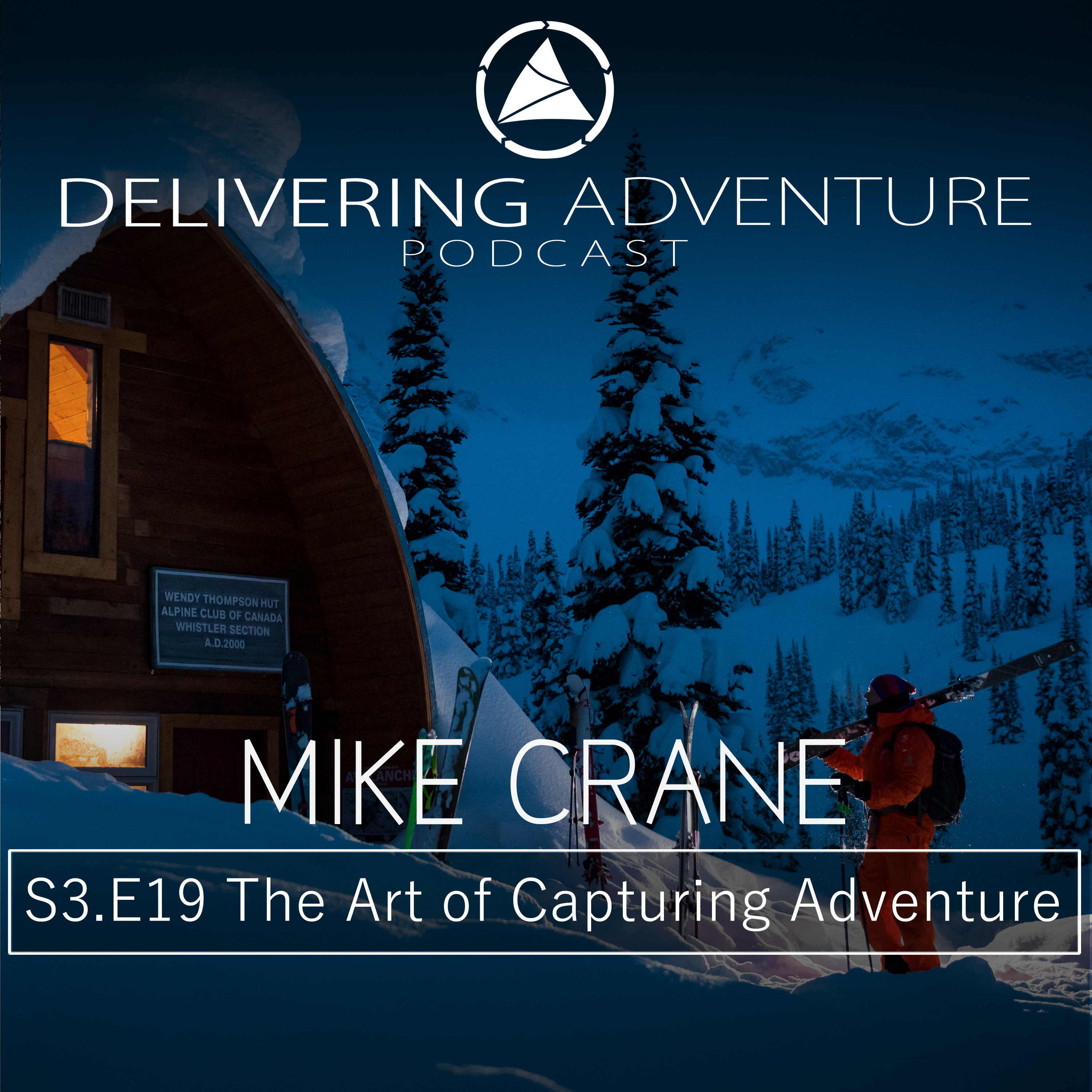
People have been recording their adventures for tens of thousands of years. From cave drawings, to songs, to cell phone selfies and GoPro videos. Wanting to have a record of our achievements has always been a very human need. Capturing our adventures is an integral part of the experience that helps us to tell the story of what happened. When done well, it can add value to an experience and depending on how it’s done. It can even redefine our memory of what happened after the fact. In this episode of Delivering Adventure, Jordy and Chris are joined by award winning adventure photographer Mike Crane to discuss how you can record adventure for yourself and others like a pro. Mike shares some of the lessons he has learned working as a professional adventure photographer. Capturing adventure is an integral part of the experience and this episode explores how you take your photography and videography farther. Key Takeaways Managing expectations : Not everyday is going to have perfect weather or conditions. The people you are with might not be that photogenic or end up where you want them to be either. For this reason, arriving with an open mind to just embrace what happens is key. The goal should be to look for opportunities to capture that special moment based on the conditions and what happens. The Goal : Is to Make them look good in the landscape. This might mean capturing people in action or even just standing there. Only need a Moment : you need a fraction of a second for everything to go well to get that great shot. Good communication : Getting people in the right place, getting them to do what you want takes coordination. As Mike said, you may not want people to improvise when you are trying to get them to do a certain move in a certain spot. You may also want them to look natural. Capturing the Special Moment : Can include getting those transitional moments like storms or just capturing the experience through fun moments or even rest moments. It doesn’t always have to be action shots all the time. Guest Bio Based in Whistler, Mike Crane has been working in the adventure industry as a photographer and videographer for the past twenty years. Early in his career he worked as an action photographer for Powder Mountain Cat skiing as well as taking portrait shots and action photos at Whistler Blackcomb. More recently, he has worked as the staff photographer for Tourism Whistler as well as a freelance photographer. His work has taken him around the world photographing in many different landscapes. It has also involved working with a variety of levels of people from first time skiers to pro athletes. Mike has won a number of awards from publications including Canadian Geographic, Your Daily Photograph and Lenswork Magazine. Guest Links Mike Crane Photography: www. mikecranephotography.com Mike Crane Instagram: @mikecranephotography Follow or Subscribe Don’t forget to follow the show! Share & Social Links https://linktr.ee/deliveringadventure Episode Cover Art Credit: Mike Crane
Adapting to Different Cultures with Patrick Barrow
Jun 20, 202646 minS3
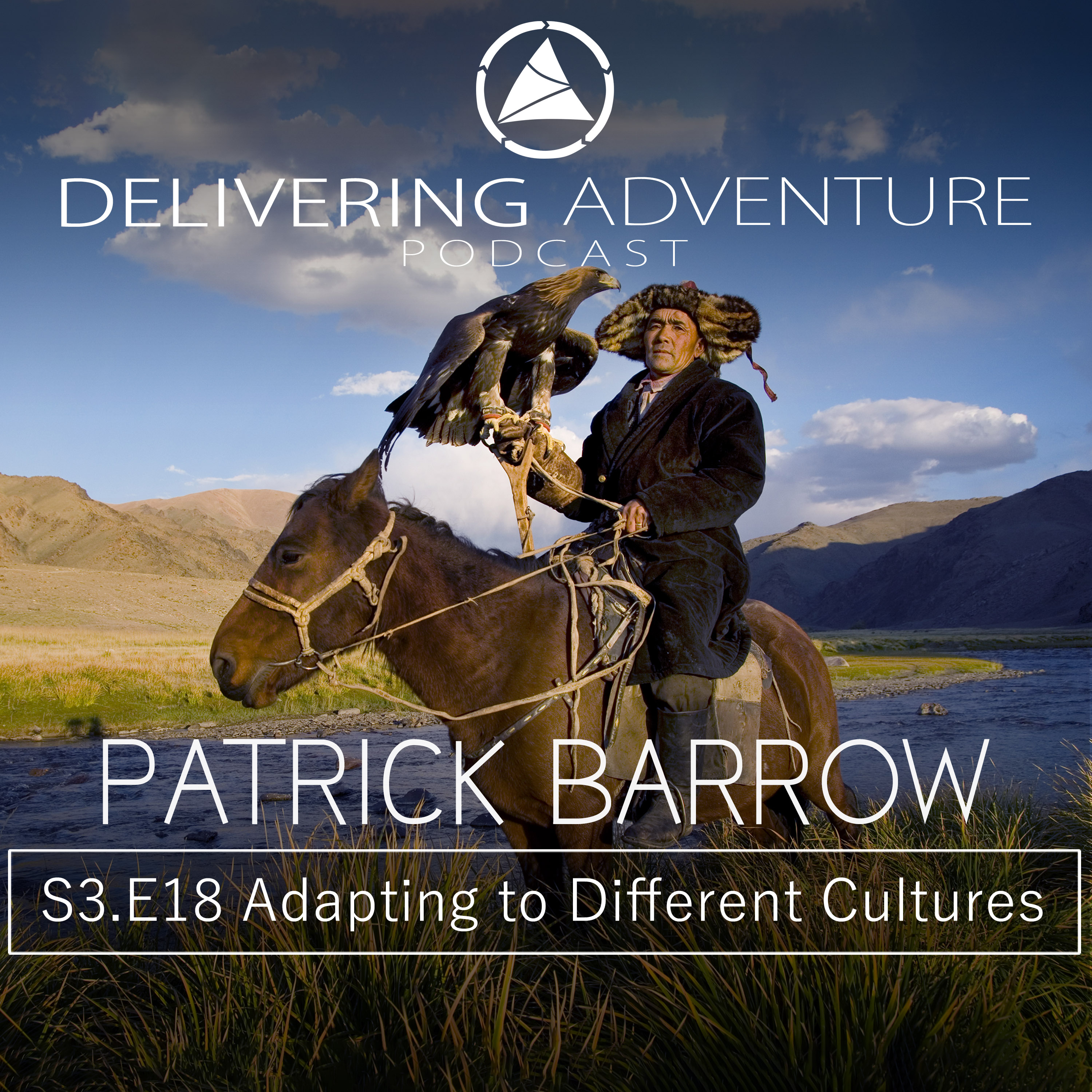
How can we adapt to new cultures when we are travelling or working aboard? In this episode we look at culture from the perspective of being an international visitor or someone working in another culture. Being immersed in another culture gives us a unique opportunity to see how other people live. It also gives us a great opportunity to see what it feels like to be a visitor. You may find yourself leading people from different cultures, putting yourself in the position of being the visitor can be a valuable way of understanding things from their perspective. Joining Chris and Jordy in this episode to discuss how we can better adapt to new cultures is Patrick Barrow. Patrick Barrow has been guiding around the globe for 20 years, toggling between adventure travel and outdoor education. Pat is an ACMG Hiking Guide who has worked extensively in Central Asia, Western China, Southeast Asia, Russia, the Himalayas, Australia, Europe and Canada. This is another engaging conversation that offers practical strategies on how we can integrate into new cultures. Key Takeaways To adapt to new cultures, we can: Observe : This is where we we watch behaviours and habits, looking for what is normal for them. Integrate : This is where we participate, join in and interact on the level they are interacting in. Manipulate : This is where we copy what people are doing, mirroring behaviours. Amalgamate : This is where we put everything together to the point where we get a level of acceptance within the group or culture. Respect Ego : This means being aware of not causing others to lose face by challenging their ego. Not respecting the ego of others can cause serious relationship damage. Guest Bio Patrick Barrow has been guiding around the globe for 20 years, toggling between adventure travel and outdoor education. A student of anthropology, originally from Australia, Pat's path into adventure guiding came through travel. Pat has worked across Europe and Australia, parts of the Indian and Nepalese Himalaya, the Stans and the Silk Road of Central Asia and West China, jungles of South East Asia, on the Yamal Peninsular of Arctic Russia with Indigenous Reindeer Herders, and most recently Canada. Pat’s career focus has been on facilitating formative expeditions for both youth and adults in culturally remote locations around the world. In particular living a decade between Kyrgyzstan and Russia, and guiding locally in Kyrgyzstan across the Tienshan Mountains. Guiding locally has given a unique perspective in working across cultures and what it takes to manage international teams. In Canada Pat is an ACMG hiking guide and an Outdoor Council of Canada Instructor. In Australia Pat has Cert IV in Outdoor Recreation, Cert IV in Outdoor Leadership, Cert IV Trainer & Assessor and is an Associate Fellow of the Academy of Extreme Environment Medicine. Guest Links Tengrie Expeditions: www.tengriexpeditions.com Patrick Barrow Contact: https://www.linkedin.com/in/patrick-barrow-83712b36 Patrick Barrow Instagram: https://www.instagram.com/tengriexpeditions?igsh=MTI4dnlmZTNrZWNheg== Resource Links Feedspot Top 30 Pacific Northwest Adventure Podcasts: Link Follow or Subscribe Don’t forget to follow the show! Share & Social Links https://linktr.ee/deliveringadventure
Understanding Culture as a Leader with Patrick Barrow
May 7, 202656 minS3
What do leaders need to be aware of when they are leading people from different cultures? People from different cultures may use different language, and have different customs, behaviours, values and even risk tolerances than you are used to. They may also have different expectations and tastes, as well as a different world view. What may be acceptable to you, may not be acceptable to them and vice versa. This can create challenges for leaders if they do not know how to adapt their leadership effectively. In this episode of Delivering Adventure, Patrick Barrow joins Chris and Jordy to share some key strategies that leaders can use to build better connections across cultures. Pat has worked as guide across Central and Southeast Asia, Europe, Canada and Australia. Patrick shares his experiences working with indigenous reindeer herders in the arctic, leading guests across the Stans and adapting to a leadership role in his new home in Canada. Guest Bio Patrick Barrow has been guiding around the globe for 20 years, toggling between adventure travel and outdoor education. A student of anthropology, originally from Australia, Pat's path into adventure guiding came through travel. Pat has worked across Europe and Australia, parts of the Indian and Nepalese Himalaya, the Stans and the Silk Road of Central Asia and West China, jungles of South East Asia, on the Yamal Peninsular of Arctic Russia with Indigenous Reindeer Herders, and most recently Canada. Pat’s career focus has been on facilitating formative expeditions for both youth and adults in culturally remote locations around the world. In particular living a decade between Kyrgyzstan and Russia, and guiding locally in Kyrgyzstan across the Tienshan Mountains. Guiding locally has given a unique perspective in working across cultures and what it takes to manage international teams. In Canada Pat is an ACMG hiking guide and an Outdoor Council of Canada Instructor. In Australia Pat has Cert IV in Outdoor Recreation, Cert IV in Outdoor Leadership, Cert IV Trainer & Assessor and is an Associate Fellow of the Academy of Extreme Environment Medicine. Guest Links Tengrie Expeditions: www.tengriexpeditions.com Patrick Barrow Contact: https://www.linkedin.com/in/patrick-barrow-83712b36 Patrick Barrow Instagram: Link Resource Links Feedspot Top 30 Pacific Northwest Adventure Podcasts: Link Follow or Subscribe Don’t forget to follow the show! Share & Social Links https://linktr.ee/deliveringadventure
Imagining the Worst-Case Scenario with Chris Kaipio & Jordy Shepherd
Feb 10, 20261h 4mS3
Why is it so important to imagine the worst-case scenario? What happens when we don’t? In this episode of Delivering Adventure, Chris and Jordy share a few examples from their adventure industry careers to illustrate the importance of considering the worst-case scenario. They also talk about some of the factors that can compromise our ability to foresee what can happen if things don’t go to plan and how we can avoid falling into these traps. Chris Kaipio has been working in the adventure guiding industry as a guide, instructor, trainer, manager and content developer since 1991. Jordy Shepard is an internationally certified ACMG / IFMGA Mountain Guide, guide trainer, an avalanche educator, rescue specialist, and a former park warden. Key Takeaways How we can imagine the wort-case scenario: Consider What can Reasonably Happen : This involves asking ourselves what all the possible negative outcomes could be and identifying if we are prepared if they come to pass. Be detail oriented : The difference between a professional and an amateur is being detail oriented. Considering all the details before hand gives us an opportunity to identify and plan for all the likely outcomes that may happen. Think ahead : This can require us to step away from complex situations so that we can fully consider the situation and what lies ahead. Ask if we are Missing Anything : Is there information that we might be missing? This is something that we should always be asking ourselves. This helps to avoid developing tunnel vision. Do your research : This can involve talking to others and looking at case-studies. Training and Simulations : This can give us firsthand experience with what can happen. Communicate the Risks Thoroughly : This creates an opportunity for everyone to understand what hazards they can expect to encounter. Guest Bios Chris Kaipio is the produce and co-host of Delivering Adventure. He has worked in the adventure industry as an instructor, guide, trainer and manager since 2001. Chris is currently developing the Managing Risk on Snow eLearning Certification for the Professional Ski Instructors of Canada. When complete, this will be a robust four level online risk management and decision-making certification for guides and Instructors. Chris has written the book Power to Influence: How to get the best out of ourselves and others. He currently serves on the Board of Directors for the Association of Canadian Mountain Guides. This is where he met Jordy Shepherd. Jordy Shepherd is the co-host of Delivering Adventure. Jordy is an internationally certified ACMG / IFMGA Mountain Guide, guide trainer, an avalanche educator, rescue specialist, and a former park warden. His work experience includes Canadian Avalanche Association Course Leader for Avalanche Search and Rescue Advanced Skills, Provincial Park Ranger, National Park Warden, Wildlife Conflict Specialist, Wildland and Structural Firefighter, Mountain and Industrial Rescue Specialist, Heli-skiing Operations Manager and Lead Guide, and Licensed Real Estate Agent. In addition to all of his work in the adventure guiding industry, Jordy runs a successful real estate company in Canmore Alberta where he currently lives with is family. Follow or Subscribe Don’t forget to follow the show! Share & Social Links https://linktr.ee/deliveringadventure
Decision Making in High-Risk Situations with Colin Zacharius
Jan 28, 20261h 7mS3
Why is it so hard to make good decisions in higher risk situations? High risk situations are ones where a mistake, a miscalculation or a mishap can lead to serious or unmanageable consequences. These situations are the ones where uncertainty and the threat of experiencing serious consequences can apply pressure that can cloud our judgment. In this episode Chris and Jordy are joined by Colin Zacharius to explore how we can make better decisions in high-risk situations. Colin is well renowned ACMG /IFMGA Mountain Guide who has worked in the adventure industry since 1980. Colin has worked as a guide, guide trainer, avalanche educator, accident investigator, risk management specialist and speaker. He has worked extensively in the cat skiing and Heli-skiing industry in Canada and the US. He has trained and examined guides across multiple disciplines for the Association of Canadian Mountain Guides where he previously served as the technical director. Colin harnesses his extensive experience working in the adventure industry to help us to understand why it so hard to make good decisions in high-risk situations and how we can avoid some of the mistakes that he has seen throughout his career. Key Takeaways How to make better decisions in high-risk situations: Imagine : What the worst-case scenario could look like. Practice Good Habits : This includes taking the time to be well prepared, being situationally aware so that you know what is happening or likely to happen and being aware of any human factors that may negatively influence your judgment. Examine Decisions Afterwards : Either by getting peer feedback, debriefing with your team or by using self-assessment. The intention should be to examine decisions that are made regardless of the outcome, with the intent of identifying things that went well and areas that could be improved. What you really want to identify are trends. Build in an Adequate Margin of Error : This gives you a buffer in case of a mistake, misstep, miscalculation or there is a surprise. Avoid Normalizing High Risk Situations : When we become too comfortable in high-risk situations, we become complacent to the danger. Guest Bio Colin Zacharius is well renowned ACMG /IFMGA Mountain Guide who has worked in the adventure industry since 1980. Colin has worked as a guide, guide trainer, avalanche educator, accident investigator, risk management specialist and speaker. He has worked extensively in the cat skiing and Heli-skiing industry in Canada and the US. He has trained and examined guides across multiple disciplines for the Association of Canadian Mountain Guides where he previously served as the technical director. Colin has contracted as an instructor, course leader, and recently as a curriculum developer for Canadian Avalanche Association (CAA) Industry Training Programs (Level 1-3). He has also provided consulting services for the American Institute for Avalanche Research and Education. His guiding work has included ski touring, trekking, and climbing adventures with individuals and small groups to domestic and exotic locations (New Zealand, Morocco, Costa Blanca Spain, the Alps, the Dolomites, the Canadian Arctic, Iceland, and the Antarctic Peninsula). Guest Links Contact Colin: colinzach@mac.com Follow or Subscribe Don’t forget to follow the show! Share & Social Links https://linktr.ee/deliveringadventure
Every question we get asked before someone starts their trial.
If you have a concern about deliverability, AI quality, data privacy, or whether this will actually work for your specific situation, it's probably answered below.
What is the difference between Founder Solo and Founder Pro?
Founder Solo gives you 50 AI pitches per month using the credit model (Standard pitches cost 1 credit, Enriched pitches cost 2). Founder Pro raises that to 200 credits per month and adds full Booking Probability access, unlimited Magic Match, Apollo enrichment credits, and data export capabilities. Both plans use the same credit system, so you can stretch your monthly budget further by using Standard-mode drafting.
How do agency tiers work?
Agency tiers have no base fee. You pay per managed client and per talent profile. Agency Standard is $199 per client per month; Agency Pro is $399 per client per month. Both add $39 per talent profile per month. Your own team's user seats are always free.
What is a talent profile?
A talent profile represents one person (founder, executive, or spokesperson) you are booking onto podcasts. It includes their bio, topics, headshots, and outreach history. Team plans include 5 profiles; agency plans are pay-as-you-go.
Can I switch plans later?
Yes, at any time. Upgrades take effect immediately; downgrades apply at the end of the current billing period. Contact support if you need help migrating between plan families.
Do you offer a free trial?
Every paid plan includes a 15-day free trial. Your card is saved at signup but you will not be charged until day 16. Cancel any time from your dashboard.
What happens if I cancel?
You keep access until the end of your current billing period. No charges after that. Your data is retained for 30 days in case you reactivate.
Is the 20% annual discount automatic?
Yes. Select Annual on the pricing toggle and the discounted price is applied automatically at checkout. The annual price shown is the full year cost.
What if I have more than 50 profiles or 20 clients?
That is our Enterprise tier. Contact our sales team and we will build a custom plan with volume pricing, a dedicated account manager, and SLA guarantees.