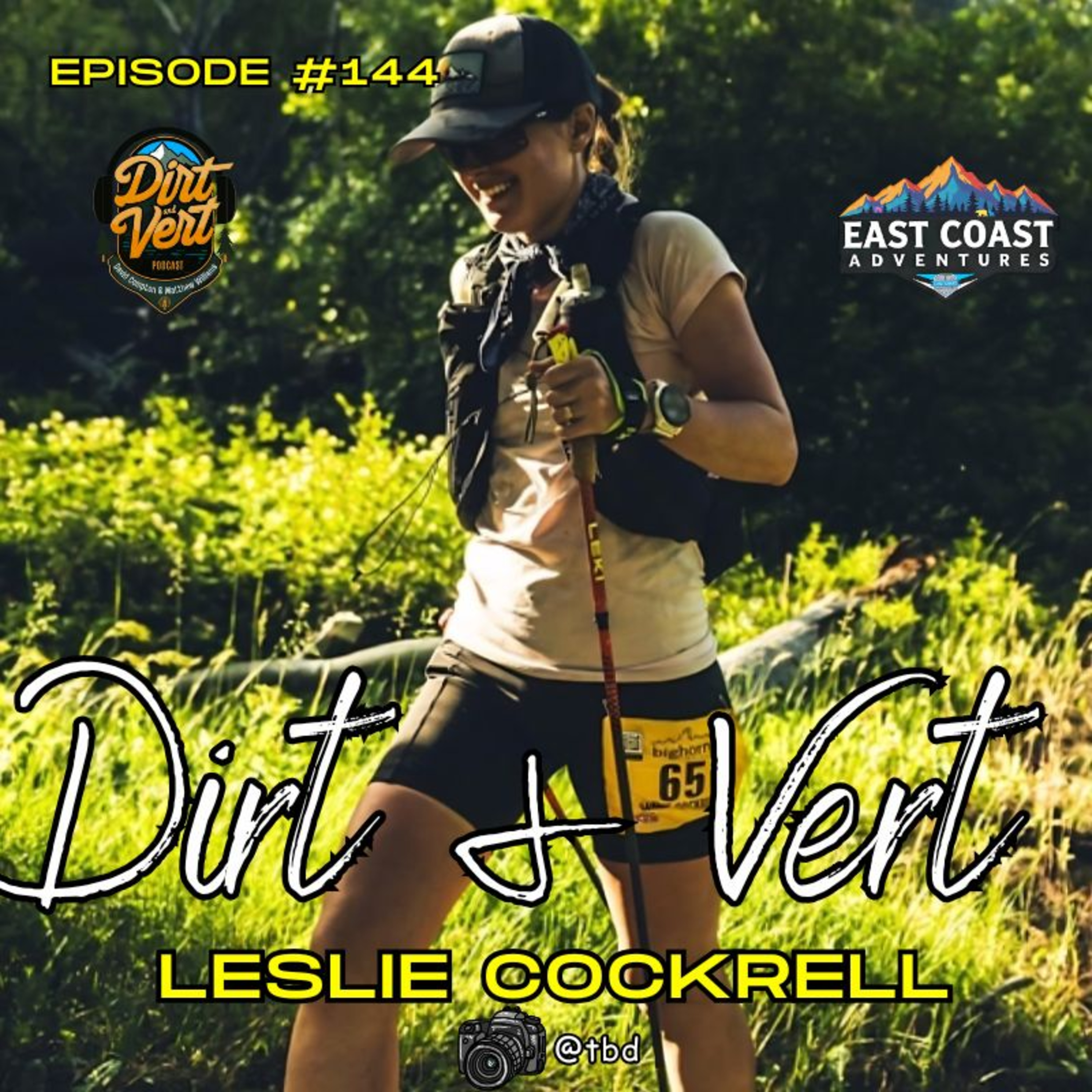
Episode #144
The Medicine from the Mountains: Leslie Cockrell on Ultrarunning, Regret, and Building True Strength
In this episode of the Dirt & Vert Podcast, Matt and I sit down with an amazing runner, coach, and longtime friend of East Coast Adventures: Leslie Cockrell . We first met Leslie back at the 2023 Fort Frenzy 12-hour, and since then, she has been an absolute fixture in our running community. Leslie takes us through her entire progression—starting out running during COVID, jumping into a 22-mile mountain retreat in Glacier National Park, and diving headfirst into the ultra scene with a 52-miler and two 100-mile finishes in her very first year of racing. We talk about the hard physical lessons learned along the way: fixing severe glute imbalances, navigating waist-deep water in Florida mangrove swamps at the Vero Beach Octopus 50K, and pacing her husband Jeremy through the brutal climbs of the Cherokee 70K. Leslie also gets real about her first DNF at the Great Divide, opening up about the mental traps that convince us to quit, why the regret of stopping hurts ten times worse than the physical pain, and how failing forward gives you the belief to tackle your next 100. Key Topics Leslie's journey from casual runner to ultra marathoner Training and race preparation for ultras Lessons learned from race experiences and DNF moments Importance of community and support in ultra running Heat training and race day strategies Balancing personal development and athletic goals Leslie's transition from rodeo to ultrarunning Crewing experiences and lessons learned The emotional and physical challenges of ultramarathons The importance of community and support in racing How to handle a DNF and learn from it Race directing and creating positive race experiences Balancing coaching with personal racing goals The mental strategies for endurance sports The significance of race environment and organization Leslie's future race goals and motivations