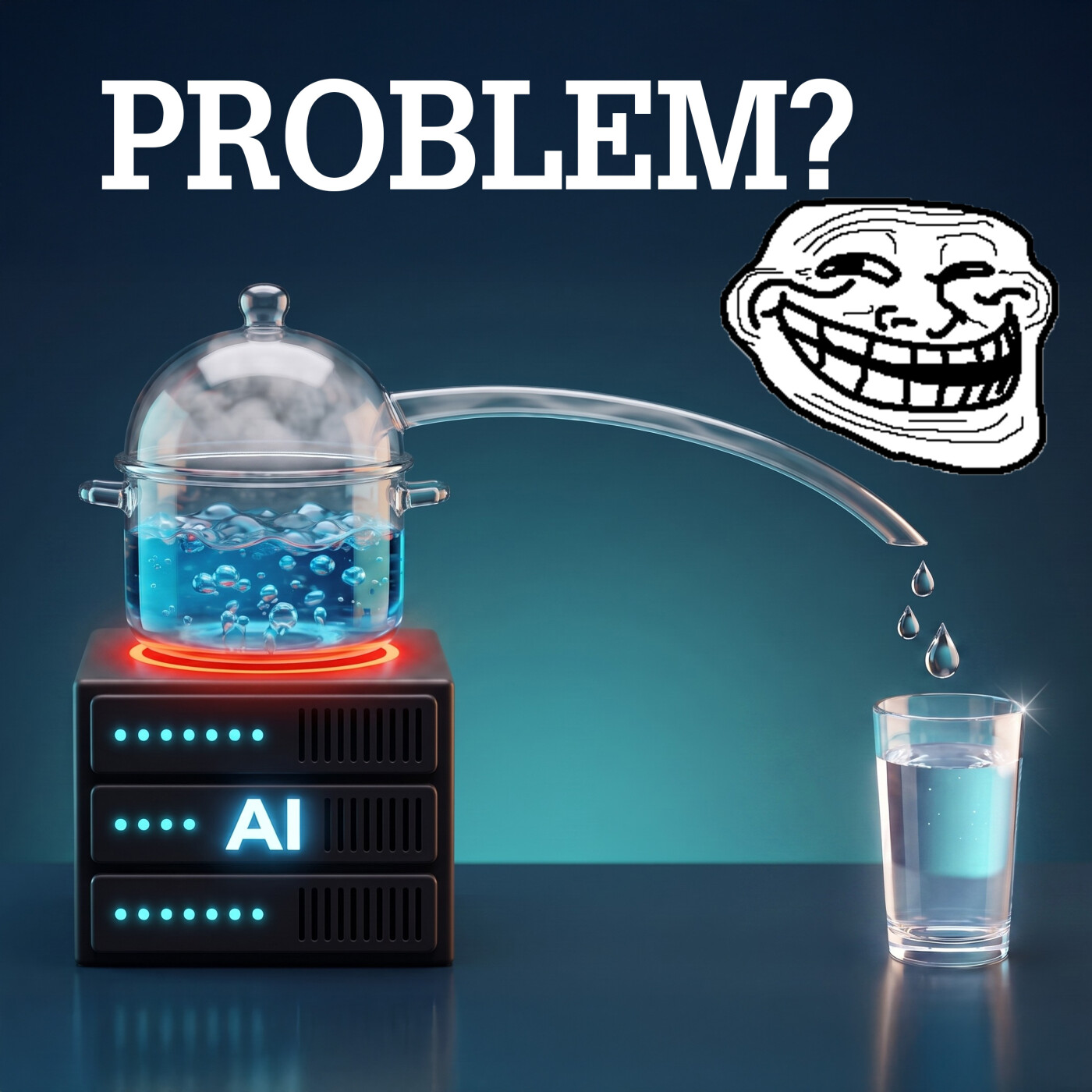
❓ Ever wondered how the #WaterIndustry was reacting to our World's Water Challenges? Water Scarcity? #SDG6? PFAS? Climate Change? Circular Economy? Digitization and Smart Water?💪 Get the Water Market pulse for free. In one hour per week, while you do the dishes!📈 We talk water investment, water tech, water entrepreneurship and water market with entrepreneurs, thought leaders, book authors, scientists, investment funds, VCs, and C-Level experts from water majors.➡️ Leverage their insights, advice & experience and ensure to stay on top of best practices🗓️ Tune in every Wednesday (don't miss out! 😅)🌐 Find all the detailed episode notes, interviews, infographics, and more at http://dww.showCurrently in its 10th Season, the "(don't) Waste Water" podcast has already welcomed around 250 guests from Water Majors (SUEZ, Veolia, Jacobs, Xylem, Kemira, Evoqua, Aquatech, SKion Water...), Scale-Ups (Cambrian Innovation, Epic Cleantec, Gradiant, Liqtech, 374Water, Gingko Bioworks...), Start-Up
Pitch Analysis
Required Pod Score for this show. PitchCentric checks your profile against host openness, topical fit, and audience signals before you generate a pitch.
Contact path
Verified email
Booking probability
38%
Guest openness
Selective
Verified email on file
80/100
Required Score
Sign up to generate a grounded pitch for (don't) Waste Water! | Water Tech to Solve the World.
What is (don't) Waste Water! | Water Tech to Solve the World?
(don't) Waste Water! | Water Tech to Solve the World is a science podcast hosted by Antoine Walter, with 504 episodes on record and a Required Pod Score of 80. PitchCentric scores this show on Booking Probability, Listen Score, and live audience signals refreshed every 24 hours.
About the host
Antoine Walter hosts (don't) Waste Water! | Water Tech to Solve the World, a science show with 504 episodes published.
Our AI reads these to draft pitches. Use them as grounding for a pitch that cites a real guest and a specific topic.
Episode #14
So, Thermal Desalination is the Future Now? (w. Willian Janssen - Desolenator)
Aug 7, 202649 minS14
Thermal desalination lost the water industry to reverse osmosis on one number: boiling seawater takes about ten times more energy than pushing it through a membrane. So why is one of the 20 teams left in the XPRIZE Water Scarcity competition still betting on heat? Desolenator is a Dutch water tech company that desalinates with heat instead of pressure, running on solar energy and industrial waste heat rather than grid electricity. Its hybrid panel harvests electricity and thermal energy from the same sunlight, recovers the latent heat of its own steam, and can run to zero liquid discharge, leaving salt instead of brine. Four patents, and a scale-up from 25 to 100, then 1,000 cubic metres a day. William Janssen built the first proof of principle in his living room and kept the distilled water in his freezer as proof. He won 100,000 euros at Climate Launchpad, was picked up by the Dubai Future Accelerator and Dubai Electricity and Water Authority, and delivered plants in Dubai and Abu Dhabi. Desolenator is chaired by Paddy Padmanathan, who led ACWA Power for 18 years and made it the world's largest desalination company. ️ KEY SPICES ️ ️ Why thermal desalination's ten-times energy penalty disappears when the heat is "chaleur fatale", the waste heat industry pays to throw away How a phone call about data centre cooling became patent number four: one heat pump worked from BOTH sides, lifting 50°C exhaust to the 70°C a distiller needs Why farmers around Al Ain are salting the aquifer they irrigate from, and how zero liquid discharge breaks that loop Paddy Padmanathan on the cost curve he signed himself: $2.50 per cubic metre in 2005, $0.46 on his last ACWA Power contract in 2023, and why it still isn't solved What William answers when asked point blank whether Desolenator wins the XPRIZE: two words no founder is supposed to say IN A NUTSHELL What is thermal desalination, and how does it differ from reverse osmosis? Thermal desalination makes fresh water by evaporating seawater and condensing the steam, the way rain works, while reverse osmosis pushes seawater through a fine membrane under pressure. Reverse osmosis uses roughly ten times less energy and won the municipal market, but it needs electricity, while thermal desalination runs on the low-grade heat industry already wastes. Can solar energy power desalination? Yes. Desolenator's panels harvest electricity and heat from the same sunlight and buffer both, which is how its Dubai plant hit the benchmark set by Dubai Electricity and Water Authority: 10 cubic metres a day, 20 hours a day, year-round. What is zero liquid discharge, and why does it matter for water scarcity? Zero liquid discharge recovers all the water from a stream and leaves solid salt instead of brine. It matters where brine has nowhere to go: around Al Ain, farmers desalinate saline groundwater and flush the concentrate back into the aquifer, making it saltier each year. Is thermal desalination a good water investment in 2026? It depends on scale and free heat. Desolenator draws its own fence at 100 million litres a day, above which membranes win. Its CapEx runs higher than conventional quotes and its OpEx dramatically lower, so the economics favour industrial sites with waste heat or land for solar, and buyers needing zero liquid discharge. #️⃣ Mentioned Links #️⃣ Desolenator - desolenator.com Why Elon Musk's Desalination Vision is Failing - watch on YouTube Hosted on Ausha. See ausha.co/privacy-policy for more information.
3 Days at the Glastonbury of Water (Northumbrian Water Innovation Festival 2026)
Jul 31, 202632 minS14
FREE TOOL ➡️ Get your water tech pitch reviewed: https://app.leviathandata.io/pitch-deck-analyzer More #water insights? Connect with me on Linkedin: https://www.linkedin.com/in/antoinewalter1/ See how the Northumbrian Water Innovation Festival brings together creative minds in Newcastle for collaborative problem solving. Watch the energy of this unique event. This episode takes you inside the Northumbrian Water Innovation Festival to show how large groups tackle industry challenges through structured collaboration. You will see firsthand how participants move from concept to practical solutions using specific frameworks like sprint tents and the Crystal Ball method. Whether you are interested in corporate innovation or local Newcastle events, this footage highlights the collaborative process in action. It is designed for professionals and curious viewers who want to observe how collaborative problem-solving works in a real-world setting, moving beyond traditional meeting rooms to open, creative environments. If you enjoyed seeing how an Innovation Festival operates, subscribe for weekly industry event recaps, and let us know in the comments if you prefer structured workshops or free-form brainstorming sessions. #️⃣ All the Links Mentioned in this Video #️⃣ Design Thinking with Lea im Obersteg: https://dww.show/who/lea-im-obersteg/ ️ Subscribe and Listen to the Don't Waste Water Podcast HERE ️ Podcast Channel: @dwwpodcast Main Channel: @AntoineWalterDWW Smartlink: https://smartlink.ausha.co/dont-waste-water Website: https://dww.show/podcast/ QUESTION: What would you like me to cover next? ⏰ TIME CODES ⏰ 00:00 The Northumbrian Water Innovation Festival 03:55 Inside Tent 15 04:32 Design Sprint Crash Course 06:13 South Bend Smart Sewer Origin 09:18 UK Spill Crisis Context 11:25 Power of Ten Ambition 13:30 Reality Check and Tease 14:27 Beetroot Break 15:21 Adoption Workshop Takeaways 20:39 Why Tents Work 21:23 NUAR Billion Dollar Story 24:55 Festival Scale and Impact 28:50 Wrap Up and Reflections 30:31 Free Tool About this Podcast: Welcome to the (don't) Waste Water podcast, the leading podcast for water industry professionals, investors, and entrepreneurs seeking deep insights into water tech innovation, investment trends, and strategic moves in the sector. Host Antoine Walter blends his technical expertise with sharp business acumen to deliver weekly episodes featuring candid conversations with C-suite executives, detailed analysis of major water industry developments, and practical insights for water tech startups and seasoned players alike. Hosted on Ausha. See ausha.co/privacy-policy for more information.
The Water VC You Can't Name (How HG Ventures Deployed $48,523,663 in Water Tech)
Jun 2, 20261h 1mS14
<p>How did HG Ventures quietly become one of the most active water tech investors on the planet, without even calling itself a water VC?</p><p><br></p><p>HG Ventures is the corporate venture capital arm of The Heritage Group, a 100-year-old, family-owned Indianapolis conglomerate active in asphalt, quarries, environmental services and specialty chemicals. With $350M in assets, the fund deploys around $50M a year across 41 portfolio companies and 7 sectors, and ranks 5th globally in water tech by deal count despite water being only 18% of its thesis.</p><p><br></p><p>Ginger Rothrock holds a PhD in...
600 Private Water Bets - Zero Public Exits. Is This Sector About to Crack? (and will Gradiant IPO?)
May 28, 20261h 17mS14
<p>The First Water Sector Unicorn Wants to IPO. But Wall Street kinda forgot how to buy water... </p><p><br></p><p>Early-stage water tech funding quadrupled in seven years. Private equity's share of water M&A doubled in a decade, with a record 165 PE-led acquisitions in a single year. The bench of PE-owned water platforms grew from 42 companies in 2015 to nearly 600 in 2025. And the sector just minted its first twice-unicorn - Gradiant - with a Series E at a $2 billion valuation on Day 1 of the Global Water Summit 2026! So, will Gradiant IPO?</p><p><br></p><p>Four...
Guess Who Just Spent $700M on Water? (10 Things Investors Missed) - CRH acquires Axius Water from KKR and XPV Water Partners
May 4, 202646 minS14
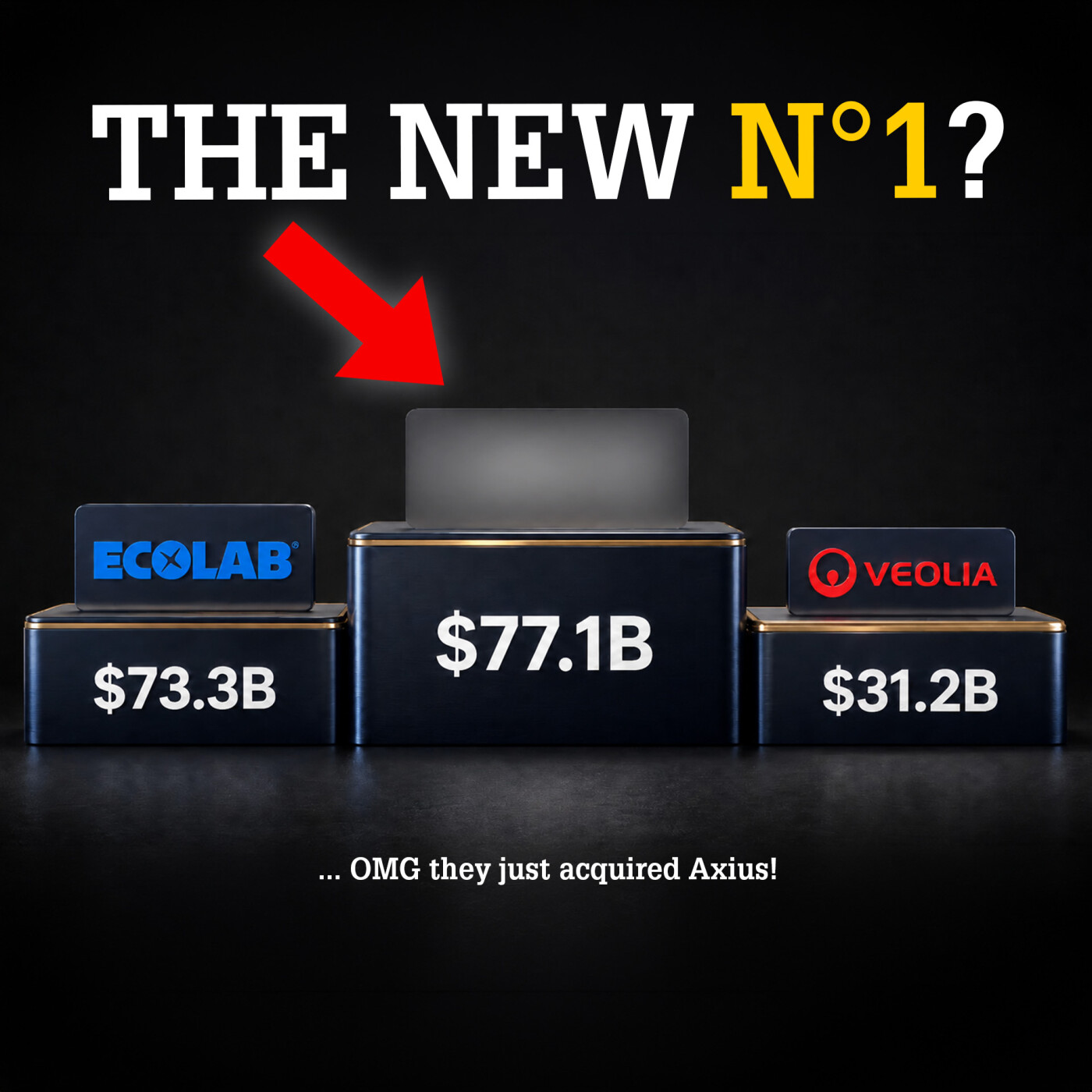
<p>On April 30, 2026, CRH plc (NYSE: CRH) announced a $700 million agreement to acquire Axius Water from KKR and XPV Water Partners - instantly making the Irish-American building materials giant one of the largest water infrastructure players in North America. If CRH acquires Axius, what's next?</p><p><br></p><p>Most investors missed it, so I thought I'd decode it! </p><p>Here are the 10 things you need to see.</p><p><br></p><p>So you got it, CRH acquires Axius. Here's the deal in 30 seconds: </p><p>• Buyer: CRH plc - a $77B market cap building materials company mo...
Every question we get asked before someone starts their trial.
If you have a concern about deliverability, AI quality, data privacy, or whether this will actually work for your specific situation, it's probably answered below.
What is the difference between Founder Solo and Founder Pro?
Founder Solo gives you 50 AI pitches per month using the credit model (Standard pitches cost 1 credit, Enriched pitches cost 2). Founder Pro raises that to 200 credits per month and adds full Booking Probability access, unlimited Magic Match, Apollo enrichment credits, and data export capabilities. Both plans use the same credit system, so you can stretch your monthly budget further by using Standard-mode drafting.
How do agency tiers work?
Agency tiers have no base fee. You pay per managed client and per talent profile. Agency Standard is $199 per client per month; Agency Pro is $399 per client per month. Both add $39 per talent profile per month. Your own team's user seats are always free.
What is a talent profile?
A talent profile represents one person (founder, executive, or spokesperson) you are booking onto podcasts. It includes their bio, topics, headshots, and outreach history. Team plans include 5 profiles; agency plans are pay-as-you-go.
Can I switch plans later?
Yes, at any time. Upgrades take effect immediately; downgrades apply at the end of the current billing period. Contact support if you need help migrating between plan families.
Do you offer a free trial?
Every paid plan includes a 15-day free trial. Your card is saved at signup but you will not be charged until day 16. Cancel any time from your dashboard.
What happens if I cancel?
You keep access until the end of your current billing period. No charges after that. Your data is retained for 30 days in case you reactivate.
Is the 20% annual discount automatic?
Yes. Select Annual on the pricing toggle and the discounted price is applied automatically at checkout. The annual price shown is the full year cost.
What if I have more than 50 profiles or 20 clients?
That is our Enterprise tier. Contact our sales team and we will build a custom plan with volume pricing, a dedicated account manager, and SLA guarantees.