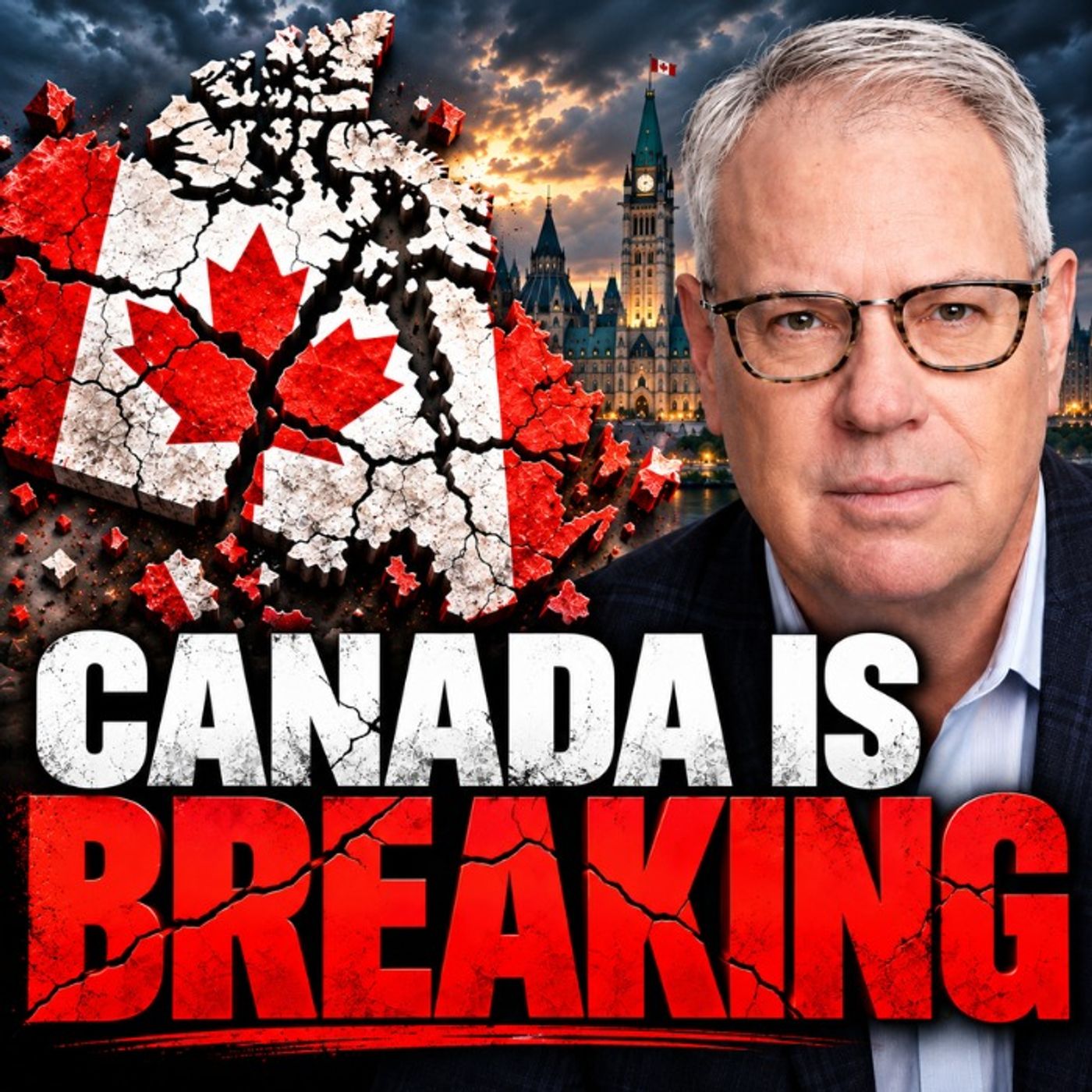
Episode #220
Canada’s Breaking Point Has Arrived (E220) - Darrell Bricker
Darrell Bricker explains why Canada is approaching a potential breaking point as soaring housing costs, immigration pressures, generational divides, regional tensions, demographic decline, and a changing relationship with the United States challenge the country’s future. Guest Bio Dr. Darrell Bricker is Global CEO of Ipsos Public Affairs and co-author, with John Ibbitson, of Breaking Point: The New Big Shifts Putting Canada at Risk . He is a leading Canadian public-opinion researcher and has written extensively on demographics, politics, and social change. Topics Discussed Why Canada may be approaching a national “breaking point” Canada’s housing affordability crisis Falling fertility and an aging population Immigration and the breakdown of Canada’s traditional immigration consensus The “Laurentian elite” and Canada’s political establishment Alberta, Saskatchewan, equalization payments, and Western alienation The widening divide between younger and older Canadians Canada’s brain drain to the United States Medical Assistance in Dying (MAID) Canada’s military decline and renewed defense spending Arctic sovereignty and competition with Russia, China, and the U.S. The changing Canada–U.S. relationship The decline of the U.S.-led global order Trudeau, Carney, Canadian identity, and national pride Whether Canada can remain unified over the coming decade Main Points Canada’s problems are deeper than its current tensions with the United States; Bricker argues that longstanding internal divisions are being exposed. Housing is central: younger Canadians increasingly struggle to achieve the homeownership and financial security enjoyed by earlier generations, with Bricker citing polling in which 74% say owning a home is now only for the rich. Immigration, historically a source of broad Canadian consensus, became politically contentious as temporary workers, international students, and other newcomers increased rapidly while housing and public services struggled to keep pace. At the same time, Canada’s fertility rate has fallen sharply, making immigration increasingly important to population growth. Regional tensions remain another major fault line. Alberta and Saskatchewan generate substantial resource wealth while many Western Canadians believe federal policy has constrained their energy industries, contributing to resentment toward Ottawa and the equalization system. Bricker also argues that Canada must adapt to a world in which it can no longer assume the old U.S.-led international order will return after Trump. Canada is increasing defense spending, focusing more heavily on Arctic sovereignty, and attempting to diversify its relationships with Europe, Asia, India, and China. Despite these problems, Bricker does not portray Canada as a failed country. Canada and the United States remain highly desirable destinations for immigrants, but Canada faces a serious challenge if younger, highly skilled Canadians increasingly believe they can find greater opportunity south of the border. Top 3 Quotes “The idea that the Canadian dream paid off for one group of the population and it’s not paying off in the same way for another group of the population is absolutely valid in the data.” “We need to start building a lot more housing stock that looks like what people want rather than what planners want them to endure.” “We’re going to have to carve a new path.” Misc. Podcast Info Guest: Dr. Darrell Bricker Book: Breaking Point: The New Big Shifts Putting Canada at Risk Co-author: John Ibbitson Role: Global CEO, Ipsos Public Affairs Core themes: Canada, housing, immigration, demographics, generational inequality, Western alienation, U.S.–Canada relations, defense, Arctic sovereignty, MAID, national identity Overall framing: Is Canada’s traditional economic, political, and national model reaching a breaking point? Closing takeaway: Bricker expects late 2026 and 2027 to be an especially consequential period for Canada, with major political and regional tensions potentially coming to the forefront. The Pod is hosted by Jesse Wright For guest suggestions, questions, or media inquiries, reach out at https://elpodcast.media/ Never miss an episode – subscribe and follow wherever you get your podcasts. ⭐️ If you enjoyed this episode, please rate and review the show. It helps others find us. Thanks for listening!