Episode #1
From Driverless Race Cars to XBOX Game Camp: What's Next for Purdue ECE?
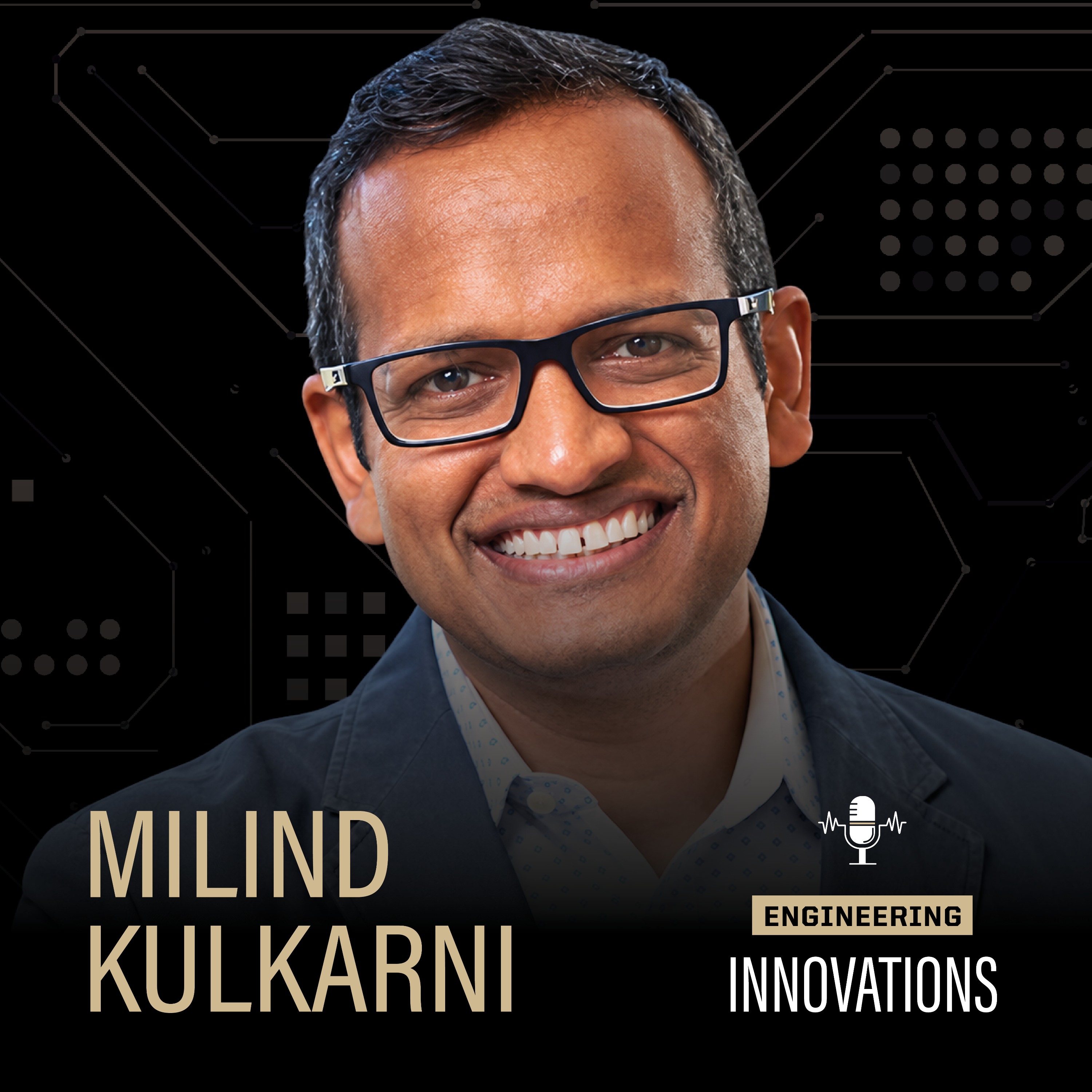
State of Purdue ECE: AI in the Classroom, Indianapolis Growth, and New Industry Partnerships Host Kristin Malavenda opens a new season of Engineering Innovations with Purdue ECE head Milind Kulkarni for the annual State of the School update. Kulkarni highlights Purdue ECE’s sustained top-10 rankings, record scale (2,500 undergraduates across West Lafayette and Indianapolis and 1,700 graduate students), and continued expansion in Indianapolis to a junior class. He discusses how AI is reshaping teaching through renewed emphasis on fundamentals (in-class Bluebook exams) and new AI-enabled approaches, including larger design projects and using AI to support ADA accessibility. Student experience is supported through VIP research, an entrepreneurship class with alumni investors, and large-scale opportunities like the 400-student System-on-Chip Design program. New initiatives include an Indianapolis gaming and interactive systems concentration partnered with Microsoft Xbox Game Camp, semiconductor training in the Birck Nanotechnology Center cleanroom, industry-informed AI curriculum updates, an executive MS in AI engineering leadership delivered in Silicon Valley, and Purdue AI Racing’s recent time-trial win and track record. 00:00 Season Kickoff 00:33 State of ECE 01:12 Growth and Indy Campus 02:09 AI in the Classroom 04:03 Accessibility with AI 04:36 Scaling Student Experience 08:25 Hands On Proof 09:34 Indy Gaming with Xbox 12:29 Purdue Computes Focus 15:23 Industry Guides AI Curriculum 17:12 Executive MS in Silicon Valley 20:51 Looking Ahead and Wrap 23:24 Final Thanks Purdue ECE: http://engineering.purdue.edu/ECE Facebook: http://facebook.com/purdueece X: https://x.com/PurdueECE Instagram: https://instagram.com/purdue.ece LinkedIn: https://www.linkedin.com/company/purdue-ece Purdue University's Elmore Family School of Electrical and Computer Engineering, founded in 1888, is one of the nation's largest ECE departments and consistently ranks among the best