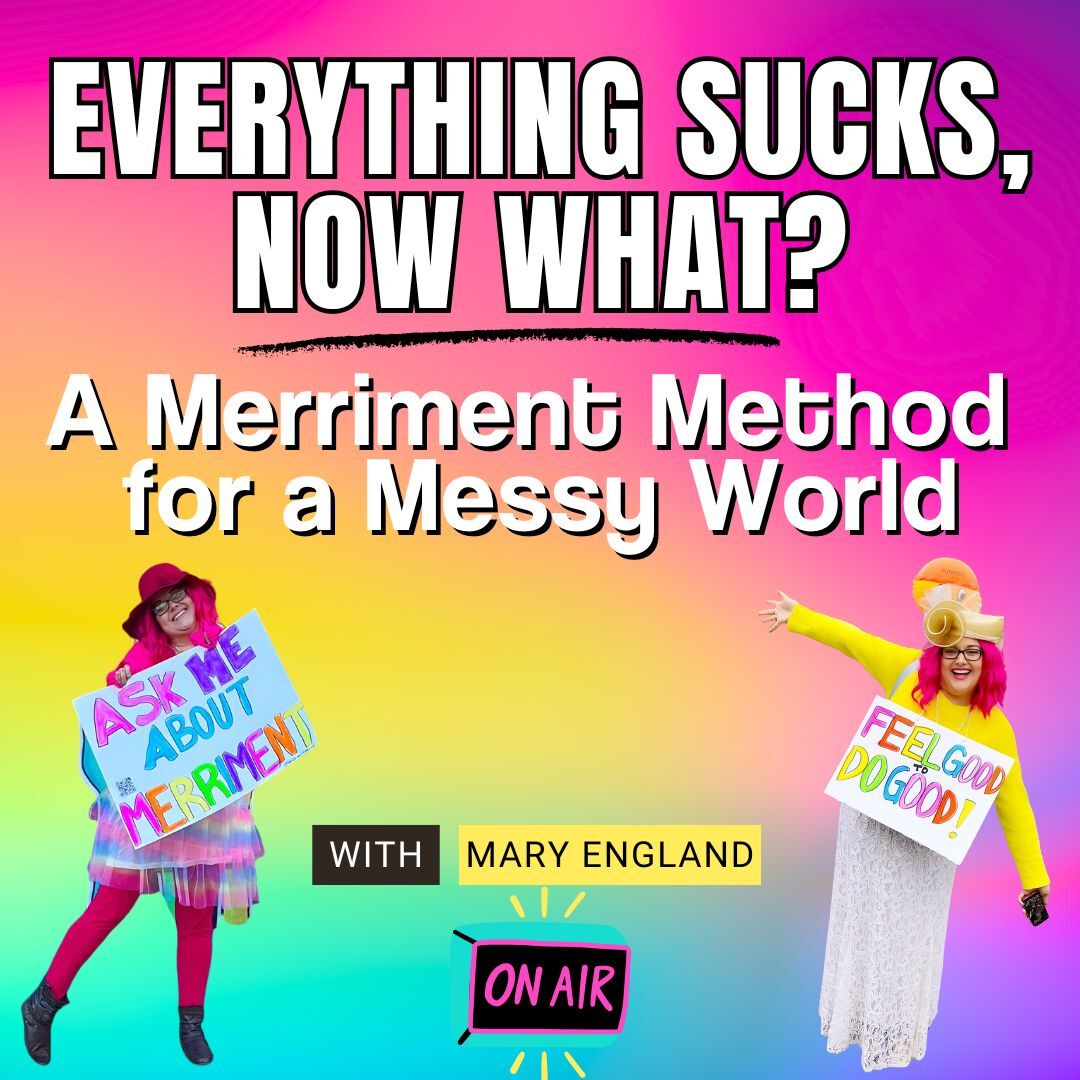
Everything Sucks, Now What? is a podcast about living thoughtfully in a complicated world. Hosted by Mary England , creator of the Merriment Method , this show is for people who feel the weight of reality but s till want to build something kinder inside it. Each episode explores how to hold two truths at once: grief and hope, rage and responsibility, realism and joy. Instead of pretending things are fine or collapsing into despair, we practice nuance. We name what’s broken . Then we ask what we can do about it. Through psychological insight, cultural analysis , and gently absurd real-life examples , Mary translates big systemic issues into personal, livable frameworks . You’ll hear conversations about care , power</stro
Pitch Analysis
Required Pod Score for this show. PitchCentric checks your profile against host openness, topical fit, and audience signals before you generate a pitch.
Contact path
Verified email
Booking probability
25%
Guest openness
Selective
Verified email on file
80/100
Required Score
Sign up to generate a grounded pitch for Everything Sucks, Now What? A Merriment Method for a Messy World..
What is Everything Sucks, Now What? A Merriment Method for a Messy World.?
Everything Sucks, Now What? A Merriment Method for a Messy World. is a education podcast hosted by Uncustomary, with 142 episodes on record and a Required Pod Score of 80.
About the host
Uncustomary hosts Everything Sucks, Now What? A Merriment Method for a Messy World., a education show with 142 episodes published.
Our AI reads these to draft pitches. Use them as grounding for a pitch that cites a real guest and a specific topic.
Episode #15
7 Ways To Get Back Your Innocence
Aug 9, 202634 minS3
I started to tell you a story about a magical root beer. And then I realized how much it was really a story about innocence. So then I got into what we're really missing when we're grieving our innocence and how to get it back!
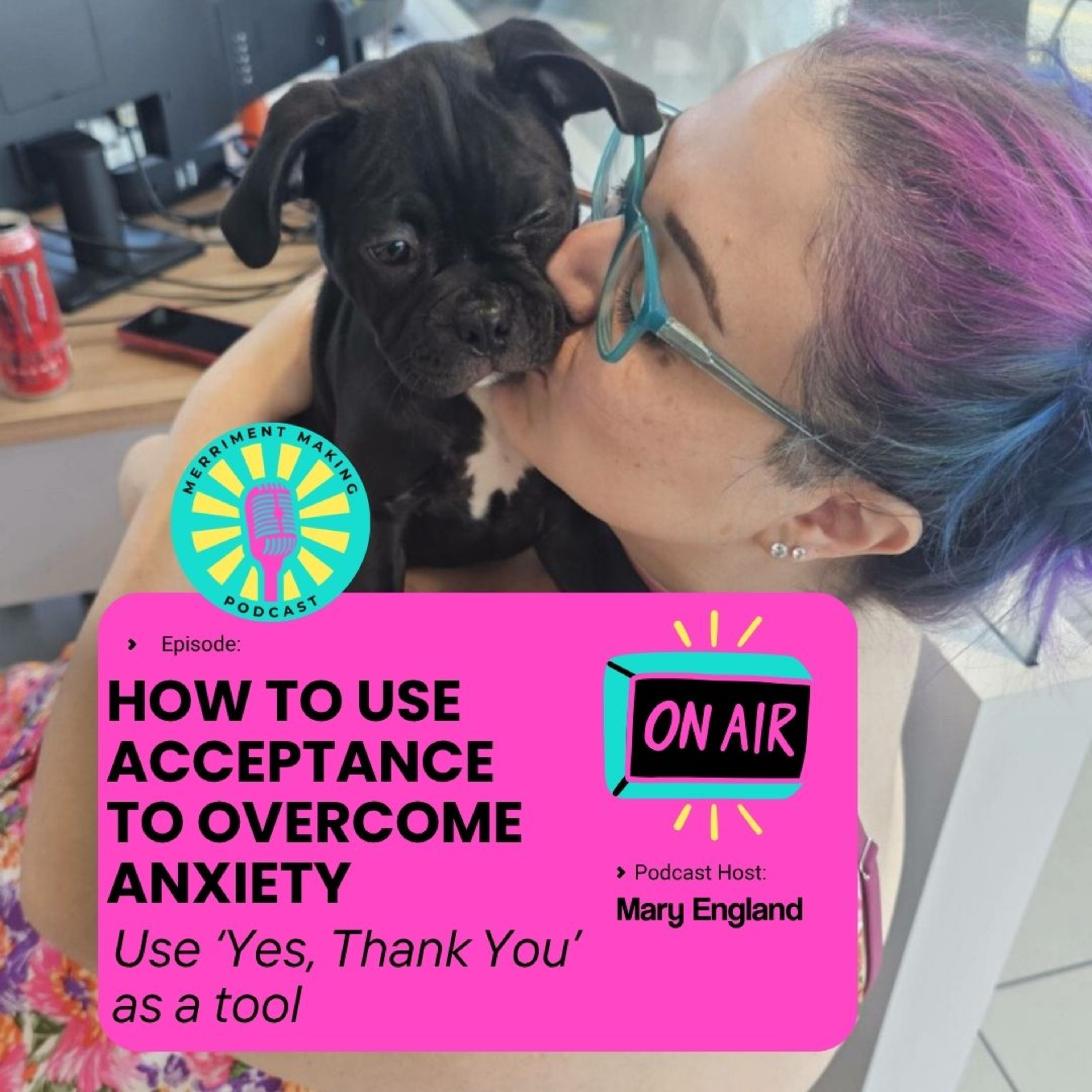
How To Use Acceptance To Overcome Anxiety: 'Yes, Thank You' As A Tool
Jul 30, 202622 minS3
What if the fastest way through anxiety isn't fighting it... but accepting that it's already here? In this episode, I explore one of the most practical mindset shifts I've ever learned: the simple phrase "Yes, thank you". Inspired by comedian Pete Holmes, this practice isn't about pretending difficult things are good. It's about stopping the exhausting argument with reality long enough to decide what to do next. We talk about why advice like "don't judge your thoughts" can feel completely useless without something tangible to replace it, why anticipation is often more painful than the outcome itself, and how acceptance can calm even the loudest spiral. Along the way, I share stories about waiting to find out whether I had a brain tumor, bad trips, car accidents, trauma, learning to cook, and the surprising difference between pain we participate in and pain that's forced upon us. This isn't an episode about toxic positivity or pretending everything happens for a reason. It's about recognizing that once the metaphorical pill is already in your bloodstream, panic doesn't remove it. Acceptance doesn't mean approval. It means saying: "Okay. We're here now." From that place, you can make a plan, take action, learn something, or simply survive the moment without letting anxiety drive the car. If you've ever found yourself trapped in rumination, overwhelmed by uncertainty, or wishing reality would negotiate with you, this episode is for you. In this episode, we cover: Why "don't judge your thoughts" often isn't enough The "Yes, thank you" practice from Pete Holmes Acceptance vs. approval Why anxiety feeds on resisting reality The psychology of anticipation and uncertainty How to find perspective in overwhelming moments Practical ways to respond when life doesn't go according to plan Get more free mental health + feel good resources at Uncustomary.org
Getting Back Together With My High School Sweetheart: The Missing Piece In Self-Love (A Personal Update)
Jul 19, 202656 minS4
I took a break from everything , made a big decision , and then life changed very quickly . In this episode I’m extremely honest about my life in the past few months including break ups , living with an ex, getting back together with my high school sweetheart , job changes, living arrangements, family health, endometriosis pain ... and where I imagine Merriment Making going from here. No edits and a long ramble on my friend’s couch sitting next to a cat. Enjoy and welcome back to the Everything Sucks, Now What? podcast. PS - For more details on getting back together with my high school love , read here .
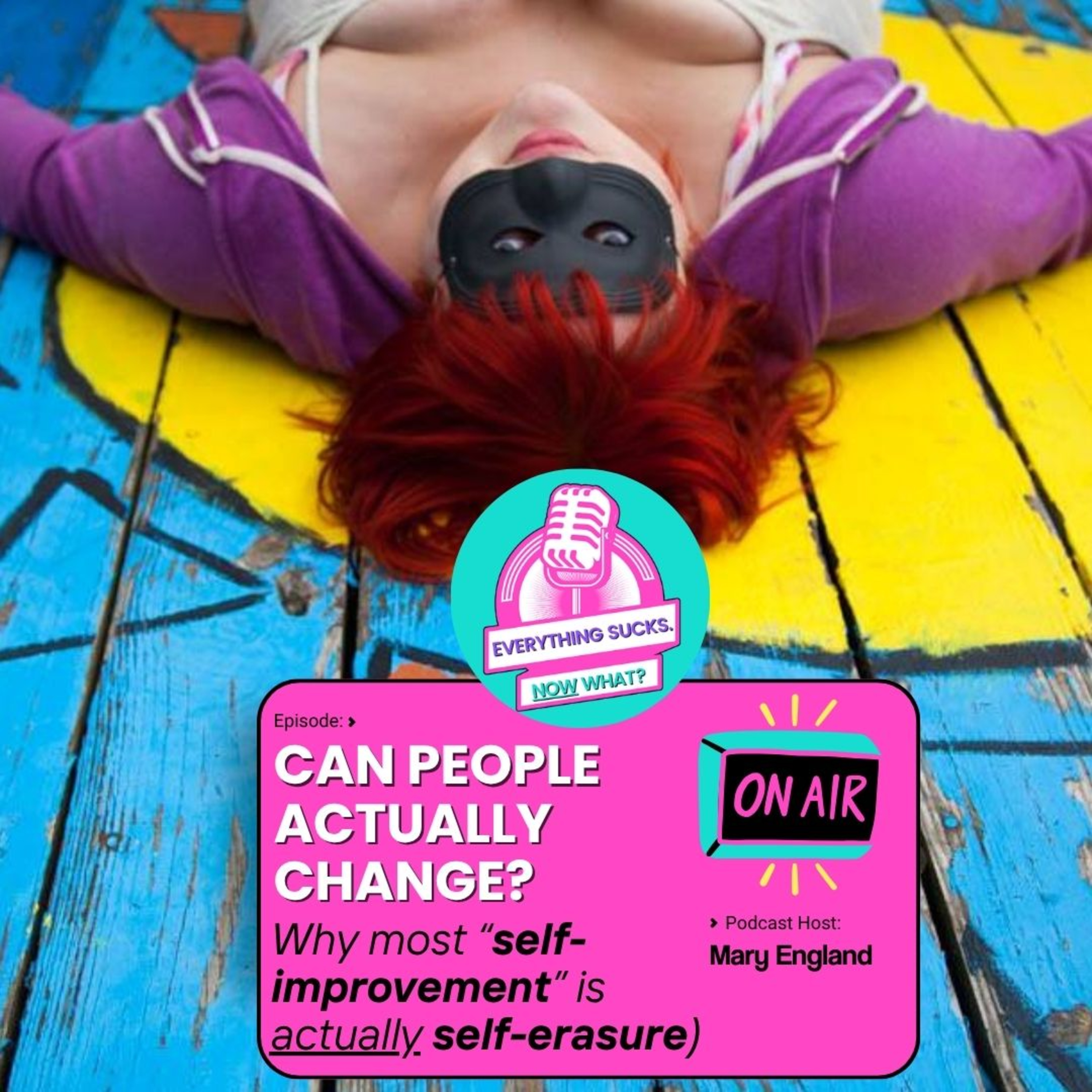
Can People Actually Change? (Why most “self-improvement” is actually self-erasure)
May 5, 202625 minS4
Everyone wants to know if people can change. But that’s not actually the question. The real question is: am I stuck like this? …and if I am , whose fault is it? In this episode, we’re pulling that entire thread until the sweater unravels like a Weezer song. We’re talking about : 🩷 why personality is both stable and changeable (yes, both… stay with me) 🩷 how trauma , shame , and environment edit you over time 🩷 why a lot of what we call “growth” is actually just really cutely decorated armor 🩷 the difference between becoming someone new and remembering who you were before the world got loud 🩷 why wanting to change means absolutely nothing (scientifically, unfortunately) 🩷 + what it actually takes to come back to yourself without romanticizing the process We're not doing a "just be yourself" pep talk... This is more like a “you might have buried yourself alive and called it maturity ” conversation. With love.... (+ receipts). Bonus pack to accompany the episode inside Strange + Functional .
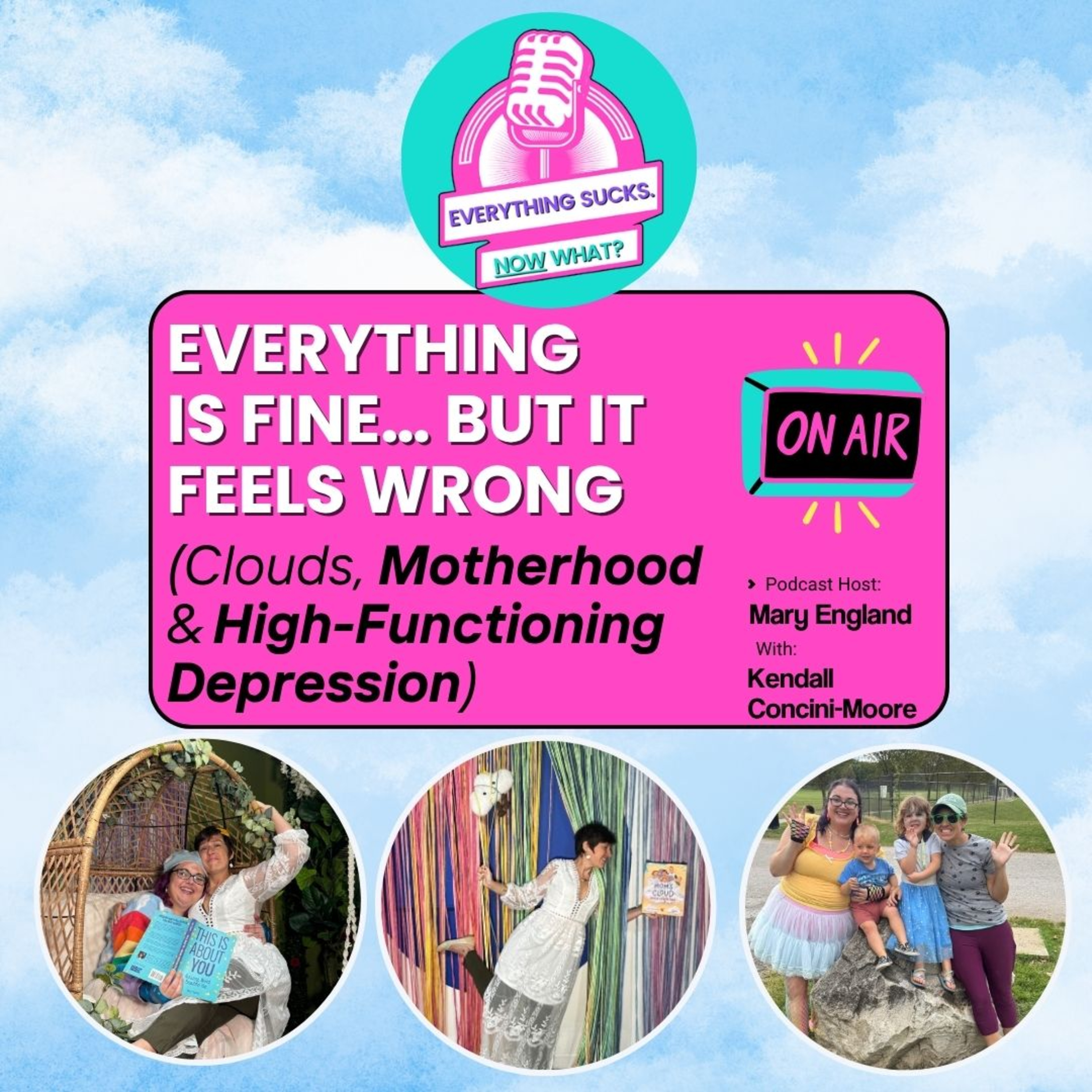
Everything Is Fine… But It Feels Wrong: Clouds, Motherhood & High-Functioning Depression (With Kendall Concini-Moore)
Apr 16, 20262h 7mS4
What happens when life looks good on the outside, but something still feels heavy... and you can't quite explain why? This week, I'm sitting down with Kendall, author, social worker, mom of two, and the creator of Cloudy Day Chronicles: a blog, Substack, and now a children's book built around one of the gentlest, most honest mental health metaphors I've ever encountered: the cloud that follows you. We met the way most great things happen; completely by accident, at Artscape, because a three-year-old lost her mind over a rainbow. And I've been grateful ever since. In this conversation, Kendall gets deeply real about what it actually feels like to live with high-functioning depression. The kind where you show up, hold it together, and still feel shaded even when you know the sun is there. We talk about postpartum depression, ADHD , disordered eating , autoimmune illness, body imag e, and what it means to b uild a shared language around feelings that are hard to name . We also dig into : 🌥️ Why Kendall's cloud metaphor started as a wave in therapy (and why she had to change it) 🌥️ What " high-functioning depression " actually looks like from the inside 🌥️ The people-pleasing spiral and how to show up for others without abandoning yourself 🌥️ Why she wrote a children's book about a mom's mental health ; and what traditional publishers said about it 🌥️ The Pay It Forward program she built around her book to reach families who need it most 🌥️ What her daughter Alma taught her about clouds that no therapist ever did This one made me cry. In the best way. 📖 Get the book & find all of Kendall Concini Moore's resources at cloudydaychronicles.org 📸 Follow her everywhere @CloudyDayChronicles
Every question we get asked before someone starts their trial.
If you have a concern about deliverability, AI quality, data privacy, or whether this will actually work for your specific situation, it's probably answered below.
What is the difference between Founder Solo and Founder Pro?
Founder Solo gives you 50 AI pitches per month using the credit model (Standard pitches cost 1 credit, Enriched pitches cost 2). Founder Pro raises that to 200 credits per month and adds full Booking Probability access, unlimited Magic Match, Apollo enrichment credits, and data export capabilities. Both plans use the same credit system, so you can stretch your monthly budget further by using Standard-mode drafting.
How do agency tiers work?
Agency tiers have no base fee. You pay per managed client and per talent profile. Agency Standard is $199 per client per month; Agency Pro is $399 per client per month. Both add $39 per talent profile per month. Your own team's user seats are always free.
What is a talent profile?
A talent profile represents one person (founder, executive, or spokesperson) you are booking onto podcasts. It includes their bio, topics, headshots, and outreach history. Team plans include 5 profiles; agency plans are pay-as-you-go.
Can I switch plans later?
Yes, at any time. Upgrades take effect immediately; downgrades apply at the end of the current billing period. Contact support if you need help migrating between plan families.
Do you offer a free trial?
Every paid plan includes a 15-day free trial. Your card is saved at signup but you will not be charged until day 16. Cancel any time from your dashboard.
What happens if I cancel?
You keep access until the end of your current billing period. No charges after that. Your data is retained for 30 days in case you reactivate.
Is the 20% annual discount automatic?
Yes. Select Annual on the pricing toggle and the discounted price is applied automatically at checkout. The annual price shown is the full year cost.
What if I have more than 50 profiles or 20 clients?
That is our Enterprise tier. Contact our sales team and we will build a custom plan with volume pricing, a dedicated account manager, and SLA guarantees.