Struggling with organization, time management, or focus? Welcome to "Executive Function Skills for All," the podcast dedicated to helping you master executive function skills and achieve your goals. Whether you're a student aiming for better grades, an adult juggling life's demands, a teenager seeking improved focus, or a student-athlete balancing academics and sports, this podcast is for you. We explore practical strategies for improving planning, organization, time management, emotional regulation, and more. Dealing with ADHD, dyslexia, anxiety, autism spectrum challenges, or just want to improve without a formal diagnosis? Join us each week as we combine research insights with real-life examples to help you boost productivity, conquer procrastination, and establish strong habits and routines. Featuring expert interviews and inspiring stories, we're here to guide you on your journey to better executive function. Subscribe now and start unlocking your full potential!
Pitch Analysis
Required Pod Score for this show. PitchCentric checks your profile against host openness, topical fit, and audience signals before you generate a pitch.
Contact path
Public web form
Booking probability
32%
Guest openness
Selective
80/100
Required Score
Sign up to generate a grounded pitch for Executive Function for All | A Podcast by Untapped Learning.
What is Executive Function for All | A Podcast by Untapped Learning?
Executive Function for All | A Podcast by Untapped Learning is a education podcast hosted by Unknown Host, with 86 episodes on record and a Required Pod Score of 80.
About the host
Unknown Host hosts Executive Function for All | A Podcast by Untapped Learning, a education show with 86 episodes published.
Our AI reads these to draft pitches. Use them as grounding for a pitch that cites a real guest and a specific topic.
Episode #10
Creating a stronger mind with Cognitive Flexibility | Natalie Wilcox
Sep 25, 202631 minS4
As education becomes more “frictionless”, students are often less challenged, leaving them to struggle when challenges arrive in education, especially at the college level. This discomfort, though, is a learning experience that helps stimulate cognitive flexibility. In this podcast, Natalie Wilcox, Neuroimmunology PhD student at the University of Toronto, and Brandon Slade, Founder of Untapped Learning, discuss the strength that comes with cognitive flexibility, including stronger self-reflection and the ability to navigate high-stress situations with ease. Learn how you can use cognitive flexibility in your own work to stay ahead and adapt to any situation that comes your way. At Untapped Learning, we help students find their stride by helping them get ahead of the curve by teaching them developmental skills to plan forward, rather than catching up. Teaching students long-term independence and success lets our students learn better and helps the parents focus on being there for their children. Want to learn more about how we help students build executive function skills? Subscribe to our YouTube channel and explore our 1-on-1 mentoring, workshops, and free resources at: untappedlearning.com Free Downloads: https://untappedlearning.com/resource-type/downloads/ Instagram: https://instagram.com/untappedlearning #ExecutiveFunction #ADHD #Neurodivergent #ExecutiveFunctionCoaching #College #StudentSupport Chapters: 0:00 Why Students Stick With Routines That Stop Working 0:16 What Cognitive Flexibility Actually Means 3:12 Why We Keep Using Strategies That Aren’t Working 5:34 The Difference Between Routines and Rigid Thinking 8:02 How to Help Students Try One Small Change 11:05 Why Students Don’t Ask for the Help They Need 14:33 How Fear of Failure Stops Students From Trying 19:49 Why Progress Matters Before the Problem Is Solved 22:18 How Adults Can Practice Cognitive Flexibility 27:02 ADHD, Negative Feedback, and Reflecting Without Shame
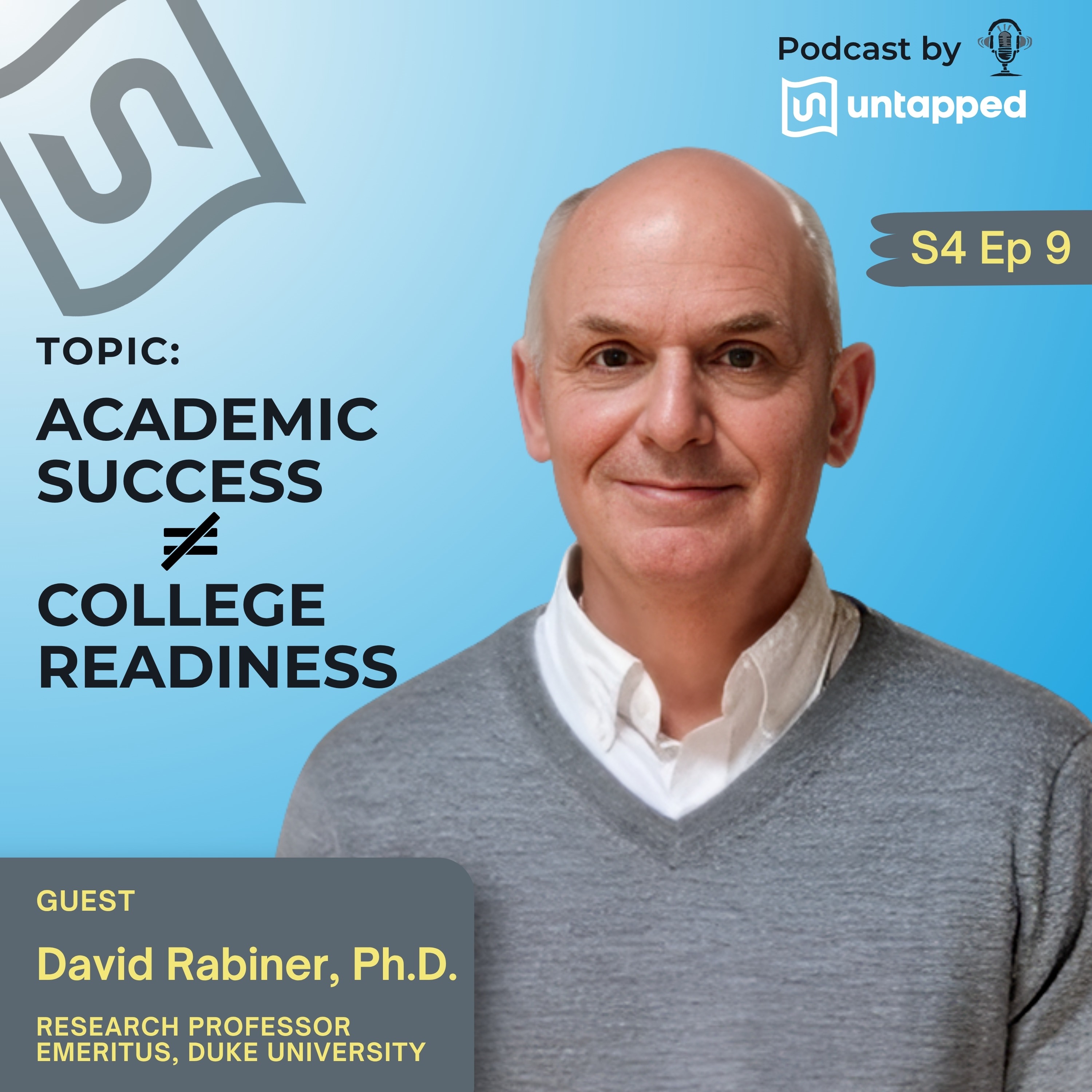
Why High-Achieving Students Struggle in College | David Rabiner, Ph.D.
Sep 11, 202627 minS4
Why do some highly successful students begin struggling as soon as they reach college? David Rabiner, Ph.D., a recently retired Duke University professor, psychologist, and former director of Duke’s Academic Advising Center, joins Brandon Slade to explain why academic success in high school does not always translate into college readiness. They discuss what happens when students lose the structure and accountability built into high school, why high achievers may resist seeking academic support, and how ADHD can affect time management, task initiation, motivation, and long-term planning. David also shares how parents can gradually pull back before college, allowing students to practice independence while the stakes are still relatively low. The conversation also explores why procrastination is not simply laziness or a lack of willpower—and how consistent external accountability can help students follow through on the goals they already have. David Rabiner is Research Professor Emeritus of Psychology and Neuroscience at Duke University. His work has focused extensively on ADHD, attention difficulties, academic performance, and improving the quality of care children with ADHD receive. Learn about David’s free ADHD Monitoring System and subscribe to his Attention Research Update: helpforadd.com . The system helps families gather regular teacher feedback and monitor how effectively a child’s ADHD treatment is working at school. Want to learn more about how we help students build executive function skills? Subscribe to our YouTube channel and explore our 1-on-1 mentoring, workshops, and free resources at untappedlearning.com Free Downloads: https://untappedlearning.com/resource-type/downloads/ Instagram: https://instagram.com/untappedlearning Chapters 00:00 - Introduction 01:25 - Why High-Achieving Students Struggle in College 06:14 - Helping College Students Manage Their Time 09:14 - Preparing High School Students for Independence 12:00 - Low-Stakes Ways Parents Can Pull Back 15:44 - ADHD and High Achievement 17:33 - Executive Function Challenges Beyond Time Management 20:07 - Why Procrastination Is More Than Willpower 23:15 - David Rabiner’s Free ADHD Monitoring Tool 26:46 - Conclusion #ExecutiveFunction #ADHD #CollegeReadiness #HighAchievingStudents #DukeUniversity
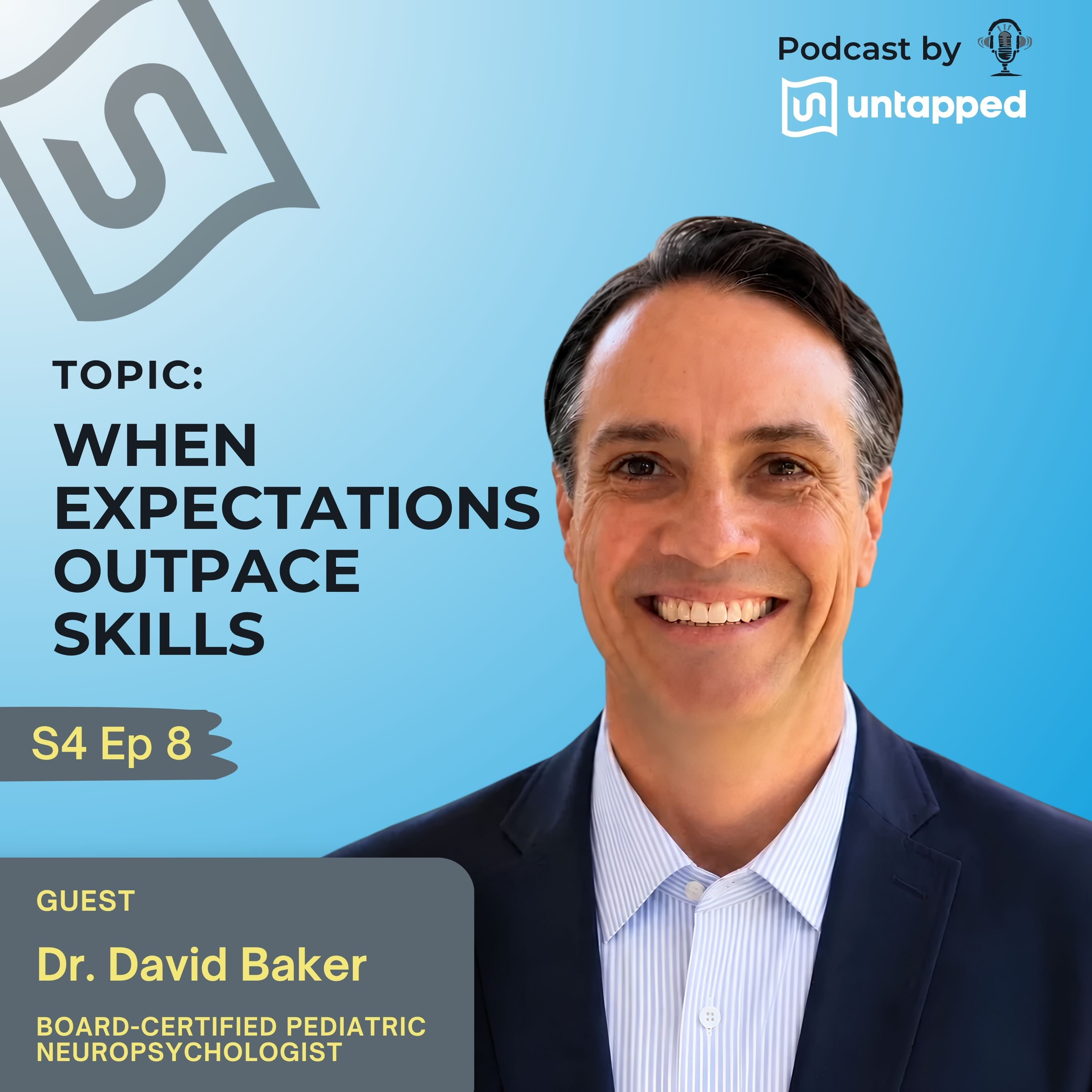
The Balance Between Transitions, Expectations, and Executive Function | David Baker
Aug 26, 202635 minS4
Why can a bright, capable child manage well for years and then suddenly struggle in middle school, high school, or college? Executive function challenges rarely appear out of nowhere. As academic demands increase and outside structure decreases, weaknesses in planning, organization, task initiation, time management, working memory, and emotional regulation can become much more visible. In this episode of Executive Function for All, Brandon Slade speaks with Dr. David Baker, a board-certified pediatric neuropsychologist and founder of Baker Neuropsychology and Learning Center. Dr. Baker explains why school transitions can reveal executive function challenges that were previously difficult to see and how parents can support independence without taking over. They also discuss: • Why bright kids can have uneven skill development • How ADHD can affect brain development • How frustration and unstructured play build self-regulation • What college students need when external structure falls away • How parents can model healthy responses to stress • What families should know about neuropsychological evaluations At Untapped Learning, we help middle school, high school, and college students build practical executive function skills through personalized coaching focused on planning, organization, task initiation, time management, and long-term independence. Learn more about Dr. Baker: https://bakernlc.com/ Want to learn more about how we support students? https://untappedlearning.com/ https://untappedlearning.com/resource-type/downloads/ https://instagram.com/untappedlearning #ExecutiveFunction #ADHD #ADHDParenting #ExecutiveFunctionCoaching #StudentSupport Chapters: 0:37 – Do Executive Function Challenges Appear Out of Nowhere? 3:18 – Building Executive Function in Elementary School 4:34 – Screens, Emotional Regulation, and Executive Function 6:20 – Building Executive Function in Middle and High School 8:41 – The “Should” Mentality: Intelligence vs. Executive Function 10:12 – ADHD Brain Development: Is It Years Behind? 13:11 – Supporting Executive Function in College 14:14 – Why Overscheduling Hurts College Readiness 18:59 – The Neuroscience of Unstructured Play 22:06 - IS ADHD Hereditary? 22:55 – Advice for Overwhelmed Parents 24:31 – Teens Watch How Parents Handle Stress 26:39 – Scaffolding Executive Function at Home 27:45 – Why “Clean Your Room” Is Too Vague 30:53 – What to Know Before a Neuropsychological Evaluation 34:28 – Connect With Dr. David Baker
How to start your College Journey | Jack DuFauchard
Jul 22, 202624 minS4
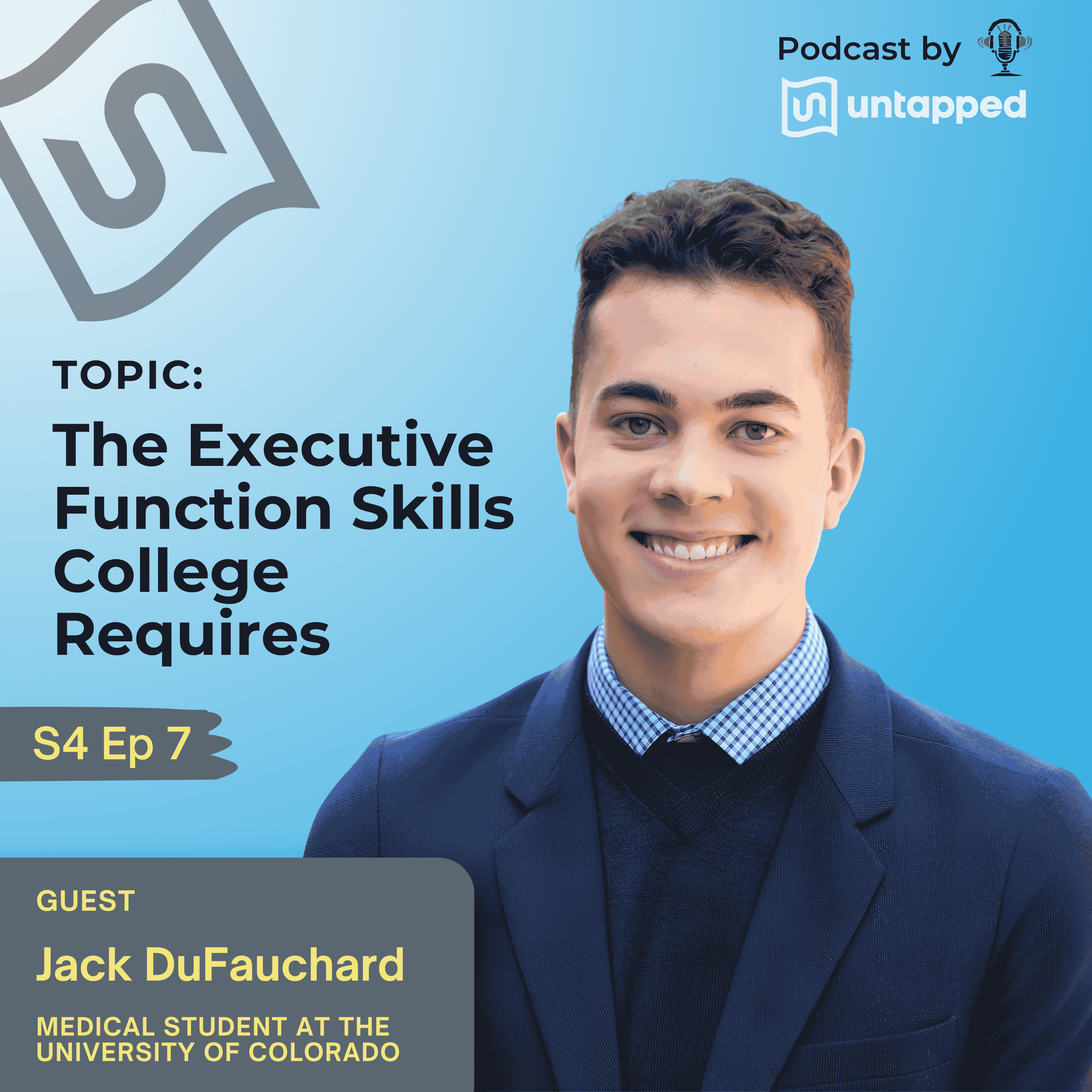
Starting college is a journey like no other; however, it’s often difficult to figure out what that “first step” is going to be, especially for some kids with executive function challenges. Through self-awareness, active learning, prioritization, and organizing a schedule, students can overcome these challenges and achieve ambitious goals. In this podcast, Jack DuFauchard, an incoming student at the University of Colorado School of Medicine, goes into greater detail about the struggles upon entering college, and how saying yes to too many things can lead to a procrastination trap. Together, we go into greater detail about the idea of essentialism, organizational systems, and the importance of balancing a schedule, even with all the freedom the university provides to the students. At Untapped Learning, we help students find their stride by helping them get ahead of the curve by teaching them developmental skills to plan forward, rather than catching up. Teaching the students long-term independence and success lets our students learn better and helps the parents focus on being there for their children. Want to learn more about how we help students build executive function skills? Subscribe to our YouTube channel and explore our 1-on-1 mentoring, workshops, and free resources at untappedlearning.com . Free Downloads: https://untappedlearning.com/resource-type/downloads/ Instagram: https://instagram.com/untappedlearning #ExecutiveFunction #ADHD #Neurodivergent #ExecutiveFunctionCoaching #College #StudentSupport
How Parents Can Support Teens with ADHD Without Constant Conflict | Gabe Casher, Ph.D.
Jul 8, 202626 minS4
When discussing homework, why does it suddenly become a fight between students and parents? When discussing a child’s success, it can be anxiety-inducing for both the child and the parent. For parents, it’s much more difficult to identify/resonate with their children when there isn't any proof to back up a child’s progress, while for children, it's difficult when parents get too involved. It creates a cycle of fear, shame, and anxiety through a family's relationship. In today’s podcast, Dr. Gabe Casher, Founder of Panorama Psychology, dives deeper into the relationship between a child with Executive Dysfunction and parents and how a lack of clear results or communication can lead to distancing between parents and students. Together, we discuss ADHD, executive functioning, emotional regulation, parenting strategies, teen mental health, and how families can break cycles of conflict. Learn why strengthening your relationship with your child often produces better long-term benefits than focusing directly on results. At Untapped Learning, we help students find their stride by helping them learn and developing the skills necessary to succeed. Teaching the students long-term independence and success lets our students learn better and helps the parents to focus on parenting. Want to learn more about how we help students build executive function skills? Subscribe to our YouTube channel and explore our 1-on-1 mentoring, workshops, and free resources at untappedlearning.com . 📥 Free Downloads: https://untappedlearning.com/resource-type/downloads/ 📸 Instagram: https://instagram.com/untappedlearning Learn more about Gabe Casher and Panorama Psychology here: ( https://www.panoramapsychology.com/ ) #ExecutiveFunction #ADHD #Neurodivergent #ExecutiveFunctionCoaching #Family #StudentSupport
Every question we get asked before someone starts their trial.
If you have a concern about deliverability, AI quality, data privacy, or whether this will actually work for your specific situation, it's probably answered below.
What is the difference between Founder Solo and Founder Pro?
Founder Solo gives you 50 AI pitches per month using the credit model (Standard pitches cost 1 credit, Enriched pitches cost 2). Founder Pro raises that to 200 credits per month and adds full Booking Probability access, unlimited Magic Match, Apollo enrichment credits, and data export capabilities. Both plans use the same credit system, so you can stretch your monthly budget further by using Standard-mode drafting.
How do agency tiers work?
Agency tiers have no base fee. You pay per managed client and per talent profile. Agency Standard is $199 per client per month; Agency Pro is $399 per client per month. Both add $39 per talent profile per month. Your own team's user seats are always free.
What is a talent profile?
A talent profile represents one person (founder, executive, or spokesperson) you are booking onto podcasts. It includes their bio, topics, headshots, and outreach history. Team plans include 5 profiles; agency plans are pay-as-you-go.
Can I switch plans later?
Yes, at any time. Upgrades take effect immediately; downgrades apply at the end of the current billing period. Contact support if you need help migrating between plan families.
Do you offer a free trial?
Every paid plan includes a 15-day free trial. Your card is saved at signup but you will not be charged until day 16. Cancel any time from your dashboard.
What happens if I cancel?
You keep access until the end of your current billing period. No charges after that. Your data is retained for 30 days in case you reactivate.
Is the 20% annual discount automatic?
Yes. Select Annual on the pricing toggle and the discounted price is applied automatically at checkout. The annual price shown is the full year cost.
What if I have more than 50 profiles or 20 clients?
That is our Enterprise tier. Contact our sales team and we will build a custom plan with volume pricing, a dedicated account manager, and SLA guarantees.