Episode #21
#21 The Rise of Screenless Wearables in 2026 + Fitbit Air vs Oura & Whoop
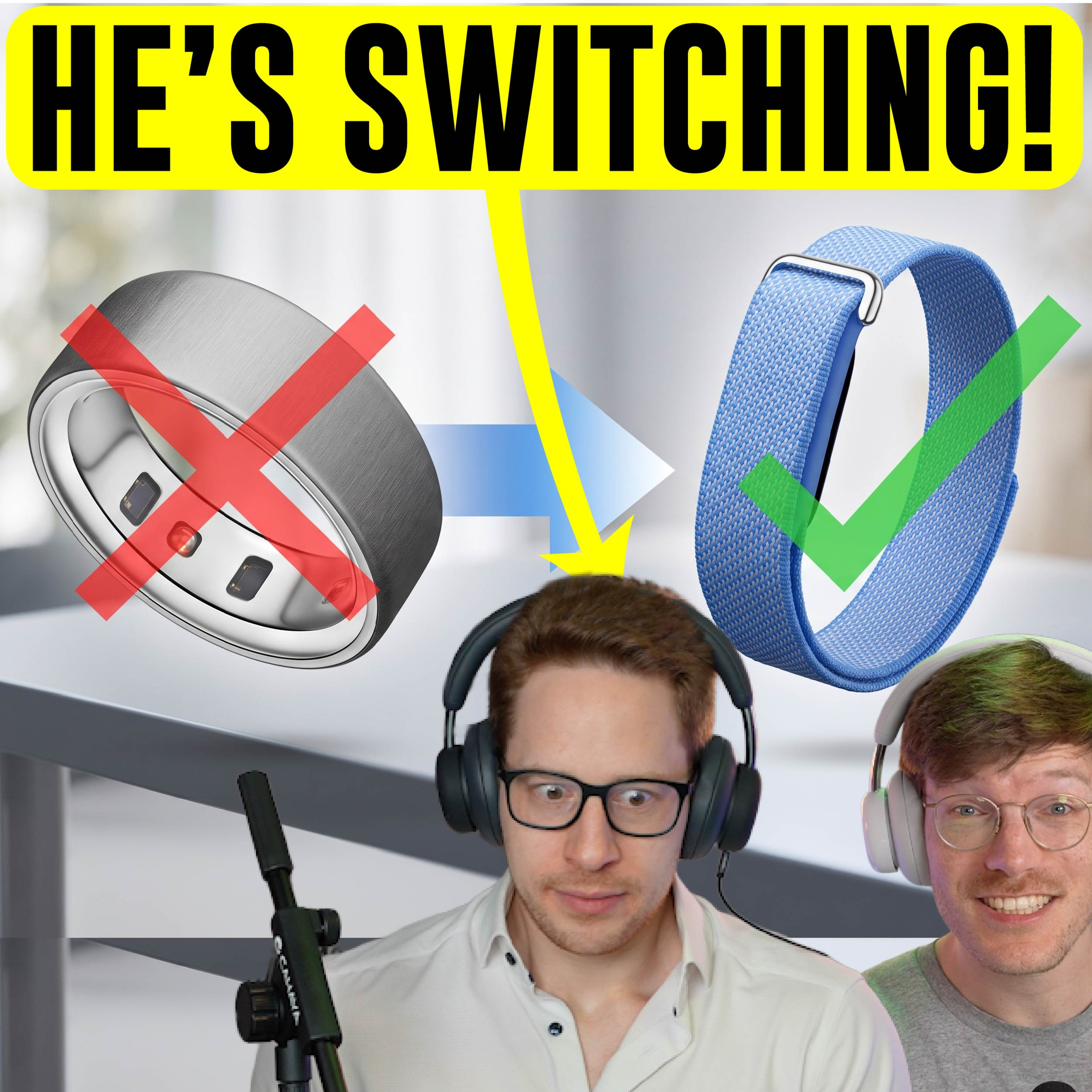
Rob and Stephan dissect the rise of minimalist, screen-free health trackers, reviewing the popular Google Fitbit Air against established giants like the Oura Ring and WHOOP. 📝Summary In this episode, biological data scientists Rob and Stephan explore the growing market of screenless wearables, boosted by the recent launch of the Google Fitbit Air and massive investments in companies like Oura and WHOOP. They define the specific characteristics of these minimalist trackers, emphasizing their passive 24/7 tracking, long battery life, and deliberate lack of attention-grabbing notifications. Stephan shares his initial hands-on review of the Fitbit Air after being an Oura user for eight years, highlighting its impressive AI-powered food logging, integrated workout builder, and smart alarms, while critiquing its lack of custom journaling and granular daytime heart rate variability data. The hosts also discuss the inherent form-factor limitations of smart rings during exercise, analyze the dubious claims surrounding the drop-shipped Hume band, and examine how tech giants like Google are using these affordable devices to become ecosystem leaders. Finally, they offer practical tips on syncing multiple wearables via Apple Health without data conflicts. ⏳Chapters 00:00:00 Screenless Wearables: The market shift towards minimalist trackers and the new Fitbit Air 00:01:21 Early Adopter: Why Stephan bought the Fitbit Air after 8 years with Oura 00:11:03 Defining the Category: What makes a wearable truly "screenless" 00:18:57 The Wearable Landscape: Amazfit Helio strap, Polar Loop, and smart rings 00:22:03 The Hume Band Scam: Drop-shipping, AliExpress clones, and fake scientists 00:26:23 Form Factor Limits: Why smart rings struggle with cycling and weightlifting 00:28:50 Divergent Data: Comparing wildly different readiness scores between Oura and Fitbit 00:34:05 Subscription Models: Device costs and the necessity of paid app memberships 00:50:42 Fitbit Air Review (Likes): AI nutrition logging, workout builders, and smart alarms 00:57:48 Fitbit Air Review (Dislikes): Missing custom tags, daytime HRV, and slow activity detection 01:05:30 Data Management: How to safely sync Fitbit Air with Apple Health 01:11:18 Final Verdict: Will Stephan ditch the Oura Ring for the Fitbit Air? 📚Resources The New Google Fitbit Air and Other Fitness Bands Are Losing Screens—and Gaining Fans - WSJ Google Fitbit Air Sharing upcoming roadmap and improvements - Google Health Oura Ring 5 WHOOP Correction: The first Whoop band officially became available and started shipping to elite athletes and professional sports teams already in 2015. Same year as the first generation Oura ring, which was sold as an end consumer product. It looks like Garmin is finally preparing its Google Fitbit Air-style screenless band, the Cirqa, for launch — but I hope it doesn't copy Google's approach to revamping its fitness app | TechRadar Helio Strap Zepp App Amazfit Helio Strap does not require a subscription, but there is an optional premium add-on called Zepp Aura , a personalised Rest and Wellness Service. Ultrahuman Polar Loop Hume Band2.0 Explore Galaxy Ring Correction: Google Health loads for most, but not all, relevant Apple Health entries the last three months. …There is more: complete show notes here 🎙️ About Fit For Science is a deep-dive podcast hosted by two biological data scientists, Rob and Stephan, exploring the intersection of research, health tech, and data-driven lifestyle design. The hosts provide evidence-based systems, layered with practical "N=2" personal experimentation, to cut through the noise and enable everyone to become their best N-of-1. Learn more and subscribe on your favorite platforms: YouTube Spotify Apple Podcasts Amazon Music Collection of all show notes ⚠️Disclaimer : This podcast represents our own opinions and is for informational purposes only. It does not constitute medical or financial advice or a professional relationship.