
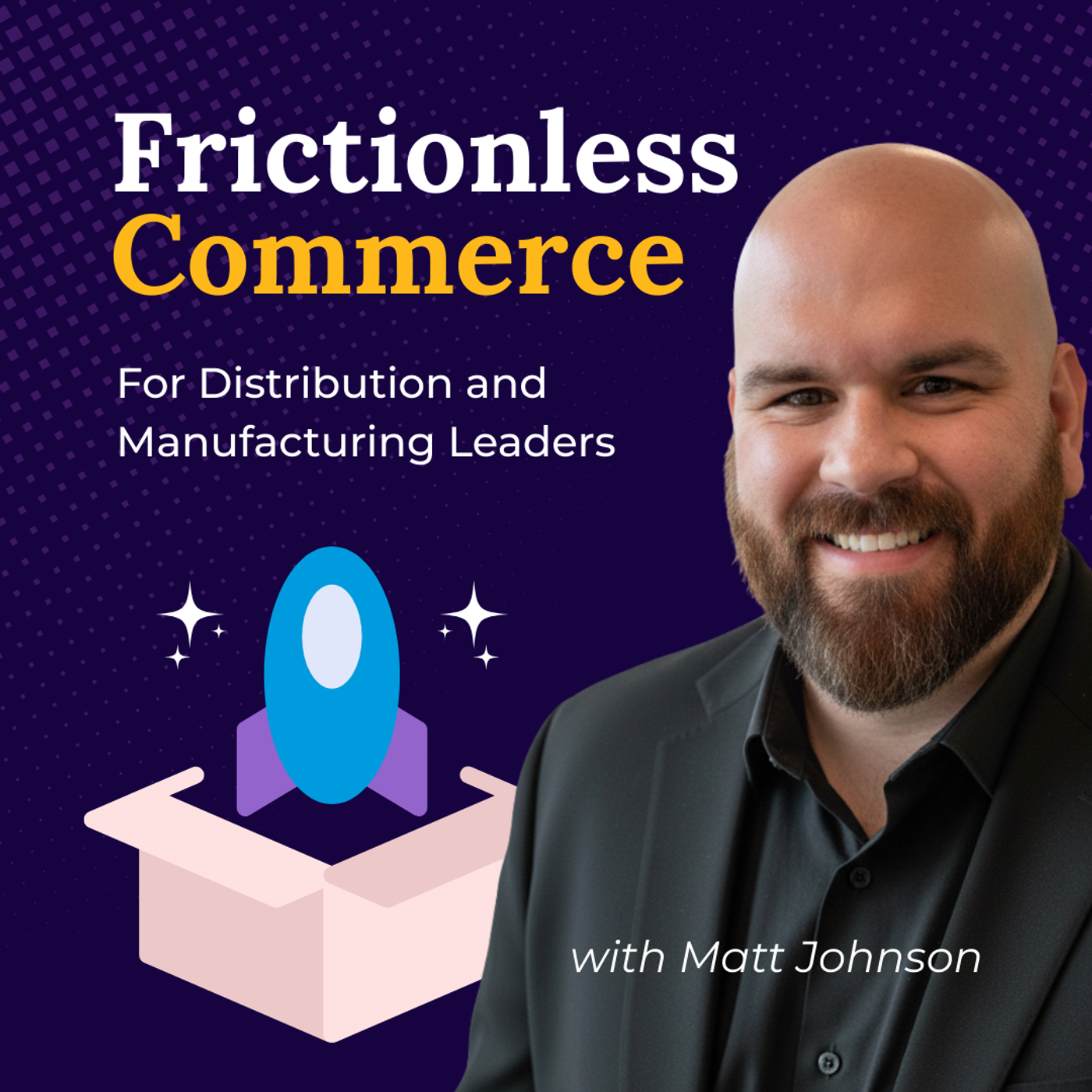
Frictionless Commerce is a podcast for leaders in distribution and manufacturing who need digital commerce to actually deliver results. Hosted by Matt Johnson, each episode goes behind the scenes—into the data, systems, and processes that determine whether transformation succeeds or stalls. This isn’t a show about hype, trends, or silver bullets. It’s about execution. You’ll hear clear, practical conversations on: Data governance, master data, and system alignment Digital commerce, automation, and operational readiness Why AI and advanced tools fail without strong foundations How to sequence change so investments create real ROI The focus is simple: diagnose the real problem, eliminate distractions, and do the right work in the right order. If you’re responsible for digital commerce, data, operations, or transformation—and you’re tired of surface-level advice—this podcast is for you. <
Pitch Analysis
Required Pod Score for this show. PitchCentric checks your profile against host openness, topical fit, and audience signals before you generate a pitch.
Contact path
Verified email
Booking probability
30%
Guest openness
Selective
Verified email on file
80/100
Required Score
Sign up to generate a grounded pitch for Frictionless Commerce.
Frictionless Commerce is a business podcast hosted by Matt Johnson, with 17 episodes on record and a Required Pod Score of 80. PitchCentric scores this show on Booking Probability, Listen Score, and live audience signals refreshed every 24 hours.
About the host
Matt Johnson hosts Frictionless Commerce, a business show with 17 episodes published.
Our AI reads these to draft pitches. Use them as grounding for a pitch that cites a real guest and a specific topic.
Frictionless Commerce
You Can't Hire Your Way Out of a Catalog Problem... But You Can Work Smarter
Apr 8, 202620 min
Most distribution leaders know their product catalog needs work. What they underestimate is why it's so hard to fix — and it's not a technology problem. It's a resource problem. The team required to run catalog operations at scale — taxonomy architects, data governance leads, enrichment specialists, data analysts — is a team that almost no mid-market or enterprise distributor can realistically build. In this episode, Matt names the capability gap for what it is and walks through three practical ways to start working around it: documenting the tribal knowledge that lives in your team's heads, protecting your senior people's strategic capacity, and honestly evaluating whether managed catalog operations might get you there faster than another open headcount req that sits on LinkedIn for six months. Key Takeaways: The catalog operations challenge isn't a technology gap — it's a capability and resource gap that hiring one more generalist won't solve. Tribal knowledge is a single point of failure. If your taxonomy logic and supplier rules live in someone's head, that's your first priority to fix. Your most experienced catalog person should be spending at least 60% of their time on strategy — not cleaning spreadsheets. If you've been stuck for more than a year, it may be time to evaluate managed catalog operations instead of trying to build internally. Connect with Matt on LinkedIn at linkedin.com/in/mattjohnson and learn more about Pivotree at pivotree.com .

Is Your Digital Catalog "Lost in Translation"? - Why Manufacturer Product Data Fails Downstream
Mar 30, 202612 min
"Your customers don't experience your data sources... they experience your inconsistency." In this episode, Matt Johnson identifies the "Translation Problem" plaguing manufacturers and distributors today. If you’ve ever wondered why your PIM team is perpetually backlogged despite using data aggregators and industry standards, this episode is for you. Matt moves past the "silver bullet" hype to offer a practical framework for digital leaders who are tired of their catalogs feeling one step behind. What’s inside this episode: Structural vs. Messy Data: Why even "standardized" data often fails to translate to a distributor's PIM. The Taxonomy Workshop: Why you should buy your subject matter experts lunch and reclaim your category structure. The Power of the Scorecard: How to hold suppliers accountable and treat data quality as a business requirement, not a courtesy. Actionable Advice: Learn why owning your schema is the highest-leverage move you can make for your e-commerce conversion rates. Links & Resources: Follow Matt Johnson on LinkedIn: https://www.linkedin.com/in/matt-johnson-frictionless/ Explore Solutions at Pivotree: https://pivotree.com/ If you found value in today’s episode, please share it with a colleague. B2B Digital commerce is a team sport!
Why Your B2B Commerce Catalog Sucks (And What to Do About It)
Mar 4, 202626 min
Most distributors and manufacturers believe their eCommerce struggles are caused by the website, the platform, or the technology stack . But the real problem is usually much deeper. It’s the catalog. If your product catalog is weak, everything downstream suffers: • Customers can’t find what they need • Product pages feel unreliable • Website traffic stalls • eCommerce adoption fails • Sales teams stop trusting the platform In this episode of Frictionless Commerce , Matt Johnson breaks down the real reason many B2B eCommerce initiatives never reach their potential—and why fixing your product data foundation is the key to unlocking growth. You’ll learn the four major catalog problems that quietly sabotage digital commerce for distributors and manufacturers. In This Episode Matt covers: • Why relying on product data aggregators creates inconsistent and unreliable catalogs • How the lack of product data governance breaks search, filters, and product discovery • Why spreadsheets, ERPs, and eCommerce platforms cannot manage product data workflows • The hidden revenue problem created by small catalogs and missing long-tail products He also explains what leaders should focus on instead if they want their digital commerce investments to actually deliver ROI. Key Takeaway: B2B eCommerce isn’t a website project . It’s a data infrastructure strategy. Companies that win in digital commerce don’t just launch websites—they build structured product data engines that power discovery, trust, and conversion. About Frictionless Commerce: Frictionless Commerce is the podcast for distribution and manufacturing leaders who need digital commerce to actually deliver results. Each episode goes behind the scenes into the data, systems, and operational processes that drive successful digital transformation across the supply chain. No hype. No silver bullets. Just practical insights from the front lines. Connect with Matt! If this episode was helpful, share it with a colleague and subscribe for more conversations about digital commerce strategy for distributors and manufacturers. Connect with Matt on LinkedIn: https://www.linkedin.com/in/matt-d-johnson/ Topics Covered: B2B eCommerce Product Information Management (PIM) Master Data Management (MDM) Product Data Governance Distribution Digital Strategy B2B Product Catalog Management Industrial eCommerce Supply Chain Digital Transformation
The Most Overlooked Asset in Distribution (It’s Not What You Think)
Feb 19, 202623 min
What is the single most important asset in distribution? Most leaders would say relationships. Or people. Or supplier partnerships. In this episode of Frictionless Commerce , Matt Johnson makes a different case: It’s your catalog. Distributor eCommerce continues to hover in the single digits — not because of weak strategy or lack of investment, but because catalog management remains fragmented, reactive, and under-governed. Matt walks through: Why everything in distribution flows through the catalog What the print era got right about data governance Why digital catalogs are harder — not easier — to manage The real reason eCommerce adoption stalls The difference between AI hype and governed, agentic catalog management How to shift from reactive data cleanup to prioritized decision-making This episode reframes the catalog as core infrastructure — not a support function — and explains why disciplined operators who master it will outpace the market. The future of digital commerce isn’t autonomous systems running wild. It’s governed intelligence accelerating structured teams. Connect with Matt on LinkedIn Distribution B2B eCommerce Digital Transformation Catalog Management Product Data PIM AI in Distribution Supply Chain Technology Agentic AI Industrial Distribution
Governance Before AI: Distributors Should Run the Wire Before Turning on The Lights
Feb 7, 202615 min
AI is everywhere in distribution and manufacturing—but results are still rare. In this episode of Frictionless Commerce , Matt Johnson challenges a common assumption: that AI tools and data enrichment can compensate for weak product data foundations. Using a simple construction analogy— you don’t install the lights before you run the wiring —Matt explains why many AI initiatives stall, even when the technology looks impressive. This conversation focuses specifically on product data , not financial or customer data, and explores: Why AI acts as a data amplifier, not a magic wand The limits of AI-driven data enrichment as a starting point The critical role of taxonomy, schema, and a “golden record” Why translation across suppliers, aggregators, and channels is the real challenge How disciplined catalog management enables scale, trust, and differentiation If you’re a digital, data, or commerce leader trying to make sense of AI pressure while managing real operational constraints, this episode will help you reframe the problem and focus on what actually drives long-term success. Bottom line: Digital commerce isn’t about doing everything. It’s about doing the right things, in the right order, the right way. Run the cable first. Then install the lights. Connect with Matt on LinkedIn Learn more about Pivotree
Every question we get asked before someone starts their trial.
If you have a concern about deliverability, AI quality, data privacy, or whether this will actually work for your specific situation, it's probably answered below.
What is the difference between Founder Solo and Founder Pro?
Founder Solo gives you 50 AI pitches per month using the credit model (Standard pitches cost 1 credit, Enriched pitches cost 2). Founder Pro raises that to 200 credits per month and adds full Booking Probability access, unlimited Magic Match, Apollo enrichment credits, and data export capabilities. Both plans use the same credit system, so you can stretch your monthly budget further by using Standard-mode drafting.
How do agency tiers work?
Agency tiers have no base fee. You pay per managed client and per talent profile. Agency Standard is $199 per client per month; Agency Pro is $399 per client per month. Both add $39 per talent profile per month. Your own team's user seats are always free.
What is a talent profile?
A talent profile represents one person (founder, executive, or spokesperson) you are booking onto podcasts. It includes their bio, topics, headshots, and outreach history. Team plans include 5 profiles; agency plans are pay-as-you-go.
Can I switch plans later?
Yes, at any time. Upgrades take effect immediately; downgrades apply at the end of the current billing period. Contact support if you need help migrating between plan families.
Do you offer a free trial?
Every paid plan includes a 15-day free trial. Your card is saved at signup but you will not be charged until day 16. Cancel any time from your dashboard.
What happens if I cancel?
You keep access until the end of your current billing period. No charges after that. Your data is retained for 30 days in case you reactivate.
Is the 20% annual discount automatic?
Yes. Select Annual on the pricing toggle and the discounted price is applied automatically at checkout. The annual price shown is the full year cost.
What if I have more than 50 profiles or 20 clients?
That is our Enterprise tier. Contact our sales team and we will build a custom plan with volume pricing, a dedicated account manager, and SLA guarantees.