

Glaucoma, Vision & Longevity: Supplements & Science
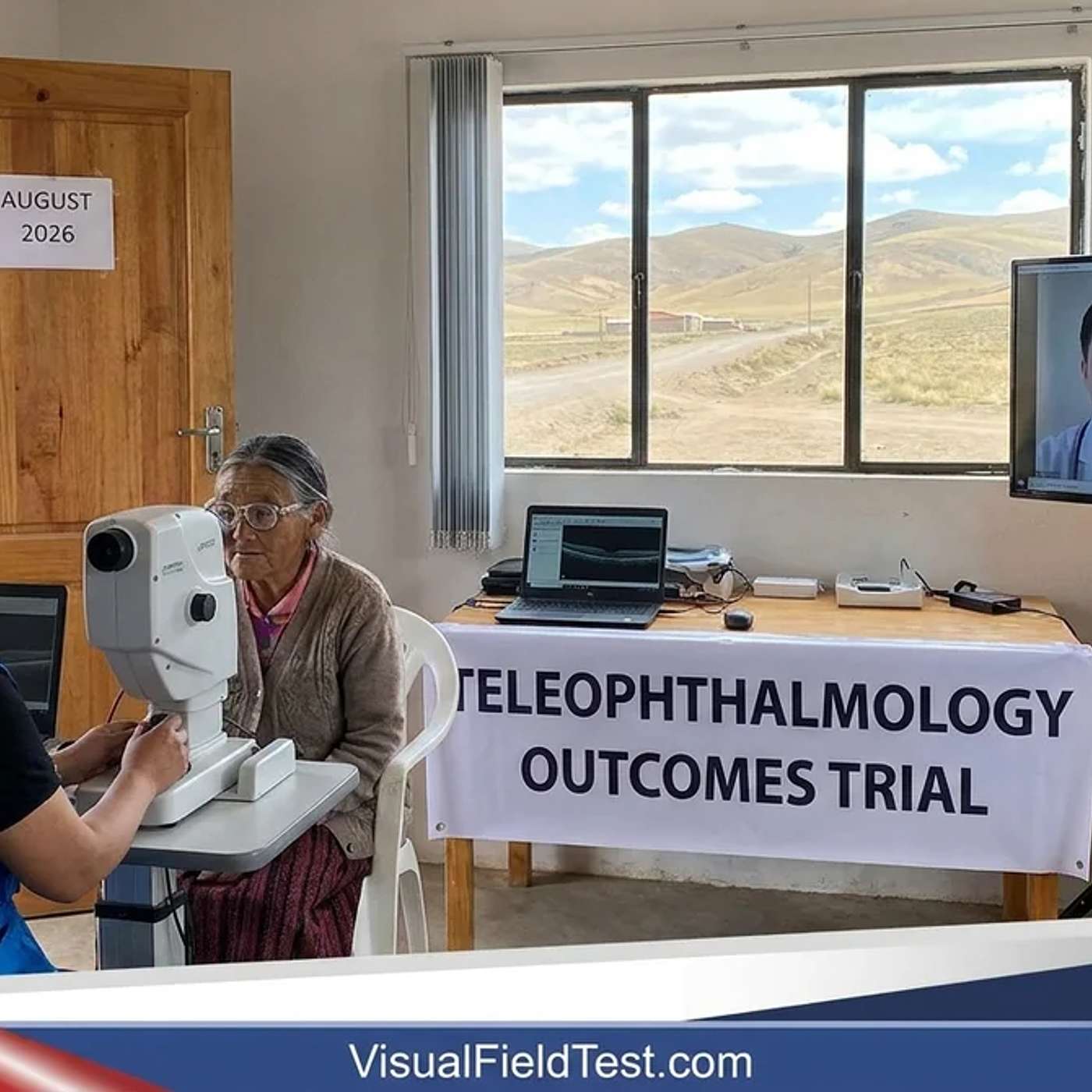
Teleophthalmology for Rural and Underserved Populations: August 2026 Outcomes Trial
This audio article is from VisualFieldTest.com . Read the full article here: https://visualfieldtest.com/en/teleophthalmology-for-rural-and-underserved-populations-august-2026-outcomes-trial Test your visual field online: https://visualfieldtest.com Support the show so new episodes keep coming: https://www.buzzsprout.com/2563091/support Excerpt: Teleophthalmology for Rural and Underserved Populations: August 2026 Outcomes Trial Evidence snapshot: August 19, 2026 Teleophthalmology can bring retinal imaging, optical coherence tomography, visual acuity testing, eye pressure measurement, specialist review, care navigation, and referral coordination closer to where patients live. This is especially important in rural communities, Federally Qualified Health Centers, Indigenous communities, and low-income areas where travel distance, cost, limited transportation, and shortages of ophthalmologists can delay care. However, an important evidence limitation should be stated clearly: I could not verify a single completed August 2026 randomized or stepped-wedge trial that enrolled rural or underserved patients and followed glaucoma, diabetic retinopathy, and age-related macular degeneration from screening through treatment initiation while also measuring vision outcomes, preventable complications, costs, and satisfaction. Reporting such a trial as if it existed would require inventing results. The available evidence is therefore best understood as a 2026 evidence set made up of several complementary trials and programs. Together, these studies show that teleophthalmology can improve screening participation, reduce unnecessary urgent referrals, shorten specialist waiting times, and achieve high patient satisfaction. They also show that the strongest remaining weakness is the “last mile” between a positive screen and completed treatment. Key Findings The strongest completed end-to-end randomized evidence comes from the United Kingdom community optometry trial known as the HERMES study. Teleophthalmology reduced unnecessary urgent referrals and shortened the average time to specialist consultation from 89 days to 53 days. The same trial showed a clinically shorter average time from the initial community visit to treatment—55 days compared with 90 days—although the difference was not statistically significant. In the Michigan Screening and Intervention for Glaucoma and eye Health through Telemedicine study, 99% of participants were satisfied or very satisfied, and the program cost approximately $110.99 per participant served. In rural Alabama, teleophthalmology detected substantial levels of glaucoma-related disease and diabetic retinopathy. Among referred participants in the initial Alabama cohort, 76.7% attended follow-up, including 92% of those referred for glaucoma. Randomized diabetic retinopathy evidence shows that telemedicine can substantially increase completion of screening, but available trials have not directly quantified the number of cases of blindness prevented. Randomized age-related macular degeneration evidence suggests that teleophthalmology can identify new suspected disease without worsening visual outcomes, but remote monitoring of recurrence may delay treatment unless the pathway includes rapid escalation. A sustainable model requires local imaging staff, remote eye specialists, care navigators, local treatment partners, interoperable electronic health records, and strong cybersecurity controls. What the Available Trials Actually Tested For the full table, please open this article on visualfieldtest.com. The United Kingdom HERMES trial is the closest match to a complete referral pathway. The rural American studies are more relevant to health equity and community implementation, but they generally functioned as screening-plus-navigation programs rather than randomized comparisons of screening through treatment. () Effects on Time to Diagnosis and Treatment The strongest evidence: faster specialist consultation In the United Kingdom cluster randomized trial, patients referred through a teleophthalmology pathway reached hospital consultation faster than patients using standard referral: Teleophthalmology pathway: approximately 53 days Standard pathway: approximately 89 days Difference: approximately 36 days faster For urgent referrals, the average time to consultation was approximately 23 days with teleophthalmology versus 53 days with standard referral. The pathway also shortened the average time from the initial community optometry visit to treatment from approximately 90 days to 55 days, although the treatment difference did not reach statistical significance. () The trial also found that 62 participants required treatment. Among those who attended consultation, treatment was required in 55.2% of teleophthalmology participants compared with 28.9% of standard-care participants. This does not mean teleophthalmology caused more disease. It more likely indicates that remote specialist triage directed a greater proportion of appropriate patients toward specialist care while reducing unnecessary visits. () Diabetic retinopathy: better screening access, incomplete time-to-treatment evidence The Tribal Vision Project randomized 567 participants and found that telemedicine greatly increased the likelihood of completing diabetic retinopathy screening: Within six months: 94.6% with telemedicine versus 43.9% with traditional surveillance Between more than six and 18 months: 53.0% versus 33.2% Over approximately four years, diabetic retinopathy worsened by at least two stages in 8.5% of participants and improved by at least two stages in 1.2%. Overall, disease severity remained generally stable. However, the study did not provide a definitive estimate of how many cases of severe visual loss or blindness were prevented through telemedicine. () A 2026 stepped-wedge randomized quality-improvement trial involving 5,665 adults with type 2 diabetes found that electronic health record “bulk orders” increased the odds of completing diabetic retinopathy screening by approximately 78%. The six-month completion rate was 17.5%, and the median time from the bulk order to a retinal imaging appointment was 79 days. This result shows that teleophthalmology infrastructure alone is not enough; scheduling access and patient follow-through remain major bottlenecks. () Age-related macular degeneration: initial referral was comparable, recurrence monitoring required caution In a randomized clinical trial of teleophthalmology for suspected neovascular age-related macular degeneration: Referral to diagnostic imaging took 22.5 days with teleophthalmology versus 18.0 days with routine care. Diagnostic imaging to treatment took 16.4 days versus 11.6 days. Neither difference was statistically significant. For recurrence monitoring, treatment reinitiation took approximately 13.6 days with teleophthalmology versus almost immediate treatment in the routine group. Despite the delay in recurrence treatment, there was no difference in final visual acuity. These results support teleophthalmology for initial triage when there is a reliable escalation system. They also warn against allowing remote monitoring to become a passive process. Patients with suspected recurrence need rapid clinical review and, when necessary, immediate injection scheduling. () Outcomes by Eye Disease Glaucoma Glaucoma is particularly challenging for teleophthalmology because diagnosis and treatment usually require more than a photograph. A useful pathway may include: Visual acuity measurement Intraocular pressure Central corneal thickness Optic nerve photographs Optical coherence tomography of the retinal nerve fiber layer Visual field testing when feasible Medical and family history Remote specialist review In-person confirmation and treatment planning The Michigan community program identified glaucoma or suspected glaucoma in 22.4% of 3,709 participants. It identified diabetic retinopathy in 4.7% and macular degeneration in 1.7%. Among participants who screened positive for glaucoma or suspected glaucoma and were randomized to receive either written education or personalized education with health coaching, follow-up attendance was similar: 61% versus 59%. () In the three Screening and Intervention for Glaucoma and eye Health through Telemedicine sites, glaucoma or suspected glaucoma was detected in: 18.6% of Alabama participants 24.0% of Michigan participants 26.7% of New York City participants In-office referral rates were 47.3% in Alabama, 42.8% in Michigan, and 66.1% in New York City. The variation partly reflects differences in screening equipment, referral criteria, and whether refractive error was treated locally or referred elsewhere. () The Michigan program also reported modest improvement in presenting visual acuity among the 943 participants who returned for repeat screening. Worse-eye visual acuity improved from a mean logarithm of the minimum angle of resolution value of 0.25 to 0.21, while vision-related quality of life improved from 81.1 to 86.4. These findings are encouraging, but the repeat-screening group was not a randomized sample, and many participants received glasses or other care. The results therefore cannot be interpreted as proof that teleophthalmology prevented glaucoma progression. () What remains unproven in glaucoma No completed rural randomized trial identified in this evidence review demonstrated reductions in: Visual field loss Glaucoma progression Emergency glaucoma surgery Medication failure Irreversible blindness Teleophthalmology appears effective for Support the show


