Growth, Brands, and More is the FMCG Growth Operating System in podcast form.Each episode breaks down how consumer goods brands win (or lose) in competitive markets. Hosted by Filiberto Amati, a growth consultant with 25 years of experience across P&G, Philips, and Campari, the show goes deep into the levers that drive real commercial results: portfolio architecture, route to market, pricing logic, brand strategy, shopper behaviour, and category dynamics.Guests are operators, not theorists — senior executives and founders from Heineken, Diageo, Coca-Cola, Unilever, P&G, Danone, and Pernod Ricard, alongside entrepreneurs building the next generation of FMCG brands.No generic marketing advice. No thought leadership filler. Built for the people running brands or advising the ones who do.For more on FMCG intelligence: https://www.filibertoamati.com/For more on GOS: https://www.amati-associates.com/diagnostic/ www.f
Pitch Analysis
Required Pod Score for this show. PitchCentric checks your profile against host openness, topical fit, and audience signals before you generate a pitch.
Contact path
Public web form
Booking probability
33%
Guest openness
Selective
80/100
Required Score
Sign up to generate a grounded pitch for Growth, Brands and More.
Growth, Brands and More is a business podcast hosted by Filiberto Amati, with 97 episodes on record and a Required Pod Score of 80. PitchCentric scores this show on Booking Probability, Listen Score, and live audience signals refreshed every 24 hours.
About the host
Filiberto Amati hosts Growth, Brands and More, a business show with 97 episodes published.
Our AI reads these to draft pitches. Use them as grounding for a pitch that cites a real guest and a specific topic.
Growth, Brands and More
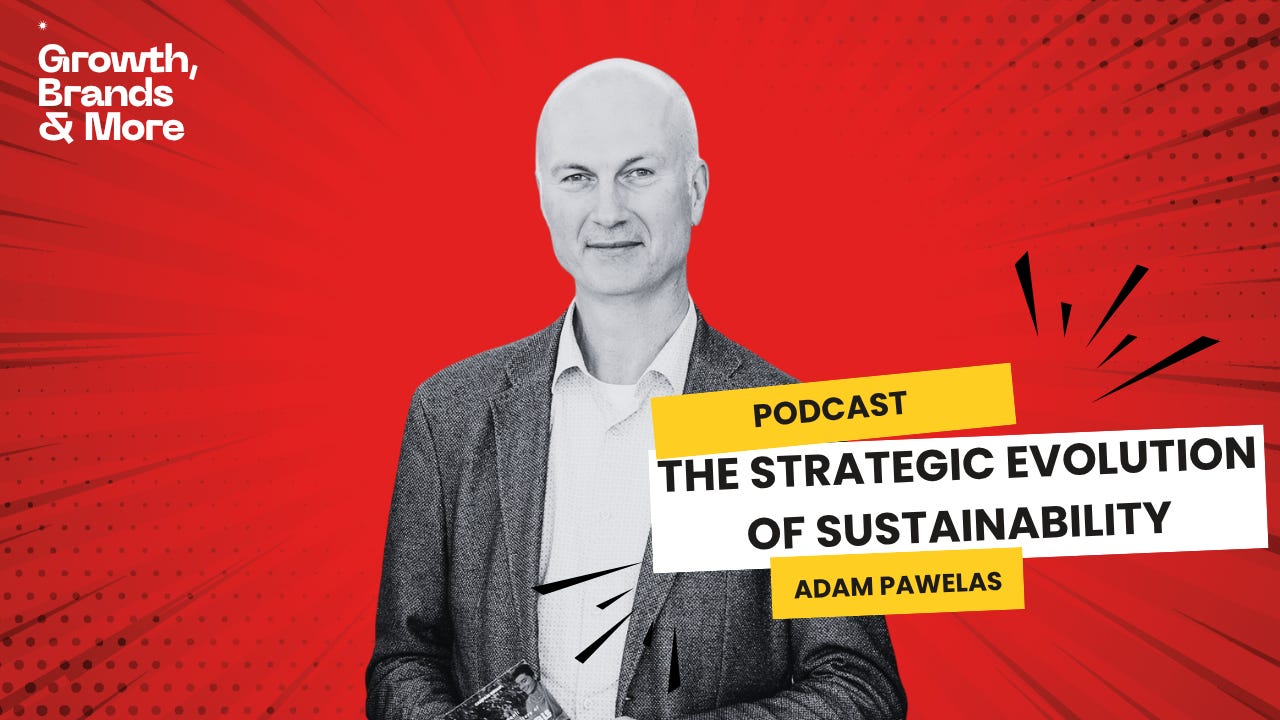
The Strategic Evolution of Sustainability | Adam Pawelas | Part 1
Jun 29, 202632 minS0
<p>What if sustainability were not about doing good or looking good? What if it were about risk management??</p><p>In this episode, Filiberto interviews sustainability professional Adam Pawelas - a sustainability veteran in food and beverages - about how sustainability has evolved over 20+ years from compliance to operational excellence, CSR, and now ESG embedded in business strategy and finance. They discuss universal sustainability practices across industries: mapping stakeholders, identifying material topics, and clarifying internal and external motivations, with leaders differentiating themselves through future-proof asset design, portfolio choices based on product footprints, responsible sourcing for scope 3 impacts, embedding sustainability...
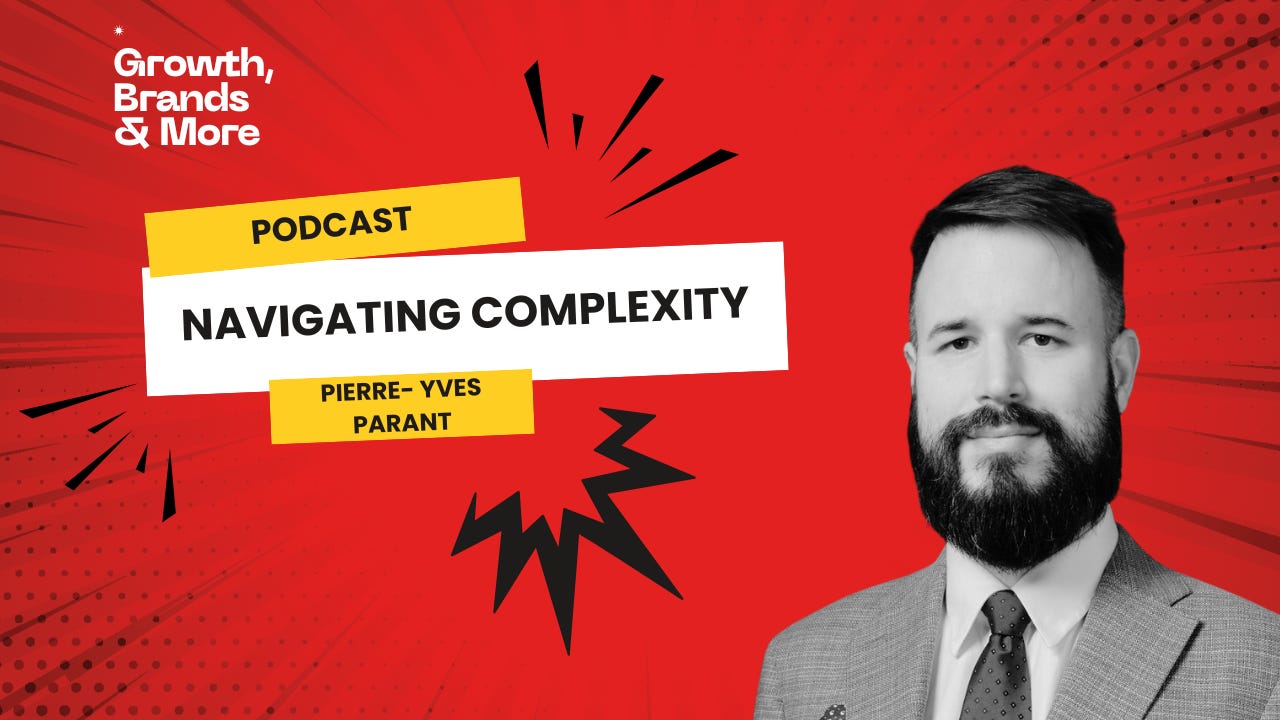
Navigating Complexity in FMCG | Pierre-Yves Parant
Jun 15, 202637 minS2
<p>Do large organisations really understand complexity? Or do they underestimate it?</p><p>The discussion argues that operations exist to manage organisational complexity but are often overlooked unless disruptions occur, making end-to-end understanding hard in large companies. On AI, it’s described as a buzzword whose operational impact is often oversold: automation isn’t new, and effective AI requires deep process knowledge, high-quality standardised data, documentation, and governance, plus costly model building, training, and controls, making business cases difficult in FMCG operations today; however, AI pressure may accelerate data standards and enable more end-to-end supplier-to-consumer data exchange. For growth stra...
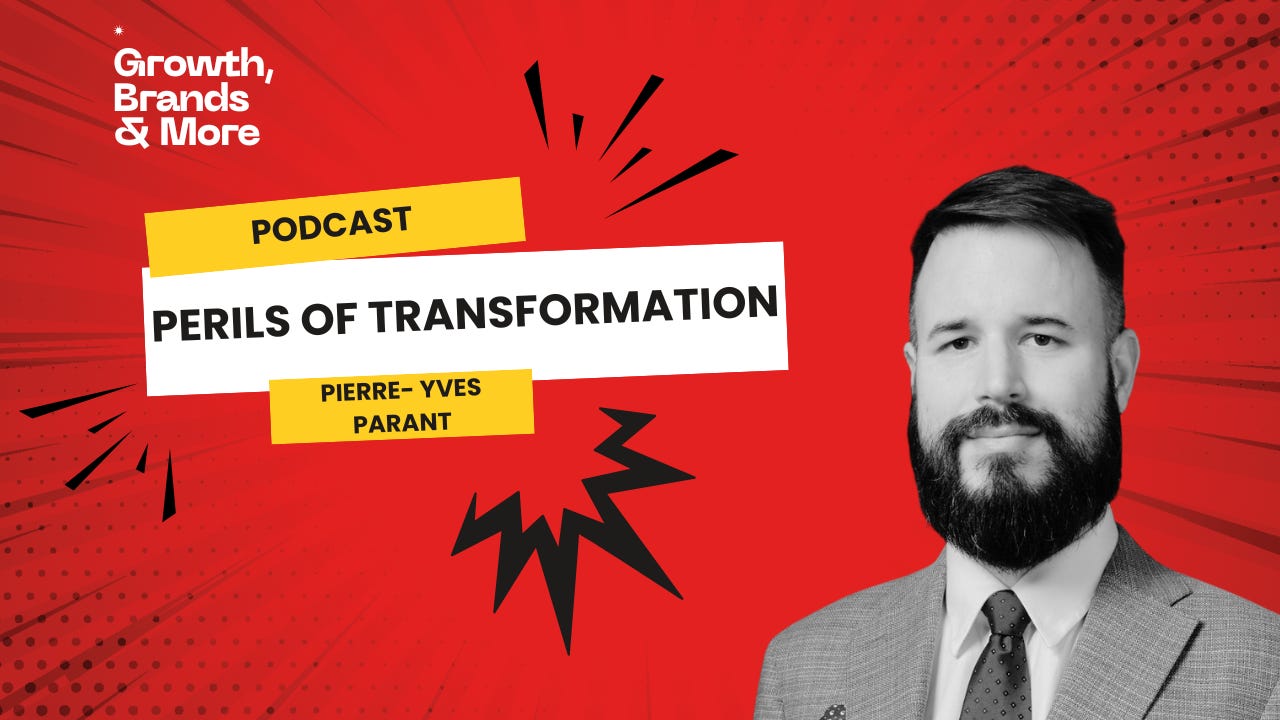
<p>Why is there a disconnect between commercial objectives and operational ability to deliver those objectives?</p><p>In this episode, our guest, Pierre-Yves Parent, a transformation and operations veteran from Procter & Gamble, Diageo, and Coty, discusses why growth strategies often fail in execution due to mismatches with a company’s operating model. Parent explains end-to-end physical and data flows, highlighting how interfaces and human interpretation create instability and how the biggest tension arises when moving from design to implementation. Using RTDs as an example, he describes a structural misalignment in commercial operations timelines driven by seasonality, weather volatility, supply co...
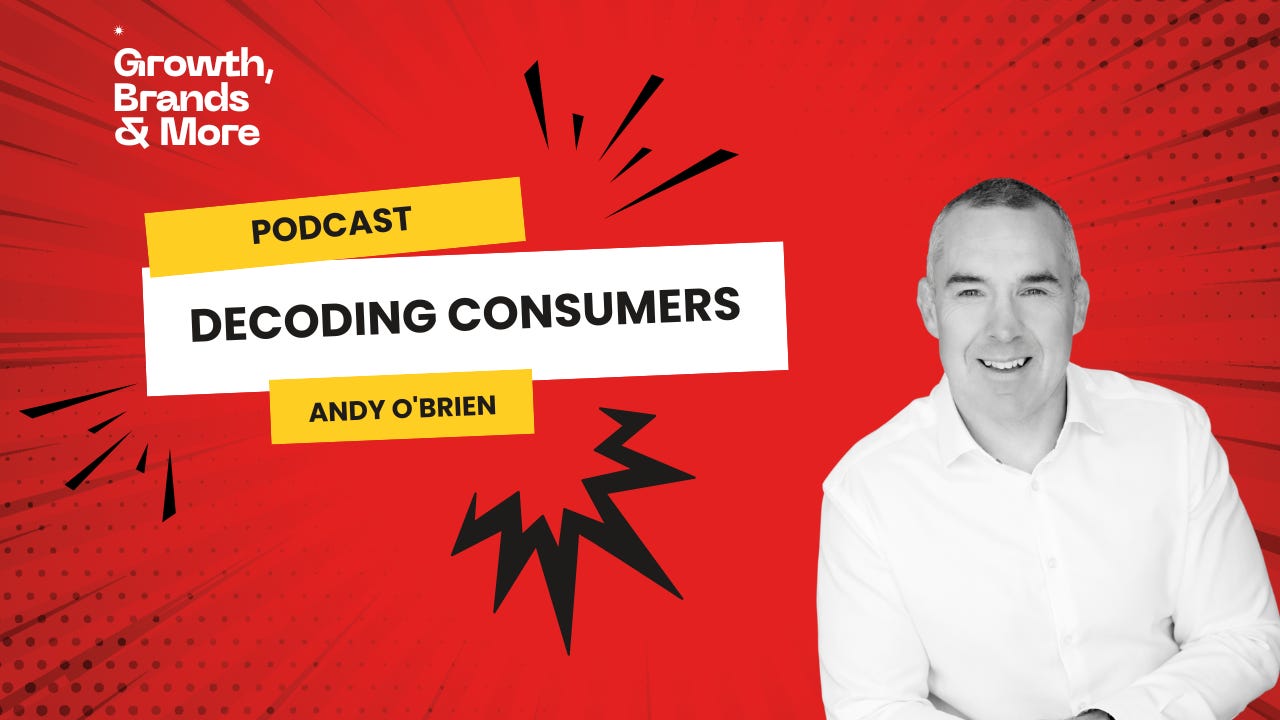
Decoding Consumers: RTDs Beer and GLP-1 | Andy O'Brien | Part 2
May 31, 202632 minS2
<p>Is premiumness in RTD as important across demographic segments?</p><p>How should an Aldi Private Label compete with Guinness? And what would happen if GLP-1 were available in an oral format?</p><p>The second part of the discussion between Andy and Filiberto begins with how conjoint analysis reveals which packaging, price, size, and format cues consumers use in split-second FMCG decisions, highlighting ABV as a simplified signal of value, quality, strength, and flavour intensity, and warning that label “communication architecture” can unintentionally drive choice. It contrasts cans (mainstream, larger scale, often requiring partners) with glass (more premium, nich...
RTDs, Conjoint and Consumer Choices | Andy O'Brien | Part 1
May 24, 202625 minS2
<p>Can we model consumer choices in a timely fashion?</p><p>Shouldn’t we test product-related design choices before launching them into the market?</p><p>The episode features Andy O’Brien, FMCG & RETAIL VP at Epic Insights, discussing his FMCG background and Epic’s software-driven, decision-based research, which delivers faster insights. They emphasise the need for rapid data to support innovation, challenge assumptions, and keep pace with retailer and internal decision timelines, noting procurement and organisational volatility as barriers and arguing that better tools should reduce high new-product failure rates. The conversation presents Epic-sponsored conjoint research on alcoholic RTDs i...
Every question we get asked before someone starts their trial.
If you have a concern about deliverability, AI quality, data privacy, or whether this will actually work for your specific situation, it's probably answered below.
What is the difference between Founder Solo and Founder Pro?
Founder Solo gives you 50 AI pitches per month using the credit model (Standard pitches cost 1 credit, Enriched pitches cost 2). Founder Pro raises that to 200 credits per month and adds full Booking Probability access, unlimited Magic Match, Apollo enrichment credits, and data export capabilities. Both plans use the same credit system, so you can stretch your monthly budget further by using Standard-mode drafting.
How do agency tiers work?
Agency tiers have no base fee. You pay per managed client and per talent profile. Agency Standard is $199 per client per month; Agency Pro is $399 per client per month. Both add $39 per talent profile per month. Your own team's user seats are always free.
What is a talent profile?
A talent profile represents one person (founder, executive, or spokesperson) you are booking onto podcasts. It includes their bio, topics, headshots, and outreach history. Team plans include 5 profiles; agency plans are pay-as-you-go.
Can I switch plans later?
Yes, at any time. Upgrades take effect immediately; downgrades apply at the end of the current billing period. Contact support if you need help migrating between plan families.
Do you offer a free trial?
Every paid plan includes a 15-day free trial. Your card is saved at signup but you will not be charged until day 16. Cancel any time from your dashboard.
What happens if I cancel?
You keep access until the end of your current billing period. No charges after that. Your data is retained for 30 days in case you reactivate.
Is the 20% annual discount automatic?
Yes. Select Annual on the pricing toggle and the discounted price is applied automatically at checkout. The annual price shown is the full year cost.
What if I have more than 50 profiles or 20 clients?
That is our Enterprise tier. Contact our sales team and we will build a custom plan with volume pricing, a dedicated account manager, and SLA guarantees.