The Happy English Podcast helps English learners learn natural American English with clear lessons, practical phrases, everyday conversation tips, and listening practice. Hosted by American English teacher Michael DiGiacomo , the show features short and practical lessons to help you build vocabulary, improve pronunciation, and speak English confidently in real conversations. Episodes range from quick tips to longer explanations and cover useful topics like phrasal verbs, idioms, pronunciation, grammar, and natural conversation patterns used by native speakers. If you want to learn English, improve your American English pronunciation, practice English listening, and speak English more confidently in everyday conversation , the Happy English Podcast will help you step by step. Since 2014, the podcast has published over 1,000 episodes and reached more than 8 million downloads worldwide . Get free weekly English lessons plus instant access to my FREE Vocabulary Workshop.: https://learn.myhappyenglish.com/free-english-lessons Watch video versions of the podcast: https://www.youtube.com/@HappyEnglishNY/podcasts
Pitch Analysis
Required Pod Score for this show. PitchCentric checks your profile against host openness, topical fit, and audience signals before you generate a pitch.
Contact path
Verified email
Booking probability
48%
Guest openness
Selective
Verified email on file
80/100
Required Score
Sign up to generate a grounded pitch for Happy English Podcast (Natural American English).
What is Happy English Podcast (Natural American English)?
Happy English Podcast (Natural American English) is a education podcast hosted by Unknown Host, with 0 episodes on record and a Required Pod Score of 80. PitchCentric scores this show on Booking Probability, Listen Score, and live audience signals refreshed every 24 hours.
About the host
Unknown Host hosts Happy English Podcast (Natural American English), a education show with 0 episodes published.
Our AI reads these to draft pitches. Use them as grounding for a pitch that cites a real guest and a specific topic.
Episode #1089
1089 – How to Use “No Wonder” Naturally
Aug 20, 20269 min
No wonder you’re tired—you only slept four hours. No wonder the room is cold. The window is open. She practices every day, so it’s no wonder she’s improving. Well, no wonder! No wonder is a very common conversational phrase in everyday English, and we use it when new information explains something that seemed surprising, confusing, or unexpected before. Have you wondered... how to use no wonder? If so, you’re in luck—because today, we’re going to look at how you can use no wonder naturally in everyday English. The Happy English Podcast Helping people speak English better since 2014 Over 1,000 episodes • 8 million downloads Get free weekly English lessons plus instant access to my FREE Vocabulary Workshop.: https://learn.myhappyenglish.com/free-english-lessons Watch video versions of the Happy English Podcast on YouTube https://www.youtube.com/@HappyEnglishNY/podcasts Learn more about my English lessons and courses https://www.myhappyenglish.com
What do you mean? I didn’t mean to upset you. I’ve been meaning to call you. You mean a lot to me , but I guess it just wasn’t meant to be. This lesson is meant to help you speak English better. Mean is a small word, but we use it in a surprising number of everyday situations. We use it to ask for clarification, explain our intentions, talk about purpose, and even tell someone how important they are to us. Have you ever been confused by all these different uses of mean? If so, you’re in luck—because today, we’re going to look at the different ways you can use mean in everyday English. The Happy English Podcast Helping people speak English better since 2014 Over 1,000 episodes • 8 million downloads Get free weekly English lessons plus instant access to my FREE Vocabulary Workshop.: https://learn.myhappyenglish.com/free-english-lessons Watch video versions of the Happy English Podcast on YouTube https://www.youtube.com/@HappyEnglishNY/podcasts Learn more about my English lessons and courses https://www.myhappyenglish.com
I found out that the store is closing. I can’t figure out how this app works. We ran out of coffee. Everything worked out in the end. It turned out to be a great restaurant. Phrasal verbs with out show up everywhere in everyday English, and the meaning of out changes depending on the verb. Have you been confused by expressions like find out, figure out, run out of, work out, and turn out? If so, you’re in luck—because today, we’re going to look at five useful phrasal verbs with out that you can use in everyday English. The Happy English Podcast Helping people speak English better since 2014 Over 1,000 episodes • 8 million downloads Get free weekly English lessons plus instant access to my FREE Vocabulary Workshop.: https://learn.myhappyenglish.com/free-english-lessons Watch video versions of the Happy English Podcast on YouTube https://www.youtube.com/@HappyEnglishNY/podcasts Learn more about my English lessons and courses https://www.myhappyenglish.com
Does that make sense? That makes sense. I’m trying to make sense of this. It makes sense to do that. Financially, it makes sense. Sense is one of those words that appears in a lot of very natural everyday expressions, especially when we’re talking about whether an idea is clear, logical, or reasonable. Have you ever been confused by the different ways we use make sense? If so, you’re in luck—because today, we’re going to look at how you can use make sense naturally in everyday English. The Happy English Podcast Helping people speak English better since 2014 Over 1,000 episodes • 8 million downloads Get free weekly English lessons plus instant access to my FREE Vocabulary Workshop.: https://learn.myhappyenglish.com/free-english-lessons Watch video versions of the Happy English Podcast on YouTube https://www.youtube.com/@HappyEnglishNY/podcasts Learn more about my English lessons and courses https://www.myhappyenglish.com
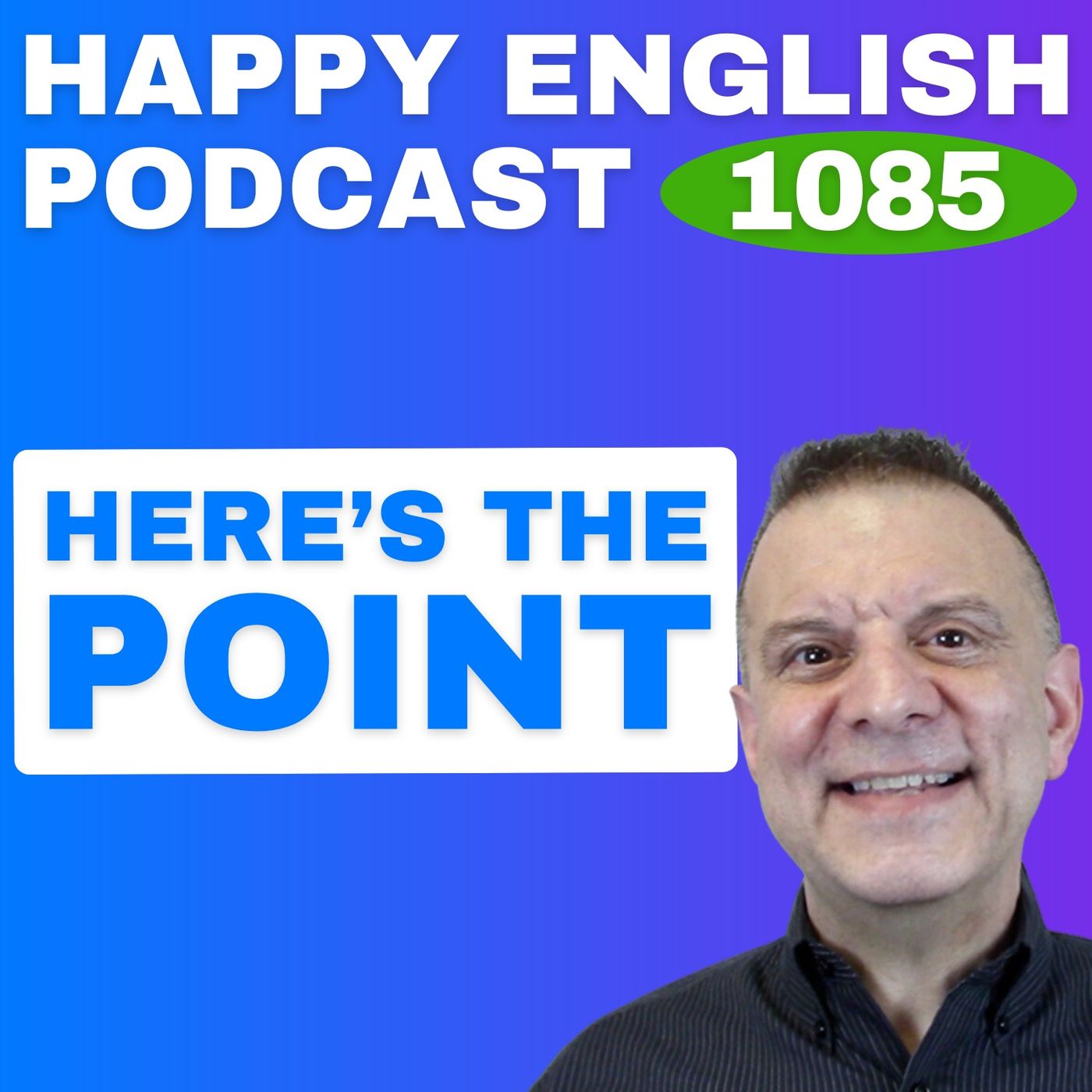
1085 – What’s the Point? How to Use “Point” in Conversation
Aug 9, 20269 min
Good point. You have a point. That’s the point. That’s not the point. What’s your point? My point is... What’s the point of arguing? Point is a really common word in everyday conversational English, especially when we’re explaining ideas, agreeing with someone, disagreeing with someone, or trying to get to the main idea of a conversation. Have you been confused by all these different uses of point? If so, you’re in luck—because today, we’re going to look at how you can use point naturally in everyday English. The Happy English Podcast Helping people speak English better since 2014 Over 1,000 episodes • 8 million downloads Get free weekly English lessons plus instant access to my FREE Vocabulary Workshop.: https://learn.myhappyenglish.com/free-english-lessons Watch video versions of the Happy English Podcast on YouTube https://www.youtube.com/@HappyEnglishNY/podcasts Learn more about my English lessons and courses https://www.myhappyenglish.com
Every question we get asked before someone starts their trial.
If you have a concern about deliverability, AI quality, data privacy, or whether this will actually work for your specific situation, it's probably answered below.
What is the difference between Founder Solo and Founder Pro?
Founder Solo gives you 50 AI pitches per month using the credit model (Standard pitches cost 1 credit, Enriched pitches cost 2). Founder Pro raises that to 200 credits per month and adds full Booking Probability access, unlimited Magic Match, Apollo enrichment credits, and data export capabilities. Both plans use the same credit system, so you can stretch your monthly budget further by using Standard-mode drafting.
How do agency tiers work?
Agency tiers have no base fee. You pay per managed client and per talent profile. Agency Standard is $199 per client per month; Agency Pro is $399 per client per month. Both add $39 per talent profile per month. Your own team's user seats are always free.
What is a talent profile?
A talent profile represents one person (founder, executive, or spokesperson) you are booking onto podcasts. It includes their bio, topics, headshots, and outreach history. Team plans include 5 profiles; agency plans are pay-as-you-go.
Can I switch plans later?
Yes, at any time. Upgrades take effect immediately; downgrades apply at the end of the current billing period. Contact support if you need help migrating between plan families.
Do you offer a free trial?
Every paid plan includes a 15-day free trial. Your card is saved at signup but you will not be charged until day 16. Cancel any time from your dashboard.
What happens if I cancel?
You keep access until the end of your current billing period. No charges after that. Your data is retained for 30 days in case you reactivate.
Is the 20% annual discount automatic?
Yes. Select Annual on the pricing toggle and the discounted price is applied automatically at checkout. The annual price shown is the full year cost.
What if I have more than 50 profiles or 20 clients?
That is our Enterprise tier. Contact our sales team and we will build a custom plan with volume pricing, a dedicated account manager, and SLA guarantees.