
Episode #29
Moments That Matter: What Your Employees Actually Remember When Everything Else Is Forgotten
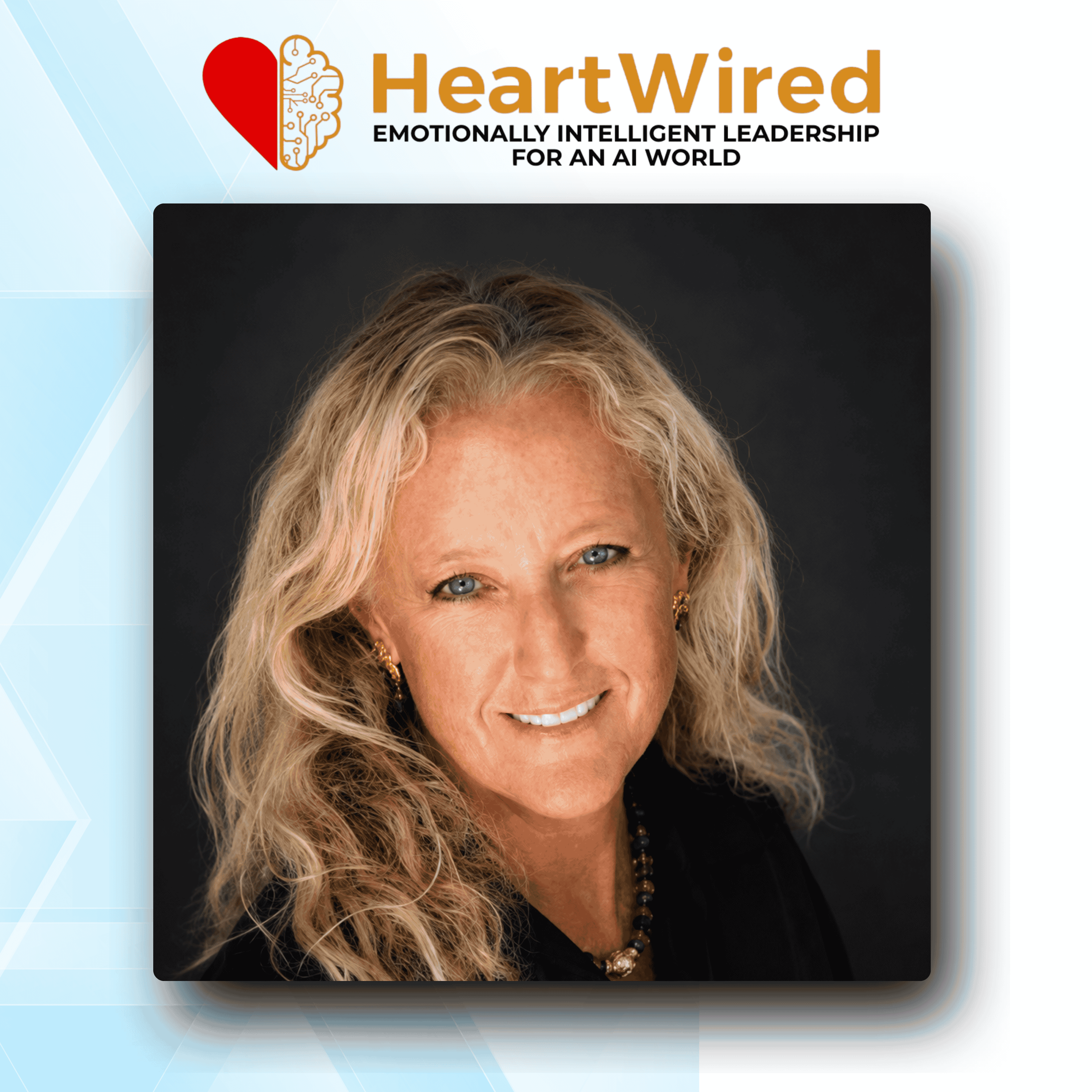
Show Notes: Heartwired – Emotionally Intelligent Leadership Episode Title: Moments That Matter: What Your Employees Actually Remember When Everything Else Is Forgotten Host: Dr. MJ Vignone Guest: Chris Dyer, Keynote Speaker, Author & Founder of PeopleG2 Episode Summary: In this episode of Heartwired, Dr. MJ sits down with Chris Dyer — keynote speaker, three-time bestselling author, and founder of PeopleG2 — for a conversation that started with an uncomfortable question. Chris spent 20 years building his company, sold it, and years later sat down with his former employees expecting gratitude. Instead, he heard, "We're mad at you." They weren't struggling in their new jobs. Many were making more money, holding bigger titles. What they missed wasn't the company. It was four or five specific moments — and how he'd shown up for them. That conversation became the seed for Chris's newest book, Moments That Matter, and for a framework he now teaches leaders navigating a world where change moves faster than they can process it. A 35% first-year attrition rate that dropped to 5% once he fixed what a first day actually felt like. A customer service team at IKEA that AI could have quietly replaced — until leadership turned those employees into a $200 million design division instead. A Harvard study tracking what employees talk about most, and the new word that has just knocked pay, perks, and recognition out of the top spot. This conversation isn't really about moments in the abstract. It's about what leadership costs when the big instances go unnoticed — and what emotional intelligence actually looks like when you stop treating it as a personality trait and start treating it as a habit of paying attention. Key Takeaways: There's a Difference Between a Bad First Day and a Bad Hire Chris assumed his early attrition problem was a hiring or onboarding issue. It wasn't. New employees were showing up without passwords, without laptops, without anyone to have lunch with — and quietly deciding they'd made the wrong choice. Once the company committed to making day one genuinely great, even delaying a start date rather than rushing an unprepared one, attrition dropped from 35% to 5%. The lesson: what looks like a retention problem is often a first-moment problem. Not Every Moment Deserves the Same Response Chris's framework identifies seven distinct types of moments — inception, transition, and culmination among them — and argues that leaders fail not from ignoring people, but from treating every moment the same way. A project ending gets the same non-reaction as a promotion. The filter he offers is simple: ask whether this will still matter tomorrow, next month, next year. The more "yeses," the more it demands a real response. Emotional Intelligence Is a Habit of Noticing, Not a Personality Trait Leaders often assume emotional intelligence is something people either have or don't. Chris reframes it as a practice: notice the moment, ask what the other person needs, decide how you want to show up — and do it. Someone going through a divorce, a first marriage, a medical diagnosis. The leaders who seem naturally gifted have usually just learned to ask, "What is it like for this person to experience me right now?" AI Didn't Have to Cost IKEA Its People — It Created Something New When AI began resolving 80% of IKEA's customer service inquiries, leadership faced the same choice most companies are facing now. Instead of layoffs, they retrained the team into a new interior design division — one they'd wanted to build for years but never had the staff for. That division is now worth $200 million. The moment an old job ended became the moment a new one opened, because someone was paying attention to more than the org chart. "Progress" Has Replaced Pay and Perks as the Thing Employees Talk About Most A Harvard study tracking employee communication over several years found that pay, perks, and recognition — long the top topics, happy or complaining — have been pushed down the list. The new number one is progress: did something move forward today. Chris connects this to AI giving people a taste of instant output, which has quietly reset what employees expect to feel by the end of a workday. Leaders Are Becoming Traffic Cones When They Need to Be Translators Chris describes watching leaders get worn down into a defensive, blocking posture — "don't go that way, that's broken" — as change accelerates around them. The alternative he teaches is becoming a translator and a sense-maker: naming where things actually stand and how people can still move forward, instead of just reacting to what's gone wrong. Memorable Quotes: "I would give up all the money, I would give up all the titles, and all the things that have happened since then, to be back working in the old company." — Former PeopleG2 employee, quoted by Chris Dyer "Mediocre is not okay. Good enough is not okay." — Chris Dyer "What is it like for that other person to experience me?" — Chris Dyer "Leaders feel like they are the traffic cone... I'm teaching them how to become the translators of all this change and chaos instead." — Chris Dyer This Week's One Action Chris's challenge: build a couple of intentional one-minute check-ins into your day — before lunch, before you leave, first thing in the morning. Close your eyes, take a breath, and ask: Is there anything happening right now, to me or to someone on my team, that could be a moment? A big project ending. Someone going through something hard. A first day. Catching it early is the whole game — most leaders realize a moment mattered a week too late, after the window to acknowledge it has closed. A free workbook for working through the seven moment types is available at chrisdyer.com/moments. About Our Guest: Chris Dyer is a keynote speaker, three-time bestselling author, and former chief executive who spent nearly 20 years building and leading PeopleG2, a background-check and intelligence firm he converted to a fully remote model in 2009. Under his leadership, the company was named a Best Place to Work 15 times and made the Inc. 5000 list of fastest-growing companies five times. He was named the #1 Leadership Speaker to Follow in 2026 by MSN and the #1 Leadership Speaker on Culture by Inc. Magazine, and has delivered more than 300 keynotes across 21 countries and all 50 U.S. states for organizations including NASA, Johnson & Johnson, Southwest Airlines, General Motors, and IKEA. His books include The Power of Company Culture, Remote Work: Redesign Processes, Practices and Strategies to Engage a Remote Workforce, and his newest, Moments That Matter. Chris hosts the leadership podcast TalentTalk on OC Talk Radio and iHeartRadio, and contributes to Forbes, Inc., HR.com, and the Society for Human Resource Management. He is a member of the Forbes Business Council and the Fast Company Executive Board. Website: chrisdyer.com LinkedIn: linkedin.com/in/chrisdyer7 Instagram: @chrispdyer7 TikTok: @chrisdyer.com X (Twitter): @ChrisPDyer Facebook: facebook.com/chrispdyer7 YouTube: youtube.com/@ChrisDyer Books: amazon.com/author/chrispdyer Connect with Heartwired Email: drmj@drmjheartwired.com Website: drmjheartwired.com LinkedIn: linkedin.com/in/maryjeanvignone Subscribe: Don't miss an episode — follow on Spotify and YouTube. Share: If this conversation made you think about a moment you missed, share it with someone who needs the reminder to catch the next one.