Humans of Martech
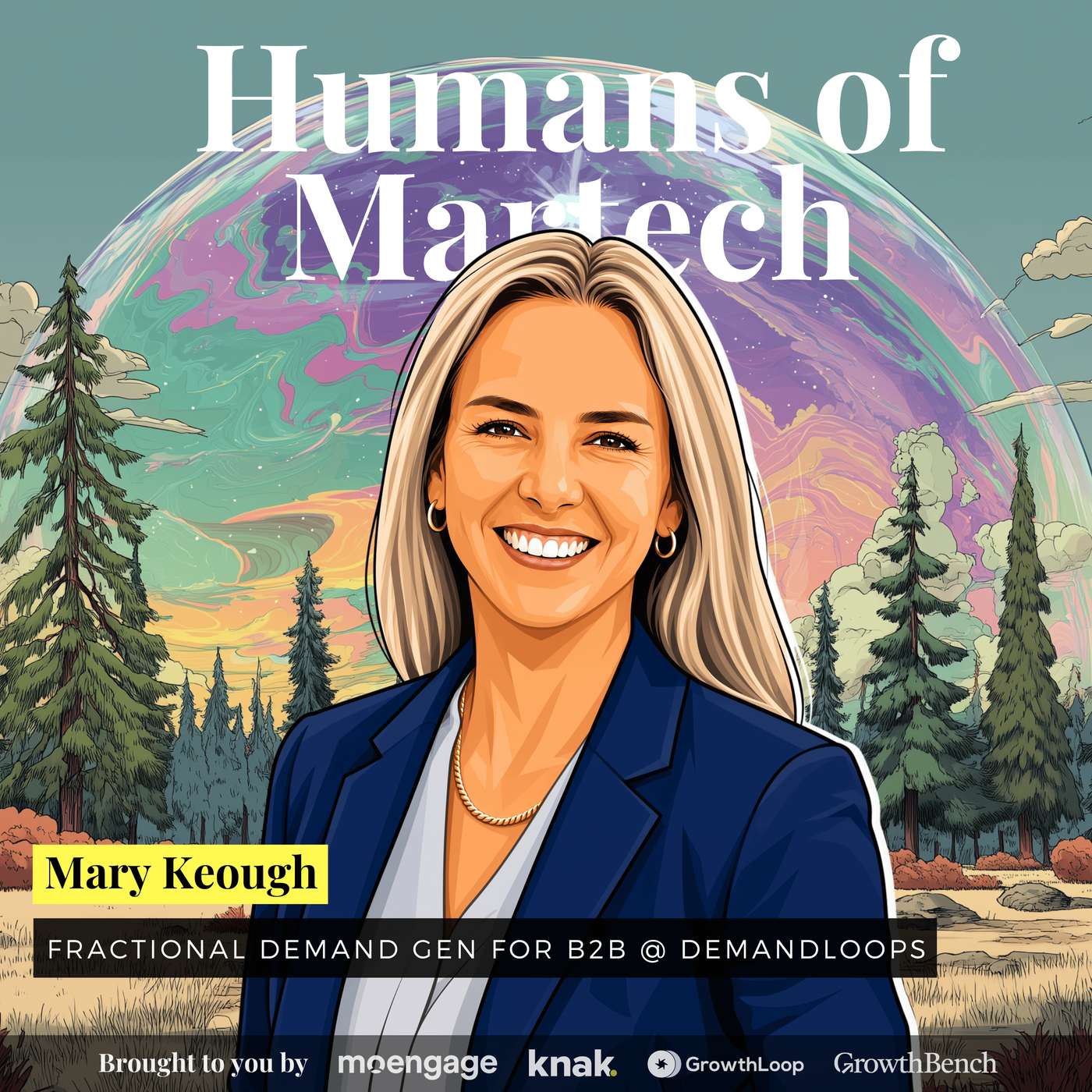
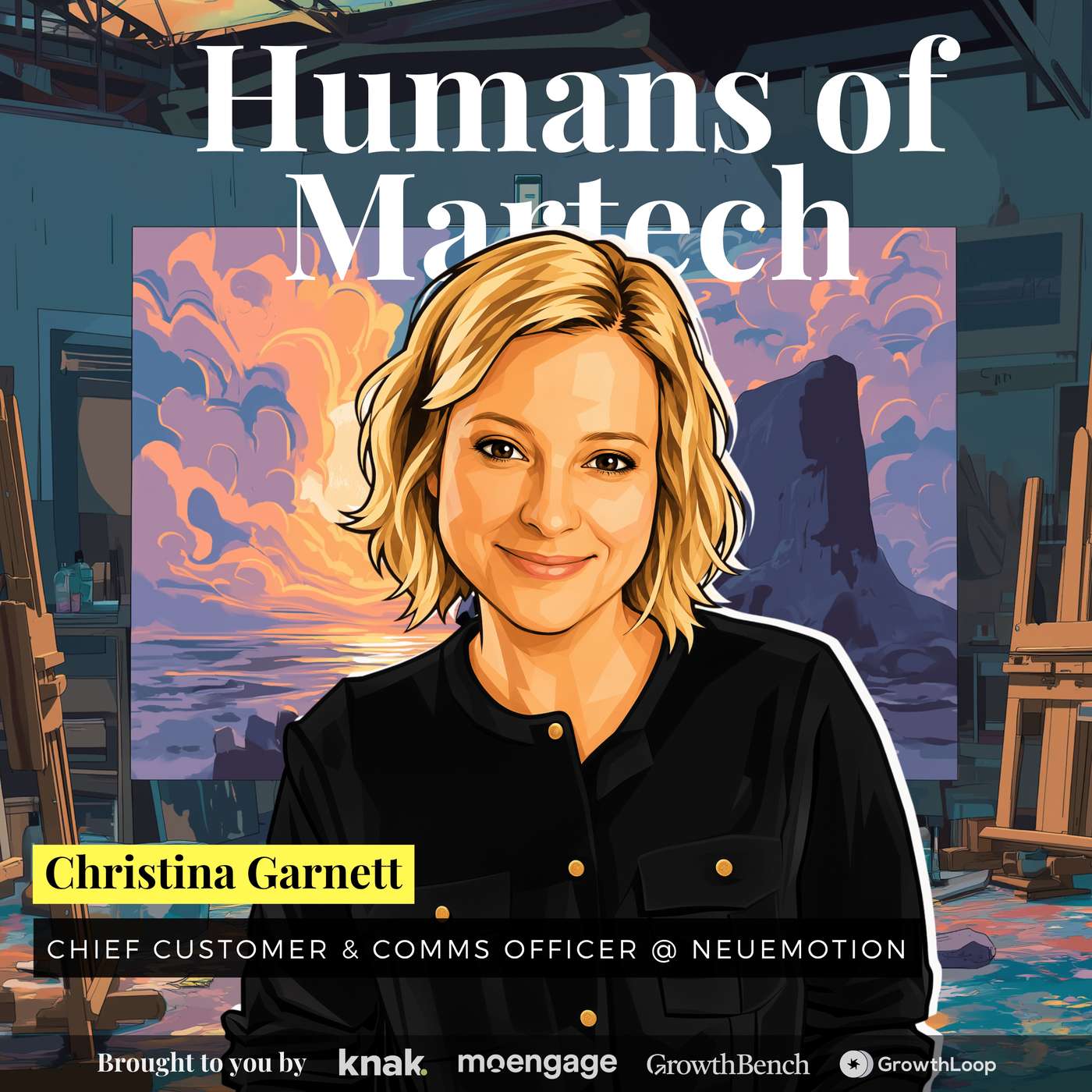
239: Personalization is a creativity problem not a data problem, with Christina Garnett
What's up everyone, today we have the pleasure of sitting down with Christina Garnett, Fractional Chief Customer and Communications Officer at Neuemotion. (00:00) - audio-Christina (01:19) - In This Episode (05:37) - Why Your Tech Stack Cannot Fix Siloed Customer Teams (11:10) - Why Getting the Name Right No Longer Counts as Personalization (18:08) - Why A/B Testing Programs Ignore Qualitative Customer Data (24:14) - How Brands Build Core Memories Customers Cannot Buy (29:55) - How B2B Brands Build Core Memories Without a Budget (35:46) - What to Do When Transactional, Behavioral and Feedback Data Disagree (42:12) - Why Spotify Wrapped Works and What Gen AI Took Away (49:17) - Why Personalization Feels Predatory Even When You Have Consent (53:58) - Where Influence Ends and Manipulation Starts in Marketing (58:57) - Why Audiences Are Going Back to the Humanities in the AI Era Summary: Christina spent 5 years teaching math before she ever wrote a subject line, and it shows in how ruthlessly she takes apart the personalization playbook. Getting someone's first name right used to be impressive and now it just proves you didn't get fired, which leaves marketers chasing hooks and tricks while customers quietly learn to read the pattern. She makes the case for core memories a brand cannot buy, walks through what actually happened when Spotify Wrapped got the AI treatment, and introduces earned context, the idea that having someone's data and having the right to use it are 2 completely different things. Along the way she calls CX and brand the same job, refuses to bet her life on NPS, and explains why the B2B move nobody is making costs almost nothing. If you have ever shipped a perfectly segmented campaign that landed with a thud, this one will tell you why. About Christina Garnett Christina Garnett is a fractional Chief Customer and Communications Officer at Neuemotion and the founder and principal at Pocket CCO, where she builds customer trust systems for agencies and SaaS companies. She's the author of Transforming Customer-Brand Relationships, which won the Independent Press Award and the International Impact Book Award and was a Foreword INDIES finalist, and she's currently writing a second book built on the Customer Trust Equation she created. Before going independent she built customer advocacy at HubSpot, growing the HubFans program from 0 to 37,000 members and more than 4,000 active advocates, and she led social and customer strategy at global scale through ICUC. She's a contributing writer at Campaign US, was previously a byline at Adweek, and she started her career as a teacher. Why Your Tech Stack Cannot Fix Siloed Customer Teams Every few years a software category shows up promising to end the silo problem. The CRM was going to do it. Then the customer data platform. Then the customer 360, the composable stack, and whatever the warehouse-native vendors are calling it this quarter. Marketing, support, social, and CX all get wired into the same tables, and everyone assumes shared data will produce shared behavior. Buy the integration, get the alignment. Christina has been on enough of those teams to know how that ends. She came into marketing sideways, an English major who taught math for 5 years, including a stretch at a school built for kids with learning differences where she trained in the Orton-Gillingham method. That method exists to move information from short-term into long-term memory. Marketers have a word for the same thing and call it brand recall. Her husband told her early on that she should go into advertising because she couldn't watch an ad without rebuilding it in her head, tweaking the copy, cutting the music, fixing whatever was broken. She went and took every course, read every book, and kept the teacher's instinct the whole way through: make the hard thing make sense, find the right words for the room you're in. Then she sat at basically every table that claims part of the customer, working as a social listening strategist, a social media creator and a social media strategist, and putting time into support, CX, community and advocacy. What she kept finding was the same organizational failure repeating under different logos, and no amount of shared tooling moved it. Here's the argument that runs under her whole book. Nobody is solving customer experience alone, because nobody is the only person reaching the customer. Support talks to them, so support gets blamed for the relationship. But your UX team is shaping what the customer can and can't do, whether they think of that as CX work or not. Your legal team is writing the fine print the customer reads at the worst possible moment. Finance sets the refund window. All of it builds the relationship, and most of it never appears on anyone's CX dashboard. The result is a company that's genuinely excellent in one place and quietly hostile in another, and it shows. That's why the material became a book rather than a framework or a course. A framework asks you to already agree with its premise before you'll use it. Christina wanted the thing she'd been hunting for on shelves and never found, written for the people at all of those different tables at once. Her words on it: "I think we all wind up writing the books that we wish already existed." The structure follows the problem in 3 moves: Every moving piece that actually builds a brand relationship, most of which sits outside the CX team., Community as the silo killer, the thing that finally forces those teams into the same room., What happens when something lands that you had no way of seeing. A brand crisis, an acquisition by a company your customers hate, or AI arriving and throwing the whole operating model in the air. That third one is where most companies are living right now, and it's the least rehearsed. The martech buying cycle keeps funding integration projects because integration is something you can purchase, and cross-functional accountability is something you have to negotiate. Until one person owns the customer relationship end to end on paper, a new platform just gives 4 teams a shared place to file work they still refuse to coordinate. Key takeaway: List every team that shapes your customer's experience, including the ones that never speak to a customer. Legal writes the cancellation language, UX decides how buried the downgrade button is, finance sets the refund window, and none of them get counted. Put all of them on one page and mark who currently owns the customer's experience of each moment. The blanks are your real CX roadmap, and no platform purchase will fill them in for you. Why Getting the Name Right No Longer Counts as Personalization Accuracy in a lifecycle program has never been cheaper. You can segment by behavior, by lifecycle stage, by predicted churn, by what someone hovered over last Tuesday, and the tooling will do all of it on a mid-tier plan. Ask a marketer whether their email is personalized and they'll show you the merge fields and the branching logic and say yes. Ask the person receiving it and you get a different answer. Christina's position is that martech made accuracy so cheap that creativity started to look like a nice-to-have, and customers noticed long before marketers did. Her frame for the whole industry is the Jeff Goldblum line from Jurassic Park, the one about scientists so preoccupied with whether they could that they never stopped to ask whether they should. We're living inside that meme, she says, running on a lot of we could so we can. And the cost shows up somewhere marketers rarely look, which is in what we've trained people to expect. Conditioning is real, and it doesn't require a marketing degree. Somebody w...