Impact Journey with Julia
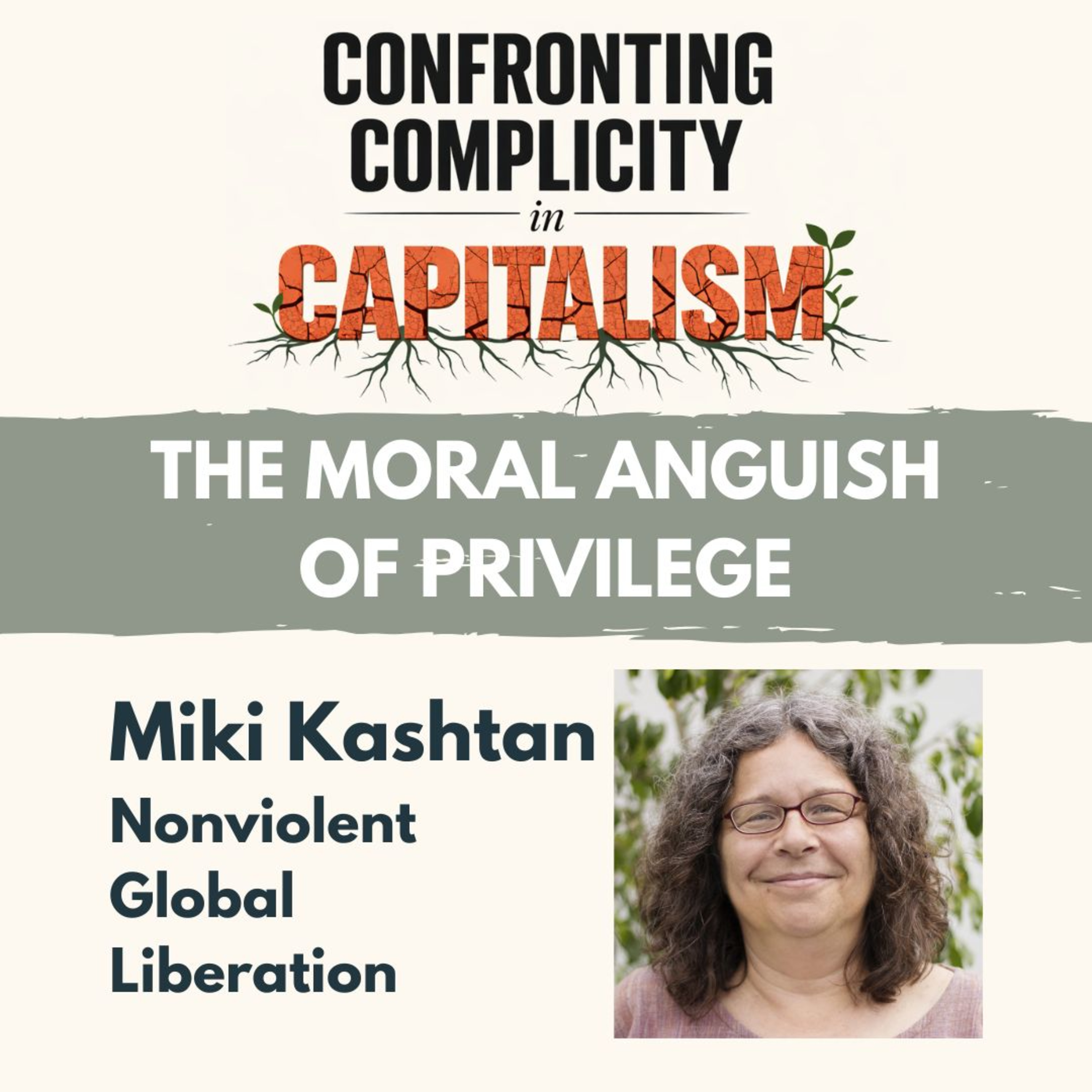
The Moral Anguish of Privilege - Miki Kashtan, NGL
This podcast is part of a series called Confronting Complicity in Capitalism . As Elena and I come toward the end of this phase of confronting our complicity in capitalism, there is one loop we keep getting stuck in - shame, specifically the shame of privilege. And there is one person we wanted to speak to, a mentor of ours: Miki Kashtan. Miki is the seed founder of the Nonviolent Global Liberation (NGL) community where Elena and I met, the author of many books, and importantly she walks the talk of nonviolence - including offering her entire body of work entirely on the gift economy. And in this conversation - the longest and most vulnerable podcast I’ve ever published - she helps me and Elena make sense of what she calls the ‘moral anguish’ of privilege, and move through it in a way that’s soft, practical, transformative. THE IMPACT. Miki Kashtan : is a practical visionary pursuing a world that works for all applies the principles and tools of Nonviolent Communication (NVC) to social transformation is the seed founder of the Nonviolent Global Liberation (NGL) Community is the author of The Highest Common Denominator and Reweaving Our Human Fabric, and The Little Book of Courageous Living. Miki also writes at The Fearless Heart holds a Ph.D. in Sociology from UC Berkeley THE JOURNEY. Some gems of wisdom that Miki takes us into: Judgment. We judge people relative to where we are. Anyone who is further outside the system is a radical fanatic, anyone more within the system is complicit. Anybody who recycles more is a fanatic; anybody who recycles less doesn't care about the Earth. Systemic shame. What is leading me to shame? Who is benefiting from my shame? The shame makes it look individual. So I had a good job, I am a problem. I have family intergenerational wealth, that is something wrong about me. Our place in the system. A system designed to benefit the fewer and fewer with each passing century at the larger and larger cost of the more many. I am just a cog in a system that no one knows how to stop. Understand the shame where you are positioned systemically, to see the values you hold dear that the shame is a distorted expression of. Means and ends. My deepest commitment is to aligning means with ends. If I treat myself poorly and do all these amazing things, the seed of non-love is there in what I do. The line of should, must, have to, shame, will not bring about a foundational shift to the system. Attachment. How attached people are to privilege is one of the core dilemmas of humanity, how to undo that attachment, what to replace it with that isn't done through internal or external imposition. From shame to grief. Shame is not gonna get us anywhere. Grief will. Moral anguish. This particular kind of pain, I call it moral anguish. It points to care. The more you can be with the pain, the more you're touching your care. Shit and bullshit jobs. That you have access to this money means that you don't have to do either shit or bullshit jobs. It's up to you what you do with your attention and energy. That is one angle of the privilege. Privilege and attention. No one is going to benefit from you taking on a regular full-time job. No one benefits from you suffering, from you feeling shame. From there, asking yourself : what is the most aligned pathway with where I'm situated, my sphere of influence, my skills, my strengths, my limitations? Modeling the change. You cannot change the systems. You're trying to model something. Rather than thinking about your privilege, think instead about what is yours to do given that you have the option to choose. A daily practice. Rather than looking for what is yours to do, review the day hour by hour. What felt on purpose, what was that purpose? What didn't feel on purpose, what do you wish you had done instead? Do that for a few weeks and see what you learn. Purpose. Some people have a very simple definition of what your purpose: that which you can't not do.