Episode #91
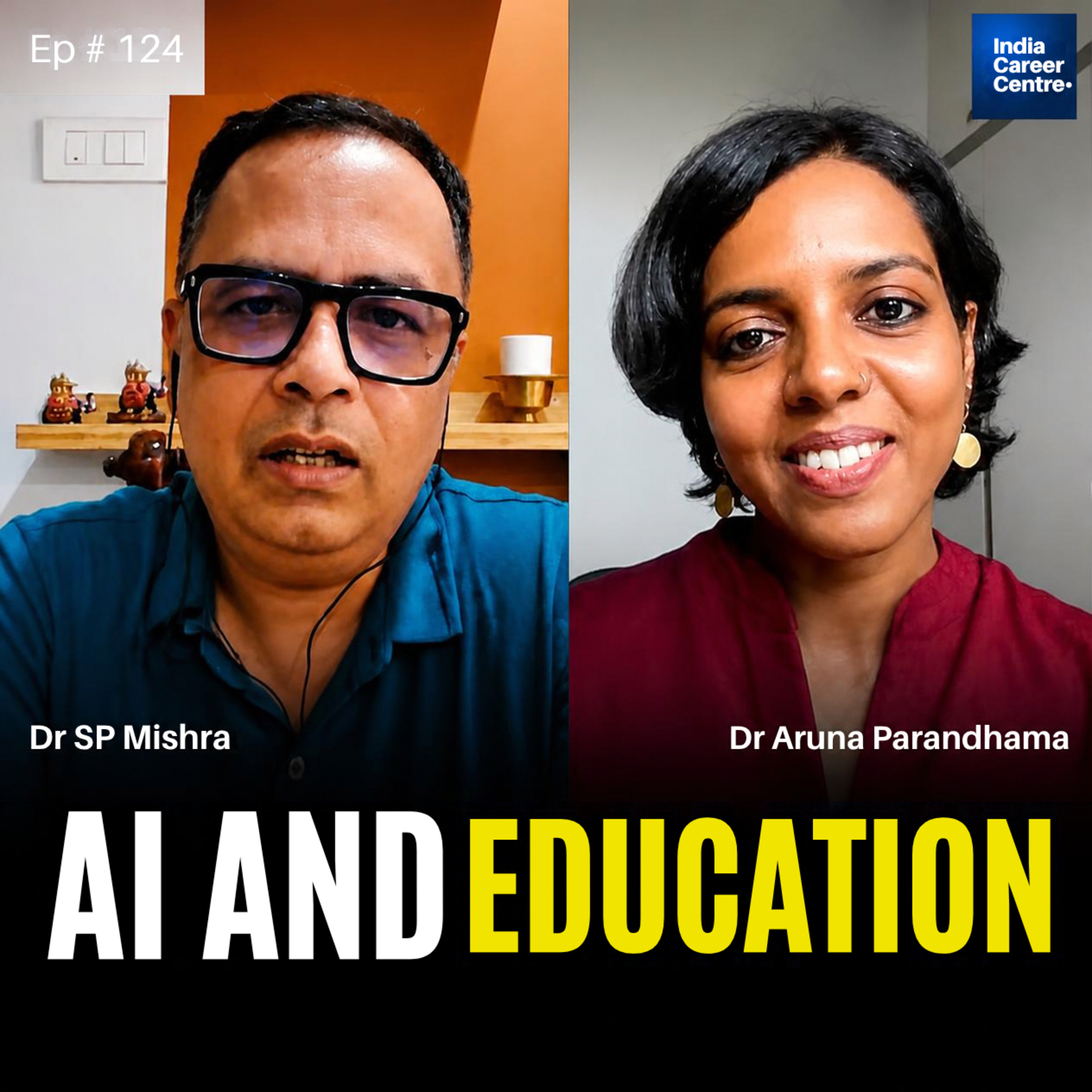
AI and Education
Learning in the age of AILearning has moved from predominantly analogue methods towards a more multimodal, interactive and personalised experience. But access to information and actual understanding are not the same thing.The importance of the “struggle” in learningAI can remove much of the friction involved in finding and processing information. But some degree of cognitive difficulty is essential for retention, comprehension and deeper learning. The challenge for educators is to determine where and how much difficulty should be deliberately built into the learning process.Are we losing deep reading and writing?As information becomes shorter, faster and increasingly entertaining, sustained reading and writing are becoming harder habits to maintain. The conversation examines why these traditional skills still matter in an AI-driven world.How teachers are adapting to shorter attention spansDr. Aruna shares practical examples from her classroom, including breaking lessons into smaller segments, using questions, activities, visual prompts and peer participation to sustain engagement.Can AI become a teaching assistant?AI can help teachers with lower-value administrative and clerical work, feedback preparation and finding references. But the value lies in how the teacher uses the technology rather than simply allowing AI to produce the final answer.AI, assignments and the problem of learning without thinkingGenerating an entire assignment through AI may produce an impressive-looking output while bypassing the student's actual learning process. The discussion explores why students need to use AI as a tool for research and exploration rather than as a substitute for thinking.The future of assessmentOne of the strongest themes of the conversation is the need to move from assessing only the product of learning towards understanding the journey of learning. What did the student know initially? How did they learn? What did they discover? How did their thinking change? The discussion also explores oral assessments, practical work, smaller assessments and more process-oriented approaches.What should students focus on when information is everywhere?Dr. Aruna identifies several areas that students should continue to develop: foundational knowledge through sustained reading, organic communication, critical questioning, information triangulation and an understanding of how they themselves learn.Can AI reduce educational inequality?AI has the potential to reduce the asymmetry in access to information, but access alone does not guarantee learning. AI literacy, the ability to ask the right questions, interpret information and apply knowledge may become equally important.The changing role of the teacherAs information becomes increasingly accessible, the teacher's role may become less about delivering information and more about helping students make sense of it, challenge it, apply it and grow through it.Past Podcast Episodes# 64 — Future of Learning: Ft. Prof. Steve Joordenshttps://open.spotify.com/episode/2MfHknvFPixOGPkDDVKc84# 76 — Reimagining Education: A Conversation with Mr. Anil Pradhanhttps://open.spotify.com/episode/3f5Znbui8LcEuizy5xKAMH# 97 — State of India's Higher Education: Conversation with Prof. M.K. Surappahttps://open.spotify.com/episode/2O9eTXgYonEjoMI20sqlRR# 98 — Indian Higher Education System: Present & Futurehttps://open.spotify.com/episode/5E0fzAbv35hsIsyGv7YT2J# 111 — Can an AI Make You a Better Communicator and Learner? Ft. Prof. Steve Joordenshttps://open.spotify.com/episode/4EmczrWo9eGfdCDxua1ww6 # 120 — Reimagining Higher Education in the Age of AI: Ft. Prof. Steve Joordenshttps://open.spotify.com/episode/4GawdjHenhvV7Pynlg1Ihp?si=27d5a3d01ba74969# 121 — Beyond Degrees | The Future of Educationhttps://open.spotify.com/episode/46quKf5KltIrdOgwQSZGs8?si=2186b7f6a775445eSupport this channel : https://www.instamojo.com/@spmishrais/ https://paypal.me/iccschool