Institute for Government
In conversation with Daisy Cooper MP
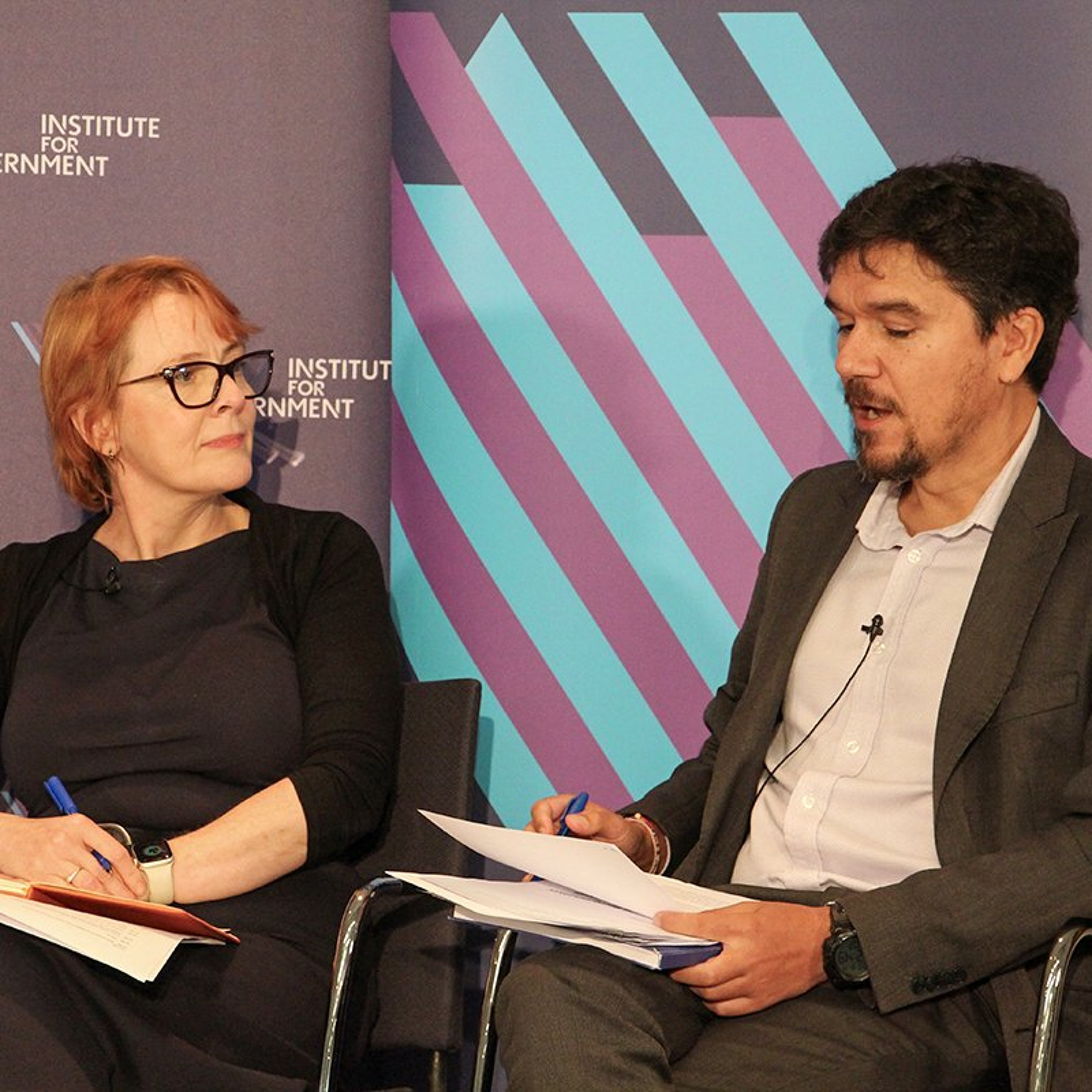
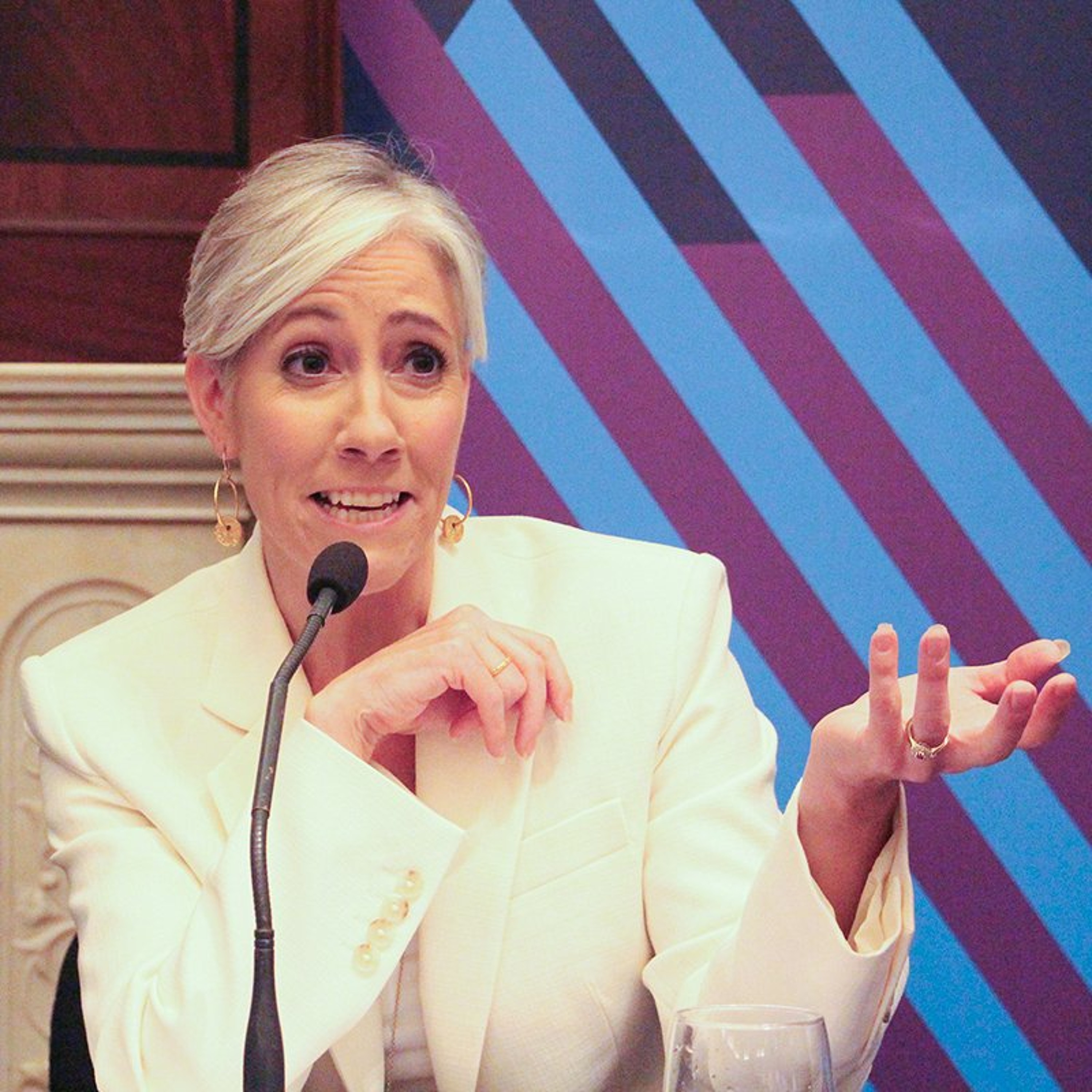
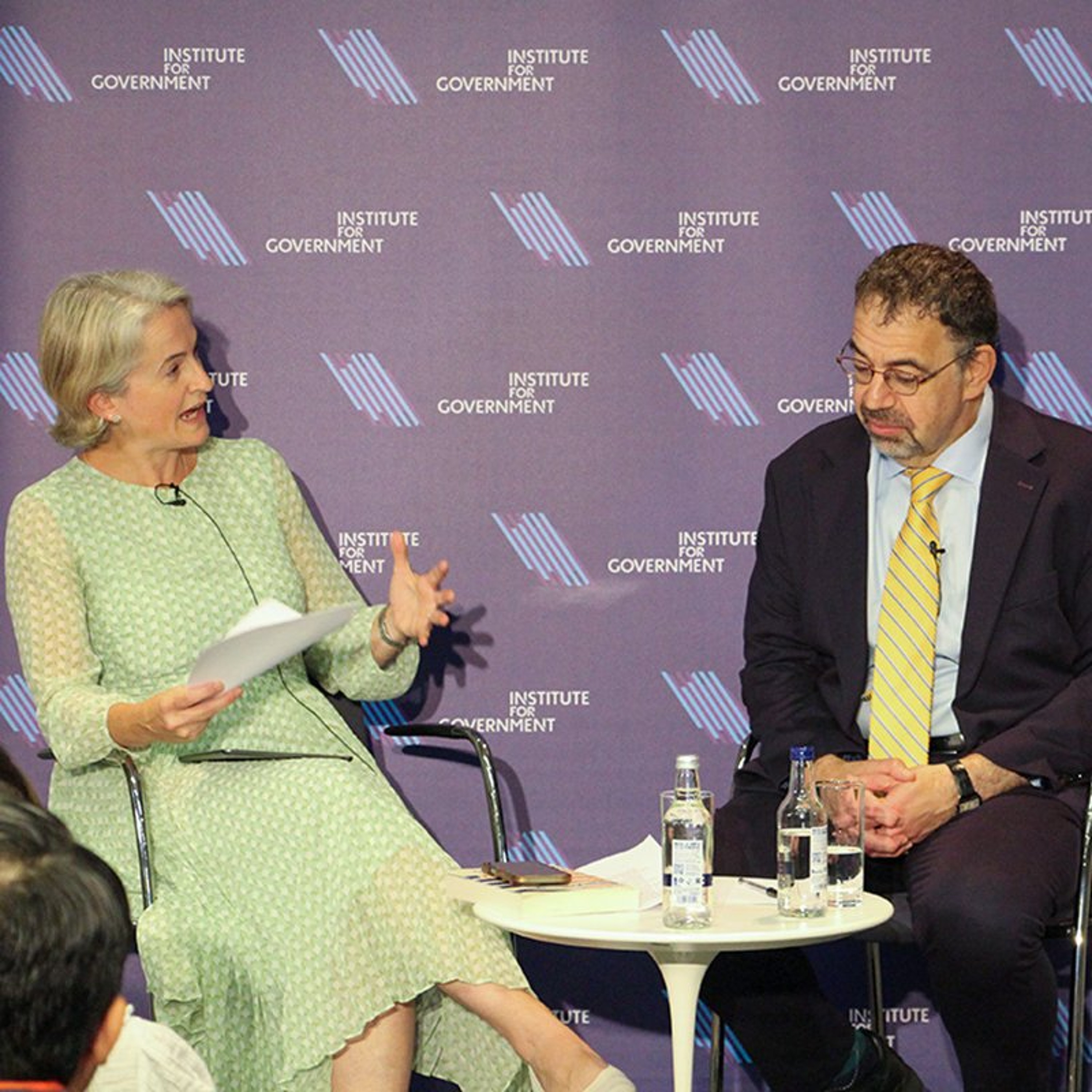
Giles Wilkes, Senior Fellow at the Institute for Government was joined by Daisy Cooper MP, Deputy Leader of the Liberal Democrats, at the Liberal Democrat Party Conference.
Loading…
News
Hosted by Unknown Host · News · EN · 500 episodes
The leading think tank working to make UK government more effective. Stay up to date with all of our commentary, analysis and events by visiting our website and subscribing to our newsletter.
Required Pod Score for this show. PitchCentric checks your profile against host openness, topical fit, and audience signals before you generate a pitch.
Contact path
Verified email
Booking probability
38%
Guest openness
Selective
Sign up to generate a grounded pitch for Institute for Government.
Signup to Generate a PitchInstitute for Government is a news podcast hosted by Unknown Host, with 500 episodes on record and a Required Pod Score of 80. PitchCentric scores this show on Booking Probability, Listen Score, and live audience signals refreshed every 24 hours.
Unknown Host hosts Institute for Government, a news show with 500 episodes published.
Our AI reads these to draft pitches. Use them as grounding for a pitch that cites a real guest and a specific topic.

Institute for Government
Giles Wilkes, Senior Fellow at the Institute for Government was joined by Daisy Cooper MP, Deputy Leader of the Liberal Democrats, at the Liberal Democrat Party Conference.
Institute for Government
High-profile incidents of misconduct, political donations, and freebies have all raised concerns about standards and integrity in UK public life – so what more can be done to tackle corruption in national and local government? In his new book Corrupted Kingdom, Robert Barrington argues that corruption in Britain is not just a matter of isolated scandals but reflects deeper systemic vulnerabilities that risk undermining trust in democratic institutions. This Institute for Government event will bring together a panel of experts – including Robert – to explore the scale and nature of corruption risks in the UK today, examine where current safeguards are working or falling short, and discuss what reforms may be needed to strengthen transparency and accountability. Robert’s book argues political leaders are facing a clear choice: tackle corruption or continue on the road to decline. This event will explore what that choice looks like in practice – and whether the UK is ready to act. The event brought together an expert panel, including: Robert Barrington, author of Corrupted Kingdom: Britain's Disappearing Integrity – And How We Can Get It Back Jenna Corderoy, Investigative reporter at Democracy for Sale Kamila Kingstone, Defending Democracy Programme Lead at Spotlight on Corruption John Penrose, former government Anti-Corruption Champion The event was chaired by Vicky Elliott, Director of the IfG Academy at the Institute for Government.

Institute for Government
The new prime minister has appointed his ministers and put his No.10 team in place. He has created a new Office for the Prime Minister and Cabinet. And set out some immediate policy changes while promising a 10-year plan later in the year. So what happens now? Having spent the summer setting out the new government's direction, how will Andy Burnham meet the challenge of being prime minister? How will he respond to parliamentary scrutiny? What do his spending choices mean for his fiscal policy? How might a challenging global situation impact his domestic policy? And what are his priorities at the upcoming Labour Party Conference? The event brought together an expert panel, including: Steph Driver, Keir Starmer’s former No.10 Communications Director Paul Johnson, Senior Fellow at the Institute for Government and former Director of the Institute for Fiscal Studies (joining virtually) Neal Lawson, Executive Director at Compass Alex Thomas, Executive Director at the Institute for Government The event was chaired by Dr Hannah White, CEO of the Institute for Government.

Institute for Government
The Institute for Government was pleased to welcome Daron Acemoglu, the Nobel Prize-winning co-author of Why Nations Fail, to discuss his new book: What Happened to Liberal Democracy? Remaking a Politics of Shared Prosperity. In his latest book, Daron Acemoglu, a Nobel Prize winner in economics, documents the rise and, some would argue, fall of liberal democracy, recounting how liberal democratic institutions plunged themselves into crisis over the last several decades. Looking at rapid advances in technology, shifts in regulatory environments, global political history, and economics, Acemoglu lays out the challenges to these institutions and sets out a new way forward, which he calls working-class liberalism: a philosophy that prioritizes shared prosperity, empowers communities, and accommodates a range of views – essential if liberal democracy is to survive in the 21st century. Daron Acemoglu was in conversation with Dr Hannah White, CEO of the Institute for Government, before taking part in an audience Q&A, followed by a book signing. Daron Acemoglu is a professor at MIT and Faculty Co-Director of MIT’s Shaping the Future of Work Initiative in Boston. Why Nations Fail (2012) has sold over one million copies globally.

Institute for Government
Angela Rayner, the Secretary of State for Housing, Communities and Local Government, has put plans to restructure local government on hold. So what went wrong and what happens next? The government’s ambitious local government reorganisation (LGR) programme, which affects around 41% of the population, aims to replace all county and district councils with a single tier of unitary local government. This would make it the largest LGR wave since 46 unitary authorities (UAs) were established between 1995 and 1997. Angela Rayner has now launched a full review of her predecessor’s decisions on future council boundaries, following new legal advice and in the face of a wave of judicial challenges. Rayner said she wanted to be satisfied the right process is in place and to test whether LGR proposals meet the priorities of the new prime minister. So how did this situation come about? What are the implications for trust between central government and local government? And how do these decisions affect broader ambitions for the government to rewire the state and deliver good growth in every postcode? As local leaders and the sector process the government’s decision, the IfG assembled an expert panel to respond to these developments, featuring: Amanda Askham, Partner, Consulting at Grant Thornton UK LLP Dr Matthew Fright, Associate Director at the Institute for Government Heather Jameson, Editor of The MJ Akash Paun, Director at the Institute for Government This event was chaired by Dr Catherine Haddon, Senior Fellow at the Institute for Government. [A previously advertised event considering 'How should central government support local authorities going through LGR?' has been postponed and will be rescheduled in the near future.] We would like to thank Grant Thornton UK LLP for kindly supporting this event.
Recent guests on Institute for Government. Study who booked and why before you pitch.
Sponsor detection runs nightly. Check back soon.
Based on semantic analysis of episode topics and host coverage, this show is a strong guest fit for executives in:
Industry fit is computed by PitchCentric using vector embeddings of the show's episode catalog.
Is this podcast yours and you'd like to remove or correct details? Request removal or email privacy@pitchcentric.com.
FAQs
If you have a concern about deliverability, AI quality, data privacy, or whether this will actually work for your specific situation, it's probably answered below.
Founder Solo gives you 50 AI pitches per month using the credit model (Standard pitches cost 1 credit, Enriched pitches cost 2). Founder Pro raises that to 200 credits per month and adds full Booking Probability access, unlimited Magic Match, Apollo enrichment credits, and data export capabilities. Both plans use the same credit system, so you can stretch your monthly budget further by using Standard-mode drafting.
Agency tiers have no base fee. You pay per managed client and per talent profile. Agency Standard is $199 per client per month; Agency Pro is $399 per client per month. Both add $39 per talent profile per month. Your own team's user seats are always free.
A talent profile represents one person (founder, executive, or spokesperson) you are booking onto podcasts. It includes their bio, topics, headshots, and outreach history. Team plans include 5 profiles; agency plans are pay-as-you-go.
Yes, at any time. Upgrades take effect immediately; downgrades apply at the end of the current billing period. Contact support if you need help migrating between plan families.
Every paid plan includes a 15-day free trial. Your card is saved at signup but you will not be charged until day 16. Cancel any time from your dashboard.
You keep access until the end of your current billing period. No charges after that. Your data is retained for 30 days in case you reactivate.
Yes. Select Annual on the pricing toggle and the discounted price is applied automatically at checkout. The annual price shown is the full year cost.
That is our Enterprise tier. Contact our sales team and we will build a custom plan with volume pricing, a dedicated account manager, and SLA guarantees.