Episode #6
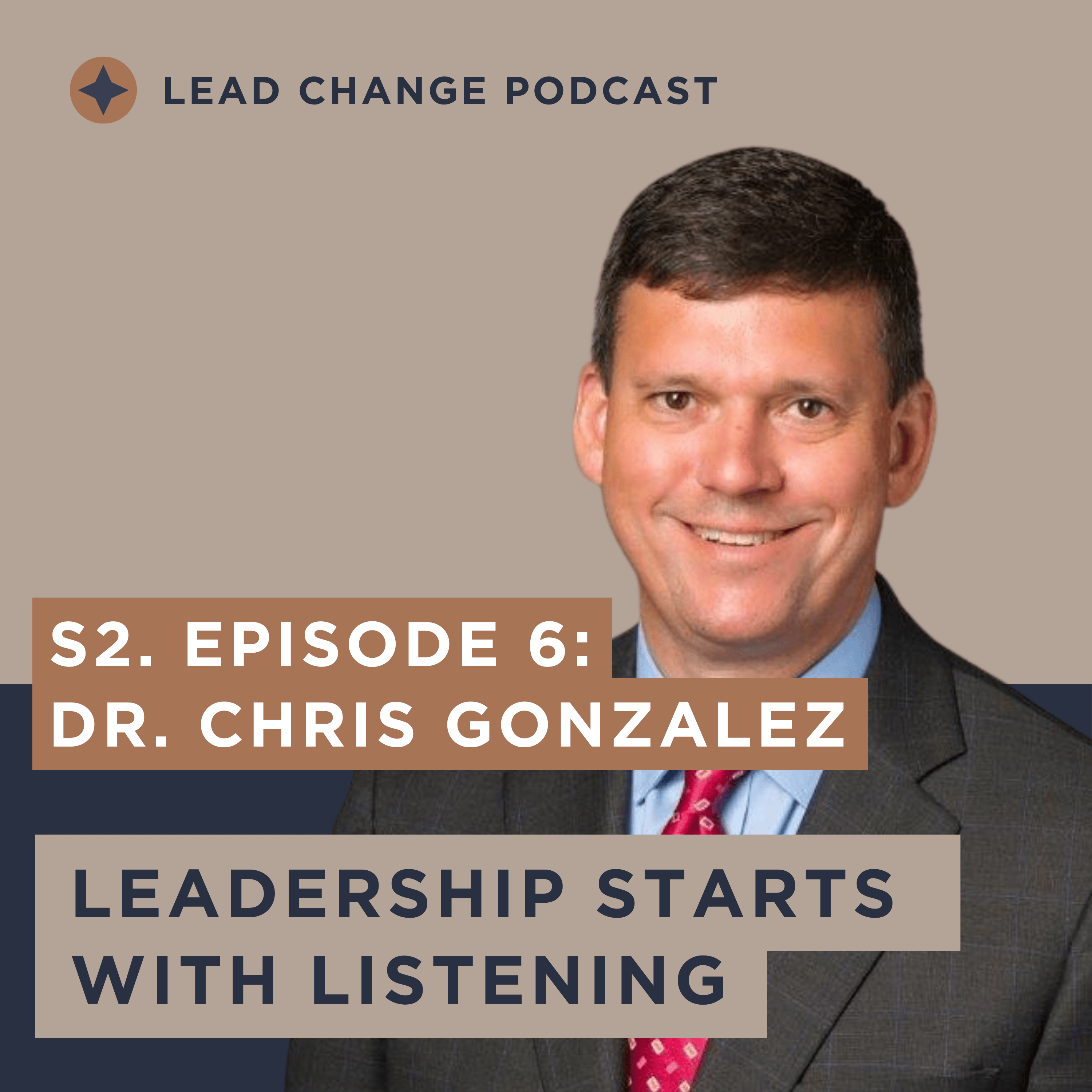
S2: Episode 6: Dr. Chris Gonzalez - Leadership Starts with Listening
In this episode of the Lead Change Podcast , Dr. Mary Mulcahey speaks with Dr. Chris Gonzalez, an accomplished urologic surgeon and physician executive whose leadership journey has included serving as department chair at two institutions, Chief of Surgery, president of a national specialty society, and Chief Clinical Officer at Loyola University Health System. Drawing on experiences spanning clinical medicine, academic leadership, professional societies, international collaboration, and even community service, Dr. Gonzalez shares a straightforward philosophy that has guided him throughout his career: try to leave every organization a little better than you found it. Dr. Gonzalez discusses why taking care of people should be one of a leader’s highest priorities. As a department chair, he viewed supporting faculty members, helping them progress in their careers, and creating an environment in which they could thrive as fundamental to the success of the department as a whole. The conversation also explores the importance of lifelong learning and international collaboration. Dr. Gonzalez describes the remarkable growth of genitourinary reconstructive surgery and his efforts to expand international participation and establish consistent standards for fellowship training around the world. His international experiences have also reinforced an important lesson: collaboration is not simply about teaching others—it is equally about recognizing how much we can learn from talented colleagues with different experiences and perspectives. Dr. Gonzalez also reflects on his transition from a highly active surgical practice to the role of Chief Clinical Officer. Although the transition required him to spend significantly less time operating, he emphasizes the importance of physician leaders remaining connected to clinical medicine. Continuing to care for patients helps leaders understand the challenges clinicians face, maintain credibility, and make decisions grounded in the realities of patient care. Finally, Dr. Gonzalez identifies two essential leadership skills: listening and empathy . Effective leaders must do more than hear what people say—they must seek to understand their concerns, appreciate their perspectives, and put themselves in others’ shoes. These skills create the foundation for trust, connection, and effective problem-solving. Key Take-Home Points Leave things better than you found them. Leadership is an opportunity to strengthen an organization for the people who will come after you—not simply to advance yourself. Take care of your people. Supporting faculty and team members in their growth, advancement, and professional fulfillment strengthens the entire organization. Listen before you lead. Dr. Gonzalez describes listening as perhaps the most important leadership skill because understanding a problem begins with genuinely hearing the people experiencing it. Lead with empathy. Putting yourself in another person’s shoes allows you to better understand challenges, build trust, and solve problems collaboratively. Stay connected to the work. Physician leaders benefit from continuing to practice medicine because firsthand clinical experience keeps them connected to patients and colleagues and helps preserve credibility. Leadership is service, not self-promotion. Whether leading a hospital, professional society, department, or community organization, the focus should remain on the people and mission being served. Learn across boundaries. International collaboration provides opportunities not only to teach but also to learn from different perspectives, approaches, and experiences.