Listen Frontier
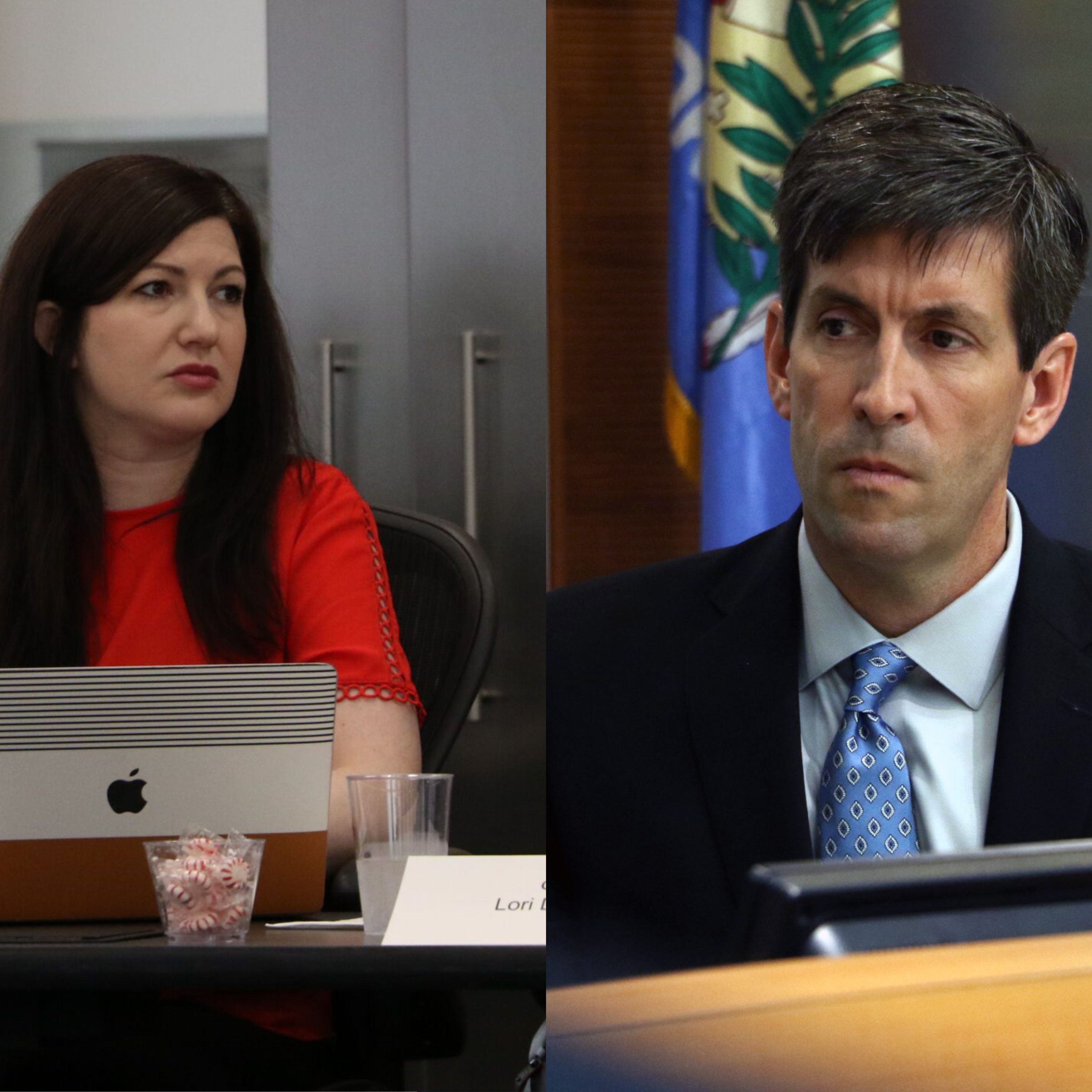
‘It’s time we do something big and bold’: Sen. Rosino pushes child welfare overhaul
The Oklahoma City Republican wants to move child welfare out of DHS and combine several state programs under a new agency focused on children.

Loading…

news
Hosted by The Frontier · news · EN · 133 episodes
Listen Frontier is a podcast exploring the investigative journalism of The Frontier and featuring conversations with those on the frontlines of Oklahoma's most important stories. At The Frontier, our mission is to hold public officials accountable, give a voice to the powerless and tell the stories that others are afraid to tell, or that illuminate the lives of people in our community. We will shine a light on hypocrisy, fraud, abuse and wrongdoing at all levels in our community and state. We will delve into complex issues and explain them to our readers, arming them with the information they need to make change.
Required Pod Score for this show. PitchCentric checks your profile against host openness, topical fit, and audience signals before you generate a pitch.
Contact path
Public web form
Booking probability
33%
Guest openness
Selective
Sign up to generate a grounded pitch for Listen Frontier.
Signup to Generate a PitchListen Frontier is a news podcast hosted by The Frontier, with 133 episodes on record and a Required Pod Score of 80.
The Frontier hosts Listen Frontier, a news show with 133 episodes published.
Our AI reads these to draft pitches. Use them as grounding for a pitch that cites a real guest and a specific topic.

Listen Frontier
The Oklahoma City Republican wants to move child welfare out of DHS and combine several state programs under a new agency focused on children.

Listen Frontier
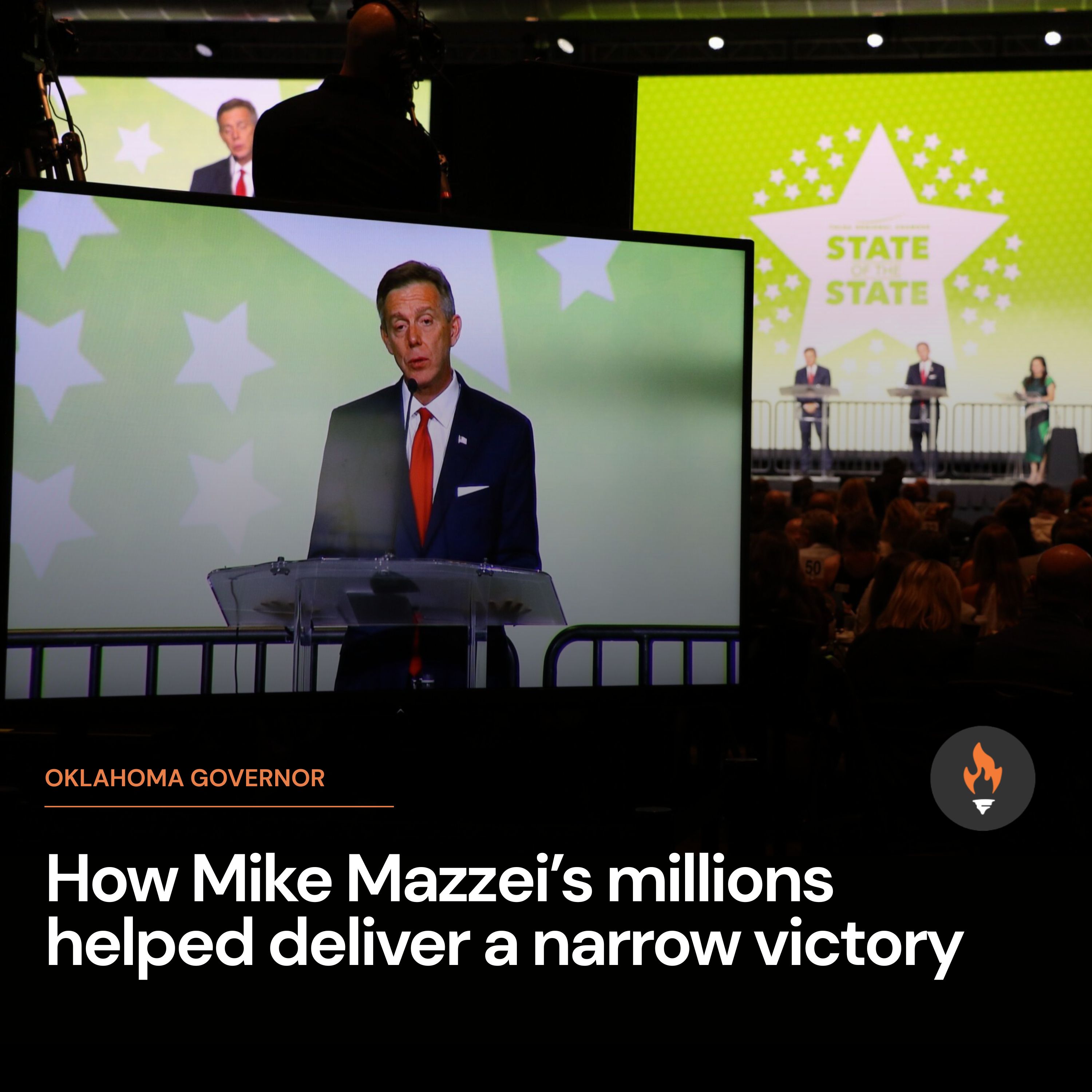
The Frontier spoke with pollster Pat McFerron about Mike Mazzei’s slim win over Gentner Drummond to secure the Republican nomination for governor. McFerron is president of the Oklahoma-based polling firm Cole Hargrave Snodgrass & Associates. For the full interview, listen to our podcast. Dylan Goforth: Let's talk about what we saw last night. It's funny: There were a lot of eyes on the election, but not so many votes. Once again, turnout in an Oklahoma runoff wasn't great, but everyone was paying attention to what happened. When you look at the runoff results, what do you think Oklahoma voters told us? Pat McFerron: I think the key takeaway is a little bit of a repudiation of the Freedom Caucus. Obviously, everyone wants to talk about the governor's race, which was very, very close. I believe it's the closest Republican runoff election we've had in the state for governor. But I think the continuation last night of support for Senate Pro Tem Lonnie Paxton — and voters increasingly siding with him over the Freedom Caucus — is probably the biggest takeaway. That, and I think you hit on it a little bit, is how few people are participating. I do think the Republican runoff election exceeded some people's expectations, but you're still talking about less than 10% of Oklahoma residents participating. It's a larger percentage of voters, but we're talking about a state of 4 million people. Less than 10% decided who is likely to be the next governor of the state. Dylan: Looking at the governor's election, Mazzei won by essentially half a percentage point. Does that look like basically a coin flip, or did you see something in the results that explains why Mazzei was able to hold off Drummond, even by the slim margin that he did? Pat: If you compare the margins — if you took out the other candidates in June and looked at the margins Drummond and Mazzei had vis-à-vis each other, then looked at what happened last night — the southeastern part of the state turned out pretty solidly and really moved toward Mazzei. In McCurtain County alone, Mazzei won by a little over 2,000 votes. He picked up 779 net votes there. So he picked up more than a third of his statewide margin in McCurtain County alone. Dylan: Do you think that's the Trump endorsement? I know southeastern Oklahoma, and I don't think of Mazzei as your typical southeastern Oklahoma candidate. Pat: It is the most Trumpian. I think the Brecheen endorsement there mattered. You also had the late Markwayne Mullin endorsement. Those are the last two congressmen there. Especially in McCurtain County, which is in the Shreveport media market, they're not seeing quite as much television advertising as some of the others are. I think they rely a little more on endorsements. So, yes, I do think that's a key part of it there. Dylan: Let's talk about the money, because I think that's an interesting part of the results. There was a lot of spending. I think Mazzei took out almost $12 million in loans. The Associated Press reported more than $14 million in television and digital advertising during the runoff, with many more millions spent before that. What did Mazzei actually buy with that money? Pat: When a race is this close, any decision on financing probably makes a difference. So, yes, I would argue that he needed it all to get there. That being said, you may recall I released numbers three weeks out that had it at 44-44. I did two other surveys that I did not release that had it at 45-45, and the last survey I did, which I finished last Thursday, had it at 45-45. That makes you wonder whether the money was wasted. But if it hadn't been there, you don't know what would have happened on the other side. It looks to me like he needed all of it—or almost all of it—to be successful. Dylan: Taking out $12 million in loans is enough to give you stress. But I guess when you win by 2,000 votes, you don't look back and regret taking out those loans. Pat: The worst feeling — and I've been on campaigns that have done this before—is to say, “I should have done something else. I should have put in another $100,000, or I should have done X, Y or Z. If I'd bought broadcast television in Shreveport, maybe I would have done better in McCurtain County.” Those are the things that drive you crazy. Very seldom do I have someone say, “We paid for a landslide, and I'm upset about it.” Dylan: I love a close race because it gives you so much to think about and dwell on. When you're talking about 2,000 votes, anywhere you're picking up votes is relevant, important and probably meaningful. One thing I was thinking about last night was the polling you released before the runoff. These guys had essentially been tied for a long time. I remember seeing numbers in June, and the June election results were close. What do last night's results — and the way the last six months played out — tell you about where the supporters of the other candidates went? Pat: Obviously, it means they split rather evenly. I haven't gone down to this level yet, but looking at the maps, it appeared Drummond ended up winning out west, where (Jake) Merrick and (Chip) Keating had done well. Mazzei did well on the eastern side of the state, where McCall had more support. For example, in Atoka County, it wasn't a huge difference, but compared with June, Mazzei picked up a net 294 votes. In a county where only about 1,600 people voted, that's a pretty big margin. Dylan: For people looking through the numbers today and trying to sort this out, are there any obvious mistakes you would caution them against making when interpreting the numbers? Pat: One thing that's interesting in a race this close is looking at local elections. That's something I always advise people to do. Look at the turnout in Ottawa County, for example. We actually had 58% more people vote in the August Republican runoff than voted in the June primary. They had a much larger turnout because there was a local sales-tax issue on the ballot that got 94% of the vote, I think. Their sheriff had been sued, and everybody was going to pay this big settlement through property taxes. They decided to pay it off with a sales tax instead. That meant a lot more people voted in Ottawa County. We saw the same thing in Adair County and Tahlequah, where there were some very important school bond issues on the ballot. Those were also places where more people voted in August than in June. Looking at some of those things matters when you get into a race that's this close. That's all short-term. Long term, I think one of the keys will be the involvement of the metro areas in nominating Republicans in the future. We'll see what happens with Cyndi Munson, and all due respect there, but if you look at the residents of Oklahoma, Tulsa, Cleveland and Canadian counties, they account for about 48% or 49% of all the residents in the state. They accounted for only 42% of the Republican primary voters. If you change that—and given that Drummond won those counties—he might be the nominee. Oklahoma County did turn out quite a bit more in the runoff than it did in the primary. Tulsa County did a little more, percentage-wise. But to me, that's a big question: Are we going to continue to be a state with rural dominance even though the metro areas are becoming more populated? Dylan: I want to look ahead to November. If you're advising Cyndi Munson, what does such a close split in the Republican runoff tell you about Mazzei's strengths and possible vulnerabilities? Is there anything in the results that gives a Democrat an opening or hope? Last night, I went back to look at the split between Drew Edmondson and Kevin Stitt in the 2018 governor's election. Obviously, the Munson campaign isn't going to say, “Our goal is to lose by less than Edmondson lost by.” But is that a good starting point for them to look at those results? What would you tell her to do over the next few months? Pat: I will tell you, 2018 is a lot different from 2026. With the teacher walkout and everything else, our generic-ballot test in 2018 had only about an eight-point Republican advantage. I'm at a 20-point Republican advantage in 2026. I think you have to create your own hope. But I don't think the opportunity for the Munson folks is necessarily the Gentner Drummond voters. I think it's the Republicans who stayed home, and they're a tougher group to reach as well. They're a little less engaged. They will vote Republican, but I think it'll take a little while to happen. I think we'll see the Republicans come back together.


Listen Frontier
Data centers are coming to Tulsa. Eventually. But that momentum has hit a pause. City leaders have unanimously approved a temporary moratorium on new data center development, stepping back amid growing concerns about what these massive projects could mean for Tulsa’s power grid, water supply and long-term growth. At the same time, data centers promise jobs, investment, infrastructure and a foothold in a rapidly expanding industry. But they also come with enormous demands. So where does Tulsa go from here? On this episode of Listen Frontier, we’re talking with Tulsa City Councilors Phil Lakin and Laura Bellis about why they supported the moratorium, what questions still need answers, and what it would take for them to feel comfortable moving forward with data center development in Tulsa. Tulsa District 4 City Councilor Laura Bellis Dylan: What does the moratorium actually do and what does it not stop? Laura Bellis: Project Anthem’s Phase One is still moving forward, and potentially Phase Two depending on future approvals. What the moratorium does is create a nine-month pause so our planning office can update how data centers are handled in our zoning code. Right now, our code treats them like light industrial uses, which assumes they won’t have off-site impacts like noise or vibration. But that’s not what we’re seeing with large-scale, hyperscale data centers. So this pause gives us time to study best practices and update our policies. During the moratorium, no new permits can be pulled for data centers. The goal is that when it ends, we’ll have clearer rules about where they can go and whether our community has the capacity to support them. Dylan: Are there limits to what this moratorium can accomplish? Laura Bellis: This is a good first step, but it’s not a complete solution. Technology, especially AI and data centers, is evolving faster than regulation. At the city level, we can address land use and zoning, but we really need broader policy at the state and federal levels as well. My hope is that during this time, we can learn from other communities, see what works elsewhere, and start building a more comprehensive approach. Dylan: What does success look like when the moratorium ends? Laura Bellis: Success would mean we have clear definitions in our zoning code for different types and sizes of data centers, along with requirements to mitigate impacts. Ideally, we’d limit where hyperscale data centers can go and have a better understanding of how many our region can realistically support, especially when it comes to water and power. We’ll also have more information from things like the Cherokee Nation’s upcoming study and potential state legislation. Right now, we just don’t capture the nuance. By the end of this process, we should. Tulsa District 8 City Councilor Phil Lakin Dylan: What led you to support the moratorium? Phil Lakin: I supported it, but really as a way to take time and get policy right. The final version was the result of compromises, and that’s why it passed unanimously. Our zoning code wasn’t written with data centers in mind, and right now they could potentially be built next to neighborhoods or existing businesses. This gives us time — about 270 days — to fix that. It also allows projects already in the pipeline to continue, which was an important consideration. Dylan: How did you balance economic opportunity with community concerns? Phil Lakin: That was a big part of the discussion. On one hand, data centers bring investment, property tax revenue and franchise fees from electricity use. Those can be meaningful for the city. On the other hand, there are concerns about water use, power demand and proximity to neighborhoods. For me, the key was balance. We want to remain open for business, but we also want to be thoughtful about where these projects go. A moratorium gives us time to get that planning right instead of reacting after the fact. Dylan: What does success look like after the moratorium? Phil Lakin: The most important thing is getting the zoning code right, clearly defining where data centers can and can’t go. Beyond that, I think success is having a better public understanding of both the benefits and the downsides. A lot of people focus on one side or the other, but we need to look at the full picture. We all use data centers every day, whether it’s cloud storage, Google searches or AI. So part of this is helping people understand both the impact and the role they play in our daily lives.

Listen Frontier
<p>Data centers are coming to Tulsa. Eventually.</p><p>But that momentum has hit a pause.</p><p>City leaders have unanimously approved a temporary moratorium on new data center development, stepping back amid growing concerns about what these massive projects could mean for Tulsa’s power grid, water supply and long-term growth.</p><p>At the same time, data centers promise jobs, investment, infrastructure and a foothold in a rapidly expanding industry. But they also come with enormous demands. </p><p>So where does Tulsa go from here?</p><p>On this episode of Listen Frontier, we’re talk...

Listen Frontier
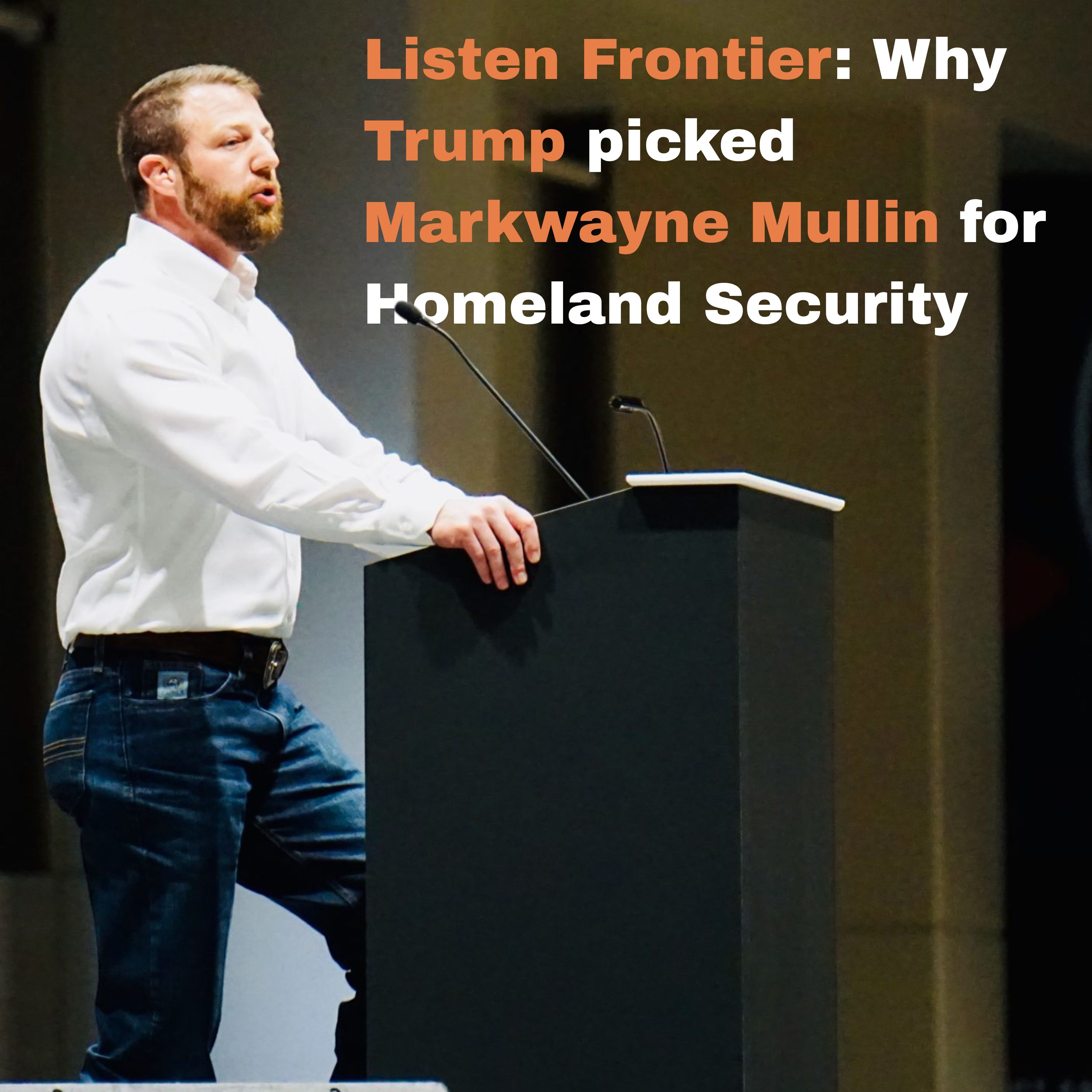
<p>Today on the Listen Frontier podcast, we’re talking about one of the more surprising political shakeups in Washington — the firing of Kristi Noem and the appointment of Oklahoma Sen. Markwayne Mullin to replace her.</p><p>Noem was abruptly pushed out of her role leading the Department of Homeland Security by President Donald Trump, setting off a scramble over who would take over one of the federal government’s most powerful agencies — responsible for border security, immigration enforcement, disaster response and counterterrorism.</p><p>Trump’s pick of Oklahoma Senator Markwayne Mullin stunned many. If confirmed, Mullin would leave what...
Recent guests on Listen Frontier. Study who booked and why before you pitch.
Sponsor detection runs nightly. Check back soon.
Based on semantic analysis of episode topics and host coverage, this show is a strong guest fit for executives in:
Industry fit is computed by PitchCentric using vector embeddings of the show's episode catalog.
Is this podcast yours and you'd like to remove or correct details? Request removal or email privacy@pitchcentric.com.
FAQs
If you have a concern about deliverability, AI quality, data privacy, or whether this will actually work for your specific situation, it's probably answered below.
Founder Solo gives you 50 AI pitches per month using the credit model (Standard pitches cost 1 credit, Enriched pitches cost 2). Founder Pro raises that to 200 credits per month and adds full Booking Probability access, unlimited Magic Match, Apollo enrichment credits, and data export capabilities. Both plans use the same credit system, so you can stretch your monthly budget further by using Standard-mode drafting.
Agency tiers have no base fee. You pay per managed client and per talent profile. Agency Standard is $199 per client per month; Agency Pro is $399 per client per month. Both add $39 per talent profile per month. Your own team's user seats are always free.
A talent profile represents one person (founder, executive, or spokesperson) you are booking onto podcasts. It includes their bio, topics, headshots, and outreach history. Team plans include 5 profiles; agency plans are pay-as-you-go.
Yes, at any time. Upgrades take effect immediately; downgrades apply at the end of the current billing period. Contact support if you need help migrating between plan families.
Every paid plan includes a 15-day free trial. Your card is saved at signup but you will not be charged until day 16. Cancel any time from your dashboard.
You keep access until the end of your current billing period. No charges after that. Your data is retained for 30 days in case you reactivate.
Yes. Select Annual on the pricing toggle and the discounted price is applied automatically at checkout. The annual price shown is the full year cost.
That is our Enterprise tier. Contact our sales team and we will build a custom plan with volume pricing, a dedicated account manager, and SLA guarantees.