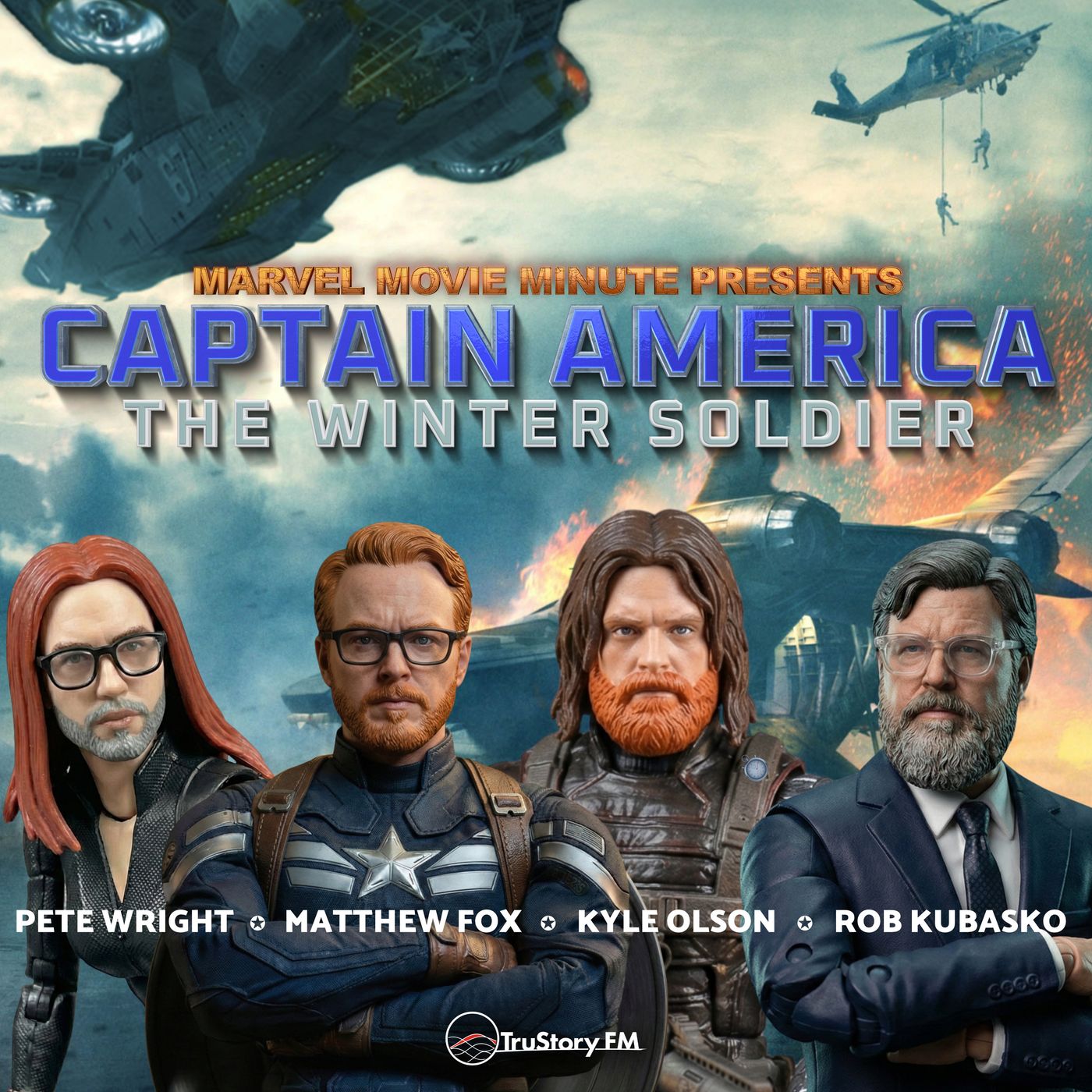
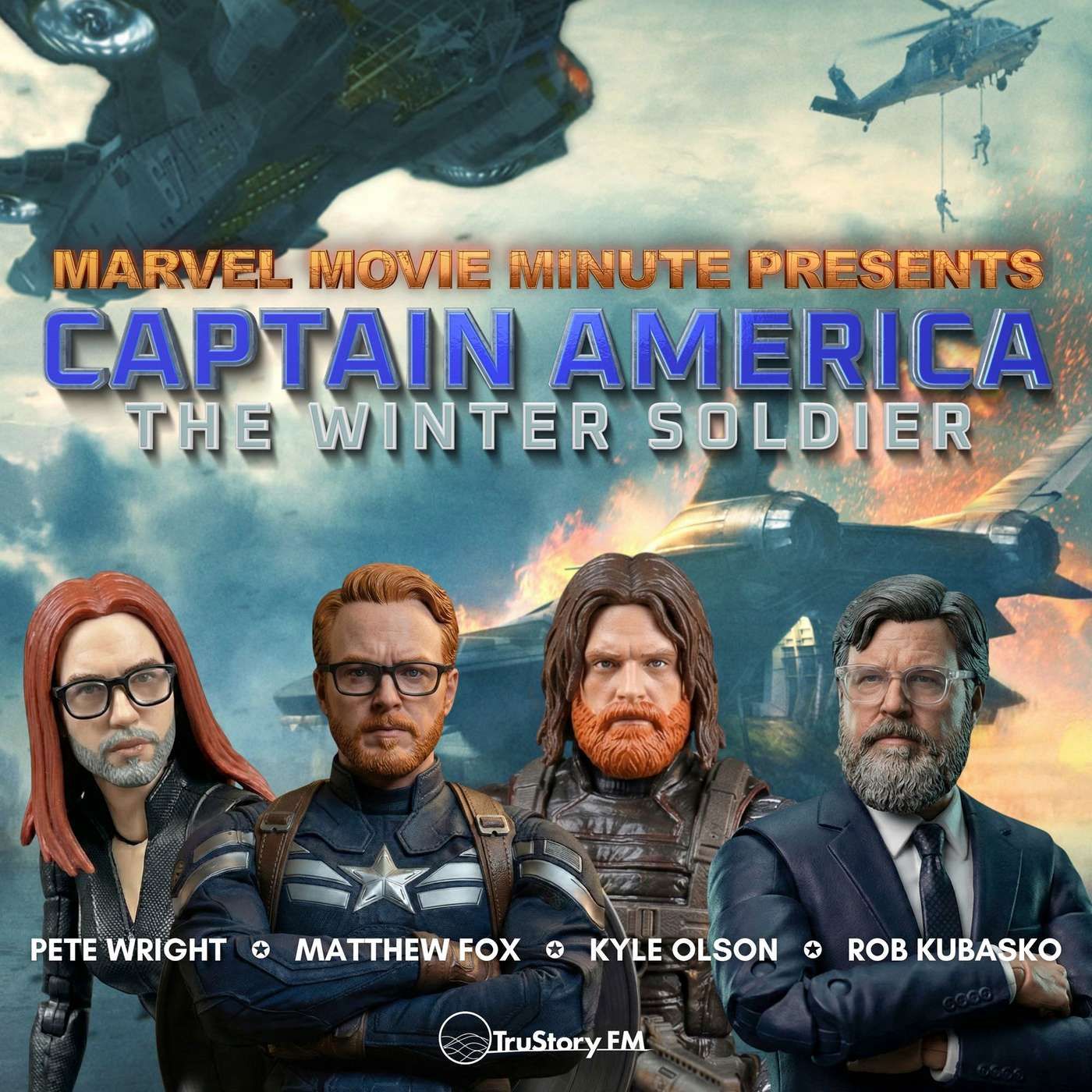
Marvel Movie Minute is the deep-dive the MCU deserves — one film, five minutes at a time. We're working through every Marvel Cinematic Universe release in order, and this season hosts Matthew Fox, Kyle Olson, Rob Kubasko, and Pete Wright are going beat by beat through Captain America: The Winter Soldier — unpacking the craft, the comic roots, and everything HYDRA thought they could hide. The show is made possible by members like you. For $5/month or $55/year, members get early access to every episode, ad-free listening, extended episodes, and exclusive perks. If you love what we do, membership is how you keep it going. Become a member today! https://marvelmovieminute.com
Pitch Analysis
Required Pod Score for this show. PitchCentric checks your profile against host openness, topical fit, and audience signals before you generate a pitch.
Contact path
Verified email
Booking probability
39%
Guest openness
Selective
Verified email on file
80/100
Required Score
Sign up to generate a grounded pitch for Marvel Movie Minute • Captain America: The Winter Soldier.
What is Marvel Movie Minute • Captain America: The Winter Soldier?
Marvel Movie Minute • Captain America: The Winter Soldier is a tv podcast hosted by Unknown Host, with 0 episodes on record and a Required Pod Score of 80. PitchCentric scores this show on Booking Probability, Listen Score, and live audience signals refreshed every 24 hours.
About the host
Unknown Host hosts Marvel Movie Minute • Captain America: The Winter Soldier, a tv show with 0 episodes published.
Our AI reads these to draft pitches. Use them as grounding for a pitch that cites a real guest and a specific topic.
Episode #26
CATWS Minutes 116-120: … to the End of the Line
Aug 17, 202639 minS9
Robert Redford watches twenty years of work break its own back in the Potomac and says "what a waste," which sets the hosts arguing about whether Alexander Pierce is a true believer or just a very well-tailored mustache-twirler. Then Nick Fury shoots him — was Pierce actually a threat in that moment, or did Fury just want him off the board before a trial aired everything Fury ever did? — and Natasha pulls off the biggest sacrifice play of her arc in roughly three seconds of screen time, which the movie promptly edits past. Elsewhere, Falcon and Rumlow beat each other around an office, and the fight is won decisively by a building.The last two minutes are the ones that hurt. Cap drops the shield, refuses the fight, and gets "you're my mission" screamed into his face — which detours the conversation into the paperclip maximizer problem and a true story about an AI that fixed a cluttered inbox by deleting the inbox. Matthew asks the harder question: when Cap gambles he can talk Bucky down, he isn't gambling with his own life. He's gambling with everyone's. Then the floor gives out. Picture wrap on Robert Redford, and on Frank Grillo.Links & ReferencesThe film and its neighbors Captain America: The Winter Soldier Captain America: The First Avenger — the Red Skull comparison, and the original fall Avengers: Age of Ultron — Strucker, and the fear that builds a robot Everything else the hosts dragged in Dr. No — the Bond monologue Pierce never gets to finish Speed — "Yeah, but I'm taller" The Wolverine — the CGI body nobody wanted to give Redford Zombieland — double tap The Empire Strikes Back — one falls, one hangs on Widow's Bay — where Pete found his favorite trolley problem answer Concepts Instrumental convergence (the paperclip maximizer) The trolley problem Characters Black Widow Crossbones More from the hosts Marvel Movie Minute — and MarvelMovieMinute.com to support the show and get episodes ad-free, a week early Superhero Ethics and The Ethical Panda with Matthew Fox Craft and Chaos with Kyle Olson The Swashbuckling Ladies Debate Society — Kyle's audio drama, in which Pete has two lines and dies twice --- Learn more about supporting this podcast by becoming a member. It's just $5/month or $55/year. Visit our website to learn more.
Nine seasons in, the fight finally arrives: Cap and Bucky, under a helicarrier, no exits. Kyle's read is that only one of them is actually in this fight — the Winter Soldier is throwing kill shots, while Cap is running an errand. So what were Bucky's orders? He's holding the chip in a hand that has demonstrably torn a man's wings off, and he never closes his fist.Pete's heresy for the week is that this is the least satisfying big fight in the movie for dumb architectural reasons. The dome set (production actually nicknamed it the "salad bowl") is the one room in a proudly grounded thriller that looks like an Ed Wood soundstage with a real budget. Kyle traces a direct line from here to Black Widow's blimp and Black Panther's train — Marvel's third-act habit of taking the movie out of the actors' hands and giving it to a render farm.Elsewhere: name-tag immolation and whether Marvel's own math on those badges holds up, a Charlie Bridge one pointy hat away from Star Wars, a 1996 UPN detour with an absurd guest list, and a scream in the last two seconds that Pete cannot unhear.Links & NotesThe film Captain America: The Winter Soldier on Letterboxd Winter Soldier (Bucky Barnes) at Marvel.com The "salad bowl" and the VFX fxguide: Captain America: The Winter Soldier — reaching new heights — production built the partial dome, dubbed it the "salad bowl," LIDAR-scanned it, and ILM extended everything else. Third-act comparisons The Avengers (2012) on Letterboxd — the helicarrier engine sequence Black Widow on Letterboxd Black Panther on Letterboxd The Charlie Commander tangent Jon Sklaroff — born in New York City, 1967 Swift Justice (1996) — Dick Wolf on UPN, thirteen episodes, canceled for being too violent James McCaffrey — Mac Swift, and later Max Payne, Thomas Zane, Zachariah Trench, and Alex Casey Screams The Wilhelm scream — which this is not List of changes in Star Wars re-releases — for the record: the scream added to Luke's Cloud City fall in the 1997 Special Edition was lifted from the Emperor's death in Return of the Jedi, and Lucas removed it again for the 2004 DVD Elsewhere in the network Craft and Chaos with Kyle Olson — on hiatus, ideal for bingeing --- Learn more about supporting this podcast by becoming a member. It's just $5/month or $55/year. Visit our website to learn more.
Nick Fury isn't dead, and he'd like his helicarriers back. This week we hit minutes 106–110 of Captain America: The Winter Soldier, and the movie shifts gears from cloak-and-dagger to full-blown superhero chaos. Alexander Pierce makes his pitch — order for seven billion, paid for with twenty million — and Robert Redford is so unbothered and so cool that we spend a good while wondering whether anybody in this room is actually capable of being swayed. Then Fury lifts the eyepatch, tells Pierce to keep both eyes open, and the plan clicks into gear.Plus: the Avengers: Doomsday trailer dropped (a nothing-burger, with all due respect to the Shang-Chi/Gambit fight), a listener comment from Steve Rogers sends Kyle down a rabbit hole about a candid MCU behind-the-scenes book, and we learn that Phase One and Phase Two were held together with a lot more chicken wire and balsa wood than any of us assumed.Links & Notes Marvel Movie Minute Become a member — episodes a week early + the Avengers Tower Discord Craft and Chaos — Kyle's other podcast Onset — Manifest Book One, by Pete Wright Answer Key — Kyle Olson's play, from Gitelman & Good --- Learn more about supporting this podcast by becoming a member. It's just $5/month or $55/year. Visit our website to learn more.
CATWS Minutes 101-105: Condorman, Photostatic Veils, and the Death of SHIELD
Jul 27, 202640 minS9
Cap gets to punch things the old-fashioned way, Falcon proves the value of a truly good sidekick, and — in the span of five minutes on the deck of the Insight — the entire MCU quietly reboots. Pete, Matthew, and Kyle break down minutes 101 through 105 of Captain America: The Winter Soldier, from the fighty-fighty cross-cutting chaos to Natasha's data dump that ends SHIELD as we knew it. Plus a deep detour into a lost Disney gem, a debate over whether Alexander Pierce actually believes his own pitch, and Bucky doing Bucky.Links & Notes MCU: The Reign of Marvel Studios — the behind-the-scenes history the crew cites for the Agents of SHIELDstories, by Joanna Robinson, Dave Gonzales, and Gavin Edwards. (Swap in your own affiliate tag on this link to support the show.) Condorman (1981) — the Disney live-action glider-suit caper starring Michael Crawford. Heads up: despite what we said on the show, it's not currently on Disney+ — it's rent/buy on Prime Video, Apple TV, and Fandango at Home . Onset: Manifest, Book One — Pete's first full-length novel, a dark YA thriller and the opening of a new trilogy. Aunt-Mimi-approved. Superhero Ethics — Matthew's show, now welcoming new co-host Paul Hoppe. An upcoming episode digs into Pete's writing and the ethical choices in his first book. Star Wars Generations — the crew's Star Wars podcast, covering the new series The Ninth Jedi. --- Learn more about supporting this podcast by becoming a member. It's just $5/month or $55/year. Visit our website to learn more.
Before a single bullet flies, Pete and Kyle do the thing every MCU completist eventually does: catalog the entire Greendale-to-Marvel pipeline (the Russos hire Community alumni the way other people accumulate airline miles). The triple-digit milestone arrives in the form of Danny Pudi — Abed himself — playing a put-upon control-room tech mid-feud over a parking spot, which is a deeply ordinary thing to be doing roughly ninety seconds before Captain America kicks your door in. There's a full IMDb Game, a Larry King detour, and the eternal question of why, of all his credits, the algorithm fixated on Somebody I Used to Know.Then Steve Rogers walks into a hostile building and gives a speech, deliberately handing back the element of surprise so the good people inside get a chance to choose. (Black Widow would've been three air-ducts deep and silent by now.) It pays off in the episode's quietest gut-punch — a regular, non-serum-having technician deciding, in real time, that "Captain's orders" is worth dying for — right before Rumlow reminds the room that he, too, is carrying a surprise knife. Somewhere in here the conversation also excavates the origin of Toastmasters, the 1876 etymology of "Mexican standoff," and how a DC blowtorch turned John Henry Irons into Steel. As you do.And then the Triskelion casually unzips the river and three Helicarriers rise up out of the water, a sequence that makes zero hydrological sense and roughly one hundred percent emotional sense (sometimes cool beats smart). The minutes end mid-flip, bullets in the air, the clock on Project Insight already running. We have officially crested the hundred-minute mark — and the unseating of Insight is next.The Film Captain America: The Winter Soldier on Letterboxd The IMDb Game Somebody I Used to Know (2023) on Letterboxd — the Danny Pudi / Alison Brie Community reunion that stumped the round The Cameo Rabbit Hole Danny Pudi (Wikipedia) Community (Wikipedia) DuckTales — 2017 reboot (Wikipedia) — "Larry, I'm on DuckTales" The Tangents Toastmasters International (Wikipedia) — founded by Ralph C. Smedley out of the YMCA in the early 1900s, exactly as advertised Mexican standoff (Wikipedia) — first appears in print in an 1876 short story in New York's Sunday Mercury Steel / John Henry Irons (Wikipedia) — the DC engineer whose "Toastmaster" weapons pushed him to build the armor The Players (Marvel.com) Falcon / Sam Wilson Maria Hill Crossbones / Brock Rumlow --- Learn more about supporting this podcast by becoming a member. It's just $5/month or $55/year. Visit our website to learn more.
Every question we get asked before someone starts their trial.
If you have a concern about deliverability, AI quality, data privacy, or whether this will actually work for your specific situation, it's probably answered below.
What is the difference between Founder Solo and Founder Pro?
Founder Solo gives you 50 AI pitches per month using the credit model (Standard pitches cost 1 credit, Enriched pitches cost 2). Founder Pro raises that to 200 credits per month and adds full Booking Probability access, unlimited Magic Match, Apollo enrichment credits, and data export capabilities. Both plans use the same credit system, so you can stretch your monthly budget further by using Standard-mode drafting.
How do agency tiers work?
Agency tiers have no base fee. You pay per managed client and per talent profile. Agency Standard is $199 per client per month; Agency Pro is $399 per client per month. Both add $39 per talent profile per month. Your own team's user seats are always free.
What is a talent profile?
A talent profile represents one person (founder, executive, or spokesperson) you are booking onto podcasts. It includes their bio, topics, headshots, and outreach history. Team plans include 5 profiles; agency plans are pay-as-you-go.
Can I switch plans later?
Yes, at any time. Upgrades take effect immediately; downgrades apply at the end of the current billing period. Contact support if you need help migrating between plan families.
Do you offer a free trial?
Every paid plan includes a 15-day free trial. Your card is saved at signup but you will not be charged until day 16. Cancel any time from your dashboard.
What happens if I cancel?
You keep access until the end of your current billing period. No charges after that. Your data is retained for 30 days in case you reactivate.
Is the 20% annual discount automatic?
Yes. Select Annual on the pricing toggle and the discounted price is applied automatically at checkout. The annual price shown is the full year cost.
What if I have more than 50 profiles or 20 clients?
That is our Enterprise tier. Contact our sales team and we will build a custom plan with volume pricing, a dedicated account manager, and SLA guarantees.