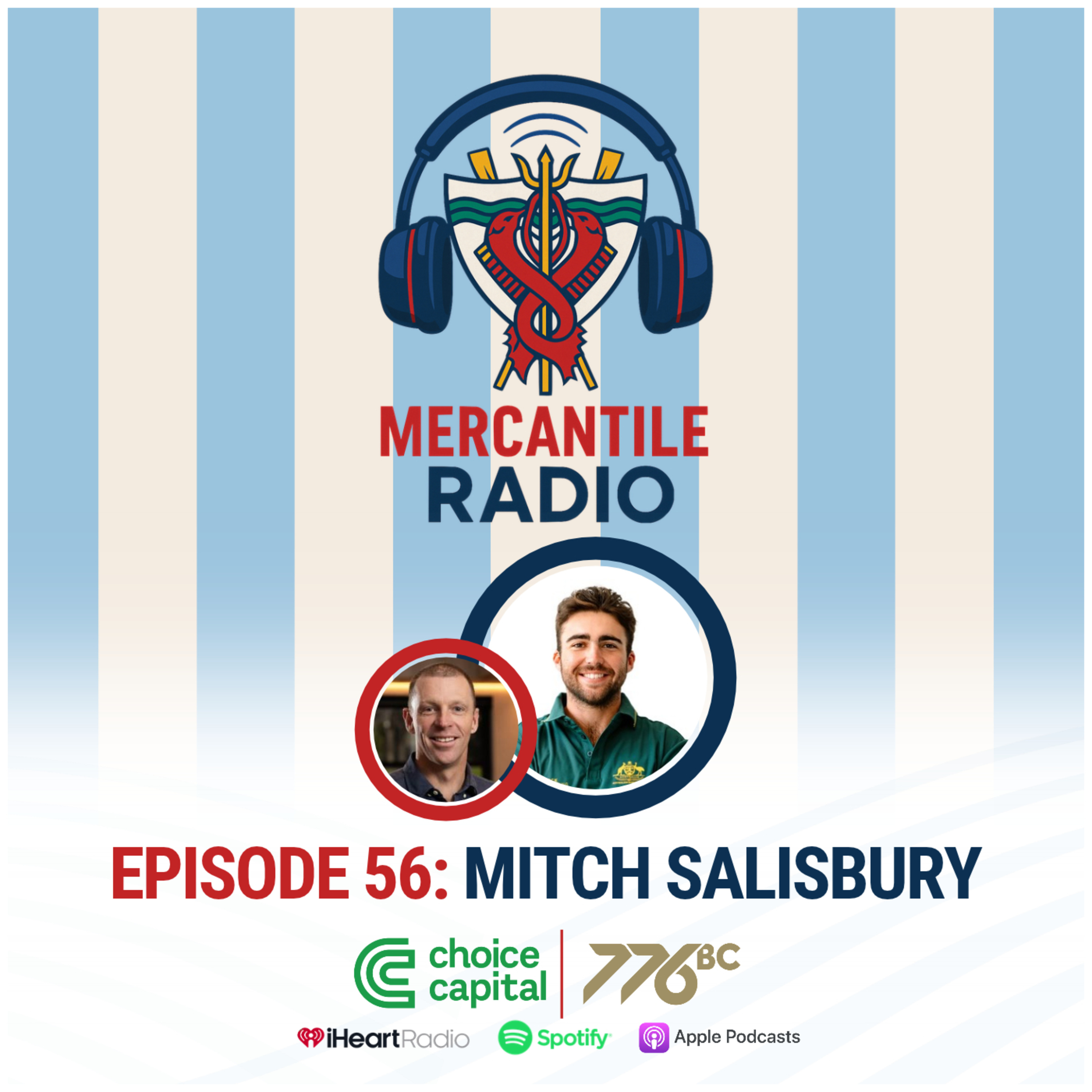
Episode #56
Mitch Salisbury: Back Yourself - Episode 56
From finding his place in rowing to stroking the Australian Eight on the world stage. Fresh from an extraordinary 2026 World Championship bronze medal in the Australian Men’s Eight, Mitch Salisbury joins Drew to discuss one of the fastest eight races ever contested, his journey from school rowing in Queensland to the Australian senior team, and the confidence that has seen him take responsibility in the stroke seat. Mitch provides a fascinating insight into stroking an Australian Eight at World Championship level: staying relaxed at extraordinary speed, trusting the preparation, keeping the rhythm simple and resisting the temptation to overthink the moment. It is also the story of an athlete who didn't necessarily fit the traditional picture of an international rower. Mitch talks openly about not being the biggest athlete, struggling to match some teammates on the erg, and learning to back what he brings to a boat. Who is Mitch Salisbury? Mitch Salisbury is a 23-year-old Australian rower and World Championship medallist whose rise has been built on boat-moving ability, rhythm, persistence and a genuine enjoyment of the sport. Growing up in Central Queensland, Mitch asked to start boarding school early so he wouldn't miss rowing season. He wasn't always the standout athlete and often found himself outside the first crew. What kept bringing him back was simple: he enjoyed rowing with his mates. After school, an unexpected Queensland State Championship result was followed by second at Nationals in the Under 21 pair and eventually the opportunity to represent Australia at Under 23 level. Now part of the senior team, Mitch has developed into a confident stroke-seat athlete. This season, he told coach Nicolo he wanted the opportunity to stroke the Eight at the World Championships — something he admits he wouldn't have had the confidence to do a year earlier. Why Is This Conversation Important? 1. You Don't Have to Look Like the Obvious Athlete Mitch's story will resonate with rowers comparing themselves with bigger, stronger athletes. Rather than accepting he was simply “no good on the erg”, Mitch saw the gap as an opportunity to improve while valuing his ability to move a boat. One measure doesn't have to define you. 2. Confidence Is Something You Build Mitch didn't always see himself as an Australian rower. His confidence developed through racing, coaching and people who believed in him. Eventually, he reached the point where he could say: “I think I'd like to give the stroke seat a crack.” That progression from uncertainty to ownership is one of the strongest themes of the episode. 3. Preparation Creates Freedom to Perform The Australian Eight rehearsed its rhythm, second-half speed and race plan so consistently that by the World Championship final, the crew knew what it could produce. Rather than searching for something new on race day, Mitch could trust the work and race. 4. Great Coaching Doesn't Have to Be Complicated Across his experiences with Scott Rowe, Randall Martin and Nicolo, Mitch returns to simplicity, belief and clarity. He describes coaches who keep messages simple, recognise potential, provide individual feedback and communicate their belief in their athletes. 5. High Performance Needs a Life Outside the Sport While living in Brisbane, Mitch played in a band, giving him a different community and an opportunity to switch off from high-performance rowing. Music remains a creative outlet and a way of maintaining perspective alongside elite sport. You Can Quote Us On That “You have to back yourself in at the end of the day.” “I never really thought I would be rowing in the Australian team.” “Every day is thinking about rowing long. Every stroke.” “There’s so much room for me to improve.” “I’m a boat mover.” Hosted by: Drew Ginn OAM Guest: Mitch Salisbury Produced by: Nicholas Finster Presented by: Mercantile Rowing Club Sponsored by: Choice Capital and 776BC