Musings on Mysteries and the Mythical Matrix (M^4, “M Quad”, or M4D for short) is a podcasting and content creation platform that is dedicated to exploring the ancient, mysterious, and unknown through logic, reason, science, and the Socratic method. Whether your interest is Atlantis, Zeus, or anything in between, we tackle it all! Our goal is to unravel the interdimensional and mythical matrix of ancient stories, and expose how these may be connected to modern mysteries and science. We approach our overall study through a unique lens of theorizing the spiritual realm exists, and is the 4th dimension as indicated by mathematical geometry. The podcast is for: mystery seekers, musers, conspiracy theorists, interdimensional philosophers, and seekers of truth. The show is NOT for those who enjoy the comfort of their confirmation bias and logical fallacies: you will get triggered!
Pitch Analysis
Required Pod Score for this show. PitchCentric checks your profile against host openness, topical fit, and audience signals before you generate a pitch.
Contact path
Verified email
Booking probability
33%
Guest openness
Selective
Verified email on file
80/100
Required Score
Sign up to generate a grounded pitch for Musings on Mysteries & the Mythical Matrix.
What is Musings on Mysteries & the Mythical Matrix?
Musings on Mysteries & the Mythical Matrix is a society podcast hosted by M Quad, with 73 episodes on record and a Required Pod Score of 80. PitchCentric scores this show on Booking Probability, Listen Score, and live audience signals refreshed every 24 hours.
About the host
M Quad hosts Musings on Mysteries & the Mythical Matrix, a society show with 73 episodes published.
Our AI reads these to draft pitches. Use them as grounding for a pitch that cites a real guest and a specific topic.
Episode #12
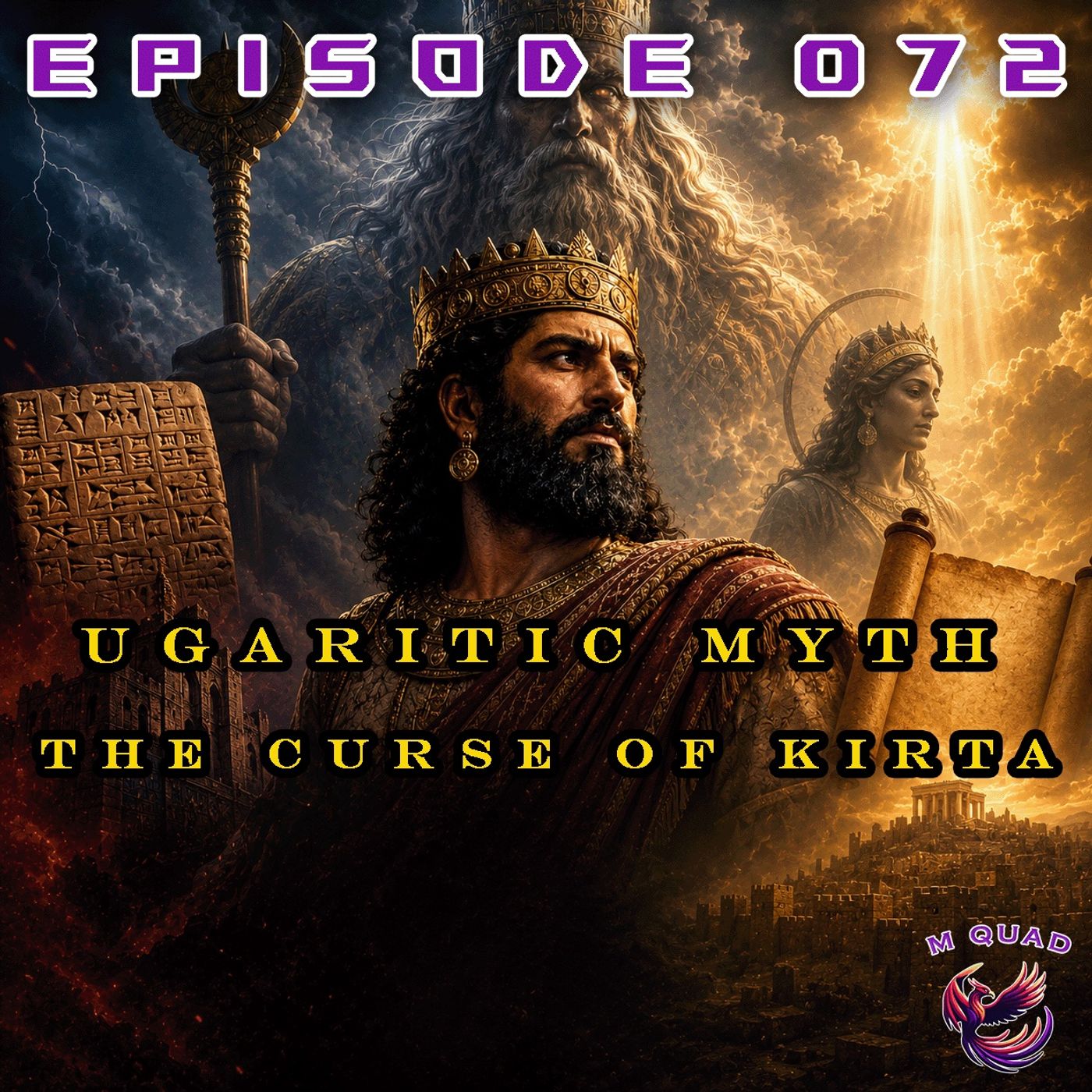
Episode 072 - Ugaritic Myth: The Curse of Kirta
Jul 15, 202649 minS4
Is the Kirta Epic connected to the Bible… or are we seeing the shared cultural world of the ancient Near East? In this episode of Musings on Mysteries and the Mythical Matrix, we break down the Ugaritic myth of Kirta, also known as Keret: a Bronze Age king who loses his family, receives a divine command from El, restores his dynasty, breaks a vow, falls under judgment, and is ultimately restored. We explore the story’s major themes: divine dreams, royal succession, broken vows, sickness, restoration, and El’s authority over the other gods. We also tackle the big comparative question: Do the parallels between Kirta and biblical figures like Job, David, and Solomon prove that the Bible repurposed Ugaritic myth… or do they reveal common themes and challenges across the ancient Near Eastern world? From there, we examine Ugaritic vows, textual dating assumptions, possible YW references, divine tents, clay creation imagery, and the significance of El intervening over Asherah’s judgment. And finally, we ask whether the Kirta myth points to ordinary polytheism… or something closer to a universal monolatry framework where one high god still has the final say. M Quad Links Support the show! https://buymeacoffee.com/m.quad.musings Discord server invite: https://discord.gg/yzfH3KEjY9 References Coogan, M. D. (1978). Stories from ancient Canaan. Westminster John Knox Press. Parker, S. B. (Ed.). (1997). Ugaritic narrative poetry. Scholars Press.
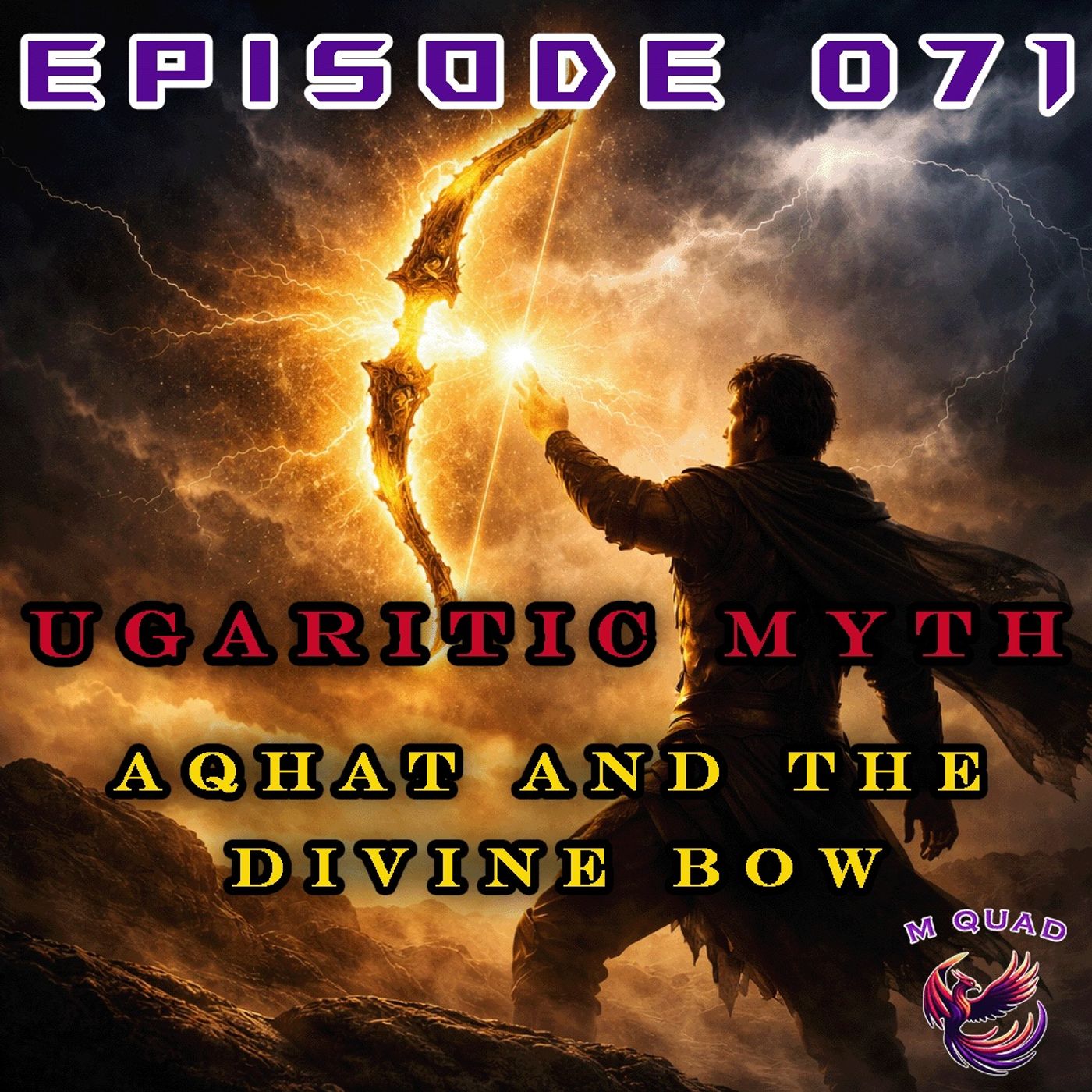
Episode 071 - Ugaritic Myth: Aqhat and the Divine Bow
Jun 3, 20261h 14mS4
Is the Aqhat Epic connected to the Bible… or part of a deeper mythological network? In this episode of Musings on Mysteries and the Mythical Matrix, we break down the Ugaritic Aqhat Epic, a Bronze Age myth discovered at Ras Shamra. We explore the story of Danel, Aqhat, and the divine bow alongside themes of immortality, divine justice, and revenge. We also tackle the major debate: Is “Danel” the same figure referenced in the Book of Ezekiel… or someone else entirely? From there, we compare Aqhat to figures like Gilgamesh, Inanna, and Adapa to ask a bigger question: Are these myths borrowed… are they fragments of a deeper shared tradition... or are they independent events entirely? M Quad Links Support the show! https://buymeacoffee.com/m.quad.musings Discord server invite: https://discord.gg/yzfH3KEjY9 References Coogan, M. D. (1978). Stories from ancient Canaan. Westminster John Knox Press. Parker, S. B. (Ed.). (1997). Ugaritic narrative poetry. Scholars Press. Wilkinson, R. H. (1991). The representation of the bow in the art of Egypt and the ancient Near East. Journal of the Ancient Near Eastern Society , 20, 83–99.
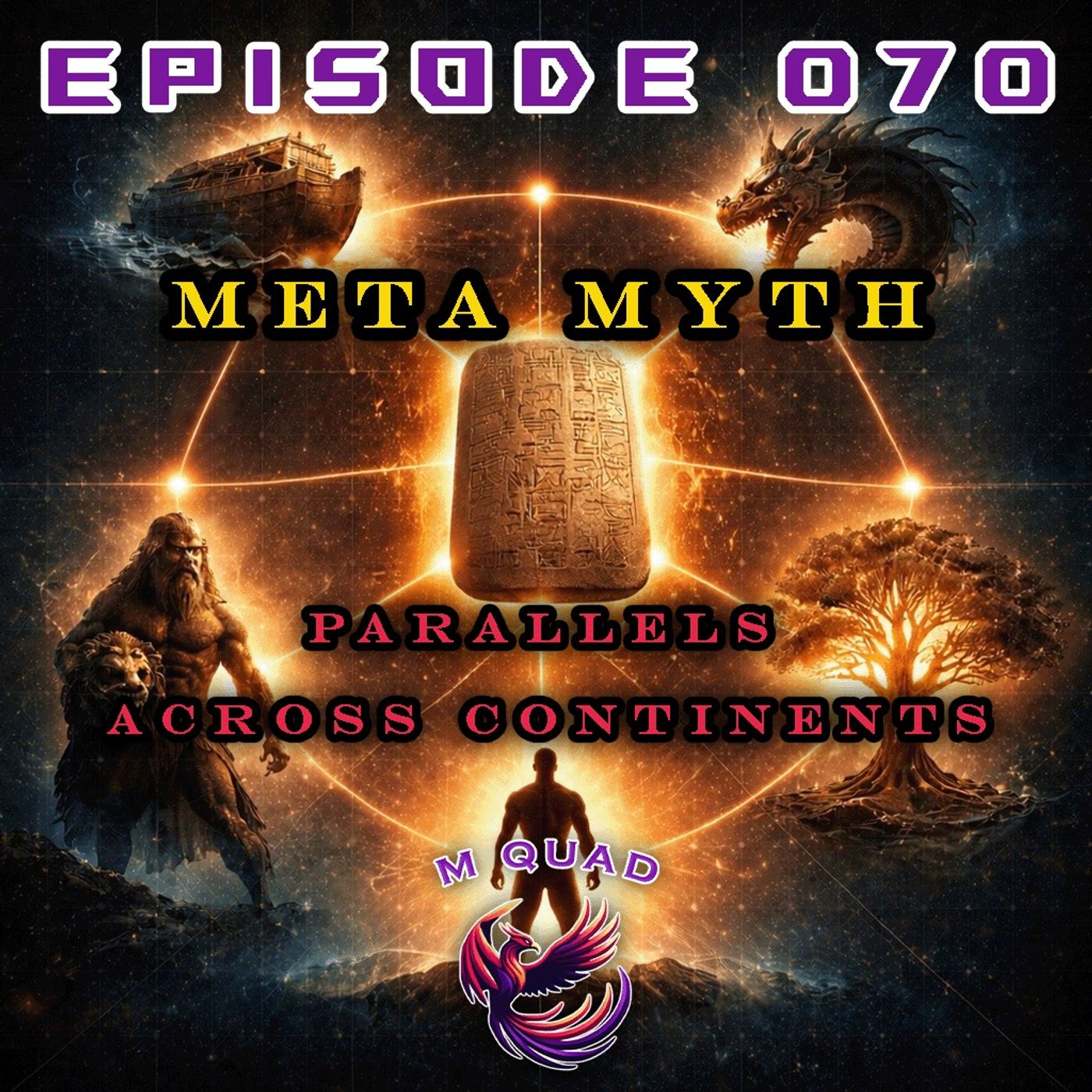
Episode 070 - Meta Myth: Parallels Across Continents
May 6, 20261h 26mS4
Are global myths independent stories… or fragments of a deeper shared tradition? In this episode of Musings on Mysteries and the Mythical Matrix, we explore the Mythical Matrix hypothesis: the idea that many ancient mythologies may preserve fragments of an older protomythology. By comparing recurring motifs across cultures, we ask whether similarities between myths point to copying, shared history, or something deeper. From Genesis and the Enuma Elish to the Popol Vuh, flood myths, and the Baal Cycle, we examine which parallels matter, and which ones don’t. Highlights: 🌍 The Mythical Matrix Explained • What the “Ur Myth” hypothesis proposes • Myth motifs and why they matter • Transmission chains: borrowing, oral tradition, diffusion, or shared memory 📜 Creation Motifs Across Cultures • Genesis, Enuma Elish, and Popol Vuh comparisons • Water at the beginning and the emergence of land Humanity formed with divine essence ⚡ Storm Gods vs Serpents • Baal vs the seven-headed serpent • Ninurta’s battles in Mesopotamian myth • Michael and the dragon in Revelation • Thunder spirits in Native American traditions 🌊 Flood Myths Around the World • Noah, Atrahasis, Ziusudra, and Gilgamesh • The recurring elements: divine warning, boat, animals, mountain landing • What flood narratives share across cultures 🏛 Divine Council Traditions • The council of El in the Baal Cycle • Deuteronomy 32 and Psalm 82 • Mesopotamian divine assemblies ⚔ Giants and Ancient Heroes • Gilgamesh and lion imagery • The Nephilim and “men of renown” 🔎 Which Similarities Actually Matter? • Linguistic parallels and surface similarities • Cedar temples, storm gods, and cultural survival traits • When myths are clearly repurposed 🎙️ Core takeaway: Not every similarity between myths is meaningful. But when multiple specific motifs cluster together across cultures, they may preserve fragments of a deeper ancient narrative. M Quad Links Support the show! https://buymeacoffee.com/m.quad.musings Discord server invite: https://discord.gg/yzfH3KEjY9
Episode 069 - The Mythical Matrix, 4D Angels, and the Nuances of Sumerian
Apr 4, 20261h 21mS4
Are ancient myths independent stories, or fragments of a deeper narrative tradition? In this episode of Musings on Mysteries and the Mythical Matrix, we explore the Mythical Matrix hypothesis: the idea that many global mythologies may trace back to a shared narrative core or “Ur Myth.” Instead of assuming myths were simply copied, we examine whether recurring motifs across cultures may preserve fragments of a more ancient tradition. We also dive into Michael Heiser’s views on Yahweh, Baal, and the divine council, explore unusual linguistic details in Sumerian and Akkadian texts, and discuss how ancient language nuance can radically change how we interpret mythology. Highlights: 🌍 The Mythical Matrix Hypothesis • What the “Ur Myth” theory proposes • Why recurring motifs appear across distant cultures • Copying vs inherited narrative traditions 📜 Comparative Mythology Examples • Genesis, Enuma Elish, and Popol Vuh parallels • Global flood traditions • The storm-god vs serpent motif ⚡ Yahweh, Baal, and the Divine Council • Michael Heiser’s interpretation of El and Baal roles • The “two Yahwehs” concept in ancient texts • Could ancient descriptions hint at higher-dimensional beings? 𒀭 Language Matters: Sumerian & Akkadian Nuances • The opening line of the Sumerian King List • How grammar and scribal choices affect interpretation M Quad Links Support the show! https://buymeacoffee.com/m.quad.musings Discord server invite: https://discord.gg/yzfH3KEjY9 Sources Cuneiform Digital Library Initiative. (n.d.). CDLI artifact 469530. https://cdli.earth/artifacts/469530 ETCSL 2.1.1, Sumerian King List. https://communio-templorum.github.io/cuneiform-text-corpus/#!/etcsl/2.1.1 Heiser, M. S. (2015). Co-regency in ancient Israel’s divine council as the conceptual backdrop to ancient Jewish binitarian monotheism. Bulletin for Biblical Research, 26(2), 195–225.
Episode 068 - Critical Thinking | The M Quad Method: How to Think, Not What to Believe
Dec 31, 20251h 36mS4
Are your beliefs actually reasoned, or are they outsourced? Before asking what to believe, we need to ask how we arrived there. In a world of expert claims, viral headlines, and emotional certainty, critical thinking isn’t optional. In this episode of Musings on Mysteries and the Mythical Matrix, we break down how reasoning works, why it fails, and how to spot bad arguments: whether they come from media, online debates, or credentialed authorities. Highlights: 🧠 Why Reasoning Matters • Information → reasoning → belief → action • Why good intentions still produce bad outcomes ⚠️ The Problem with Faulty Reasoning • Confidence replacing evidence • Media turning speculation into certainty • “Most experts agree” without explanation 🎓 Authority vs Argument • Appeal to Authority fallacy • When expertise guides inquiry: and when it shuts it down • Why credentials ≠ immunity from critique 🧪 How to Think Critically • Identifying claims, confidence levels, and fields • Who carries burden of proof • Separating data from inference • Logic testing, fallacies, and falsification 📋 Critical Thinking Micro-Checklist • A practical framework you can apply immediately • Available on the Discord 🎙️ Core takeaway: Confidence isn’t evidence. Expertise should guide inquiry: not end it. Method matters. M Quad Links Support the show! https://buymeacoffee.com/m.quad.musings Discord server invite: https://discord.gg/yzfH3KEjY9 Sources: Damer, T. E. (2006). Attacking faulty reasoning: A practical guide to fallacy-free arguments (5th ed.). Thomson Wadsworth. Hayes, J. (2018). A Manual of Sumerian Grammar and Texts. Undena Publications. Weston, A. (2009). A rulebook for arguments (4th ed.). Hackett Publishing Company.
Every question we get asked before someone starts their trial.
If you have a concern about deliverability, AI quality, data privacy, or whether this will actually work for your specific situation, it's probably answered below.
What is the difference between Founder Solo and Founder Pro?
Founder Solo gives you 50 AI pitches per month using the credit model (Standard pitches cost 1 credit, Enriched pitches cost 2). Founder Pro raises that to 200 credits per month and adds full Booking Probability access, unlimited Magic Match, Apollo enrichment credits, and data export capabilities. Both plans use the same credit system, so you can stretch your monthly budget further by using Standard-mode drafting.
How do agency tiers work?
Agency tiers have no base fee. You pay per managed client and per talent profile. Agency Standard is $199 per client per month; Agency Pro is $399 per client per month. Both add $39 per talent profile per month. Your own team's user seats are always free.
What is a talent profile?
A talent profile represents one person (founder, executive, or spokesperson) you are booking onto podcasts. It includes their bio, topics, headshots, and outreach history. Team plans include 5 profiles; agency plans are pay-as-you-go.
Can I switch plans later?
Yes, at any time. Upgrades take effect immediately; downgrades apply at the end of the current billing period. Contact support if you need help migrating between plan families.
Do you offer a free trial?
Every paid plan includes a 15-day free trial. Your card is saved at signup but you will not be charged until day 16. Cancel any time from your dashboard.
What happens if I cancel?
You keep access until the end of your current billing period. No charges after that. Your data is retained for 30 days in case you reactivate.
Is the 20% annual discount automatic?
Yes. Select Annual on the pricing toggle and the discounted price is applied automatically at checkout. The annual price shown is the full year cost.
What if I have more than 50 profiles or 20 clients?
That is our Enterprise tier. Contact our sales team and we will build a custom plan with volume pricing, a dedicated account manager, and SLA guarantees.