
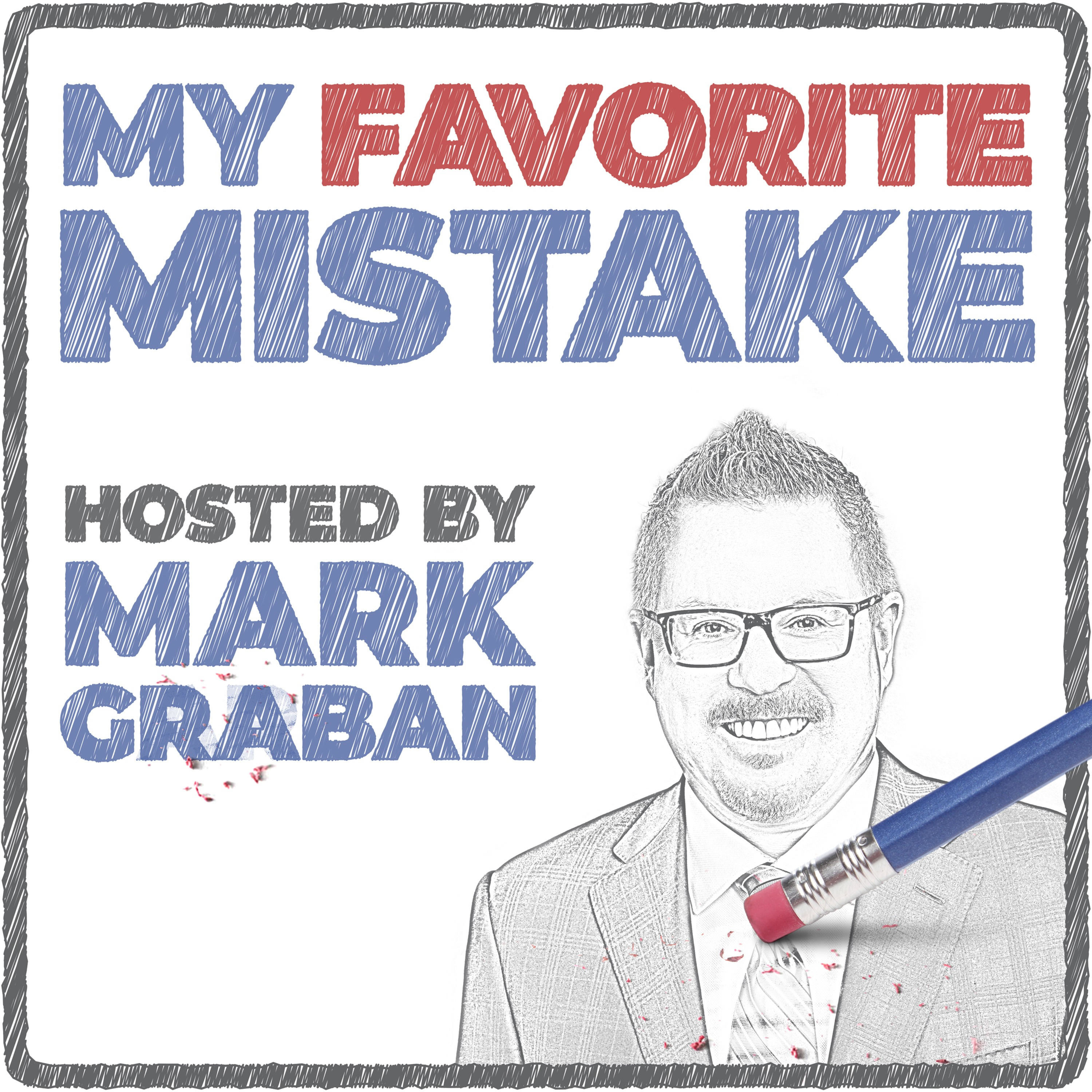
My Favorite Mistake is a podcast about learning without blame in business and leadership.Hosted by Mark Graban, the show features honest conversations with leaders, executives, entrepreneurs, and changemakers about a meaningful mistake they made—and what they learned after things went wrong. It’s not just my favorite mistake; it’s yours, it’s ours, and it’s what we can all learn from when things don’t go as planned.This isn’t a podcast about failure theater, gotcha moments, or simplistic “lessons learned.” It explores how real people reflect, improve, and lead better in complex organizations—without scapegoating, shame, or hindsight bias.Drawing on systems thinking, Lean management, continuous improvement, and psychological safety, each episode focuses less on who messed up and more on what the system taught us.My Favorite Mistake: Learning Without Blame in Business and Leadership
Pitch Analysis
Required Pod Score for this show. PitchCentric checks your profile against host openness, topical fit, and audience signals before you generate a pitch.
Contact path
Verified email
Booking probability
38%
Guest openness
Selective
Verified email on file
80/100
Required Score
Sign up to generate a grounded pitch for My Favorite Mistake: Learning Without Blame in Business and Leadership.
What is My Favorite Mistake: Learning Without Blame in Business and Leadership?
My Favorite Mistake: Learning Without Blame in Business and Leadership is a business podcast hosted by Mark Graban, with 407 episodes on record and a Required Pod Score of 80. PitchCentric scores this show on Booking Probability, Listen Score, and live audience signals refreshed every 24 hours.
About the host
Mark Graban hosts My Favorite Mistake: Learning Without Blame in Business and Leadership, a business show with 407 episodes published.
Our AI reads these to draft pitches. Use them as grounding for a pitch that cites a real guest and a specific topic.
Episode #361
Nurse Tiffany Auvil on Caregiving, Denials, and a Misdiagnosis
Aug 10, 202639 minS1
Tiffany Auvil spent more than twenty years inside the U.S. healthcare system, starting as a volunteer firefighter and eventually serving as System Director of Outpatient Clinics for a three-hospital health system. She is a functional medicine health coach, she is completing a Doctorate of Science in Integrative Healthcare, and she is the author of "The No BS Guide for Caregivers: How to Survive the Healthcare Maze," available now. Episode page with links and more Her favorite mistake was trusting the system she had worked inside for two decades. Her husband Dave was treated for renal cell carcinoma in 2016 and was cancer-free within three months. Seven years later it returned in his pancreas and liver. The night before Dave's first immunotherapy infusion, the oncology nurse called to say insurance had denied it. Tiffany had done prior authorizations for years and knew the denial did not add up, so she called the insurer, who had no denial on file at all. The failure was upstream: the hospital's prior authorization specialist had entered a diagnosis code in the field meant for the procedure code, and the portal rejected it as invalid. When they arrived for treatment the next morning, the oncologist was relieved someone had finally figured it out, because she had been watching authorizations get denied without ever learning why. That was not the only failure. A Gamma Knife authorization later sat unsubmitted because nobody attached the clinical notes or pressed the button. And the cancer in Dave's brain turned out to be central nervous system lymphoma, an entirely separate primary cancer that Tiffany believes had been in his eye all along. Mark and Tiffany talk about diagnostic error and the cognitive bias that makes a second primary cancer nearly invisible, about Code Help and the escalation paths families are rarely told about, about what it costs to be the employee who questions things and tries to connect silos, and about why "good catch" recognition is where organizational learning usually stops instead of starts. Dave died at home in April 2025. He used to ask Tiffany what people do who do not have a Tiffy. The book is her answer: scripts for talking with physicians, how to read a bill, how to appeal a denial and how to tell whether a denial is even real, and a closing section on end of life that most caregiving books avoid. What You'll Learn Why insider knowledge is not the same as protection How a single field on a single screen became a denial that nearly delayed cancer treatment Why Tiffany filed a grievance after the problem was already fixed How cognitive bias makes a second primary cancer nearly invisible, even to excellent physicians What Code Help is, and why most families never hear about it What it costs to be the employee who tries to close loops between silos Why "good catch" is where learning usually stops instead of starts How to make a fifteen-minute physician visit actually work Why starting hospice earlier is a practical decision, not a surrender
Why ESPN's Founder Was Pushed Out of the Network He Built, with Historian Mike Soltys
Aug 3, 202640 minS1
Bill Rasmussen got fired by the Hartford Whalers, then chased an idea almost nobody believed in: sports television around the clock. He burned through his own money, his credit cards, his son Scott's money, and money from his father, sister, and brother. Six months before launch, out of cash, he signed a deal with Getty Oil for the tens of millions ESPN needed. Episode page with video, links, and more Getty took most of the company. Other terms were left as loose ends to settle after the contract, and employment contracts for Bill, Scott, and the early team were among them. They never got settled. Two early leaders were pushed out almost immediately. Scott was shown the door at launch. Bill was gone a year later. Mike Soltys was hired as ESPN's first PR intern in 1980 and stayed 43 years, the last 20 as a vice president in corporate communications. He's now the network's official historian, and he tells this story on Bill's behalf, because Bill has never called it a mistake and doesn't look back. The lesson holds up for any founder taking outside money: financial control and employment protection are two separate negotiations, and it's easy to lose the second one while focused on the first. Scott Rasmussen says he negotiated far better after watching what happened. Mike also shares why ESPN's first live remote failed on opening night, why the network celebrates its bloopers instead of burying them, and how he used Bill's 1978-79 business diary to settle disputes when everyone remembered the same night differently.
Why Fighter Pilots Never Use the Word "Mistake" -- with Boo Boucousis
Jul 27, 202648 minS1
In fighter jet aviation, errors can be fatal -- so the systems built around learning from them have to actually work. My guest is Christian "Boo" Boucousis, a former Royal Australian Air Force fighter pilot and CEO of Afterburner, a leadership firm that has spent three decades translating combat aviation discipline into frameworks for business leaders. Episode page with links and more Boo's favorite mistake is really a reframe of the whole concept: in fighter pilot culture, there's no word for "mistake," only outcomes to debrief. He tells the story of his first mission as a commander, which ended in a visible, ten-second failure in front of three of the most senior leaders in the Air Force -- and how every one of them owned their own error first in the debrief that followed. That moment became the foundation for ORCA (Objective, Result, Cause, Action), the method he now teaches business leaders to replace blame with structured learning. We also get into the difference between "perfect" and "flawless," why an estimated 86 percent of leaders may carry undiagnosed perfectionism, and how that shows up as a need for control at work. If you lead a team and want a more honest way to talk about what went wrong, this conversation is for you.
Succession Planning Is a Journey, Not an Event -- with Andrea Carpenter and Elizabeth Ledoux
Jul 20, 202641 minS1
Andrea Carpenter and Elizabeth Ledoux, co-founders of The Transition Strategists, were mid-negotiation on a business succession deal -- Andrea buying into Elizabeth's business -- when Andrea found out she was pregnant. The pregnancy wasn't the mistake. The mistake, as Andrea describes it, was her own rigidity: treating the closing of the deal as a fixed event that had to happen on schedule, instead of one point in an ongoing process. In this episode, Andrea and Elizabeth unpack what changed when they let go of that mindset, and what it taught them about succession more broadly. They talk candidly about being opposite personality types -- Andrea a planner, Elizabeth an adapter -- and how that tension shapes their partnership. They also share the two mistakes they see most often when family businesses transition ownership: starting too late, and leaving the successor out of the design process. Episode page with video, transcript, links, and more If you're navigating a leadership transition, planning to bring in a successor, or thinking about what comes after you step back from something you built, this conversation offers a practical framework for treating that process as a journey worth designing carefully, rather than a deadline to hit.
Wiebke Tasch on the Amazon Mistake That Erased Her Income Overnight
Jul 6, 202644 minS1
Publishing strategist Wiebke Tasch had built a bestselling book and a comfortable full-time income on Amazon -- enough to quit her PR job. Then one morning an automated email told her she had violated Amazon's terms, and both of her accounts and all of her books were deleted. No warning, no explanation, no human to appeal to. Her mistake: she had opened two accounts, one for a pen name and one under her real name, not knowing Amazon allows only one per person. Episode page with video, links, and more That is Wiebke's favorite mistake, and losing everything turned out to be the start of her company, Digital Authors. In this episode, she shares how she rebuilt and what the experience taught her about never building a livelihood on a platform you do not control. We also get practical about publishing as a system: why book structure should start with market demand rather than your own wish list, why the first five days after launch shape an Amazon book's entire future, and how to spot the predatory "buy reviews" emails that prey on anxious authors. Wiebke is candid about AI, too -- a useful tool for proofreading and getting unstuck, but a fast track to forgettable, same-sounding books when it replaces your own voice. If you are an expert thinking about writing a book, or you just want a sharp reminder to own your audience instead of renting it, this one is worth your time.
Every question we get asked before someone starts their trial.
If you have a concern about deliverability, AI quality, data privacy, or whether this will actually work for your specific situation, it's probably answered below.
What is the difference between Founder Solo and Founder Pro?
Founder Solo gives you 50 AI pitches per month using the credit model (Standard pitches cost 1 credit, Enriched pitches cost 2). Founder Pro raises that to 200 credits per month and adds full Booking Probability access, unlimited Magic Match, Apollo enrichment credits, and data export capabilities. Both plans use the same credit system, so you can stretch your monthly budget further by using Standard-mode drafting.
How do agency tiers work?
Agency tiers have no base fee. You pay per managed client and per talent profile. Agency Standard is $199 per client per month; Agency Pro is $399 per client per month. Both add $39 per talent profile per month. Your own team's user seats are always free.
What is a talent profile?
A talent profile represents one person (founder, executive, or spokesperson) you are booking onto podcasts. It includes their bio, topics, headshots, and outreach history. Team plans include 5 profiles; agency plans are pay-as-you-go.
Can I switch plans later?
Yes, at any time. Upgrades take effect immediately; downgrades apply at the end of the current billing period. Contact support if you need help migrating between plan families.
Do you offer a free trial?
Every paid plan includes a 15-day free trial. Your card is saved at signup but you will not be charged until day 16. Cancel any time from your dashboard.
What happens if I cancel?
You keep access until the end of your current billing period. No charges after that. Your data is retained for 30 days in case you reactivate.
Is the 20% annual discount automatic?
Yes. Select Annual on the pricing toggle and the discounted price is applied automatically at checkout. The annual price shown is the full year cost.
What if I have more than 50 profiles or 20 clients?
That is our Enterprise tier. Contact our sales team and we will build a custom plan with volume pricing, a dedicated account manager, and SLA guarantees.
