
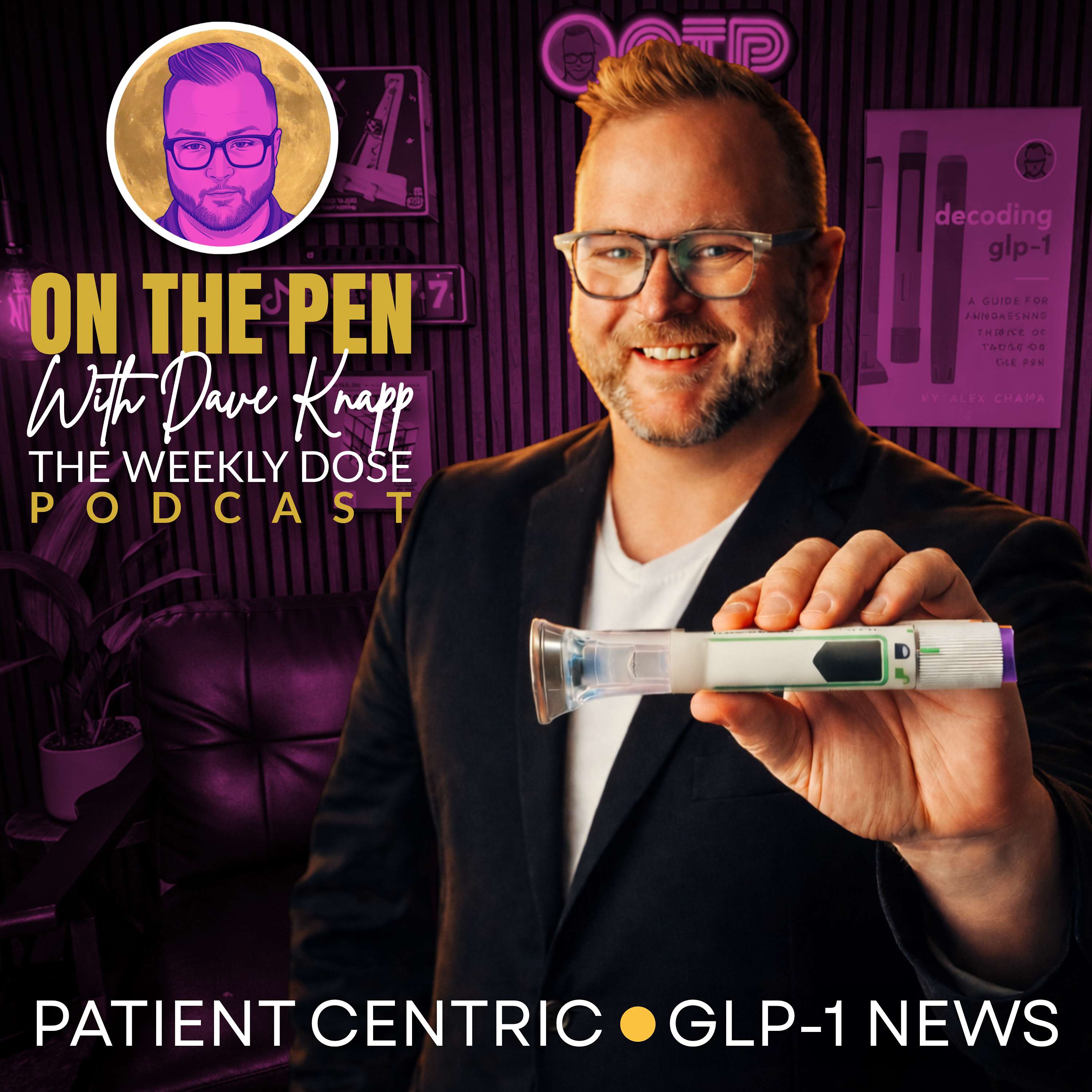
On The Pen GLP-1 News
$50 Zepbound Incoming? China Has US in a GLP-1 “Chokehold”
Could GLP-1 medications eventually cost just $40 to $50 per month? Hims & Hers CEO Andrew Dudum thinks so, and if he’s right, it could completely change access to obesity treatment in America. But getting there may depend on something most patients have never heard of: the global peptide manufacturing supply chain. In this episode of The Weekly Dose from On The Pen, Dave Knapp, Man on the Mounjaro, breaks down one of the biggest weeks in GLP-1 and obesity medicine news, including the surprising role of Chinese pharmaceutical manufacturer WuXi AppTec, which Bloomberg described as having a “GLP-1 chokehold” while U.S. policymakers wrestle with reducing America’s dependence on Chinese biotechnology. We also dig into one of the strangest GLP-1 stories of the year. Amylyx Pharmaceuticals just reported positive Phase 3 results for avexitide, a GLP-1 receptor antagonist, meaning it actually BLOCKS GLP-1. The drug reduced serious hypoglycemic events by 55% in patients with post-bariatric hypoglycemia, a debilitating condition that can occur after gastric bypass surgery. Then we get personal. Online personality Clavicular recently described becoming apathetic while taking a high dose of retatrutide, renewing the conversation around GLP-1 medications, anhedonia, emotional blunting, dopamine and reward signaling. Dave has firsthand experience with anhedonia during GLP-1 treatment and previously discussed that experience as part of coverage on the Today Show. At what point does turning down food noise start turning down everything else? We also examine Serena Williams’ return to professional tennis while openly using Zepbound (tirzepatide) and the growing debate over whether GLP-1 medications could ever be considered performance-enhancing drugs in professional sports. Plus, new research suggests GLP-1 medications and significant weight loss may improve testosterone levels and fertility markers in men with obesity-related low testosterone, raising important questions about metabolic health, hypogonadism and when testosterone replacement therapy may or may not be appropriate. In this episode: Could Ozempic, Wegovy, Mounjaro and Zepbound eventually cost $40 to $50 per month? Why WuXi AppTec and China matter to the global GLP-1 supply chain How manufacturing capacity could determine future GLP-1 prices Amylyx avexitide Phase 3 results and the “anti-GLP-1” Post-bariatric hypoglycemia after gastric bypass surgery Retatrutide, anhedonia, apathy and emotional blunting ⚖️ Why anecdotes about GLP-1 side effects still need scientific context Serena Williams, Zepbound and the performance-enhancing drug debate GLP-1 medications, weight loss and testosterone in men Obesity, metabolic health, fertility and hypogonadism The goal here isn’t to cheerlead GLP-1 medications or scare patients away from them. It’s to understand what the headlines actually mean so patients can have better conversations with their healthcare providers. If GLP-1 medications were available for $40 to $50 cash per month without insurance, would that change your ability to stay on treatment? Let me know in the comments. And if you’ve experienced anhedonia or emotional flattening while taking a GLP-1 medication, particularly after increasing your dose, I’d be interested in hearing about your experience as well. The Weekly Dose is shot live in the Bask Health Studio. Learn more at bask.health Thanks to VoaFit and the MyLevel app for sponsoring the podcast. Learn more at voafit.com/otp Follow On The Pen, find our newsletter, resources and all of my social channels: otplinks.com On The Pen covers breaking news and patient-focused reporting on obesity medicine, GLP-1 medications, Ozempic, Wegovy, Mounjaro, Zepbound, tirzepatide, semaglutide, retatrutide, compounded GLP-1 medications, obesity treatment, type 2 diabetes, metabolic health and the next generation of obesity medications.
