Tending Our Roots is a conversation-based podcast that uplifts Indigenous voices, knowledge, and ways of being as pathways to well-being. Hosted by Dr. Miigis Gonzalez (Lac Courte Oreilles Ojibwe) and Dr. Jill Fish (lineal descendant of the Tuscarora Nation), the podcast creates space for stories grounded in relationships—to land, to community, to spirit, and to self.Each episode brings listeners into conversation with guests whose lives and work reflect Indigenous approaches to living well. From artists and scholars to knowledge holders and community leaders, these conversations move through story, humor, and reflection—rooted in everyday practices of care, responsibility, and connection. Whether speaking about language revitalization, ceremony, land, or creative expression, guests share how wellbeing is lived, not defined.Rather than seeking to define or measure Indigenous systems of health, Tending Our Roots listens to and learns from those who carry them forward. The podcast in
Pitch Analysis
Required Pod Score for this show. PitchCentric checks your profile against host openness, topical fit, and audience signals before you generate a pitch.
Contact path
Verified email
Booking probability
28%
Guest openness
Selective
Verified email on file
80/100
Required Score
Sign up to generate a grounded pitch for Tending Our Roots.
Tending Our Roots is a health podcast hosted by Jill Fish & Miigis Gonzalez, with 11 episodes on record and a Required Pod Score of 80. PitchCentric scores this show on Booking Probability, Listen Score, and live audience signals refreshed every 24 hours.
About the host
Jill Fish & Miigis Gonzalez hosts Tending Our Roots, a health show with 11 episodes published.
Our AI reads these to draft pitches. Use them as grounding for a pitch that cites a real guest and a specific topic.
Tending Our Roots
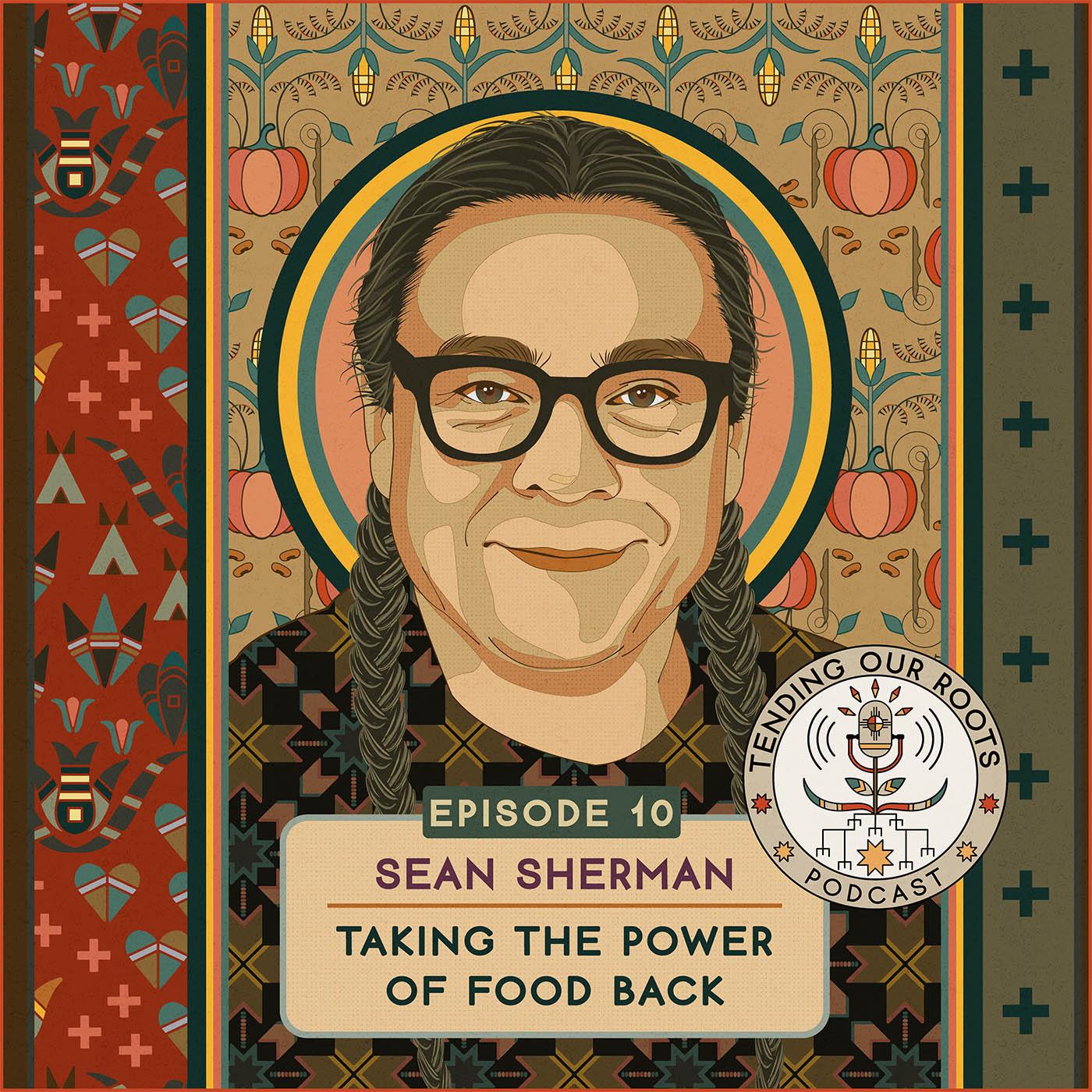
Sean Sherman — “Taking the Power of Food Back”
Jul 2, 202644 minS1
Join us for our season finale of Tending Our Roots with chef, author, and food sovereignty visionary Sean Sherman, a member of the Oglala Lakota Nation. Sean is transforming the landscape of Indigenous cuisine. Through his work with the nonprofit NATIFS and his award-winning restaurant Owamni (soon-to-be known as Indígena by Owamni), Sean is helping communities “take the power of food back” — restoring connections between land, culture, and health. When we spoke, Owamni was preparing to move into a new home at the Guthrie Theatre, a reminder that Indigenous foods belong everywhere — from backyard tables to center stage. We also talked about his new book, Turtle Island, and how food can be a story, a memory, and a pathway toward collective healing. Interested in learning more from Sean after our conversation? You can purchase his book Turtle Island: Foods and Traditions of the Indigenous Peoples of North America here. Tending Our Roots is co-hosted by Drs. Miigis Gonzalez (Lac Courte Oreilles Ojibwe) and Jill Fish (lineal descendent of the Tuscarora Nation). This podcast was funded by the Robert Wood Johnson Foundation and supported by the CIRCLE P50 Center of Excellence funded through the National Institute on Drug Abuse of the National Institutes of Health (Award Number P50DA058619). The content is solely the responsibility of the authors and does not necessarily represent the official views of the National Institutes of Health. Production was completed by Solar Powered Studios in St. Paul, MN. Podcast artwork was completed by Marlena Myles , a Spirit Lake Dakota, Mohegan, Muscogee artist. The song, “The Best of Me” is used with the permission of Anishinaabe and First Nations singer-songwriter, Leonard Sumner .
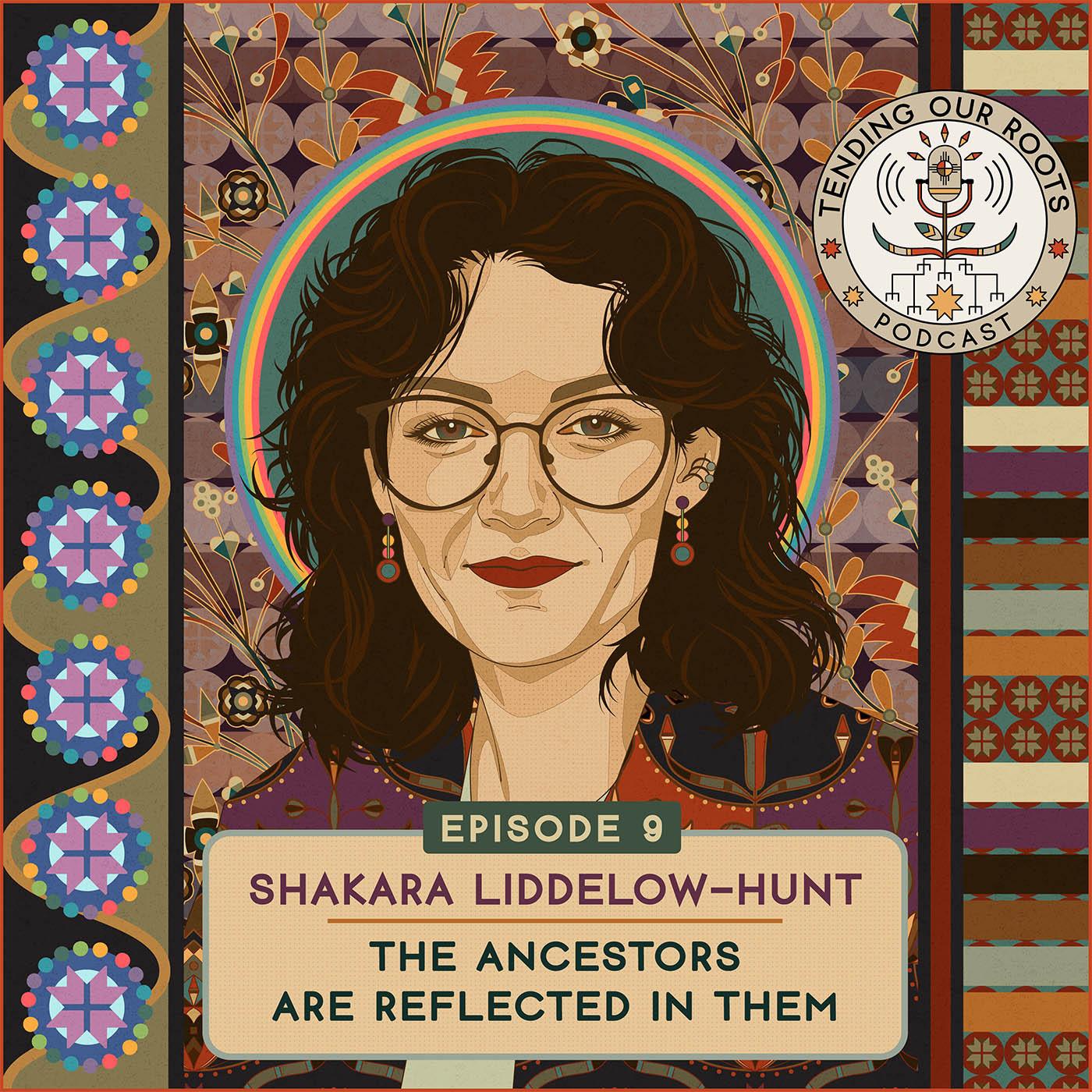
Shakara Liddelow-Hunt — “The Ancestors Are Reflected in Them.”
Jun 25, 202656 minS1
Our guest this week is Shakara (Shak) Liddelow-Hunt, a researcher, advocate, and community builder centering the mental health and wellbeing of Aboriginal and Torres Strait Islander LGBTQIA+ young people. Shak is Wajarri Yamatji and grew up on Noongar Country. Their work challenges Western research norms, making space for Indigenous methods that honor community and story. Our conversation was a reminder that research environments can — and must — be crafted with care, humility, and cultural safety. Shak’s work uplifts youth voices, showing that the ancestors are reflected in them and that their brilliance shapes the futures we’re all moving toward. Interested in learning more after our conversation? You can explore Shak’s project, Walkern Katatdjin (Rainbow Knowledge) here . Tending Our Roots is co-hosted by Drs. Miigis Gonzalez (Lac Courte Oreilles Ojibwe) and Jill Fish (lineal descendent of the Tuscarora Nation). This podcast was funded by the Robert Wood Johnson Foundation and supported by the CIRCLE P50 Center of Excellence funded through the National Institute on Drug Abuse of the National Institutes of Health (Award Number P50DA058619). The content is solely the responsibility of the authors and does not necessarily represent the official views of the National Institutes of Health. Production was completed by Solar Powered Studios in St. Paul, MN. Podcast artwork was completed by Marlena Myles , a Spirit Lake Dakota, Mohegan, Muscogee artist. The song, “The Best of Me” is used with the permission of Anishinaabe and First Nations singer-songwriter, Leonard Sumner .
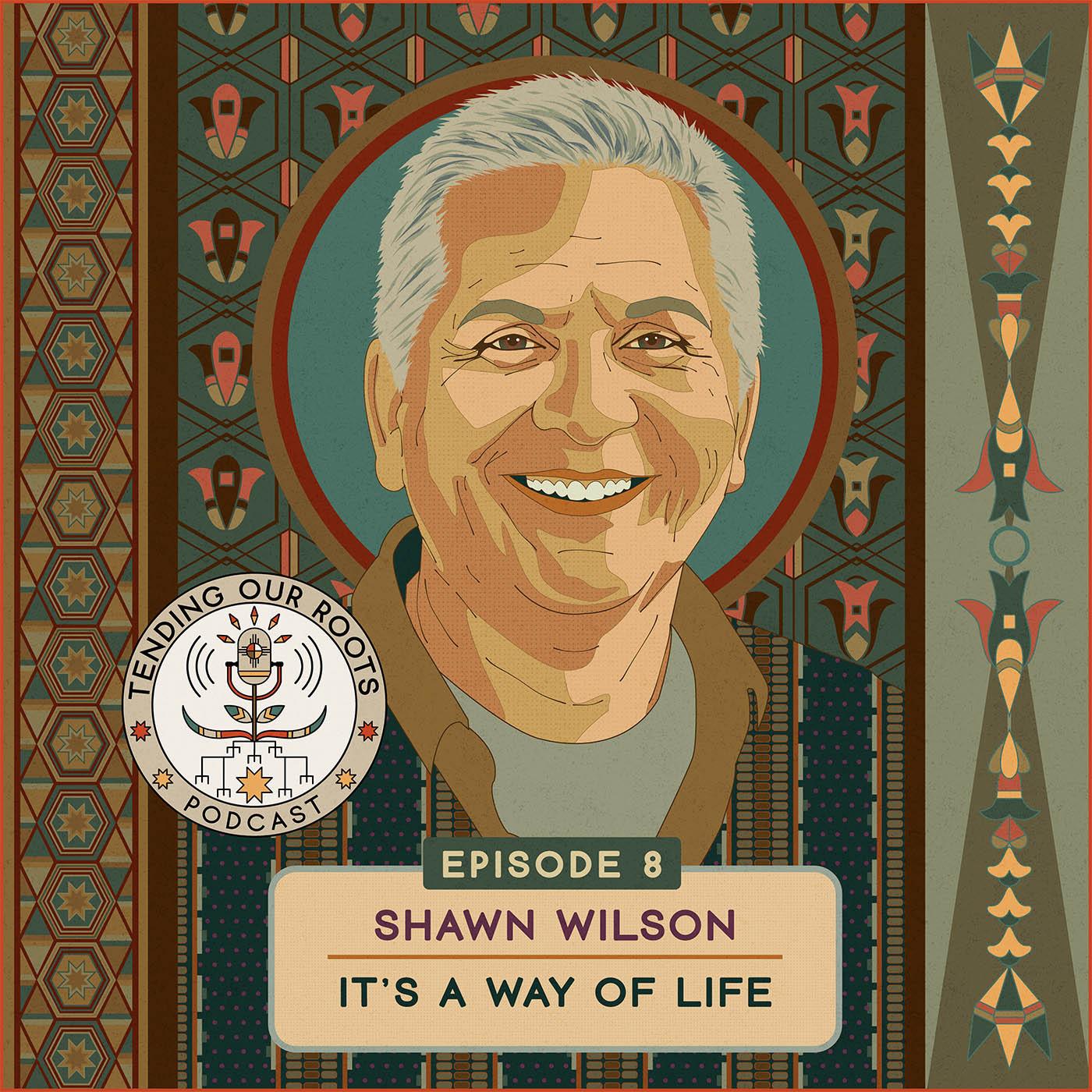
Listen as we visit with Shawn Wilson, a researcher, teacher, and storyteller from the Opaskwayak Cree Nation in northern Canada. Shawn reminds us that research itself can be ceremony. Now based on Syilx territory in British Columbia, Shawn’s work spans continents — from Turtle Island to Australia — grounded always in relationships and respect for Indigenous knowledge systems. In this conversation, he reflects on what it means to live a life of ceremony, to see the universe as a web of relationships, and to change the world by changing how we relate to one another. We also laugh about “big words” like epistemology and ontology and celebrate his joyful self-proclaimed title: IndigiNerd. For Shawn, research is not just a method — it’s a way of life. Interested in learning more after our conversation? Check out more of Shawn’s work, and grab copies of Research is Ceremony and Research and Reconciliation . Tending Our Roots is co-hosted by Drs. Miigis Gonzalez (Lac Courte Oreilles Ojibwe) and Jill Fish (lineal descendent of the Tuscarora Nation). This podcast was funded by the Robert Wood Johnson Foundation and supported by the CIRCLE P50 Center of Excellence funded through the National Institute on Drug Abuse of the National Institutes of Health (Award Number P50DA058619). The content is solely the responsibility of the authors and does not necessarily represent the official views of the National Institutes of Health. Production was completed by Solar Powered Studios in St. Paul, MN. Podcast artwork was completed by Marlena Myles , a Spirit Lake Dakota, Mohegan, Muscogee artist. The song, “The Best of Me” is used with the permission of Anishinaabe and First Nations singer-songwriter, Leonard Sumner .
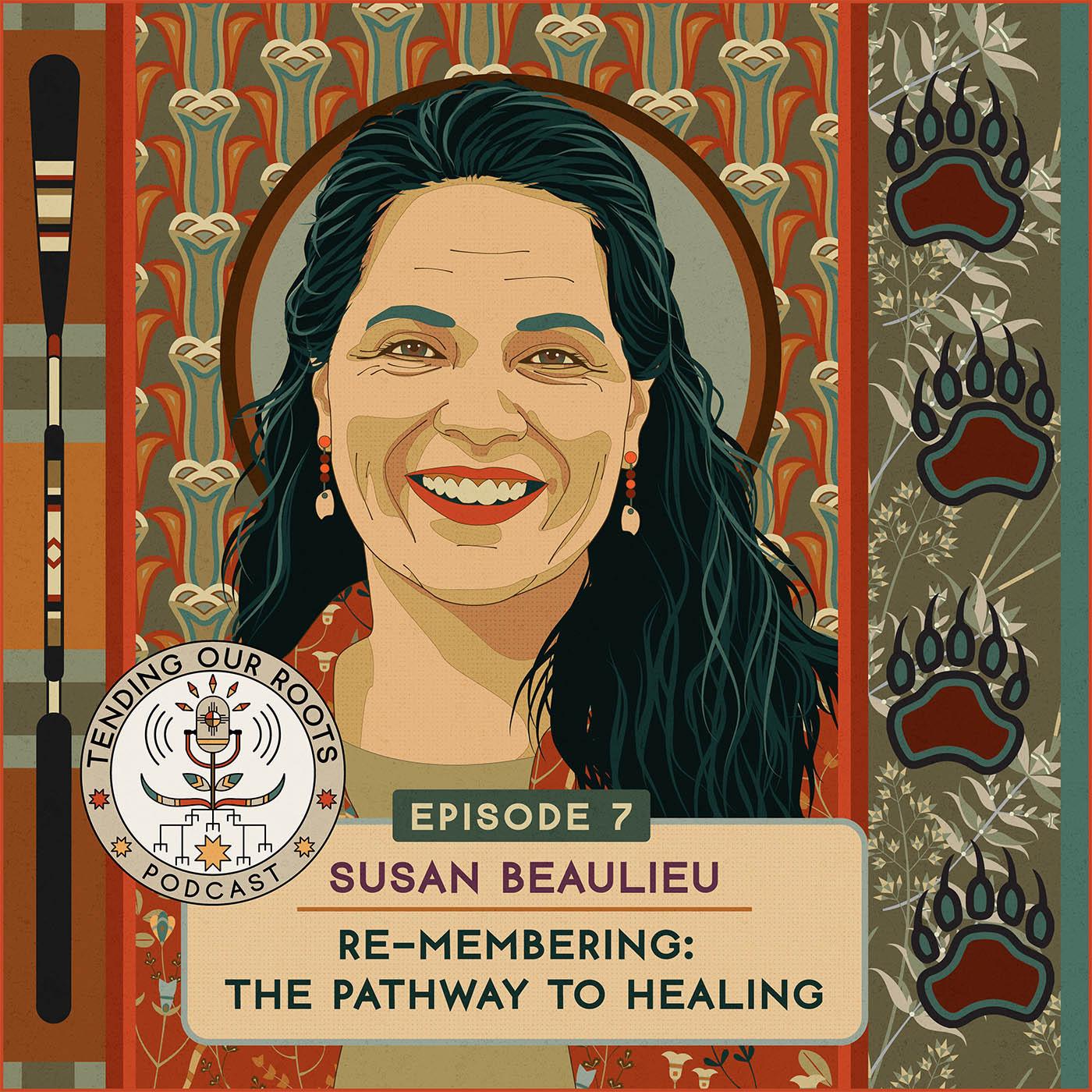
Susan Beaulieu — “Re-membering: The Pathway to Healing”
Jun 11, 202649 minS1
This week we’re Tending Our Roots with Susan Beaulieu, an Anishinaabe woman and citizen of the Red Lake Nation who has spent two decades working with Indigenous communities and the last decade supporting healing from collective, ancestral, and individual trauma. A facilitator, teacher, and student of Life, Susan reminds us that healing begins within, where we hold the most power and responsibility. In this episode, Susan offers tools for reconnecting body, mind, heart, and spirit, guiding us toward re-membering — bringing ourselves and our communities back into balance. Her teachings call us to the ongoing, courageous work of healing, not only for ourselves, but for the generations yet to come. Interested in hearing more from Susan? Hear more from her here . Tending Our Roots is co-hosted by Drs. Miigis Gonzalez (Lac Courte Oreilles Ojibwe) and Jill Fish (lineal descendent of the Tuscarora Nation). This podcast was funded by the Robert Wood Johnson Foundation and supported by the CIRCLE P50 Center of Excellence funded through the National Institute on Drug Abuse of the National Institutes of Health (Award Number P50DA058619). The content is solely the responsibility of the authors and does not necessarily represent the official views of the National Institutes of Health. Production was completed by Solar Powered Studios in St. Paul, MN. Podcast artwork was completed by Marlena Myles , a Spirit Lake Dakota, Mohegan, Muscogee artist. The song, “The Best of Me” is used with the permission of Anishinaabe and First Nations singer-songwriter, Leonard Sumner .
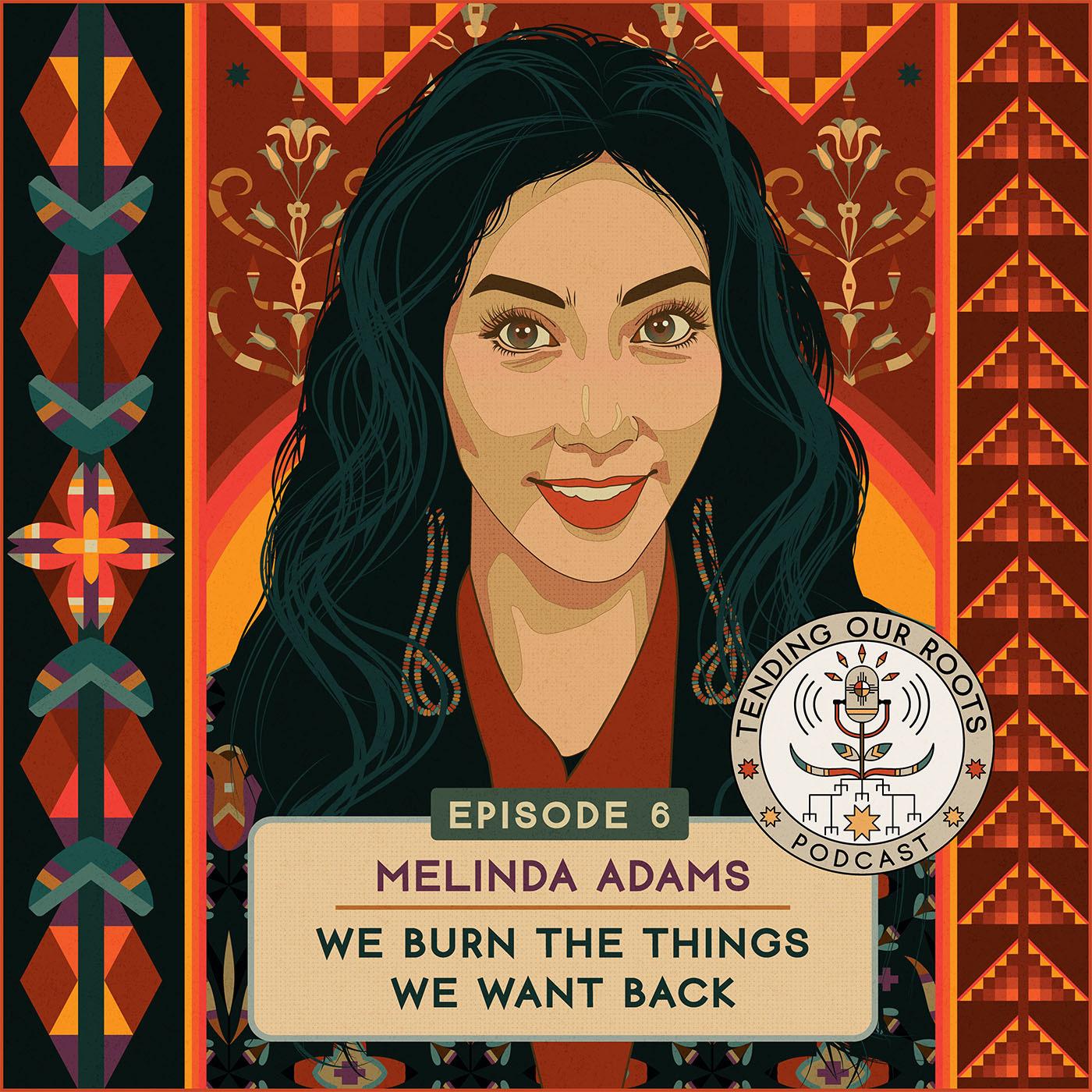
Join us as we sit down with Melinda Adams, a cultural fire practitioner and scholar from the N’dee San Carlos Apache Tribe and the Tohono O’odham Nation. Melinda brings together ecology, ceremony, and Indigenous science in her work. As an Assistant Professor at the University of Kansas, she studies and practices the revitalization of cultural fire — working alongside Tribal nations in California, the Great Plains, and beyond. When we recorded this conversation, wildfires burned across the region — a reminder of both the urgency and the wisdom in Melinda’s work. In this episode, she helps us understand solastalgia — the grief we feel for lands in distress — and reminds us that fire is not only renewal but relational. She teaches that we must burn the things we want back, doing so slowly, intentionally, and together. Interested in learning more after the conversation? Check out more of Melinda’s work . Tending Our Roots is co-hosted by Drs. Miigis Gonzalez (Lac Courte Oreilles Ojibwe) and Jill Fish (lineal descendent of the Tuscarora Nation). This podcast was funded by the Robert Wood Johnson Foundation and supported by the CIRCLE P50 Center of Excellence funded through the National Institute on Drug Abuse of the National Institutes of Health (Award Number P50DA058619). The content is solely the responsibility of the authors and does not necessarily represent the official views of the National Institutes of Health. Production was completed by Solar Powered Studios in St. Paul, MN. Podcast artwork was completed by Marlena Myles , a Spirit Lake Dakota, Mohegan, Muscogee artist. The song, “The Best of Me” is used with the permission of Anishinaabe and First Nations singer-songwriter, Leonard Sumner .
Every question we get asked before someone starts their trial.
If you have a concern about deliverability, AI quality, data privacy, or whether this will actually work for your specific situation, it's probably answered below.
What is the difference between Founder Solo and Founder Pro?
Founder Solo gives you 50 AI pitches per month using the credit model (Standard pitches cost 1 credit, Enriched pitches cost 2). Founder Pro raises that to 200 credits per month and adds full Booking Probability access, unlimited Magic Match, Apollo enrichment credits, and data export capabilities. Both plans use the same credit system, so you can stretch your monthly budget further by using Standard-mode drafting.
How do agency tiers work?
Agency tiers have no base fee. You pay per managed client and per talent profile. Agency Standard is $199 per client per month; Agency Pro is $399 per client per month. Both add $39 per talent profile per month. Your own team's user seats are always free.
What is a talent profile?
A talent profile represents one person (founder, executive, or spokesperson) you are booking onto podcasts. It includes their bio, topics, headshots, and outreach history. Team plans include 5 profiles; agency plans are pay-as-you-go.
Can I switch plans later?
Yes, at any time. Upgrades take effect immediately; downgrades apply at the end of the current billing period. Contact support if you need help migrating between plan families.
Do you offer a free trial?
Every paid plan includes a 15-day free trial. Your card is saved at signup but you will not be charged until day 16. Cancel any time from your dashboard.
What happens if I cancel?
You keep access until the end of your current billing period. No charges after that. Your data is retained for 30 days in case you reactivate.
Is the 20% annual discount automatic?
Yes. Select Annual on the pricing toggle and the discounted price is applied automatically at checkout. The annual price shown is the full year cost.
What if I have more than 50 profiles or 20 clients?
That is our Enterprise tier. Contact our sales team and we will build a custom plan with volume pricing, a dedicated account manager, and SLA guarantees.