File 47: Investigative History Podcast
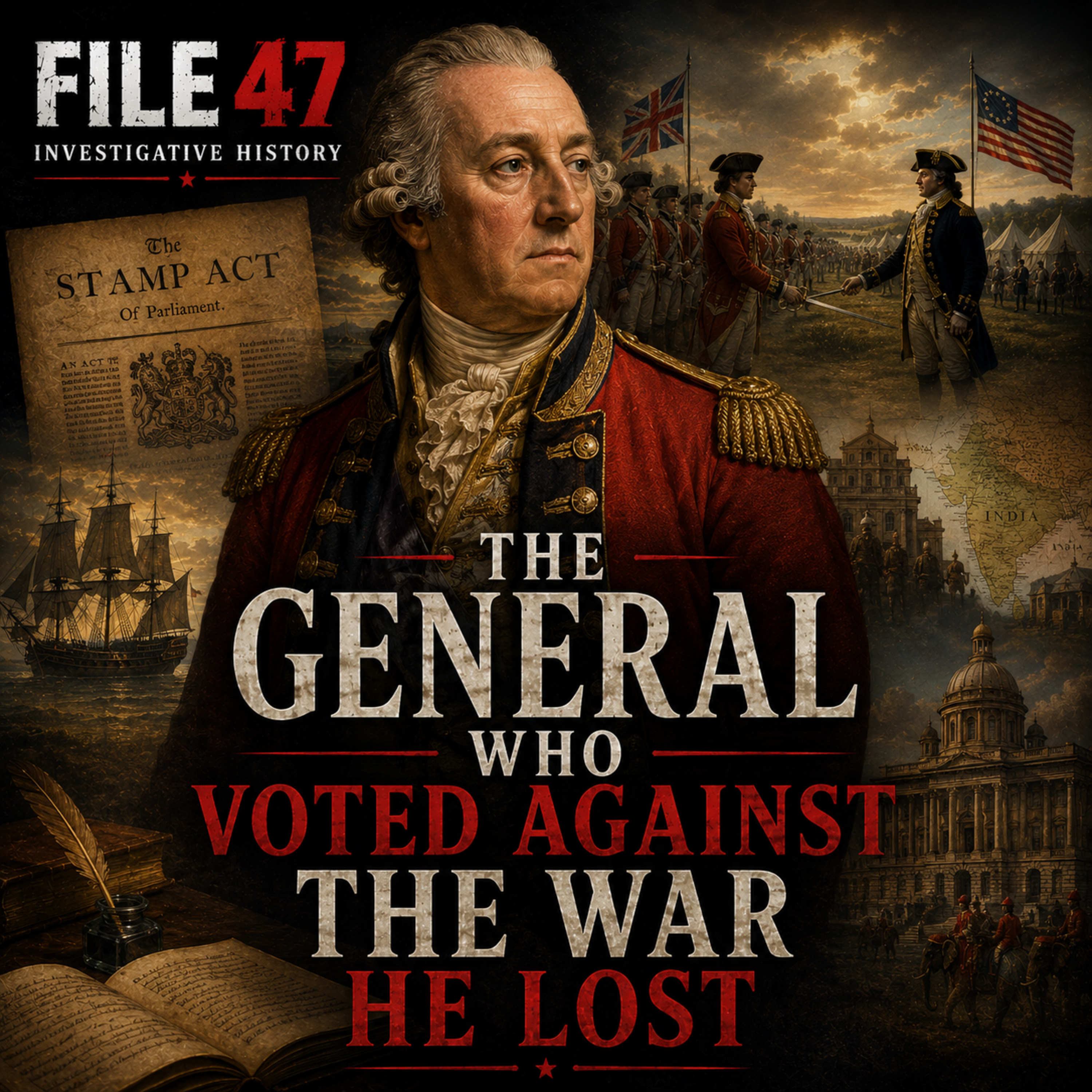
The General Who Voted Against the War He Lost
On October 19, 1781, at Yorktown, Virginia, the British army marched out to surrender. The British band played a tune called "The World Turned Upside Down." General Charles Cornwallis was not among them. He claimed to be ill. He sent his second-in-command, Brigadier General Charles O'Hara, to surrender in his place. O'Hara tried to hand his sword to George Washington. Washington refused to accept it from a subordinate and directed O'Hara to his own second-in-command, General Benjamin Lincoln. Two armies, on the most consequential day of the war, both too proud to hand a sword directly to the other side. That's where the American story of General Cornwallis ends. Here is what it leaves out: before he sailed to America, Cornwallis was one of only five members in the entire House of Lords who voted against the Stamp Act — the specific legislation that triggered everything that followed. He also voted against the Declaratory Act, which asserted Parliament's right to tax the colonies in all cases whatsoever. The man who surrendered at Yorktown had voted against the policies that made the war inevitable, years before the first shot was fired. And after Yorktown, he spent twenty-four years as one of the most consequential administrators in British imperial history — reforming the corrupt civil service of the East India Company, building the legal foundation for British rule in India that lasted almost to the end of the empire, arguing for Catholic emancipation in Ireland until he resigned when the government refused, and negotiating the Treaty of Amiens with Napoleon Bonaparte. The American story of Cornwallis ends at the surrender. The full story is considerably longer, and considerably more interesting, than the moment it stops at. Subscribe wherever you get podcasts. Companion article on Medium, linked in show notes.