Diagnosing Dx
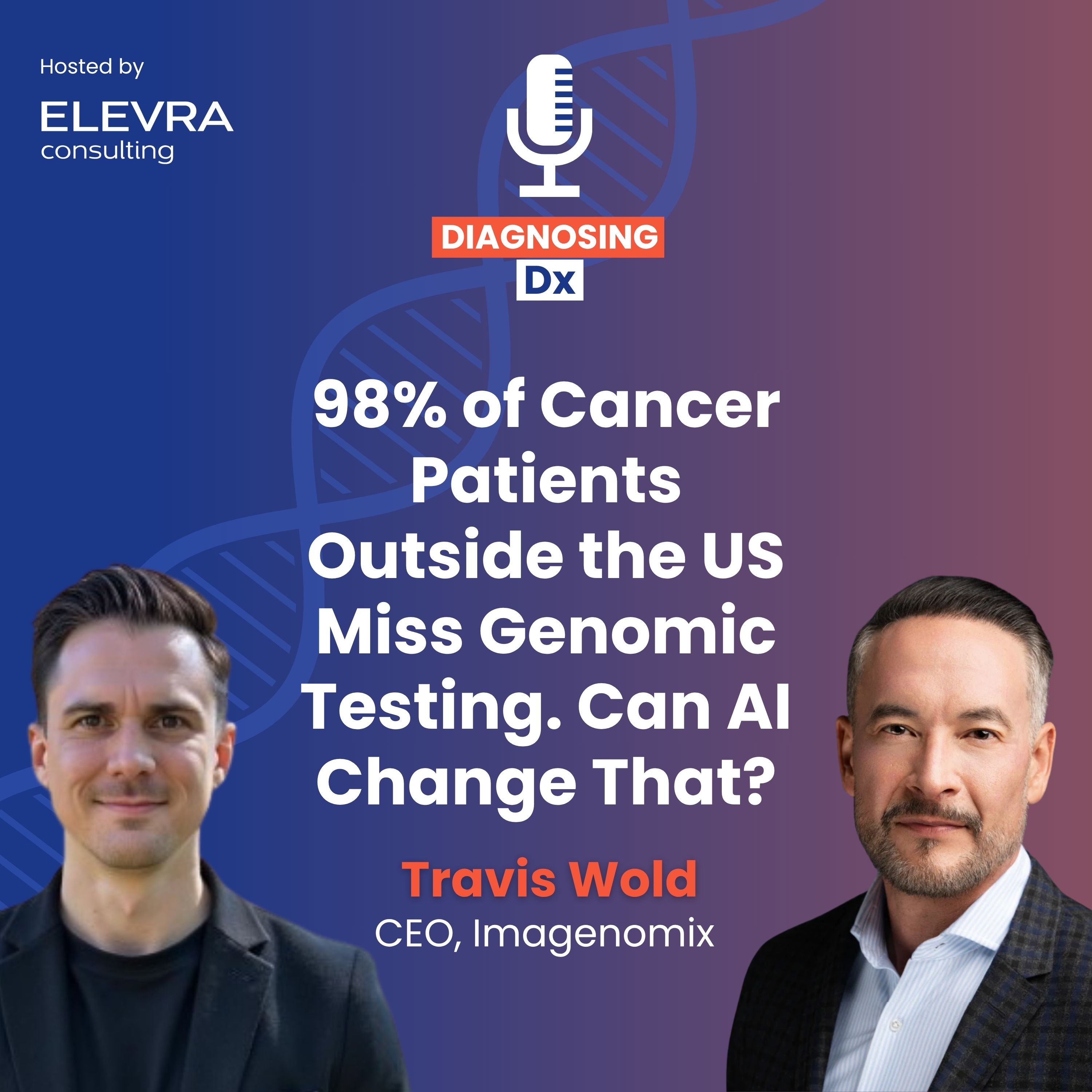
98% of Cancer Patients Outside the US Miss Genomic Testing. Can AI Change That?
In this episode of Diagnosing Dx, David Filby is joined by Travis Wold, Chief Executive Officer at Imagenomix . Travis brings experience across cancer diagnostics, genomics, liquid biopsy, and international commercialization. We explore how Imagenomix is using AI to help make genomic testing more accessible to cancer patients globally. With around 98% of cancer patients outside the US not receiving NGS testing, Travis explains how analysing standard H&E pathology images could help identify patients who are more likely to benefit from confirmatory genomic testing. We also discuss Imagenomix’s commercial strategy, digital pathology partnerships, and the longer-term potential for AI to support more precise treatment decisions in oncology. Key takeaways: Why access to genomic testing remains extremely limited outside the US How Imagenomix uses AI to identify mutation signals from standard H&E pathology images Why AI screening could reduce the cost and volume of unnecessary NGS testing How digital pathology partnerships could help Imagenomix scale globally Why predicting treatment response could become the next major step for AI in precision oncology Chapters: 00:59 Introduction and Travis Wold’s background 05:29 From cancer diagnostics to the global genomic testing problem 09:42 The limitations of NGS and where AI fits into the workflow 13:36 Imagenomix’s mission and the 98% genomic testing gap 17:42 Funding, digital pathology partnerships, and commercial traction 20:36 Regulatory strategy, screening, and the path towards companion diagnostics 23:13 Can AI predict which cancer patients will respond to treatment? 32:56 Scaling Imagenomix globally and the milestones ahead Guest: Travis Wold Chief Executive Officer at Imagenomix LinkedIn: https://www.linkedin.com/in/travisjwold/ Host: David Filby Founder and CEO of Elevra Consulting LinkedIn: https://www.linkedin.com/in/davidfilby/ Subscribe to Diagnosing Dx for weekly conversations with leaders shaping the future of diagnostics and omics.