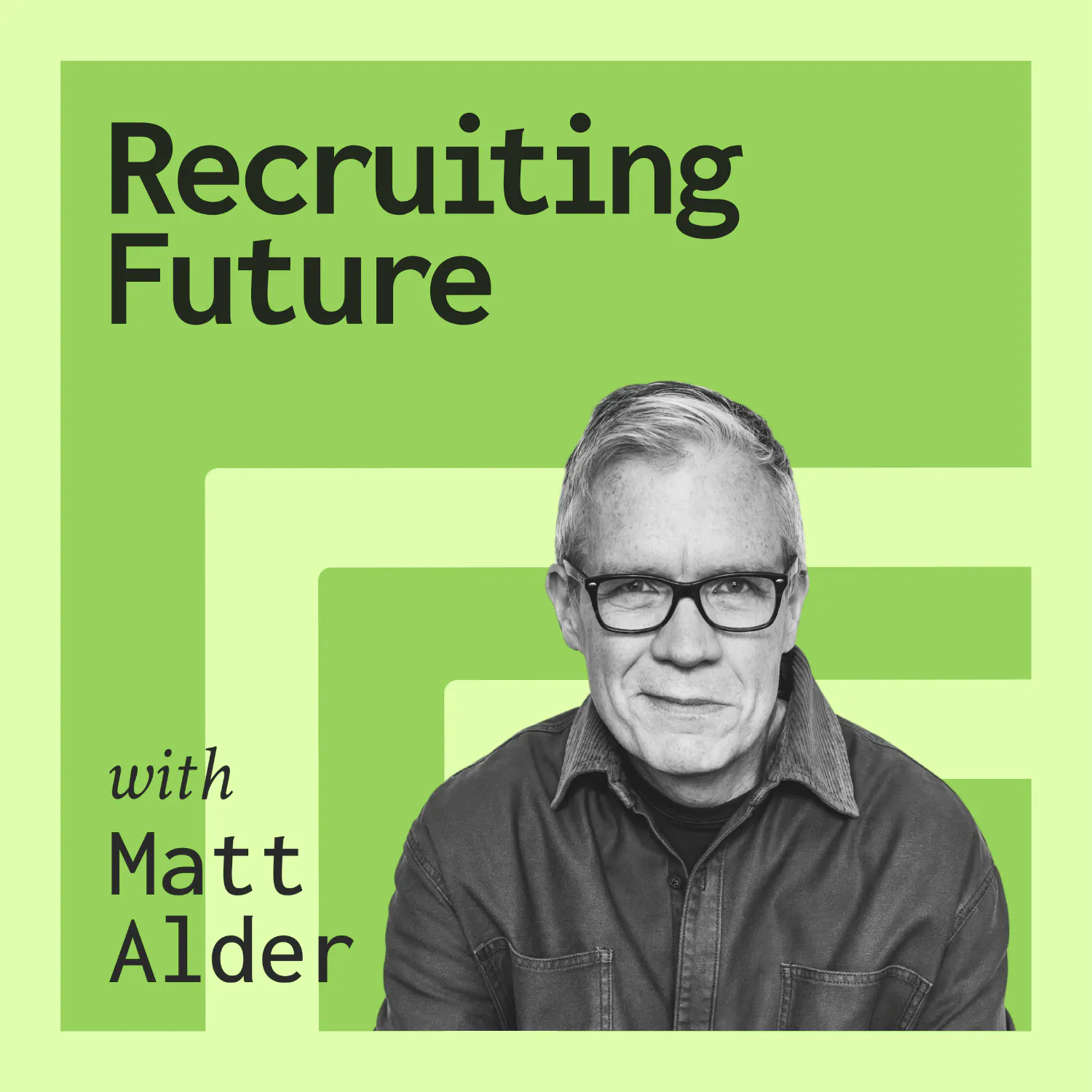
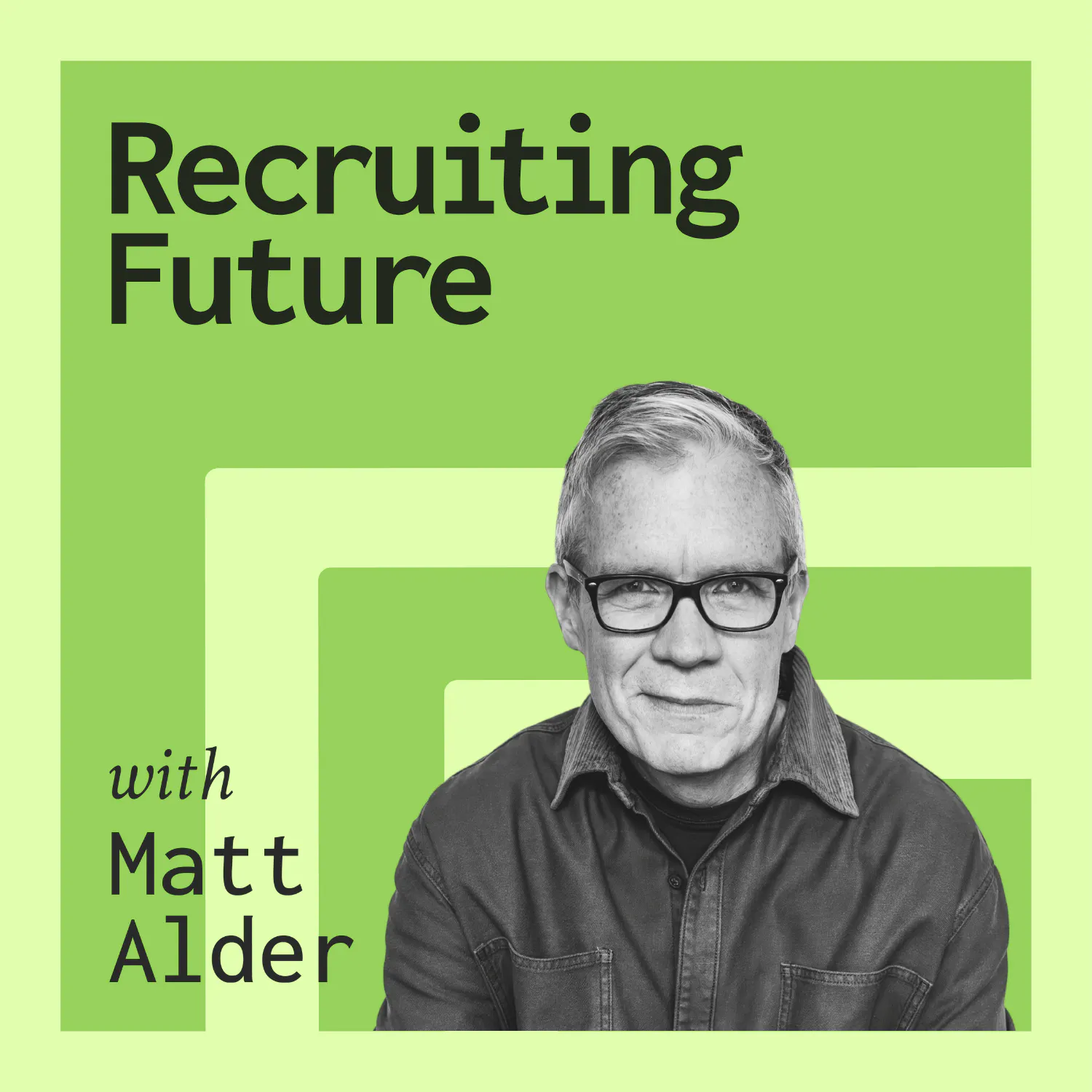
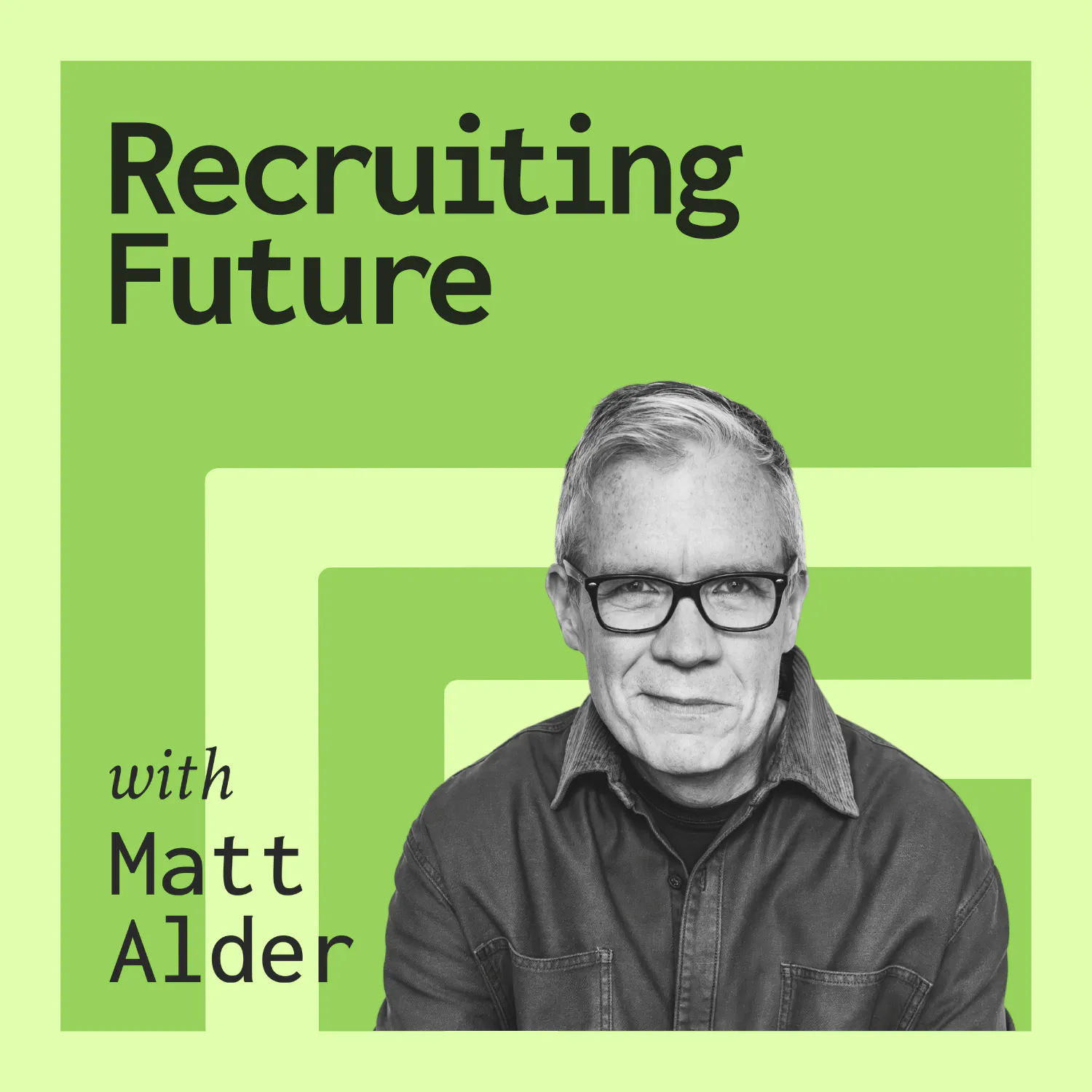
Talent acquisition is undergoing unprecedented disruption as AI, economic uncertainty, and the ever-shortening lifespan of skills radically reshape recruiting. On Recruiting Future, Matt Alder explores this evolving landscape, using insightful interviews with transformational TA practitioners and forward-thinking experts to spark your imagination and provide the insights you need to shape the future of talent acquisition in your organization. Each episode explores topics such as AI, recruiting automation, recruitment marketing, employer branding, skills-based hiring, assessment, candidate experience, DEI, internal mobility, and the transformation of TA teams. Recruiting Future is an essential resource for everyone involved in hiring. Matt Alder is a globally respected talent acquisition futurist, author, and speaker with over 25 years of experience exploring what’s next in recruiting. Renowned for his expertise in strategic foresight and technology trends, Matt provides a unique perspective that empowers leaders to navigate disruption. His deep industry knowledge and ability to spark meaningful conversations make Recruiting Future a must-listen for talent acquisition and HR professionals everywhere.
Pitch Analysis
Required Pod Score for this show. PitchCentric checks your profile against host openness, topical fit, and audience signals before you generate a pitch.
Contact path
Verified email
Booking probability
39%
Guest openness
Selective
Verified email on file
80/100
Required Score
Sign up to generate a grounded pitch for Recruiting Future with Matt Alder - What's Next For Talent Acquisition, HR & Hiring?.
What is Recruiting Future with Matt Alder - What's Next For Talent Acquisition, HR & Hiring??
Recruiting Future with Matt Alder - What's Next For Talent Acquisition, HR & Hiring? is a business podcast hosted by Unknown Host, with 0 episodes on record and a Required Pod Score of 80. PitchCentric scores this show on Booking Probability, Listen Score, and live audience signals refreshed every 24 hours.
About the host
Unknown Host hosts Recruiting Future with Matt Alder - What's Next For Talent Acquisition, HR & Hiring?, a business show with 0 episodes published.
Our AI reads these to draft pitches. Use them as grounding for a pitch that cites a real guest and a specific topic.
Episode #819
Ep 819: Who Gets The Biggest Job In HR?
Aug 21, 202627 min
The job of Chief People Officer has never been more demanding, and the way organizations decide who gets it is changing fast. Appointment volumes have fallen sharply, boards are rethinking what they value in an HR leader, and the profile of the people winning the top seats looks different from even two years ago. Experience of having done the job before is no longer the deciding factor it once was, which changes the calculation for everyone with ambitions on the role. So what are boards really looking for when they appoint a Chief People Officer? My guest this week is Olivia Sharp, a Partner at executive search firm Eton Bridge Partners, where she leads searches for Chief People Officers and board-level appointments and heads the firm's research into CPO hiring globally. In our conversation, she shares what the data reveals about experience versus potential, the skills that now define the role, and how TA leaders can position themselves for the top job. In the interview, we discuss: The fundamental shifts in what organizations value when hiring Chief People Officers Why boards are taking calculated risks on potential rather than buying proven experience What the appointment data means for first-time CPO candidates The leadership qualities that now matter more than HR expertise Where the traditional HR career path falls short The commercial capability gap in HR development How TA leaders can position themselves for the top job The swing back to external hiring and why new doesn't mean radical What will the Chief People Officer role look like in the future? Follow this podcast on Apple Podcasts. Follow this podcast on Spotify.
Skills have been on the HR agenda for decades, but they rarely became the basis for real decisions; frameworks took so long to build that the business had moved on before they were finished. What's different now is that AI agents are starting to handle work that used to require a person, and that changes the question employers need to ask. It's no longer just about who to hire; it's about whether the work needs a human at all. When you can map work to the skills it requires, you have a basis for deciding what stays with people and what moves to an agent. Making that shift isn't straightforward, though; it raises questions about what HR itself needs to look like and what capabilities the function needs to develop. So what does it take to make skills the basis for deciding how work gets done? My guest this week is Ciara Harrington, Chief People Officer at Skillsoft. In our conversation, Ciara shares how Skillsoft is rethinking which work needs a person, why HR has to become more technical to lead that conversation, and what happens when you add "bot" to your talent strategy. In the interview, we discuss: How is AI changing the way we think about skills? Build, buy, borrow, bot Helping leaders understand what work could be done differently Tasks, skills, jobs, and units of work How understanding skills underpins this transformation AI can be more expensive than humans Building an effective governance model Hiring technical skills into HR and connecting the data Critical human skills and why they need to be developed faster What does the future look like? Follow this podcast on Apple Podcasts. Follow this podcast on Spotify.
Recruiting Future with Matt Alder - What's Next For Talent Acquisition, HR & Hiring?
Decoding the C-Suite: Part 5 The Market
Aug 18, 202627 min
This is the final episode of Decoding the C-Suite, a five part miniseries from Recruiting Future about how leadership really thinks about AI, recorded with the leadership team at SmartRecruiters seven months into their acquisition by SAP. Three years into the AI boom, the marketing noise has never been louder. Everything is AI-powered and every vendor makes the same claims. In the final episode, Steve Hardy, who leads marketing at SmartRecruiters, is unusually candid about all of it: why he tells his own sales team to stop demoing, what he calls AI washing, why buyers should start with business priorities rather than features, and what actually builds trust with buyers and candidates alike. The series closes with the question that ran through every conversation: what does good leadership look like in an AI-driven world?
Recruiting Future with Matt Alder - What's Next For Talent Acquisition, HR & Hiring?
Decoding the C-Suite: Part 4 - The Product
Aug 18, 202625 min
This is episode four of Decoding the C-Suite, a five part miniseries from Recruiting Future about how leadership really thinks about AI, recorded with the leadership team at SmartRecruiters seven months into their acquisition by SAP. AI is moving faster than any buyer can absorb, and that creates a genuine design problem: build for the boldest customers and you lose everyone else, build for the cautious and you fall behind. Shefali Netke, VP of Product Design at SmartRecruiters, lives in that tension every day. She explains how to design for a spectrum of readiness rather than an average user, why she refuses to keep designing for the old world, how her team builds AI fluency, and what it takes to merge two design cultures into one team.
Recruiting Future with Matt Alder - What's Next For Talent Acquisition, HR & Hiring?
Decoding the C-Suite: Part 1 - The Thesis
Aug 18, 202625 min
The organisations genuinely driving AI change in talent all have one thing in common: alignment with the C-suite. Decoding the C-Suite is a five part miniseries from Recruiting Future exploring how leadership really thinks about AI. Recorded over one day with the leadership team at SmartRecruiters, seven months into their acquisition by SAP, the series unpacks AI through five lenses: the thesis, the people, the money, the product and the market. If you want to understand the conversations happening around your own leadership table, and how to win them, this series is for you. In the opening episode, the tables are turned as SmartRecruiters' Allyn Bailey interviews Matt on the future of talent acquisition. Matt shares his honest assessment of the outdated stories the industry keeps telling itself, why mental models matter more than systems, how candidates are already breaking recruiting, and a prediction about AI agents talking to AI agents that he's prepared to be held to. It sets the agenda for the four leadership conversations that follow.
Every question we get asked before someone starts their trial.
If you have a concern about deliverability, AI quality, data privacy, or whether this will actually work for your specific situation, it's probably answered below.
What is the difference between Founder Solo and Founder Pro?
Founder Solo gives you 50 AI pitches per month using the credit model (Standard pitches cost 1 credit, Enriched pitches cost 2). Founder Pro raises that to 200 credits per month and adds full Booking Probability access, unlimited Magic Match, Apollo enrichment credits, and data export capabilities. Both plans use the same credit system, so you can stretch your monthly budget further by using Standard-mode drafting.
How do agency tiers work?
Agency tiers have no base fee. You pay per managed client and per talent profile. Agency Standard is $199 per client per month; Agency Pro is $399 per client per month. Both add $39 per talent profile per month. Your own team's user seats are always free.
What is a talent profile?
A talent profile represents one person (founder, executive, or spokesperson) you are booking onto podcasts. It includes their bio, topics, headshots, and outreach history. Team plans include 5 profiles; agency plans are pay-as-you-go.
Can I switch plans later?
Yes, at any time. Upgrades take effect immediately; downgrades apply at the end of the current billing period. Contact support if you need help migrating between plan families.
Do you offer a free trial?
Every paid plan includes a 15-day free trial. Your card is saved at signup but you will not be charged until day 16. Cancel any time from your dashboard.
What happens if I cancel?
You keep access until the end of your current billing period. No charges after that. Your data is retained for 30 days in case you reactivate.
Is the 20% annual discount automatic?
Yes. Select Annual on the pricing toggle and the discounted price is applied automatically at checkout. The annual price shown is the full year cost.
What if I have more than 50 profiles or 20 clients?
That is our Enterprise tier. Contact our sales team and we will build a custom plan with volume pricing, a dedicated account manager, and SLA guarantees.