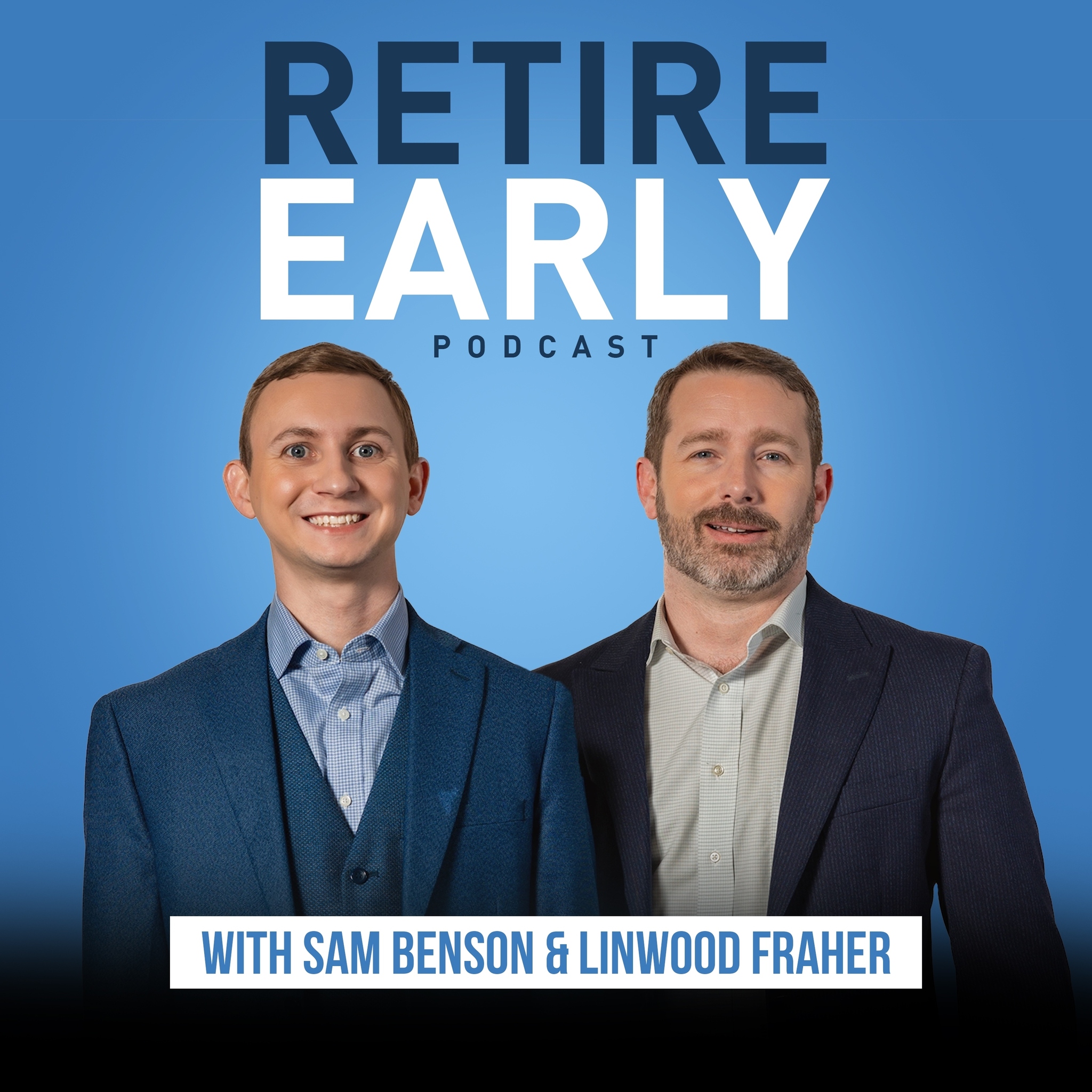
Welcome to ”The Retire Early Podcast,” your essential guide to achieving the retirement you’ve always dreamed of—sooner rather than later! Hosted by Sam Benson and Linwood Fraher, this podcast is tailored specifically for individuals aged 50-65 who are passionate about retiring early and living their best lives. Each week, we’ll dive deep into essential retirement topics including tax-efficient strategies, smart investing, healthcare planning, income optimization, Social Security tips, estate planning, and actionable financial advice. We’ll feature expert insights, inspiring stories, and practical tools to empower you on your journey toward early retirement. Whether you’re planning to retire in 5 years or 15, ”The Retire Early Podcast” equips you with the knowledge and confidence to secure your financial future, maximize your wealth, and enjoy the retirement lifestyle you deserve. Subscribe today and join our community committed to retiring early and th
Pitch Analysis
Required Pod Score for this show. PitchCentric checks your profile against host openness, topical fit, and audience signals before you generate a pitch.
Contact path
Public web form
Booking probability
32%
Guest openness
Selective
80/100
Required Score
Sign up to generate a grounded pitch for Retire Early Podcast.
Retire Early Podcast is a education podcast hosted by Sam Benson & Linwood Fraher, with 78 episodes on record and a Required Pod Score of 80. PitchCentric scores this show on Booking Probability, Listen Score, and live audience signals refreshed every 24 hours.
About the host
Sam Benson & Linwood Fraher hosts Retire Early Podcast, a education show with 78 episodes published.
Our AI reads these to draft pitches. Use them as grounding for a pitch that cites a real guest and a specific topic.
Episode #78
The 3 Worst Investment Decisions to Make Before Retirement
Sep 1, 202616 min
The decisions you make with your investments as you approach retirement can have consequences that last for decades. In this episode of the Retire Early Podcast, Certified Financial Planners Sam Benson and Linwood Fraher discuss three of the biggest investment mistakes they see people make heading into retirement, and how planning ahead can help you avoid them. The conversation begins with the story of an investor who watched the market fall during COVID while preparing for retirement. Fear took over, and he moved his investments into CDs. Years later, he regretted the decision. Sam and Linwood explain why retirement investing isn't simply about avoiding market losses. You need a strategy for turning your portfolio into a paycheck, managing taxes, maintaining enough long-term growth to keep pace with inflation, and preparing your plan for the unexpected. Mistake #1: Retiring Without an Income Distribution Plan For decades, your employer provides a paycheck. In retirement, that responsibility shifts to you and your portfolio. Without an income distribution strategy, retirees can end up taking money from the wrong accounts at the wrong time, overspending, or unexpectedly increasing their tax bill. Sam explains how something as simple as taking a large IRA distribution for a vehicle could potentially push someone into a higher tax bracket. The goal is to understand how much you'll need, where the money will come from, and how your different accounts can work together to recreate a dependable retirement paycheck. Mistake #2: Getting Completely Out of the Market Market volatility becomes much more intimidating when retirement is close. That fear can lead investors to abandon the market entirely for CDs, Treasuries, savings accounts, and other conservative investments. While those assets can have an appropriate role in a retirement strategy, moving everything to short-term investments creates another risk: your money may fail to keep pace with inflation and your long-term spending needs. Sam and Linwood discuss investors who sold during major downturns—including the 2008 financial crisis and the COVID crash, and then remained on the sidelines during the recovery. Mistake #3: Failing to Stress-Test Your Retirement A retirement plan shouldn't only work when everything goes right. What happens if investment returns are lower than expected? Inflation runs higher? Social Security benefits change? Spending increases? A major home repair arrives? Or one spouse dies earlier than anticipated? Stress-testing a retirement plan means deliberately modeling difficult scenarios to identify its weak points before those problems actually happen. The goal isn't to predict the future. It's to build enough flexibility into the plan that unexpected events don't automatically derail your retirement. In This Episode 00:00 — A Retirement Decision He Regretted 01:00 — The 3 Biggest Investment Mistakes Near Retirement 02:00 — Mistake #1: No Retirement Paycheck Plan 03:00 — Taking Money From the Wrong Accounts 04:00 — How Much Can You Actually Spend? 05:00 — Mistake #2: Getting Out of the Market 06:00 — The Hidden Problem With "Safe" Investments 07:00 — Spend Your Retirement While You Can Enjoy It 08:00 — Recovering From Emotional Investment Decisions 10:00 — Why COVID Felt Different 11:00 — Mistake #3: Failing to Stress-Test Your Portfolio 12:00 — Preparing for Major Retirement Expenses 13:00 — What Happens When the Plan Goes Wrong? 14:00 — The 3 Mistakes to Avoid 15:00 — Where to Start
In this episode of the Retire Early Podcast, financial advisors Sam Benson & Linwood Fraher of Martin Wealth Solutions address a common question among people approaching retirement: Should I retire now or work one more year? Sam and Linwood explain how an additional year of work could affect several parts of a retirement plan. Working longer may provide another year of income, retirement account contributions, employer benefits, and potential investment growth while also reducing the number of years your portfolio must support you. However, the decision is not purely financial. They also discuss the importance of evaluating healthcare coverage, Social Security timing, retirement income, current expenses, and whether the additional year would meaningfully improve the strength of your plan. The episode encourages listeners to weigh the financial benefits of continuing to work against their health, family priorities, personal goals, and the value of their time. For anyone standing at the edge of retirement, this conversation offers a helpful framework for determining whether one more year is necessary—or whether you may already be ready to begin the next chapter. http://retirewithmartin.com/ ← Learn about working with us www.planwellretirehappy.com Episode Breakdown 00:00 Introduction: Should you work one more year? 00:39 Meet Sam and Linwood 01:08 The financial benefits of another year of income 02:04 Social Security and retirement income considerations 03:10 Considering the intangible benefits of working an additional year 5:00 The importance of paying off different types of debts 07:08 Reducing the number of years your savings must support 08:31 Practicing a “transitional year” from employment to retirement 09:35 Will one more year significantly improve your financial security? 10:10 Continuing to work because you simply enjoy it 11:44 Health, family, and personal priorities 14:30 Experiencing burnout at work and its effects 15:40 Preparing for unexpected changes and events 16:53 Balancing financial security with the value of time and once-in-a-lifetime moments 18:25 Key takeaways, final thoughts and closing remarks Disclaimer Opinions expressed herein are solely those of Martin Wealth Solutions, unless otherwise specifically cited. Material presented is believed to be from reliable sources, but no representations are made by our firm as to another parties’ informational accuracy or completeness. Content provided herein is for informational purposes only and should not be used or construed as investment advice or a recommendation regarding the purchase or sale of any security. There is no guarantee that any statements, opinions or forecasts provided herein will prove to be correct. All information or ideas provided should be discussed in detail with an advisor, accountant or legal counsel prior to implementation. Past performance may not be indicative of future results. Indices are not available for direct investment. Any investor who attempts to mimic the performance of an index would incur fees and expenses which would reduce returns. Securities investing involves risk, including the potential for loss of principal. There is no assurance that any investment plan or strategy will be successful.
In this episode of the Retire Early Podcast, financial advisors Sam Benson & Linwood Fraher of Martin Wealth Solutions discuss why many early retirees end up paying more in taxes than necessary—and what they can do to avoid it. Sam and Linwood explain that retirement creates unique tax planning opportunities, but without a strategy, retirees can unknowingly increase their tax bill. They discuss how different account types are taxed, why withdrawal sequencing matters, and how careful income planning can help reduce lifetime taxes. They also cover common mistakes involving Social Security, Required Minimum Distributions (RMDs), Roth conversions, and Medicare premium surcharges, showing listeners how proactive planning can keep more money working for them instead of going to the IRS. Whether you're planning to retire early or are already enjoying retirement, this episode highlights practical tax strategies that could make a meaningful difference over the long term. http://retirewithmartin.com/ ← Learn about working with us www.planwellretirehappy.com Episode Breakdown 00:00 Introduction to today's topic 00:52 Meet the hosts 02:05 Avoiding unexpected surprises with your taxes 03:57 Why withdrawal order matters 06:37 The importance of tax diversification 08:35 What to lookout for with Roth conversion opportunities 10:38 Social Security taxation and hidden tax costs 11:50 Coordinating investments with tax strategy 12:36 What to do with Employer stock 14:29 Retirement planning and buyer's remorse 16:15 Common tax mistakes retirees make 16:53 Action steps to improve tax efficiency 17:35 Final thoughts and closing remarks Disclaimer Opinions expressed herein are solely those of Martin Wealth Solutions, unless otherwise specifically cited. Material presented is believed to be from reliable sources, but no representations are made by our firm as to another parties' informational accuracy or completeness. Content provided herein is for informational purposes only and should not be used or construed as investment advice or a recommendation regarding the purchase or sale of any security. There is no guarantee that any statements, opinions or forecasts provided herein will prove to be correct. All information or ideas provided should be discussed in detail with an advisor, accountant or legal counsel prior to implementation. Past performance may not be indicative of future results. Indices are not available for direct investment. Any investor who attempts to mimic the performance of an index would incur fees and expenses which would reduce returns. Securities investing involves risk, including the potential for loss of principal. There is no assurance that any investment plan or strategy will be successful.
7 Red Flags That Mean You Shouldn't Retire Just Yet
Aug 11, 202628 min
In this episode of the Retire Early podcast, financial advisors Sam Benson & Linwood Fraher of Martin Wealth Solutions discuss the warning signs that may indicate you are not quite ready to retire. Retirement readiness involves more than reaching a certain age or account balance. Sam and Linwood explain why retirees also need a dependable income plan, a clear understanding of their expenses, a strategy for healthcare, and a plan for how they will spend their time after leaving work. They also address the risks of carrying too much debt, relying on unrealistic investment returns, or making a retirement decision before both spouses are on the same page. The episode encourages listeners to identify potential gaps before submitting their retirement notice. With proper planning, many of these warning signs can be addressed, helping you approach retirement with greater clarity, confidence, and flexibility. http://retirewithmartin.com/ ← Learn about working with us www.planwellretirehappy.com Episode Breakdown 00:00 Introduction: Are you truly ready to retire? 00:46 Meet the hosts 01:44 Retirement readiness is about more than your savings 02:26 Sign #1: You don’t understand your retirement expenses 05:01 Sign #2: You haven’t built a dependable income plan 10:41 Sign #3: You haven’t planned for healthcare costs 13:19 Sign #4: You’re carrying too much debt 15:51 Sign #5: You don't have any emergency reserves 18:50 Sign #6: You don't have a strategy for your taxes 22:41 Sign #7: You haven't created a plan with your spouse 23:56 Planning for purpose, routine, and social connection 26:07 Stress-testing your retirement strategy 26:25 Final thoughts and closing remarks Disclaimer Opinions expressed herein are solely those of Martin Wealth Solutions, unless otherwise specifically cited. Material presented is believed to be from reliable sources, but no representations are made by our firm as to another parties’ informational accuracy or completeness. Content provided herein is for informational purposes only and should not be used or construed as investment advice or a recommendation regarding the purchase or sale of any security. There is no guarantee that any statements, opinions or forecasts provided herein will prove to be correct. All information or ideas provided should be discussed in detail with an advisor, accountant or legal counsel prior to implementation. Past performance may not be indicative of future results. Indices are not available for direct investment. Any investor who attempts to mimic the performance of an index would incur fees and expenses which would reduce returns. Securities investing involves risk, including the potential for loss of principal. There is no assurance that any investment plan or strategy will be successful.
Making Six Figures But Still Broke? How High Earners Fix Their Finances
Aug 4, 202623 min
In this episode of the Retire Early podcast, financial advisors Sam Benson & Linwood Fraher of Martin Wealth Solutions discuss why earning six figures does not always translate into feeling financially secure. As income rises, spending often increases alongside it, leaving many high earners wondering why they are not making more progress toward their financial goals. Sam and Linwood explore how lifestyle inflation, housing costs, vehicles, debt, taxes, subscriptions, and everyday spending can quietly consume a strong income. They explain the difference between earning a high salary and actually building wealth, as well as the importance of understanding where your money is going each month. The episode also offers practical ideas for taking control of cash flow, using raises and bonuses intentionally, automating savings, and aligning spending with the goals that matter most. Whether you recently received a raise or have earned a strong income for years, this conversation can help you turn that income into greater financial confidence and long-term wealth. http://retirewithmartin.com/ ← Learn about working with us www.planwellretirehappy.com Episode Breakdown 00:00 Introduction: Making six figures but still feeling broke 00:52 Meet the hosts 01:42 Why a strong income may not feel like enough 03:32 How lifestyle inflation affects high earners 05:30 Understanding where your money is going 07:34 Housing, vehicles, debt, and recurring expenses 09:38 The difference between earning money and building wealth 11:32 Why budgeting still matters at higher incomes 13:24 Using raises and bonuses intentionally 15:18 Automating savings and investing 17:12 Aligning spending with your financial priorities 19:10 Avoiding comparison and keeping up with others 20:48 Practical steps to start making progress 22:14 Final thoughts and closing remarks Disclaimer Opinions expressed herein are solely those of Martin Wealth Solutions, unless otherwise specifically cited. Material presented is believed to be from reliable sources, but no representations are made by our firm as to another parties' informational accuracy or completeness. Content provided herein is for informational purposes only and should not be used or construed as investment advice or a recommendation regarding the purchase or sale of any security. There is no guarantee that any statements, opinions or forecasts provided herein will prove to be correct. All information or ideas provided should be discussed in detail with an advisor, accountant or legal counsel prior to implementation. Past performance may not be indicative of future results. Indices are not available for direct investment. Any investor who attempts to mimic the performance of an index would incur fees and expenses which would reduce returns. Securities investing involves risk, including the potential for loss of principal. There is no assurance that any investment plan or strategy will be successful.
Every question we get asked before someone starts their trial.
If you have a concern about deliverability, AI quality, data privacy, or whether this will actually work for your specific situation, it's probably answered below.
What is the difference between Founder Solo and Founder Pro?
Founder Solo gives you 50 AI pitches per month using the credit model (Standard pitches cost 1 credit, Enriched pitches cost 2). Founder Pro raises that to 200 credits per month and adds full Booking Probability access, unlimited Magic Match, Apollo enrichment credits, and data export capabilities. Both plans use the same credit system, so you can stretch your monthly budget further by using Standard-mode drafting.
How do agency tiers work?
Agency tiers have no base fee. You pay per managed client and per talent profile. Agency Standard is $199 per client per month; Agency Pro is $399 per client per month. Both add $39 per talent profile per month. Your own team's user seats are always free.
What is a talent profile?
A talent profile represents one person (founder, executive, or spokesperson) you are booking onto podcasts. It includes their bio, topics, headshots, and outreach history. Team plans include 5 profiles; agency plans are pay-as-you-go.
Can I switch plans later?
Yes, at any time. Upgrades take effect immediately; downgrades apply at the end of the current billing period. Contact support if you need help migrating between plan families.
Do you offer a free trial?
Every paid plan includes a 15-day free trial. Your card is saved at signup but you will not be charged until day 16. Cancel any time from your dashboard.
What happens if I cancel?
You keep access until the end of your current billing period. No charges after that. Your data is retained for 30 days in case you reactivate.
Is the 20% annual discount automatic?
Yes. Select Annual on the pricing toggle and the discounted price is applied automatically at checkout. The annual price shown is the full year cost.
What if I have more than 50 profiles or 20 clients?
That is our Enterprise tier. Contact our sales team and we will build a custom plan with volume pricing, a dedicated account manager, and SLA guarantees.