Episode #8
Is Your Agenda Too Loud? Jesse Israel on Quiet, Noise, and Mindful Event Design
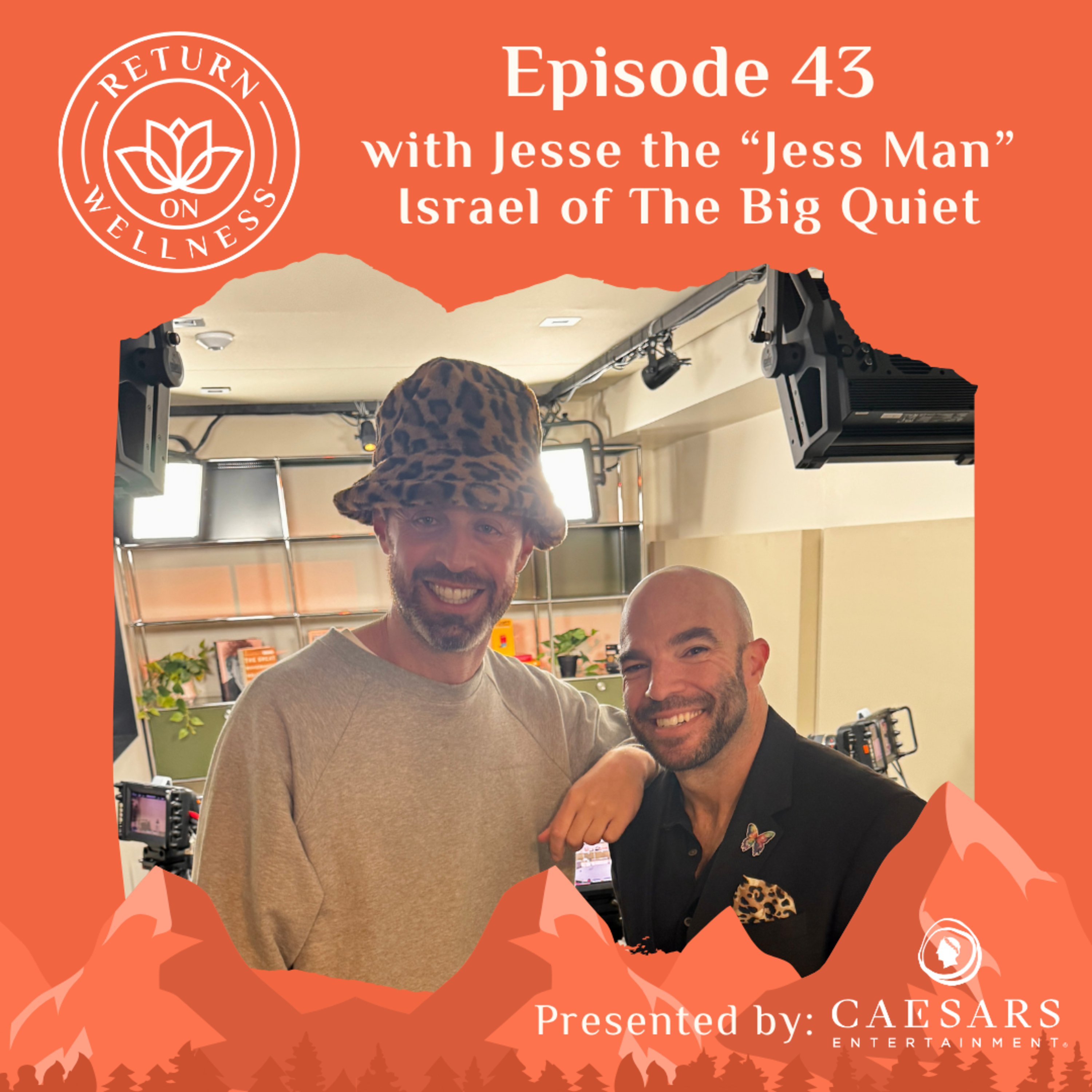
What if mindfulness at events is less about adding a meditation break and more about being mindful of what we are asking participants to do in the first place? In this episode of Return on Wellness, David T. Stevens sits down with Jesse Israel, founder of The Big Quiet, for a conversation about quiet, noise, AI, nervous system regulation, and the future of mindful event design. Jesse’s work has brought large groups of people together through collective quiet at festivals, arenas, corporate events, and on Oprah’s tour. But this conversation is not just about meditation. It is about the noise participants bring into the room: the noise of the world, the noise in their heads, and the noise in their bodies. For meeting and event professionals, that matters. We ask participants to travel, learn, network, listen, decide, connect, retain information, attend receptions, answer emails, show up for breakfast, and somehow leave with enough energy to go back to work and use what they learned. Then we design agendas that give them almost no room to breathe. David and Jesse talk about why quiet is not dead space, why over-programmed agendas are not the same as valuable agendas, how AI is increasing the need for human-centered programming, and why food, white space, and recovery need to be part of the strategy if we expect people to pay attention, connect, remember, and actually use what they learned. Because your agenda may look full, but their nervous systems and their devices know whether it worked. Chapters 00:00 Welcome to Return on Wellness 00:52 Meet Jesse “The Jess-Man” Israel 01:45 Music, MGMT, panic attacks, and finding meditation 03:00 Creating quiet backstage at festivals 04:10 Leopard print, bucket hats, and the Jess-Man story 06:45 What people get wrong about quiet 08:10 Why quiet matters now, especially with AI 09:45 The three types of noise 11:00 Solitude deprivation and distraction 13:20 Sleep, hotel rooms, and the noise in the body 15:45 Hustle culture vs. quiet as performance 19:00 Quieting the body, not just the mind 21:30 Why white space matters 22:50 What changes when groups get quiet together 25:30 Why agendas do not leave room for quiet 27:00 How to pitch quiet to executives and planners 28:00 Zone of genius and quiet beyond meditation 30:30 Conference-focused mindfulness 31:40 Why under five minutes can be enough 33:00 Storytelling, emotion, and quiet in corporate keynotes 34:45 Quiet, connection, meaning, and service 36:15 Discomfort, courage, and sharing your gifts 38:30 Failure, growth, and good stress 39:30 The future of meetings and human programming 42:00 Phone-free events and wanting to feel human again 44:00 Pairing AI speakers with human-centered programming 45:00 How AI can support presence 46:00 Where to start: phone boundaries and Opal 49:00 Why the first 30 minutes of the day matter 50:00 What events need to stop doing 51:30 What events need to start doing 52:00 Email breaks, family time, and treating participants like people 54:00 Final wrap