Scaling Intelligence
Beyond the Benchmark: Sagar Dolas, SURF, on Exascale Scientific Productivity
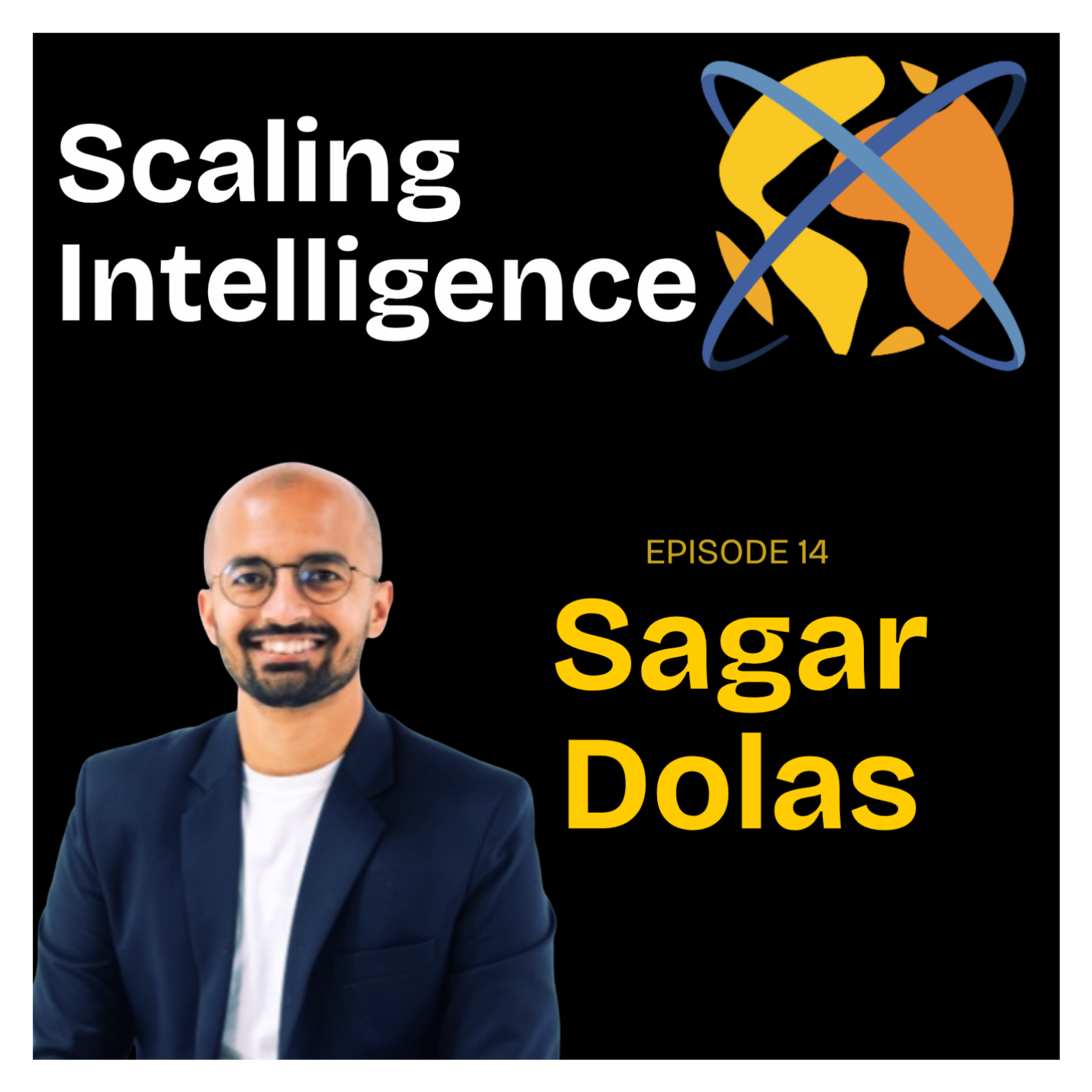
Sagar Dolas, Program Manager at SURF — the Dutch national organization for digital infrastructure in research and higher education — joins Kevin Jackson to challenge one of HPC's most enduring assumptions: that bigger machines produce more science. Sagar argues that raw compute capacity and scientific productivity are not the same thing, and that the gap between them is growing. At SURF, he and his colleagues have tracked that classical simulation and modeling workflows can lose as much as 25 to 30 percent of their compute time to manual data movement between storage tiers — a problem rooted not in hardware limits but in orchestration, legacy software, and workflow design. He makes the case that if the HPC community had designed systems from the application side outward, a convergent infrastructure meeting the needs of astronomy, high-energy physics, and classical simulation workflows would have emerged a decade earlier. Sagar goes further: the cultural and funding architecture of the field — CapEx for hardware, incidental OpEx for people — structurally underinvests in the expertise that makes machines useful. He proposes replacing the FLOP-count-focused Top500 with a new international ranking that celebrates whole-system scientific productivity, and calls on policymakers to shift from hardware-first to capabilities-first investment, measuring success by time to science, end-to-end workflow throughput, and communities served.