

Episode #70
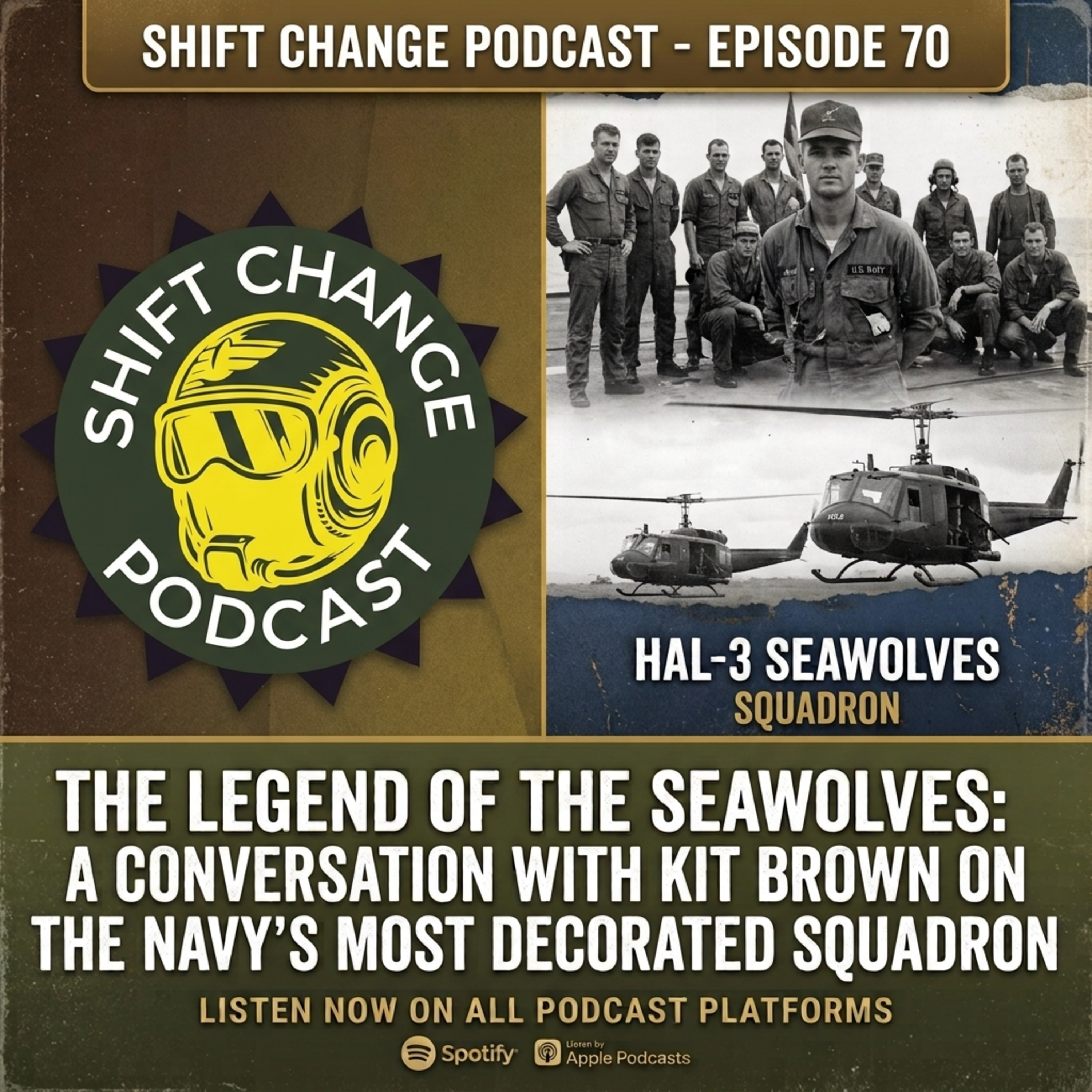
Ep. 70: Kit Brown and the US Navy Seawolves
Navy Squadron Commander turned air medical pilot explains how armed helicopters quietly shaped modern special operations—and why the missions most people never see are often the ones that matter most. This episode I sit down with friend of the show Kit Brown for a wide-ranging story about flying, war, risk, and reinvention. From tracking Russian submarines and supporting SEAL teams to rebuilding a decommissioned squadron and flying rescue missions in Iraq and the Pacific, Kit traces a career built around doing hard things when the stakes are highest. You’ll discover: How Navy helicopter pilots are trained, assigned, and moved through the fleet Why the Sea Wolves in Vietnam became the blueprint for later Navy Reserve special operations aviation What it actually takes to track submarines from a helicopter using sonobuoys How HCS-84 and HSC-85 ended up supporting SEALs in Iraq and beyond Why the Navy kept shutting down and resurrecting the same mission over and over What makes training for rescue work so different from doing the real thing Kit also opens up about the personal cost of a life spent deploying, the pressure of being gone so often, and the strange challenge of leaving one identity behind and building another. This episode is for anyone who loves military history, aviation, special operations, or the behind-the-scenes story of how elite rescue and support missions really work. It’s also for listeners thinking about retirement, reinvention, or what happens when the job you’ve trained your whole life for finally changes. By the end, you’ll understand why some of the most important military jobs are the least visible—and why the people who do them often miss the work long after they’ve left it. If you want cool history, real sea stories, and a rare look at the Navy’s unconventional helicopter mission, this one delivers.
