
Loadingβ¦

Loadingβ¦

business
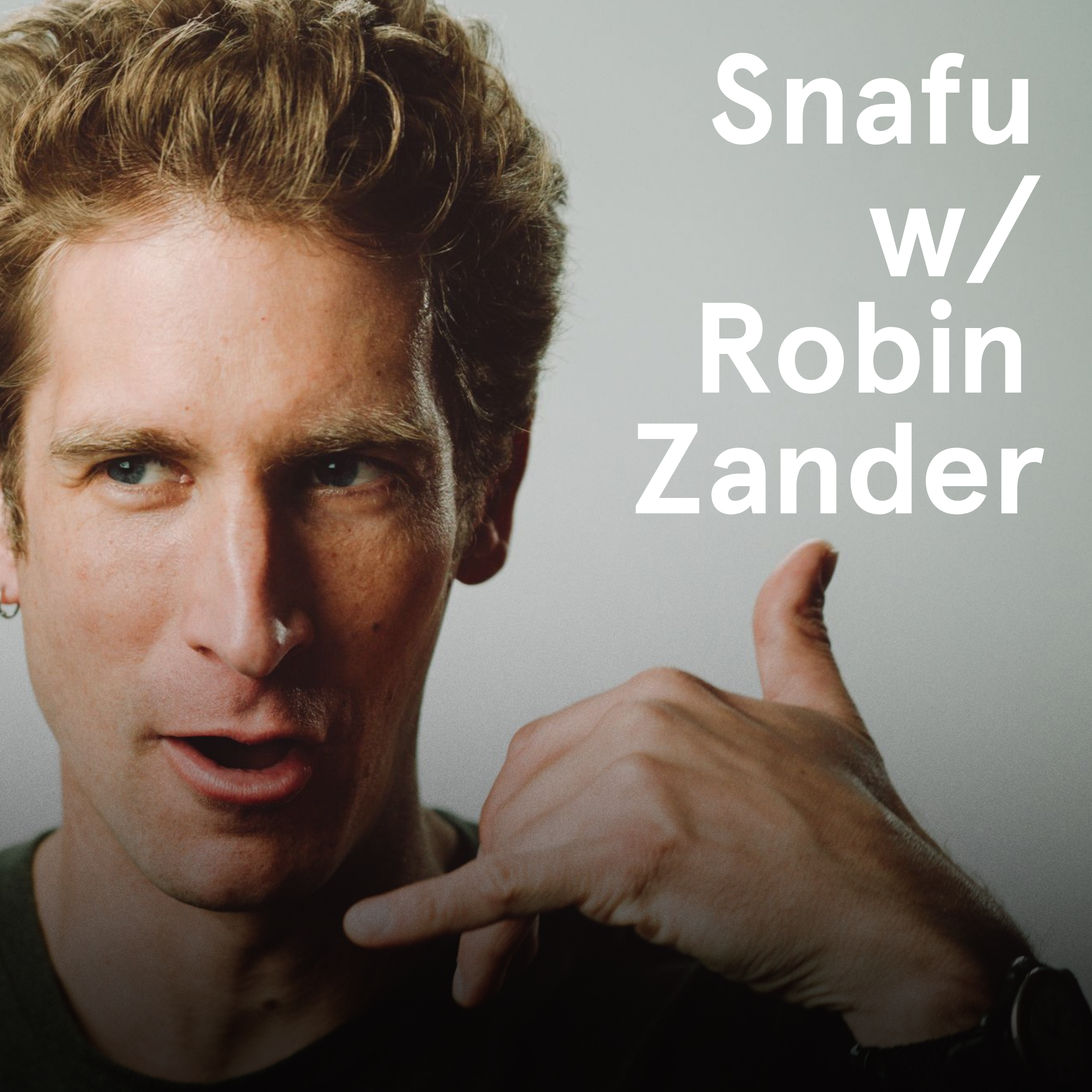
Hosted by Robin P. Zander Β· business Β· EN Β· 100 episodes
Welcome to Snafu, a podcast about sales, persuasion, and work. Amidst all the change going on in the world today, "durable" skills are often the most resilient. Snafu is a podcast for entrepreneurs, freelancers, and ambitious professionals who need to sell β but aren't quite comfortable yet.Robin Zander has spent more than 20 years tackling things he doesn't know how to do. From starting a restaurant in three weeks without any prior restaurant experience to performing as a self-taught acrobat with the San Francisco Opera, Robin has built his life and career around learning new things.But growth isn't all upside. Trying new things comes with lots of failures. On Snafu, Robin sits down with authors and entrepreneurs to talk about a more human approach to sales, persuasion, and work.
Required Pod Score for this show. PitchCentric checks your profile against host openness, topical fit, and audience signals before you generate a pitch.
Contact path
Verified email
Booking probability
34%
Guest openness
Selective
Sign up to generate a grounded pitch for Snafu w/ Robin Zander.
Signup to Generate a PitchSnafu w/ Robin Zander is a business podcast hosted by Robin P. Zander, with 100 episodes on record and a Required Pod Score of 80. PitchCentric scores this show on Booking Probability, Listen Score, and live audience signals refreshed every 24 hours.
Robin P. Zander hosts Snafu w/ Robin Zander, a business show with 100 episodes published.
Our AI reads these to draft pitches. Use them as grounding for a pitch that cites a real guest and a specific topic.


Snafu w/ Robin Zander
In this episode, I'm joined by Adam Rosendahl β facilitator, artist, and founder of Late Nite Art β for a conversation about creativity, trust, belonging, and why deeply human experiences may matter more than ever in an increasingly AI-driven world. Adam's work uses collaborative art, storytelling, music, and facilitation to help people lower their defenses and reconnect with one another in ways that traditional meetings, networking, and workplace culture often fail to create. We explore how creativity can function as a kind of social technology β building trust, emotional openness, empathy, and shared experience across strangers, teams, and organizations. We talk about the origins of Late Nite Art, the leadership camps and formative experiences that shaped Adam's philosophy, and why so many people today feel disconnected despite being constantly online. Along the way, we explore relationship-centered leadership, workplace trust, emotional safety, political polarization, experiential learning, and why organizations increasingly need spaces for genuine human connection. Toward the second half of the conversation, we discuss AI, automation, digital overwhelm, and the growing tension between technological acceleration and preserving humanity, creativity, and embodied experience. Adam also reflects on friendship, handwritten art, illuminated notes, and why imperfect human-made experiences may become even more valuable in a world saturated with AI-generated content. If you're thinking about creativity, leadership, belonging, trust, or how to stay emotionally grounded in rapidly changing times, this conversation is for you.

Snafu w/ Robin Zander
In this episode, I'm joined by Sara Loncka β experiential learning designer, leadership strategist, and CEO of Experience Institute β for a conversation about why human experience may matter more than ever in an increasingly AI-driven world. Sara's work focuses on leadership development, experiential learning, and organizational transformation, but this conversation goes far beyond workplace training. It's about what happens when people become disconnected from themselves, each other, and the environments shaping their lives β and why intentional experiences can interrupt the routines, assumptions, and identity patterns we often move through unconsciously. At the center is Sara's distinction between "little e" experiences and "Big E" Experiences. Little e experiences are the stories, habits, and assumptions people accumulate over time. Big E Experiences are intentionally disruptive moments that create reflection, discomfort, curiosity, and transformation. We talk about why growth often requires stepping outside familiar environments, embracing beginner mindsets, and placing ourselves in situations where certainty and competence disappear. We also explore the origins of Experience Institute, why traditional corporate training often fails, how experiential learning creates lasting behavioral change, and the challenge of building organizations that remain deeply human as technology accelerates. Along the way, Sara reflects on founder transitions, reinvention, identity, discomfort, and how even small experiences can quietly reshape the direction of a person's life. Toward the end, the conversation becomes more personal as Sara shares how pregnancy and motherhood have challenged her relationship with control, embodiment, and uncertainty β becoming a different kind of transformational experience entirely. If you're thinking about leadership, personal growth, reinvention, or how to stay connected to what feels deeply human in rapidly changing times, this conversation is for you.

Snafu w/ Robin Zander
In this episode, I'm joined by Eric Ries β entrepreneur, founder of the Lean Startup movement, and author of The Lean Startup and Incorruptible β for a conversation about what it actually takes to build companies that last. Eric's work has shaped how startups and large organizations approach innovation, but this conversation goes deeper than experimentation. It's about what happens after you succeed and why so many good companies slowly lose their way. At the center is a concept he calls financial gravity: the invisible force that pushes organizations toward short-term decisions, often at the expense of customers, employees, and long-term value. We talk about how this pressure shows up everywhere β from venture-backed startups to public companies β and why even well-intentioned leaders struggle to resist it. We dig into real examples, from Costco and Patagonia to lesser-known companies that have built what Eric calls "incorruptible" systems β organizations designed to hold their values under pressure. That means not just strong culture, but governance, ownership, and structures that reinforce the mission over time. We explore: Where things break. Why founders lose control. Why incentives drift. Why "best practices" often lead to worse outcomes. And why resisting that pull requires more than good intentions. Along the way, we touch on AI, alternative ownership models, and the growing tension between innovation and accountability, especially as new technologies are being built inside increasingly concentrated power structures. If you're building a company, thinking about long-term value, or trying to create something that doesn't fall apart as it scales, this podcast is for you.

Snafu w/ Robin Zander
In this episode, I'm joined by Ellen Huet β journalist at Bloomberg and author of Empire of Orgasm β for a conversation about power, belonging, and the sometimes blurry line between influence and manipulation. Ellen has spent over a decade covering Silicon Valley β from AI startups to the personalities shaping the industry. Empire of Orgasm explores OneTaste, the sexual wellness company and alleged sex cult. Throughout the book, Ellen also explores the broader question of how high-demand groups actually work. At the center of this book is the uncomfortable idea that cults aren't a binary; they exist on a spectrum. And, as we discuss in depth, many of the dynamics we associate with extreme groups β belonging, shared language, mission-driven work, charismatic leadership β show up in everyday organizations more than we'd like to admit. We talk about what she learned reporting on OneTaste, from the power of social pressure and status to the subtle ways people are influenced without ever being explicitly told what to do. Ellen breaks down how "consent" gets distorted in these environments, and why the ability to freely say "no" is the clearest line between healthy influence and coercion. We also explore the overlap between cult dynamics and modern business β especially in tech. From grand mission statements to founder mythology, there's often an emotional pull that goes beyond logic. Ellen shares how these forces show up in AI companies today, and why the belief that you're "part of something world-changing" can be both motivating and dangerous. Along the way, we get into sales, persuasion, and the tension between helping someone and overriding their agency. Where is the line between influence and manipulation?
Recent guests on Snafu w/ Robin Zander. Study who booked and why before you pitch.
Sponsor detection runs nightly. Check back soon.
Based on semantic analysis of episode topics and host coverage, this show is a strong guest fit for executives in:
Industry fit is computed by PitchCentric using vector embeddings of the show's episode catalog.
Is this podcast yours and you'd like to remove or correct details? Request removal or email privacy@pitchcentric.com.
FAQs
If you have a concern about deliverability, AI quality, data privacy, or whether this will actually work for your specific situation, it's probably answered below.
Founder Solo gives you 50 AI pitches per month using the credit model (Standard pitches cost 1 credit, Enriched pitches cost 2). Founder Pro raises that to 200 credits per month and adds full Booking Probability access, unlimited Magic Match, Apollo enrichment credits, and data export capabilities. Both plans use the same credit system, so you can stretch your monthly budget further by using Standard-mode drafting.
Agency tiers have no base fee. You pay per managed client and per talent profile. Agency Standard is $199 per client per month; Agency Pro is $399 per client per month. Both add $39 per talent profile per month. Your own team's user seats are always free.
A talent profile represents one person (founder, executive, or spokesperson) you are booking onto podcasts. It includes their bio, topics, headshots, and outreach history. Team plans include 5 profiles; agency plans are pay-as-you-go.
Yes, at any time. Upgrades take effect immediately; downgrades apply at the end of the current billing period. Contact support if you need help migrating between plan families.
Every paid plan includes a 15-day free trial. Your card is saved at signup but you will not be charged until day 16. Cancel any time from your dashboard.
You keep access until the end of your current billing period. No charges after that. Your data is retained for 30 days in case you reactivate.
Yes. Select Annual on the pricing toggle and the discounted price is applied automatically at checkout. The annual price shown is the full year cost.
That is our Enterprise tier. Contact our sales team and we will build a custom plan with volume pricing, a dedicated account manager, and SLA guarantees.
