Social Justice & Activism - The Creative Process - Activists, Environmental, Indigenous Groups, Artists and Writers Talk Diversity, Equity and inclusion
Social Justice & Activism episodes of the popular The Creative Process podcast. We speak to activists, environmental organizations, indigenous groups, artists, writers & others who have devoted their life to making a difference. Exploring the fascinating minds of creative people. Conversations with writers, artists & creative thinkers across the Arts & STEM. We discuss their life, work & artistic practice. Winners of Oscar, Emmy, Tony, Pulitzer, leaders & public figures share real experiences & offer valuable insights. Notable guests and participating museums and organizations include: Academy of Motion Picture Arts & Sciences, Neil Patrick Harris, Smithsonian, Roxane Gay, Musée Picasso, EARTHDAY.ORG, Neil Gaiman, UNESCO, Joyce Carol Oates, Mark Seliger, Acropolis Museum, Hilary Mantel, Songwriters Hall of Fame, George Saunders, The New Museum, Lemony Snicket, Pritzker Architecture Prize, Hans-Ulrich Obrist, Serpentine Galleries, Joe Mantegna, PETA, Greenpeace, EPA, Morgan Library & Museum, and many others. The interviews are hosted by founder and creative educator Mia Funk with the participation of students, universities, and collaborators from around the world. These conversations are also part of our traveling exhibition.
Pitch Analysis
Required Pod Score for this show. PitchCentric checks your profile against host openness, topical fit, and audience signals before you generate a pitch.
Contact path
Verified email
Booking probability
45%
Guest openness
Selective
Verified email on file
86/100
Required Score
Sign up to generate a grounded pitch for Social Justice & Activism - The Creative Process - Activists, Environmental, Indigenous Groups, Artists and Writers Talk Diversity, Equity and inclusion.
What is Social Justice & Activism - The Creative Process - Activists, Environmental, Indigenous Groups, Artists and Writers Talk Diversity, Equity and inclusion?
Social Justice & Activism - The Creative Process - Activists, Environmental, Indigenous Groups, Artists and Writers Talk Diversity, Equity and inclusion is a arts podcast hosted by Unknown Host, with 300 episodes on record and a Required Pod Score of 86. PitchCentric scores this show on Booking Probability, Listen Score, and live audience signals refreshed every 24 hours.
About the host
Unknown Host hosts Social Justice & Activism - The Creative Process - Activists, Environmental, Indigenous Groups, Artists and Writers Talk Diversity, Equity and inclusion, a arts show with 300 episodes published.
Our AI reads these to draft pitches. Use them as grounding for a pitch that cites a real guest and a specific topic.
Episode #1266
Literature as Resistance: Combating Propaganda and the Weaponization of Nostalgia - Highlights
Aug 27, 202626 minS17
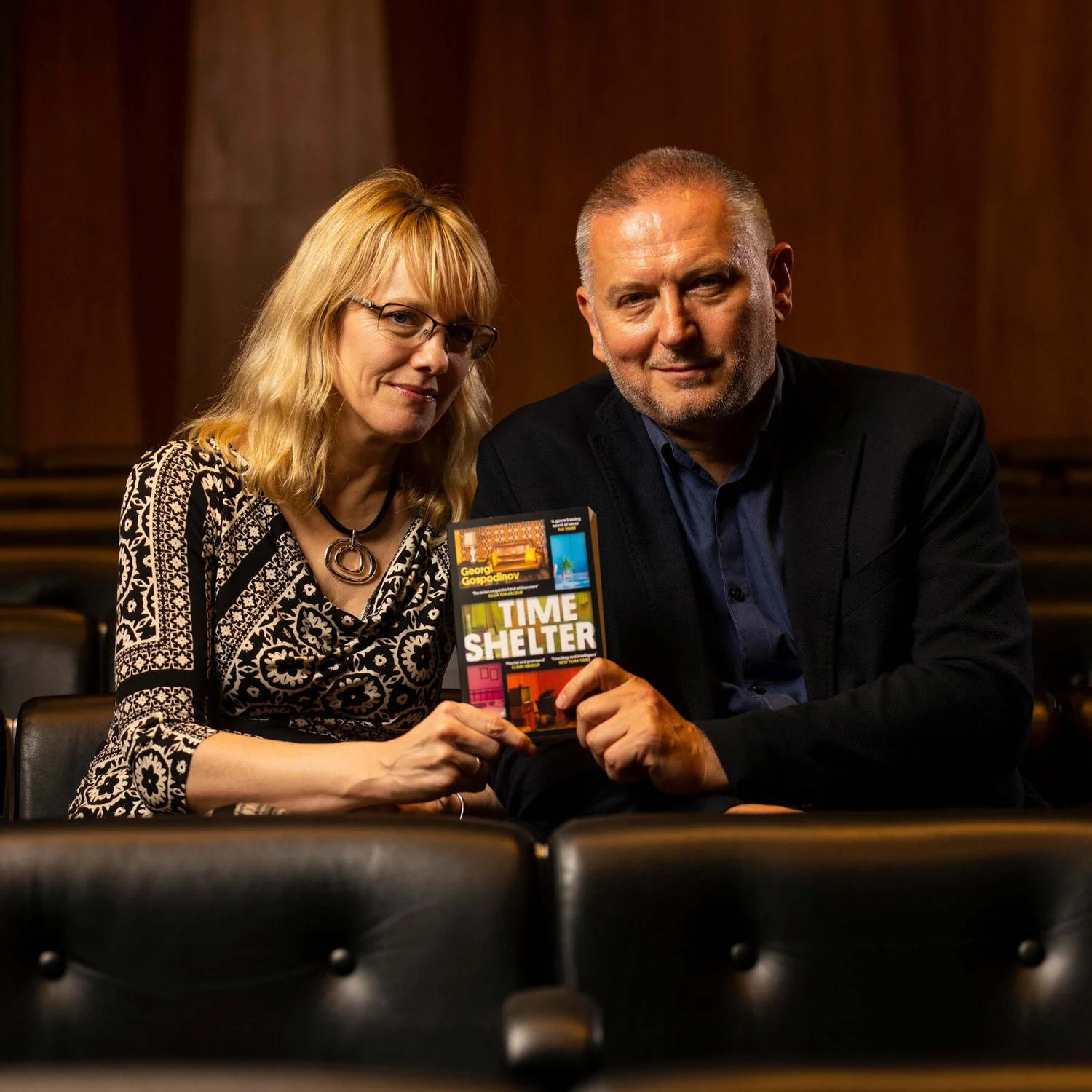
Today, we have a conversation about time, memory, and the bittersweet geography of human sorrow. Georgi Gospodinov is widely considered one of the most daring voices in contemporary European literature. His acclaimed novel, The Physics of Sorrow , won the prestigious Jan Michalski Prize in 2016 , blending ancient myth and quantum physics to chronicle the delicate realities of post-socialist Eastern Europe. Joining him is Angela Rodel , a brilliant linguist, musician, and translator whose profound artistic empathy carries the flowing cadences of the Bulgarian language into vivid English. Together, this extraordinary creative duo made history by winning the 2023 International Booker Prize for Time Shelter —the first book written in Bulgarian to ever receive the honor. Time Shelter is a masterfully dark, funny, and prescient novel. It begins with an enigmatic psychiatrist opening a clinic that treats Alzheimer’s patients by meticulously recreating past decades to match their internal clocks. But the experiment quickly escapes the clinic walls, triggering a pan-European crisis where entire nations hold democratic referendums to choose which era of the past they will retreat into. It is a book that holds up a mirror to our own world, exploring what happens when a civilization faces a deficit of meaning and tries to weaponize nostalgia. (0:00) The Trap of Nostalgia (1:22) The Nonlinear Approach to Storytelling (3:53) Translating the Atmosphere (4:31) The Pandemic of the Past (6:37) Death and the Gardener (9:49) The Translators Calling (11:00) Slowing Down Time (13:14) Storytelling vs Propaganda (15:54) Translating the Atmosphere (18:19) What makes a good life? What has given your life meaning? (20:56) Reflections on God and the Stories His Grandmother Told Him (23:43) The Importance of Hugging, Empathy and Storytelling Episode Website www.creativep rocess.info/pod Instagram: @creativeprocesspodcast
Time, Memory & the Art of Translation with GEORGI GOSPODINOV & ANGELA RODEL
Aug 25, 20261h 30mS17
“We are in the middle of a labyrinth which suggests to us many fake corridors. What's the superpower of literature? Literature is like an antidote against propaganda. Propaganda explains the world easily in a two-dimensional way. Literature gives you a more complex explanation. Literature tells personal stories.” Today, we have a conversation about time, memory, and the bittersweet geography of human sorrow. Georgi Gospodinov is widely considered one of the most daring voices in contemporary European literature. His acclaimed novel, The Physics of Sorrow , won the prestigious Jan Michalski Prize in 2016 , blending ancient myth and quantum physics to chronicle the delicate realities of post-socialist Eastern Europe. Joining him is Angela Rodel , a brilliant linguist, musician, and translator whose profound artistic empathy carries the flowing cadences of the Bulgarian language into vivid English. Together, this extraordinary creative duo made history by winning the 2023 International Booker Prize for Time Shelter —the first book written in Bulgarian to ever receive the honor. Time Shelter is a masterfully dark, funny, and prescient novel. It begins with an enigmatic psychiatrist opening a clinic that treats Alzheimer’s patients by meticulously recreating past decades to match their internal clocks. But the experiment quickly escapes the clinic walls, triggering a pan-European crisis where entire nations hold democratic referendums to choose which era of the past they will retreat into. It is a book that holds up a mirror to our own world, exploring what happens when a civilization faces a deficit of meaning and tries to weaponize nostalgia. (0:00) The Trap of Nostalgia (2:13) The Art of Translation (5:44) The Pandemic of the Past (11:30) Reading from ‘Time Shelter’ (14:28) Death and the Gardener (19:34) The Translator's Calling (26:05) Cultural Rhythms of the Bulgarian Language (30:00) The Nonlinear Approach to Storytelling (34:30) Separating Personal and Historical Pasts (42:55) Storytelling vs Propaganda (47:19) Bodies, Animals and the Loneliness of the Minotaur (56:00) Reading ' Eight Minutes and 19 Seconds’ (1:00:28) What makes a good life? What has given your life meaning? (1:04:18) Childhood, Memory and Imagination (1:10:38) Reflections on God and the Stories His Grandmother Told Him (1:17:20) Education and the Empathic Imagination (1:23:25) The Museum of Memory (1:26:15) The Importance of Hugging and Empathy (1:28:02) AI and the Future of Humanity Episode Website www.creativep rocess.info/pod Instagram: @creativeprocesspodcast
LINCOLN CENTER: Celebrating the Performing Arts & the Human Spirit w/ SHANTA THAKE
Aug 19, 202658 minS17
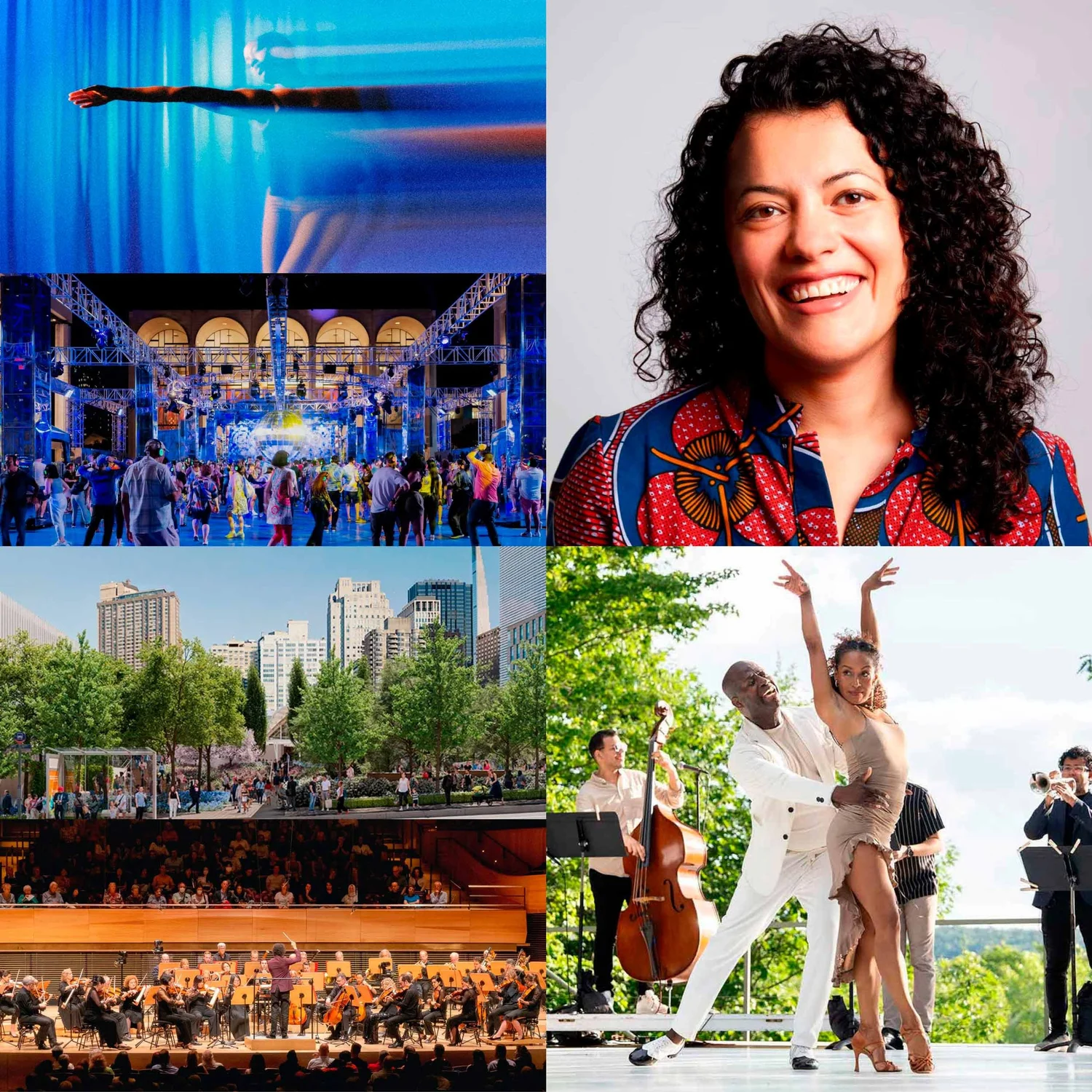
“Lincoln Center is multiple stages. I think probably over three dozen stages across 16 acres. It is a vast canvas in and of itself. And then we have this beautiful plaza that leads to this beautiful campus, and that’s the visual I think that most people have when they think of Lincoln Center is this beautiful fountain in the center and these three gorgeous buildings.It’s New York’s biggest plaza, and it feels very vibrant and beautiful. In the summer, we really take that plaza and we transform it into a dance floor. So this idea of also interrupting what people’s notion of Lincoln Center is because it’s a space that is very aspirational, which is a great thing.” Shanta Thake is the Chief Artistic Officer at Lincoln Center for the Performing Arts —the nation's largest performing arts complex. Before stepping into this role, she spent nineteen years at The Public Theater, shaping the city's cultural landscape through Joe's Pub and expansive community initiatives. Today, she is tearing down walls—both the literal barriers separating Lincoln Center from its neighbors, and the figurative ones that dictate who belongs in our cultural spaces. She views the arts not as a luxury, but as essential civic infrastructure. We are pleased to have Shanta Thake to discuss her journey, the power of radical curation, and the future of public performance. (0:00) Reimagining Lincoln Center (2:27) Art and the Human Experience (4:40) The Curiosity of Childhood (5:44) Alvin Ailey and the Pivot (8:29) The Invisible Arts (9:06) The Power of Public Theater (17:03) Curation, Programming and the Art of Listening (23:42) San Juan Hill and The Wall (31:23) Art as the Oldest Technology (35:02) globalFEST: Music and Connection (38:20) Finding Universal Belonging (41:20) The Gift of Pause (54:27) A Collective Caretaking Episode Website www.creativeprocess.info/pod Instagram: @creativeprocesspodcast
Lincoln Center & Spatial Justice: Dismantling Cultural Barriers w/ Chief Artistic Officer SHANTA THAKE - Highlights
Aug 19, 202619 minS17
"I really do believe that the arts are critical to how we move forward together, and live performance in particular, I think, is a way of us practicing how to move across our ideological boundaries and find one another and imagine these new worlds together and create together." Shanta Thake is the Chief Artistic Officer at Lincoln Center for the Performing Arts —the nation's largest performing arts complex. Before stepping into this role, she spent nineteen years at The Public Theater, shaping the city's cultural landscape through Joe's Pub and expansive community initiatives. Today, she is tearing down walls—both the literal barriers separating Lincoln Center from its neighbors, and the figurative ones that dictate who belongs in our cultural spaces. She views the arts not as a luxury, but as essential civic infrastructure. We are pleased to have Shanta Thake to discuss her journey, the power of radical curation, and the future of public performance. (00:00) Reimagining Lincoln Center (03:09) A Collective Caretaking (03:47) The Technology of Human Creation (04:20) The Curiosity of Childhood (09:25) San Juan Hill and The Wall (14:20) globalFEST: Music and Connection (16:06) The Gift of Pause (17:20) A Collective Caretaking Episode Website www.creativeprocess.info/pod Instagram: @creativeprocesspodcast
Environmental Justice: From Extraction to Regeneration - Redesigning Our Relationship with Nature
May 29, 202636 minS16
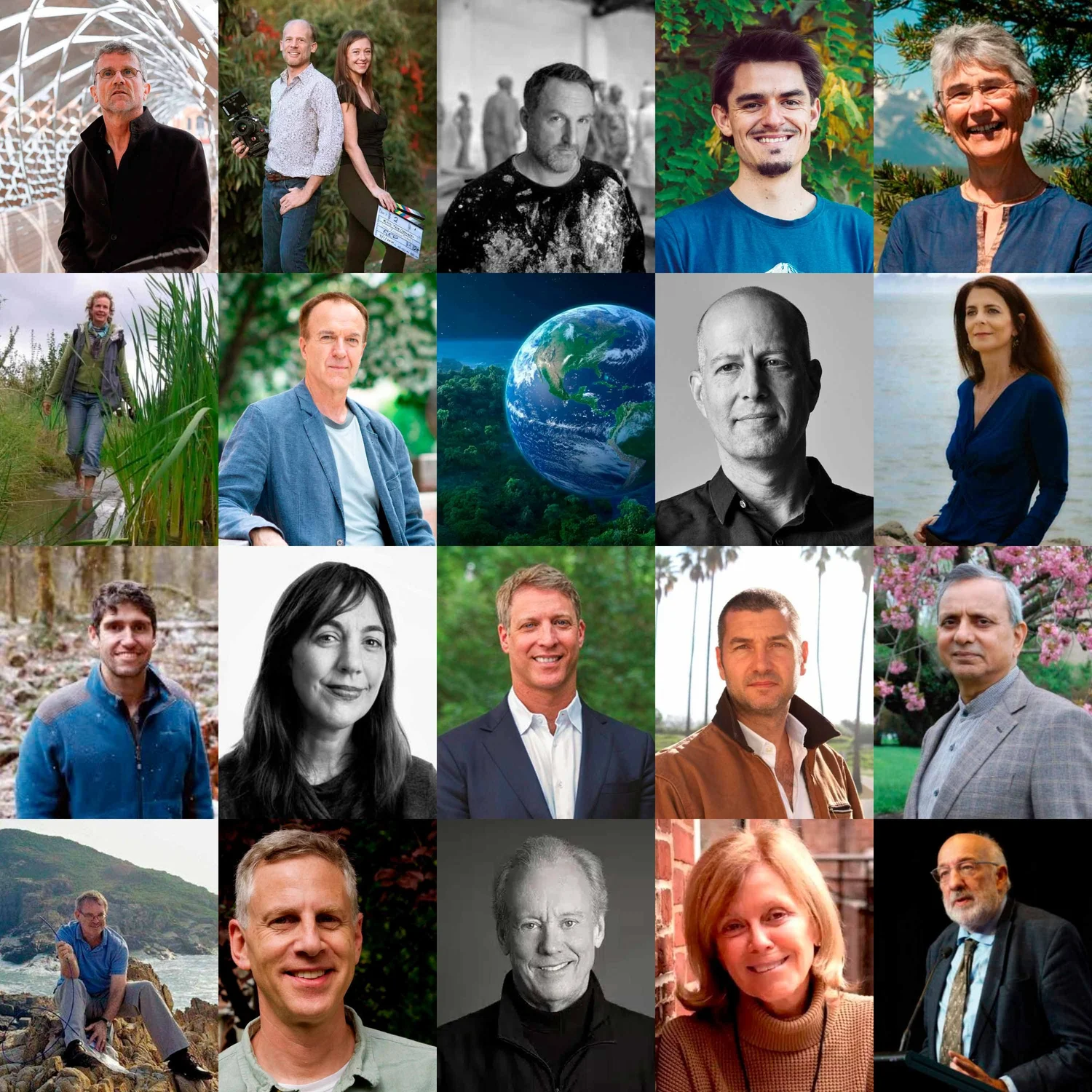
Today, we examine how we will adapt to a changing climate and learn to listen to the Earth.(0:00) Abrahm Lustgarten (Reporter, ProPublica) (3:00) Jon Gertner (Author, The Ice at the End of the World) (5:32) Bill Hare (CEO, Climate Analytics) (6:35) Rob Nixon (Prof. Environmental Humanities, Princeton) (8:12) Louis de Jaeger (Co-founder, Food Forest Institute) (10:06) Kathleen Rogers (Pres., EarthDay.org) (11:31) Rebecca Tickell (Filmmaker, Groundswell) (13:42) Ben Goldfarb (Author, Crossings) (14:56) Jane Madgwick (CEO, Plantlife International) (19:23) Jason deCaires Taylor (Sculptor, Underwater Museums) (21:02) William McDonough (Architect, Cradle to Cradle) (23:19) Euan Nisbet (Scientist, Royal Holloway) (26:06) Roland Geyer ( Author, The Business of Less) (28:15) Ron Gonen (CEO, Closed Loop Partners) (29:34) Paul Shrivastava (Co-President, Club of Rome) (30:14) Carlo Ratti (Architect, Dir., MIT Senseable City Lab) (31:24) Osprey Orielle Lake (Founder, WECAN) (32:38) Liza Featherstone (Journalist) (33:41) Yolanda Kakabadse (Fmr. President, WWF) For more, listen to their full interviews Episode Site: https://www.creativeprocess.info/interviews-featured/anth-regen
Best industries to pitch Social Justice & Activism - The Creative Process - Activists, Environmental, Indigenous Groups, Artists and Writers Talk Diversity, Equity and inclusion for
Based on semantic analysis of episode topics and host coverage, this show is a strong guest fit for executives in:
Artsstrong
Industry fit is computed by PitchCentric using vector embeddings of the show's episode catalog.
Podcasts like Social Justice & Activism - The Creative Process - Activists, Environmental, Indigenous Groups, Artists and Writers Talk Diversity, Equity and inclusion
Every question we get asked before someone starts their trial.
If you have a concern about deliverability, AI quality, data privacy, or whether this will actually work for your specific situation, it's probably answered below.
What is the difference between Founder Solo and Founder Pro?
Founder Solo gives you 50 AI pitches per month using the credit model (Standard pitches cost 1 credit, Enriched pitches cost 2). Founder Pro raises that to 200 credits per month and adds full Booking Probability access, unlimited Magic Match, Apollo enrichment credits, and data export capabilities. Both plans use the same credit system, so you can stretch your monthly budget further by using Standard-mode drafting.
How do agency tiers work?
Agency tiers have no base fee. You pay per managed client and per talent profile. Agency Standard is $199 per client per month; Agency Pro is $399 per client per month. Both add $39 per talent profile per month. Your own team's user seats are always free.
What is a talent profile?
A talent profile represents one person (founder, executive, or spokesperson) you are booking onto podcasts. It includes their bio, topics, headshots, and outreach history. Team plans include 5 profiles; agency plans are pay-as-you-go.
Can I switch plans later?
Yes, at any time. Upgrades take effect immediately; downgrades apply at the end of the current billing period. Contact support if you need help migrating between plan families.
Do you offer a free trial?
Every paid plan includes a 15-day free trial. Your card is saved at signup but you will not be charged until day 16. Cancel any time from your dashboard.
What happens if I cancel?
You keep access until the end of your current billing period. No charges after that. Your data is retained for 30 days in case you reactivate.
Is the 20% annual discount automatic?
Yes. Select Annual on the pricing toggle and the discounted price is applied automatically at checkout. The annual price shown is the full year cost.
What if I have more than 50 profiles or 20 clients?
That is our Enterprise tier. Contact our sales team and we will build a custom plan with volume pricing, a dedicated account manager, and SLA guarantees.