Soil Talks™ Podcast cuts through the slogans and gets straight to decisions that matter. Each week, we sit down with producers, agronomists, researchers, and product builders shaping the next decade of agriculture. We go beyond theory into timing, placement, risk, and verification. So you hear exactly how people are solving tough problems: compaction that returns, salinity and sodicity, nutrient “access vs. supply,” microbe persistence, drought-time irrigation tactics, and when it’s safe to pull inputs back without risking the crop. You won’t hear hype. You’ll listen to what worked, where it stalled, and the single change that restarted progress. . If you’re responsible for acres, budgets, or outcomes and want signal over noise this is your show.
Pitch Analysis
Required Pod Score for this show. PitchCentric checks your profile against host openness, topical fit, and audience signals before you generate a pitch.
Contact path
Verified email
Booking probability
30%
Guest openness
Selective
Verified email on file
80/100
Required Score
Sign up to generate a grounded pitch for Soil Talks™ Podcast.
Soil Talks™ Podcast is a science podcast hosted by Brandon Kail, with 23 episodes on record and a Required Pod Score of 80. PitchCentric scores this show on Booking Probability, Listen Score, and live audience signals refreshed every 24 hours.
About the host
Brandon Kail hosts Soil Talks™ Podcast, a science show with 23 episodes published.
Our AI reads these to draft pitches. Use them as grounding for a pitch that cites a real guest and a specific topic.
Episode #23
Why Soil Stops Working (And How Fungi Bring It Back) | Dan Grotsky, Groundwork BioAg
Jun 2, 20261h 4m
What if the biggest limitation in agriculture isn't fertilizer... What if it's a function? In this episode of Soil Talks™ Podcast, Brandon Kail sits down with Dan Grotsky, Co-Founder and Chief Growth Officer of Groundwork BioAg , to explore the underground biological networks that drive nutrient cycling, carbon sequestration, crop resilience, and long-term soil function. For decades, agriculture was told that mycorrhizal fungi were too expensive, too fragile, and impossible to scale across broad-acre row crops. Groundwork BioAg proved otherwise. Inside this conversation: ✅ Why soils stop working even when nutrients are present ✅ How mycorrhizal fungi unlock legacy phosphorus ✅ The hidden biological network beneath every crop ✅ Why soil biology drives drought resilience ✅ How fungi become the primary pathway for carbon sequestration ✅ The science behind soil carbon payments and carbon markets ✅ What the future of regenerative and biological agriculture looks like If agriculture is going to produce more food with fewer inputs, the answer won't come from adding more products. It will come from restoring biological function. Measure Your Soil Biology: Ultimate Soil Health Bundle - Advanced Testing + Consultation + Course Learn More About Biological... Beyond Organic®: The Biological...Beyond Organic® Fundamentals Course 🎙 Subscribe for more Soil Talks™ Podcast episodes.
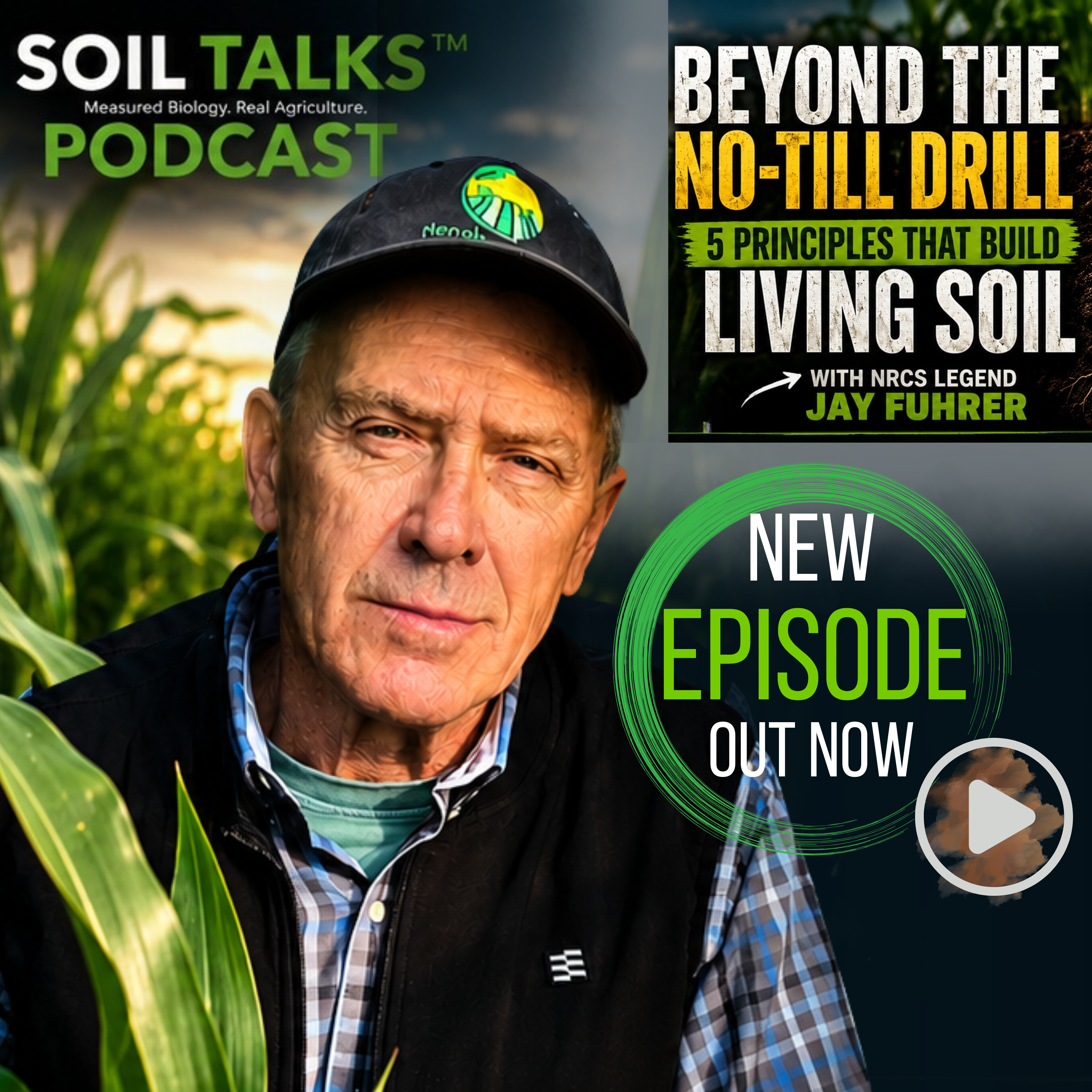
Beyond the No-Till Drill: A Blueprint for Living Soil with Jay Fuhrer
May 8, 20261h 6m
No-till is a great start, but it isn't the whole solution. In this episode of Soil Talks , we sit down with regenerative pioneer Jay Fuhrer to discuss the transition from traditional conservation to a biological systems approach. With over 40 years of experience at the NRCS and legendary work at Minokin Farm, Jay breaks down why carbon is the universal currency of a successful farm and how to move beyond simple extraction toward true stewardship of living soil. In this episode, we cover: Why carbon-deficient soil is a global resource concern. The "Step on a Staircase" analogy: Moving from conservation tillage to biological systems. The 5 Principles of Soil Health: How Jay developed the descriptions and why they must work together. Soil Armor (Principle #1): Why bare soil is a "failed state" and how it prevents hydration. The three types of disturbance: Physical, Chemical, and Biological. Explore Minokin Farm Learn the 5 Principles of Soil Health Rocky Mountain BioAg – Biological Inoculants Subscribe to the Soil Talks™ Podcast #SoilTalks #RegenerativeAgriculture #SoilHealth #NoTill #JayFuhrer #MinokinFarm #CarbonStewardship #SoilMicrobiology #BeyondOrganic #SustainableFarming #CoverCrops
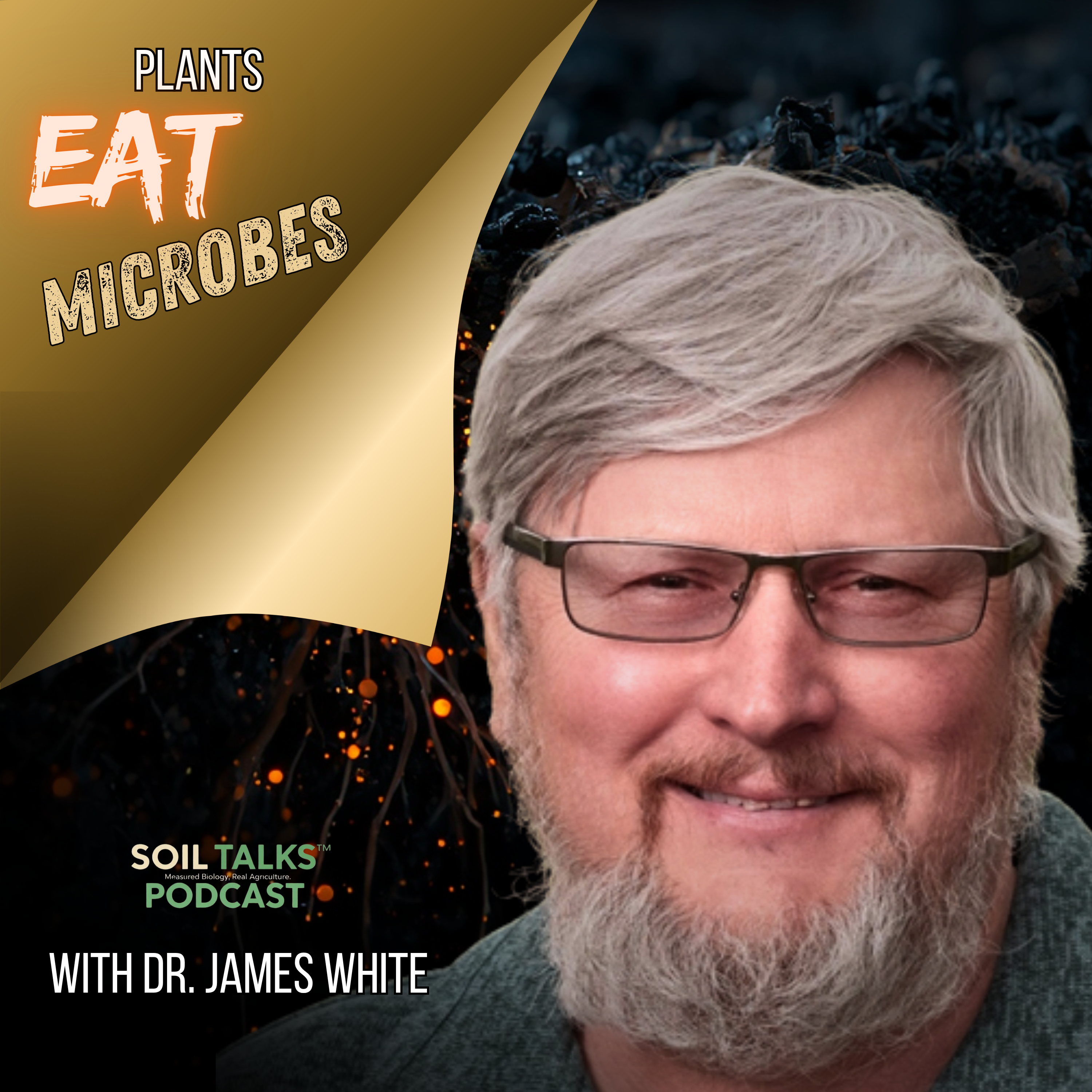
The Rhizophagy Revolution: Why Plant Roots are Microbial Farmers with Dr. James White
May 1, 202648 min
What if everything we knew about nutrient uptake was only half the story? In this episode of Soil Talks™ , we dive deep into the Rhizophagy Cycle with world-renowned expert Dr. James White. We move beyond the "straw" model of plant roots and explore how plants actually "farm" microbes, attracting, absorbing, and even stripping the cell walls of bacteria to extract vital nutrients like manganese and nitrogen. Dr. White explains the "addictive" nature of conventional chemical inputs and how they blind plants to their natural internal partners. From the secret ecology of seed-borne endophytes to the direct link between soil health and human nutrition, this episode is a masterclass in the " Biological... Beyond Organic®" methodology . Chapter Markers (01:24) Roots as "hunters and farmers" vs. "straws" (02:56) Defining the Rhizophagy Cycle (06:03) Why rhizophagy is the key to reducing synthetic inputs (12:11) How microbes enter root cells: The entry hypothesis (15:40) The "Stripping Process": Using reactive oxygen to extract nutrients (19:41) Ejecting microbes: How plants manage soil "cattle" (21:00) Endophytes: The interior design of plant health (27:42) How plants vector microbes to the next generation via seeds (32:46) The "Addiction" of conventional NPK and fungicides (41:39) Can we use biology as a selective herbicide? (46:00) Soil testing: Why microbial biomass equals cycle success Key Takeaways Active Symbiosis: Plants are not passive absorbers; they actively manage a complex internal ecology to ensure survival and nutrient efficiency. Seed Integrity: Modern seed processing often removes the very microbes a seedling needs to survive and resist pathogens. Nutrient Density: A diverse soil microbiome directly increases the production of health compounds like phenolics in crops. #SoilTalks #RhizophagyCycle #RegenerativeAg #SoilMicrobiome #DrJamesWhite #BeyondOrganic #SoilHealth #PlantPhysiology
Jeff Lowenfels | Rhizophagy, Microplastics, and the Biological Revolution
Apr 24, 202631 min
In this episode of Soil Talks™, we sit down with the "Lord of the Roots" himself, Jeff Lowenfels. As the author of the legendary Teaming with Microbes series, Jeff has spent decades moving the needle from chemical dependency to biological stewardship. We dive deep into the "Poop Loop," the new frontier of the Rhizophagy cycle, and why modern agriculture must transition toward a regenerative, system-based approach to survive. Key topics discussed: The "Lightbulb Moment": Jeff shares the story of the Anchorage truck driver and the peat sample that changed his focus forever. Rhizophagy Explained: How plants literally "eat" bacteria to forage for nutrients. The Microplastic Crisis: The hidden dangers of plastic in farming and its link to human health. Fungal to Bacterial Ratios: How to use the microBIOMETER® to stop "guessing and stressing". The Evolution of the Soil Food Web: Why "Beyond Organic" is the necessary next step for large-scale agriculture. Links: Explore Rocky Mountain BioAg® Teaming with Microbes Series Soil Talks™ Podcast on YouTube Technical Inquiries: Consultation Info #SoilTalks #JeffLowenfels #RegenerativeAg #SoilFoodWeb #Rhizophagy #Microbiology #TeamingWithMicrobes #SoilHealth
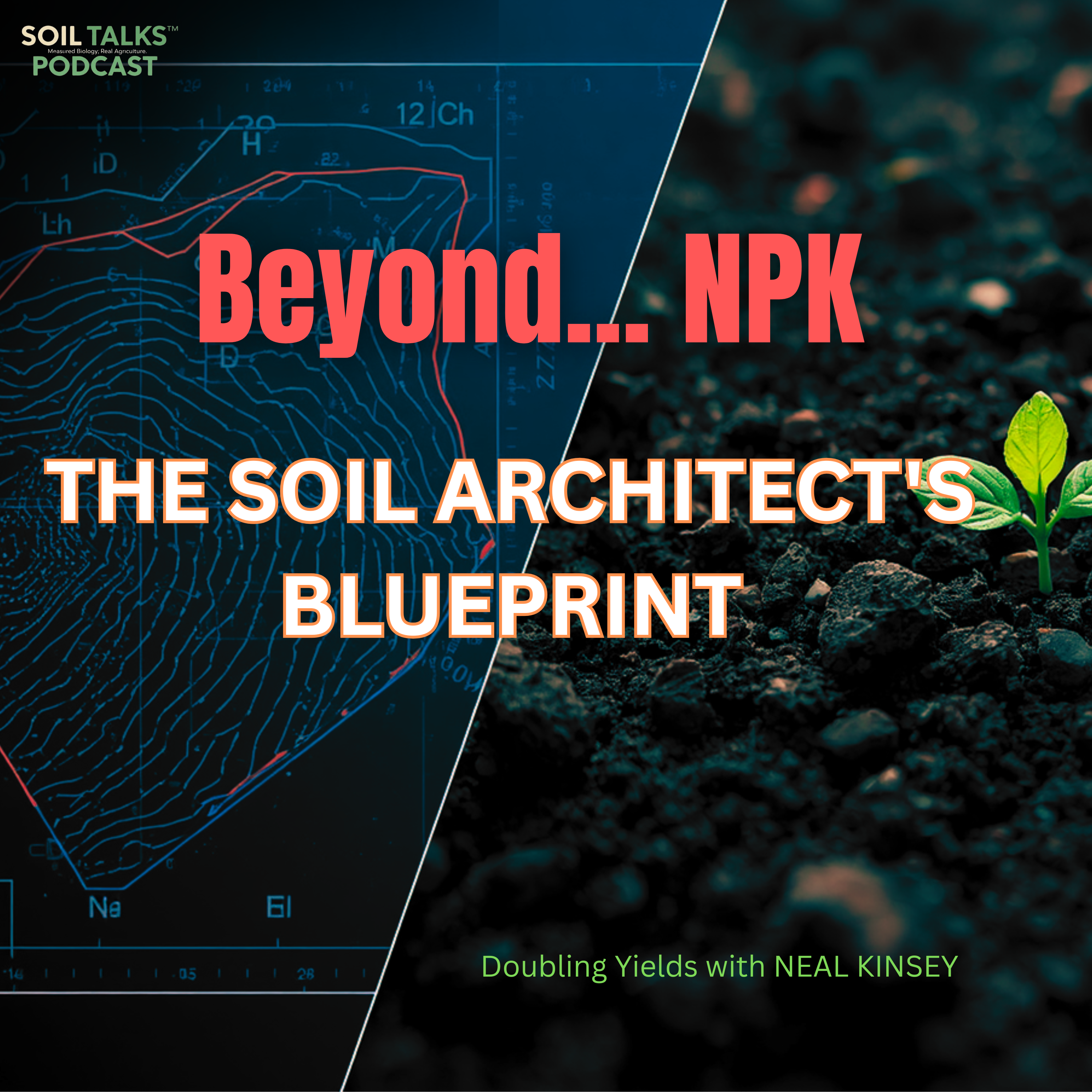
Beyond NPK |The Soil Architect's Blueprint for Doubling Yields with Neal Kinsey
Apr 17, 20261h 52m
In this episode, we dive deep into the "Blueprint of the Earth" with the soil architect himself, Neal Kinsey. Neal shares over 50 years of wisdom inherited directly from Dr. William Albrecht, challenging the modern "NPK-only" mindset that leaves growers with declining yields and unbalanced soil. We explore why standard soil tests often fail by stopping at pH, the critical role of calcium as the "doorman" for all other nutrients, and how balancing base saturations can transform even "dead" or sandy ground into highly productive land. Whether you are dealing with heavy clay gumbo or light sands, Neil explains how to prioritize feeding the soil so the soil can feed the plant. Key Discussion Points The Albrecht Legacy: Neal’s journey from a Missouri graduate student to a world-renowned consultant mentored by Dr. William Albrecht. Why pH is a Trap: Discover why a "perfect" 6.5 pH can still hide severe nutrient deficiencies that bottleneck your harvest. Calcium is King: Understanding the element that dictates soil structure, porosity, and the uptake of every other nutrient. ROI Over Inputs: Real-world stories of farmers doubling their whole-farm yields by switching from a "shotgun approach" to "rifle-like" soil balancing. The Physics of Fertility: How soil chemistry controls the air and water balance (porosity) required for biological life to thrive. #SoilTalks #NealKinsey #RegenerativeAg #SoilHealth #BeyondNPK #AlbrechtMethod #SoilTesting #BaseSaturation #AgriculturalYield #SustainableFarming #SoilBiology #Agronomy Kinsey Agricultural Services: KinseyAg.com Learn More about Soil Balancing: The Biological...Beyond Organic® Fundamentals Course Follow Soil Talks™ Podcast
Every question we get asked before someone starts their trial.
If you have a concern about deliverability, AI quality, data privacy, or whether this will actually work for your specific situation, it's probably answered below.
What is the difference between Founder Solo and Founder Pro?
Founder Solo gives you 50 AI pitches per month using the credit model (Standard pitches cost 1 credit, Enriched pitches cost 2). Founder Pro raises that to 200 credits per month and adds full Booking Probability access, unlimited Magic Match, Apollo enrichment credits, and data export capabilities. Both plans use the same credit system, so you can stretch your monthly budget further by using Standard-mode drafting.
How do agency tiers work?
Agency tiers have no base fee. You pay per managed client and per talent profile. Agency Standard is $199 per client per month; Agency Pro is $399 per client per month. Both add $39 per talent profile per month. Your own team's user seats are always free.
What is a talent profile?
A talent profile represents one person (founder, executive, or spokesperson) you are booking onto podcasts. It includes their bio, topics, headshots, and outreach history. Team plans include 5 profiles; agency plans are pay-as-you-go.
Can I switch plans later?
Yes, at any time. Upgrades take effect immediately; downgrades apply at the end of the current billing period. Contact support if you need help migrating between plan families.
Do you offer a free trial?
Every paid plan includes a 15-day free trial. Your card is saved at signup but you will not be charged until day 16. Cancel any time from your dashboard.
What happens if I cancel?
You keep access until the end of your current billing period. No charges after that. Your data is retained for 30 days in case you reactivate.
Is the 20% annual discount automatic?
Yes. Select Annual on the pricing toggle and the discounted price is applied automatically at checkout. The annual price shown is the full year cost.
What if I have more than 50 profiles or 20 clients?
That is our Enterprise tier. Contact our sales team and we will build a custom plan with volume pricing, a dedicated account manager, and SLA guarantees.