Loading…

Loading…
science
Hosted by Unknown Host · science · EN · 20 episodes
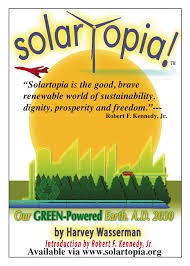
Harvey Wasserman embraces your views with a Solartopian vision of the people’s politics, ecology, holistic health and much more.
Required Pod Score for this show. PitchCentric checks your profile against host openness, topical fit, and audience signals before you generate a pitch.
Contact path
Verified email
Booking probability
30%
Guest openness
Selective
Sign up to generate a grounded pitch for Solartopia Green Power & Wellness Hour.
Signup to Generate a PitchSolartopia Green Power & Wellness Hour is a science podcast hosted by Unknown Host, with 20 episodes on record and a Required Pod Score of 80.
Unknown Host hosts Solartopia Green Power & Wellness Hour, a science show with 20 episodes published.
Our AI reads these to draft pitches. Use them as grounding for a pitch that cites a real guest and a specific topic.
Episode #452
This meeting focused on election protection and voting rights issues, with participants discussing evidence of election manipulation in recent elections. T (representing the investigative group "This Will Hold") presented findings of fake counties and vote banking schemes used in the 2024 election, explaining how data was swapped and votes disappeared for Democratic candidates. The discussion covered similar patterns of election manipulation dating back to 2000, with participants noting that Democratic leaders including Kamala Harris and Mark Elias have consistently failed to address or investigate these issues. Julia Fiedler from the Election Safeguards Response Network (ESRN) outlined her organization's efforts to provide rapid response and legal support to pro-democracy efforts, while participants expressed concerns about Trump's attempts to limit mail-in voting and the Supreme Court's potential involvement. The conversation highlighted ongoing challenges with election security, particularly regarding electronic voting machines and the vulnerability of voting systems to manipulation.
Episode #451
This was the 274th Green Grassroots Emergency Election Protection Conference (GREEP) call focused on election protection and voter rights, particularly in the context of upcoming midterm elections. The discussion centered on voting rights challenges in Georgia, where Ray McClendon explained how voter suppression laws continue to be passed annually and recent efforts to block redistricting plans were successfully defeated through community organizing. The conversation highlighted the importance of grassroots voter mobilization versus reliance on corporate media campaigns, with participants discussing how marginalized voters need trusted local messengers to increase turnout. Key concerns included the SAVE Act as a major voter suppression bill, challenges with voter ID requirements that disproportionately affect women and minority voters, and the need for Democratic candidates to fund grassroots organizing rather than relying solely on TV advertising. The call also touched on broader issues including the concentration of media ownership by billionaires and concerns about election infrastructure being controlled by right-wing activists, with participants emphasizing the urgent need for grassroots organizing to counteract coordinated efforts to suppress Democratic and minority voter turnout.
Episode #450
This was the 273rd meeting of the Green Grassroots Emergency Election Coalition Zoom call, hosted by Harvey Wasserman and featuring discussions on election protection and global citizenship. The meeting opened with Arthur Kanegis presenting his documentary film "The World Is My Country" about Gary Davis, a former Broadway actor who became the first official world citizen and advocated for global governance through the United Nations. The film highlighted how Davis's actions helped lead to the adoption of the Universal Declaration of Human Rights in 1948. The discussion then transitioned to election protection issues in Arizona, where John Brakey and Ken Bennett explained their concerns about the state's hand-count audit system, particularly how pre-selecting batches of ballots for verification could potentially compromise election security. They detailed how 80% of Arizona ballots are cast by mail, with Maricopa County (containing 2.9 million registered voters) being particularly significant for state elections. The conversation covered various aspects of voting infrastructure, including the use of paper ballots versus ballot marking devices, and the challenges in maintaining election security across different states with varying systems and regulations.
Episode #449
<p>Solartopia and Green Power Hour - 6-11-26</p>
Recent guests on Solartopia Green Power & Wellness Hour. Study who booked and why before you pitch.
co-founder, The Dolores Huerta Foundation
founder, choreographer, creative director, Center for Common Ground
Barack Obama’s Deputy Assistant Secretary of State, American Jewish Congress
member of Congress representing Silicon Valley, California's 17th Congressional District
Sponsor detection runs nightly. Check back soon.
Based on semantic analysis of episode topics and host coverage, this show is a strong guest fit for executives in:
Industry fit is computed by PitchCentric using vector embeddings of the show's episode catalog.
Is this podcast yours and you'd like to remove or correct details? Request removal or email privacy@pitchcentric.com.
FAQs
If you have a concern about deliverability, AI quality, data privacy, or whether this will actually work for your specific situation, it's probably answered below.
Founder Solo gives you 50 AI pitches per month using the credit model (Standard pitches cost 1 credit, Enriched pitches cost 2). Founder Pro raises that to 200 credits per month and adds full Booking Probability access, unlimited Magic Match, Apollo enrichment credits, and data export capabilities. Both plans use the same credit system, so you can stretch your monthly budget further by using Standard-mode drafting.
Agency tiers have no base fee. You pay per managed client and per talent profile. Agency Standard is $199 per client per month; Agency Pro is $399 per client per month. Both add $39 per talent profile per month. Your own team's user seats are always free.
A talent profile represents one person (founder, executive, or spokesperson) you are booking onto podcasts. It includes their bio, topics, headshots, and outreach history. Team plans include 5 profiles; agency plans are pay-as-you-go.
Yes, at any time. Upgrades take effect immediately; downgrades apply at the end of the current billing period. Contact support if you need help migrating between plan families.
Every paid plan includes a 15-day free trial. Your card is saved at signup but you will not be charged until day 16. Cancel any time from your dashboard.
You keep access until the end of your current billing period. No charges after that. Your data is retained for 30 days in case you reactivate.
Yes. Select Annual on the pricing toggle and the discounted price is applied automatically at checkout. The annual price shown is the full year cost.
That is our Enterprise tier. Contact our sales team and we will build a custom plan with volume pricing, a dedicated account manager, and SLA guarantees.
