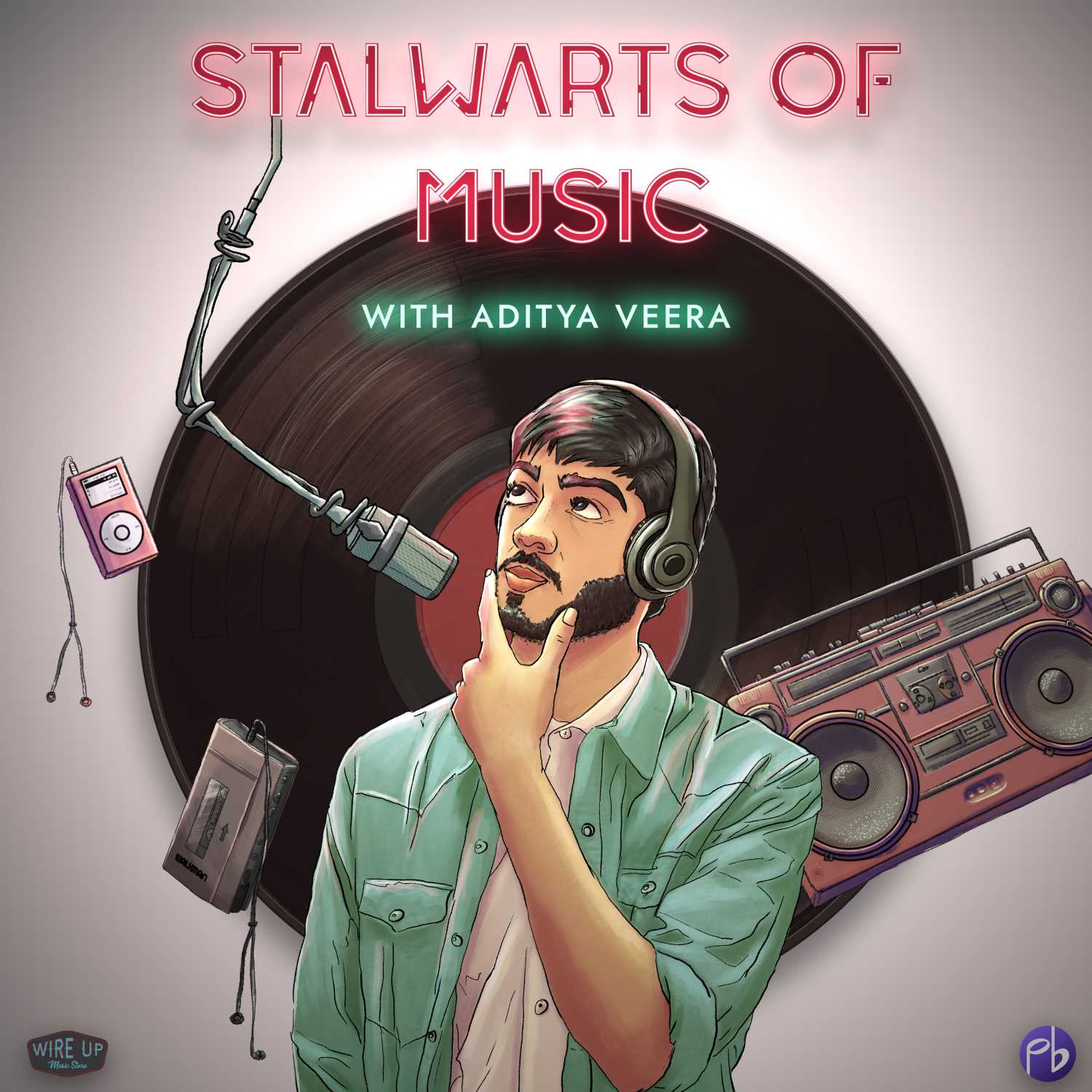
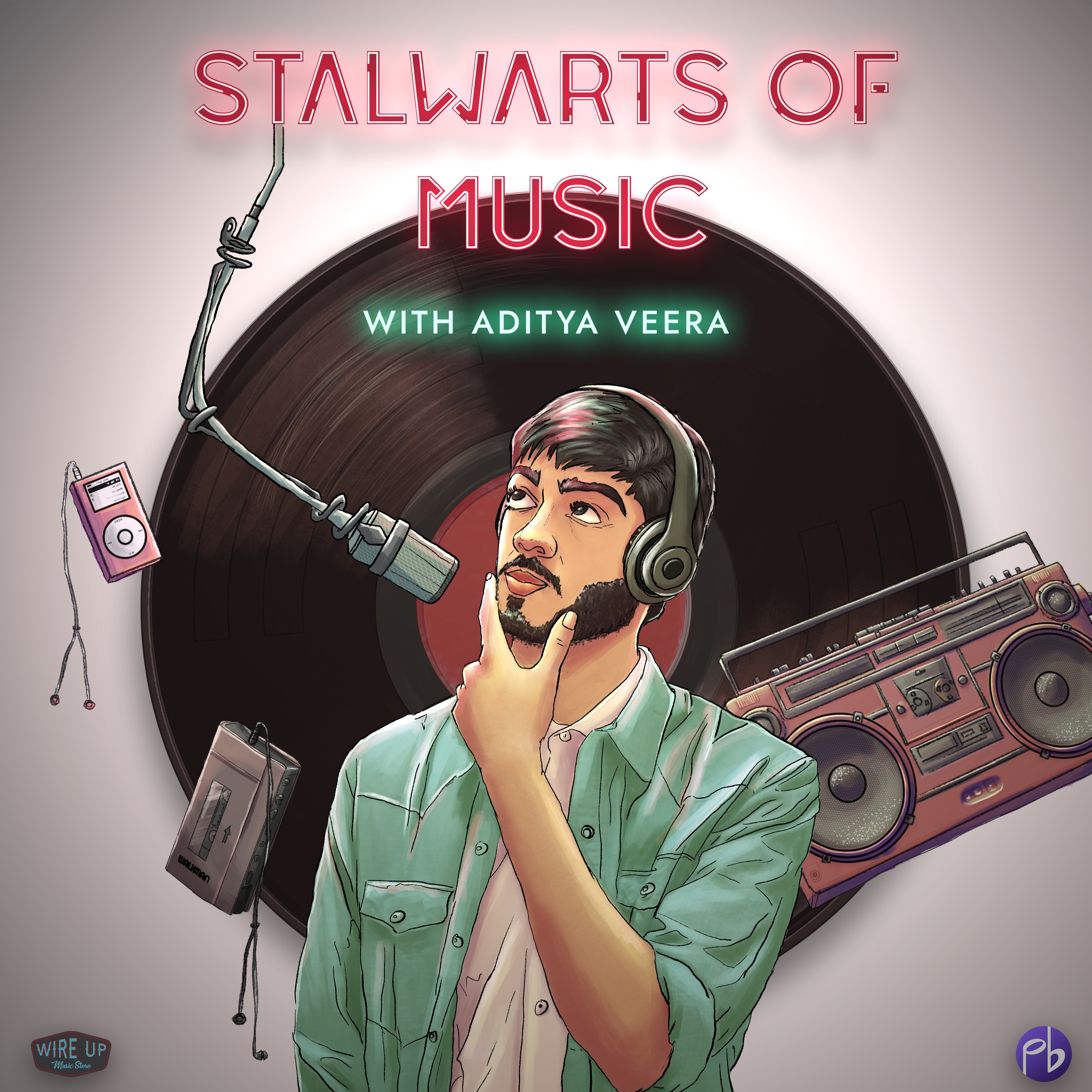
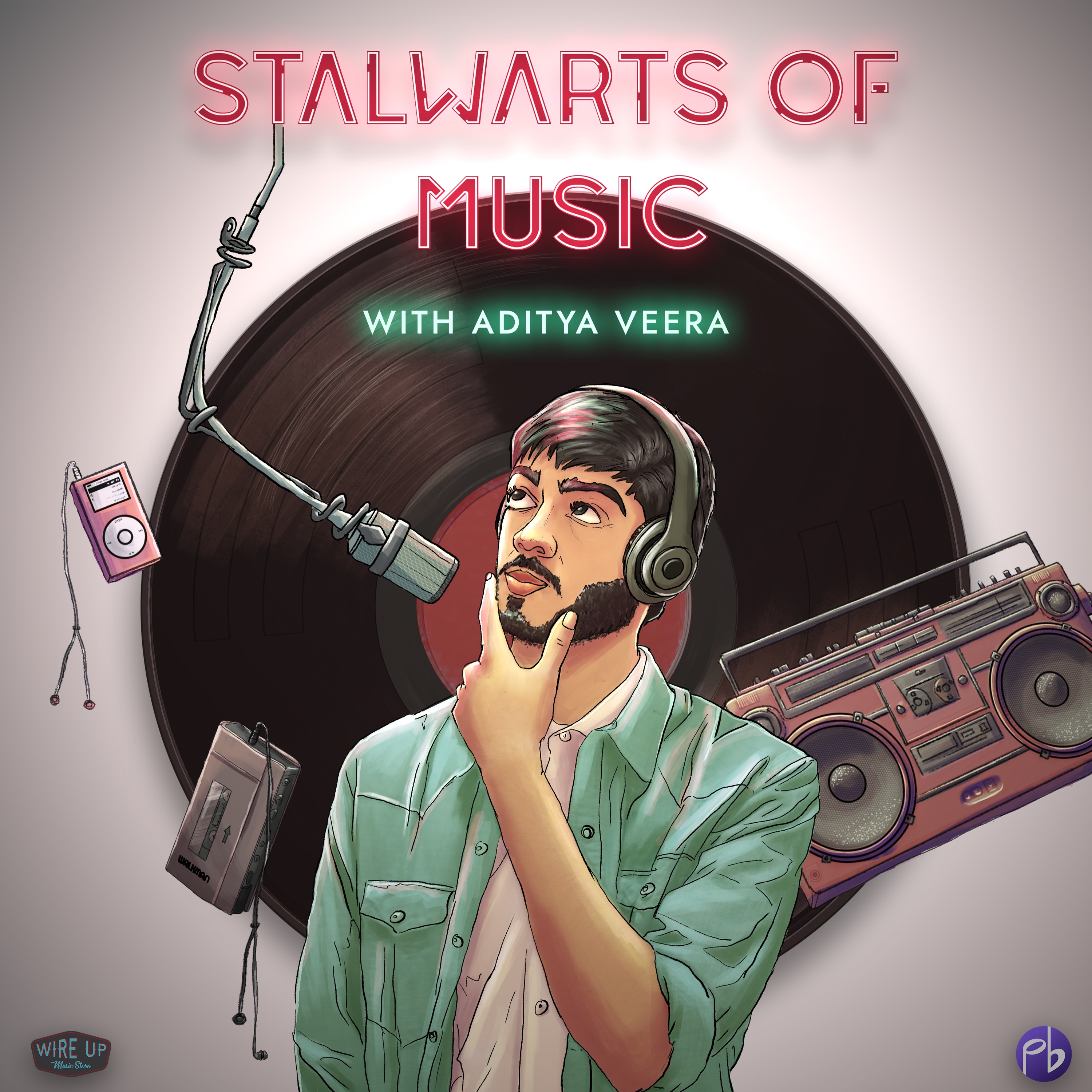
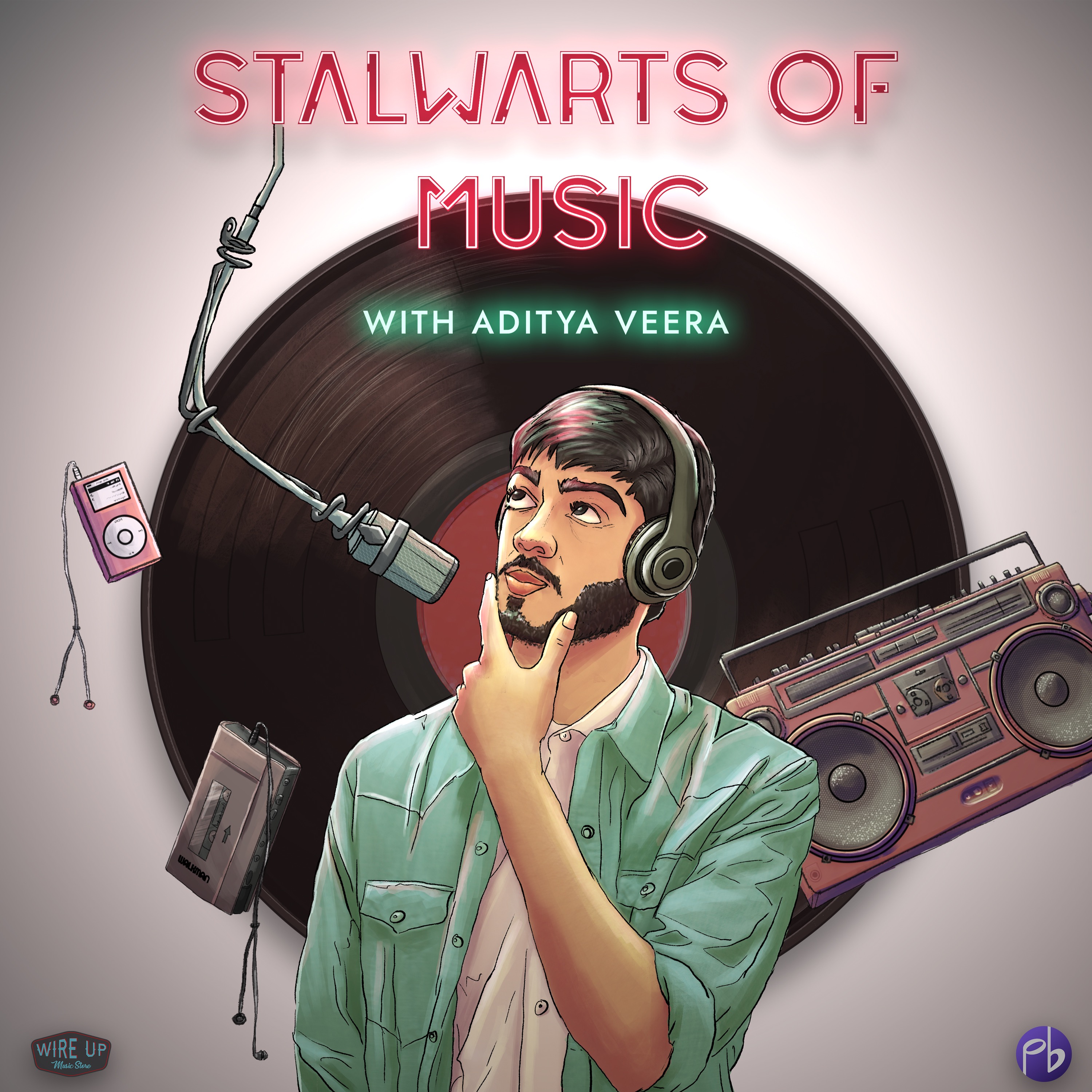
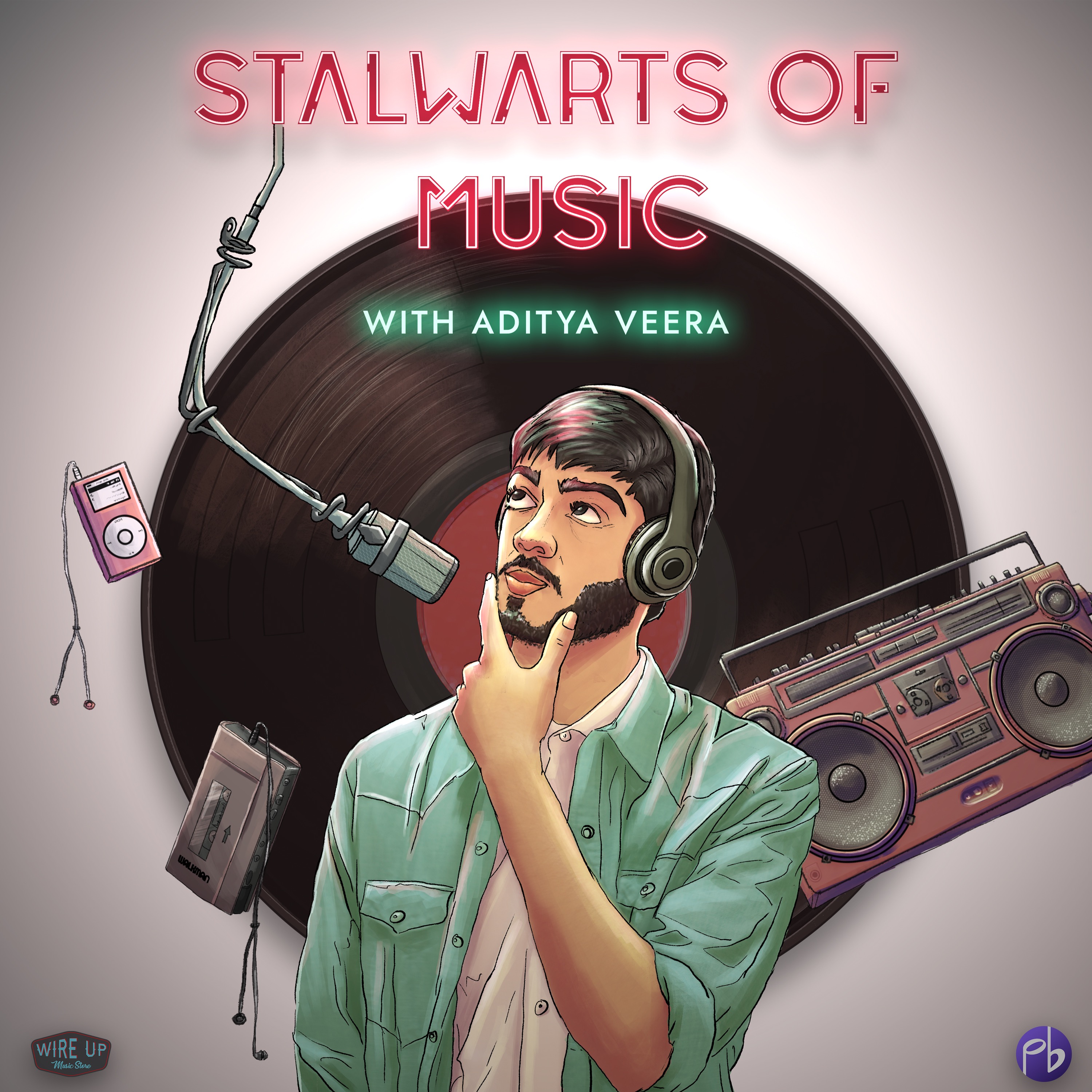
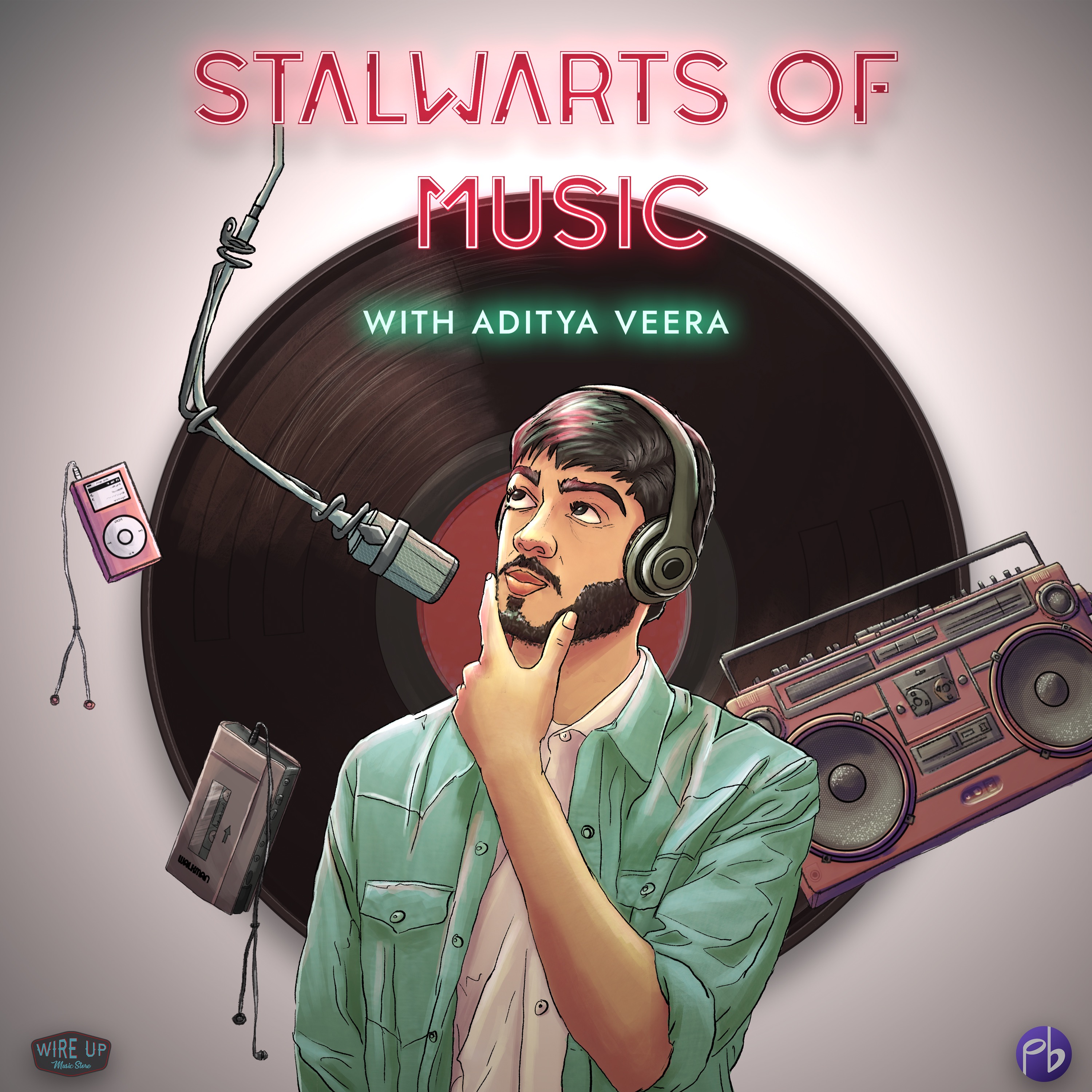
Through this podcast Aditya Veera, engages in insightful interviews with Grammy-winning/nominated & highly accomplished upcoming musical prodigies from across the globe. Through his unique interviewing style, Aditya aims to share the musical journeys of these maestros with people of India and beyond. With a growing listener base on Instagram and radio (Big FM Shillong & Aizawl), Aditya is emerging as one of India's pioneering music podcasters, focusing exclusively on interacting with internationally acclaimed musicians. In just a year, he has interviewed renowned legends like Joe Satriani, Cindy Blackman Santana, Phil Perry, Bob James, Lee Ritenour, Doyle Bramhall II, Eric Martin, Nathan East, Richard Bona, Paul Carrack, Victoria Canal, and many others. Season 1 comprised over 50 remarkable episodes, and Season 2 promises even more by featuring international legends and music industry experts from India. This season also introduces a new dimension with festival edition podcasts in the country. Get ready for an extraordinary journey into the world of music!
Pitch Analysis
Required Pod Score for this show. PitchCentric checks your profile against host openness, topical fit, and audience signals before you generate a pitch.
Contact path
Verified email
Booking probability
41%
Guest openness
Selective
Verified email on file
80/100
Required Score
Sign up to generate a grounded pitch for Stalwarts Of Music with Aditya Veera.
Stalwarts Of Music with Aditya Veera is a history podcast hosted by Unknown Host, with 48 episodes on record and a Required Pod Score of 80. PitchCentric scores this show on Booking Probability, Listen Score, and live audience signals refreshed every 24 hours.
About the host
Unknown Host hosts Stalwarts Of Music with Aditya Veera, a history show with 48 episodes published.
Our AI reads these to draft pitches. Use them as grounding for a pitch that cites a real guest and a specific topic.
Episode #9
Tracing Narada Michael Walden's Awakening
Jun 21, 202654 minS5
To understand Narada Michael Walden is to understand the very heartbeat of modern music’s most profound transitions, moving from the visceral grit of Detroit’s Motown into the dizzying mathematics of progressive rock, and ultimately into the sanctuaries of Pop royalty. The narrative effectively begins in the psychedelic wreckage of 1970. Shaken by the tragic, untimely death of Jimi Hendrix, a young Michael Walden recognised the fatal limits of the era's chemical indulgence and pivoted toward a pursuit of profound spiritual clarity. This existential hunger led him to a concert in Hartford, Connecticut, where the incendiary guitar work of Sir. John McLaughlin blew the doors off his consciousness. A backstage meeting with McLaughlin introduced Walden to the rigors of daily meditation and the teachings of Guru Sri. Chinmoy. His drumming was no longer just an exercise in keeping time; it became a conduit for divine expression, a spiritual practice designed to elevate both the player and the listener above the terrestrial static. Stepping into the slipstream of the Mahavishnu Orchestra, was tasked with anchoring an avant garde cosmos built on fiercely complex odd meters. Yet, as he explains, mastering time signatures of 9, 11, and 13 was never an exercise in sterile mathematical counting. For him, it was about feeling the shape of the rhythm. He brought a heavy, syncopated funk and R&B sensibility crediting the trailblazing Billy Cobham for laying that foundational groove into the band's Indian inspired ragas. He survived the sonic storm by deeply listening to his bandmates' improvisations, allowing his intuition to guide his polyrhythmic assault. He champions the rigorous physical philosophy of Independence, the absolute decoupling of all four limbs to achieve rhythmic freedom, a technique he marvels at seeing brilliantly adopted by a new generation of Indian percussionists exploring Western musical styles. Today, Narada observes a drastically shifted music industry landscape, noting the daunting reality for independent artists forced to navigate the algorithm driven currents of platforms like TikTok without major label support. However, beneath his astute industry observations remains the undying ethos of the Haight-Ashbury generation. His latest release, Riding in a Pink Bubble, is an unapologetic, exuberant manifesto of Flower Power unity, envisioned to spread love to children worldwide in the face of enduring societal prejudice.
Steve Smith: Journey to the Centre of the Rhythmic Nerve
Jun 21, 20261h 19mS5
For Steve Smith, the stadium shaking bombast of Journey could have been a comfortable, lucrative terminus, but instead, it was merely the prologue to one of the most profound ethnomusicological quests in modern rhythm. Freddie Gruber taught Steve Smith that brute force is a trap; true sonic power, the elusive big sound,is conjured by surrendering to the natural physics of rebound, allowing the instrument to breathe in the negative space of a stroke rather than choking it into submission. This radical physical deconstruction of his posture and technique laid the ergonomic groundwork for a much larger, transcontinental rewiring of his rhythmic DNA. Abandoning the rigid grid of Western pop, Steve Smith plunged headlong into the labyrinthine depths of Indian classical music. Faced with the delicate, hyper-articulate acoustics of Zakir Hussain’s Tabla and Karuna Murthy's Thavil, he realized that traditional hickory drumsticks were blunt instruments of sonic destruction. Refusing to overpower his mentors, he collaborated to engineer the Tala Wands specialized, foam-cored bamboo implements that allowed him to unleash his full kinetic fury while maintaining an equitable, whispering dialogue with the hand drums. But the transformation was not merely physical; it was cognitive. He absorbed the syllabic sorcery of Konnakol, bypassing the cognitive bottleneck of Western numerical counting to ride the dizzying currents of asymmetrical meters. This linguistic groove became the heartbeat of his approach to music like Khanda West, where a strict five beat quintuplet framework paradoxically liberates the improviser to explore infinite micro-phrasings, proving that the tightest rhythmic constraints often yield the most profound freedoms. He learned to treat the drum kit as a polyphonic extension of the vocal cord, tuning his toms to mimic sympathetic drones and bending his bass drum pitches to echo the sliding groan of the tabla. This lifelong synthesis of sweat, wood, and syllable violently and beautifully coalesces in Vital Information's landmark 2025 release, New Perspective. Coaxed by the disruptive brilliance of bandmates Manuel Valera and Janek Gwizdala, Steve Smith finally detonates the wall between his arena rock past and his present, entirely dismantling Journey monoliths like Don't Stop Believin and Open Arms to transmute pop ubiquity into sleek, odd-meter jazz exploration
Scoring Parasomnia: John Petrucci on Night Terrors and Its Dark Concepts
Apr 18, 202657 minS5
Dream Theater’s legendary guitarist John Petrucci painted a vivid picture of the band’s current monumental era, framed by their 40th-anniversary tour and the hauntingly thematic new album, Parasomnia. Delving into the dark, cross-cultural phenomena of sleep disturbances, he revealed that he penned the lyrics for the album’s sprawling 19 minute epic centered on sleep paralysis. To bring this conceptual nightmare to life sonically, he didn’t just rely on the band’s signature sound; he actively expanded it. Embracing the 8 string guitar not to alter his core style but to deepen his sonic range, he also spent a year mastering a breathtaking new hyper speed picking technique. Inspired by gypsy jazz and utilising the elbow as a secondary fulcrum, this fierce new skill is showcased in a blistering unison passage with keyboardist Jordan Rudess on the track Night Terror. Beyond his instrumental wizardry, he sheds light on the structural heartbeat of Dream Theater, particularly the emotional and musical triumph of drummer Mike Portnoy’s return. Rekindling a natural, kinetic chemistry forged over 25 years, the reunion seamlessly integrated with his established role as the band’s sole producer a mantle he assumed after Mike Portnoy’s initial departure and maintained with Portnoy's full support. John Petrucci details out his meticulous production philosophy, which strikes a delicate balance between modern recording innovations and the warmth of vintage tones with the help of engineer Jimmy T, a formula that earned the band a Grammy nomination. This philosophy bleeds into their composition style, which he describes as a deliberate push and pull between mind bending technical complexity and memorable, straightforward simplicity designed to deeply engage the listener. Taking this ambitious vision on the road requires staggering discipline, with John Petrucci emphasizing the rigorous physical fitness, extensive band and production rehearsals, and logistical mastery necessary to execute a global tour of this scale. Choosing to resurrect their 40th anniversary celebration to honour fans across Asia, Dubai, and specifically India. Observing the fascinating diversity of international audiences, from culturally distinct seating preferences to varied crowd energy, he underscored the beautiful, universal language of music that effortlessly transcends borders, uniting fans worldwide under the banner of Dream Theater’s enduring 40 year legacy.
Escaping the Lab, Finding the Pocket: The Musical Epiphanies of Rob Araujo
Mar 28, 20261h 8mS5
Rob Araujo’s artistic journey from a pharmacology graduate student to a pioneering force in the modern Jazztronica movement underscores a profound philosophical evolution where the empirical rigors of science are traded for the visceral, communal joy of sonic experimentation. At the core of his ideology is the absolute equivalence of sound design and composition; he argues that because music is fundamentally just sound, the specific texture of an instrument dictates its structural and emotional impact, making it a mistake to separate the two disciplines. He beautifully demystifies the romanticized notion of spontaneous genius, instead framing creativity as a process of combinatorial reinterpretation where the mind restacks internalized auditory memories into novel configurations. His modern workflow often begins by discovering a specific, inspiring sonic colour such as the tones found in Keyscape or shearwater piano plugins and letting that texture dictate the creation of the track. This experimental process constantly navigates the tension between the raw, vulnerable intimacy of analog performance which he likens to a nuanced, face to face conversation and the meticulous, heavily curated environment of digital production. He embraces this, describing the intricate blending of acoustic and electronic elements as a highly satisfying form of gambling, an unpredictable wager where experimenting with different sonic combinations eventually pays off into something cohesive and beautiful. Crucially, he advocates for the urgent modernization of Jazz’s timbral palette, noting that the genre risks complete cultural stagnation if it continues to pair advanced 21st century harmonic theory with antiquated 1960’s sound design. A pivotal moment in his development was witnessing a Black Radio epiphany; after seeing his peers remain largely unengaged by traditional Acoustic Jazz, he observed their immediate, visceral connection to Robert Glasper's fusion of complex harmony with heavy, relatable hip-hop textures. This realization fundamentally shaped his approach to the structural architecture of a mix, shifting the rhythmic focus away from the traditional jazz timekeepers of the ride cymbal and upright bass, and instead aggressively prioritizing the kick and snare drum to create an undeniable, modern pocket. Ultimately, by explicitly rejecting the superficial Smoke and Mirrors of the traditional mainstream industry which he believes is functionally dead and highly decentralized Araujo champions an independent paradigm. In this modern era, he emphasizes that direct, unmediated listener resonance and genuine, unforced human connections remain the most potent catalysts for both artistic legacy and professional success. This deeply humanistic philosophy is perfectly exemplified by how he landed a major international tour to India with elite musicians like Jack Gardner and Henrik Linder: not through calculated corporate networking, but entirely organically during a casual dinner at an Indian restaurant with his friend Porter Bliquez.
The Yin, Yang, & the Avant-Garde: Deciphering Bickram Ghosh's Global Pulse
Mar 28, 202652 minS5
Legendary percussionist Bickram Ghosh outlines his multifaceted journey from rigorous classical roots to becoming a trailblazer of global fusion. Raised in a strict musical household by Patiala Gharana vocalist Sanjukta Ghosh and tabla maestro Pandit Shankar Ghosh who famously poured water on him to wake him for practice. He uniquely completed a Master's degree in English Literature before fully committing to his musical career. He explains his conscious rejection of the orthodox Pandit title, noting it contradicts his avant-garde fusion avatar, and instead cherishes the Prince of Tabla moniker affectionately bestowed upon him by George Harrison. Recounting the surreal experience of receiving a personal phone call to record on the album Brainwashed and being picked up in stretch limousines, he warmly highlights Harrison's profound humility in the studio. His core musical philosophy marries the strict, Staccato mathematics of his Carnatic training (which he began at age 13 under Vidwan S. Shekhar) with the poetic license and lyrical modulation of the North Indian Hindustani tradition. This transcultural fluency deeply informs his technical approach to acoustic engineering; he meticulously manages frequency margins by using separate microphones to isolate the high end transients of the tabla and the low end resonance of the Baya, capturing their distinct Yin and Yang sonic profiles without muddying the mix. Beyond his technical mastery, he acts as a passionate cultural custodian, elevating marginalized indigenous instruments like the Banglar Dhak and Shree Khol to mainstream stages in his Drums of the East project at the Mahindra Percussion Festival, while fiercely advocating for government financial support for the struggling artisan instrument makers who craft them. His compositional ambition is vast, demonstrated by his ability to seamlessly integrate complex mathematical rhythms like nine-beat cycles into mainstream pop collaborations with artists, alongside his historic endeavour to transmute Rabindranath Tagore's intimate poetry into a grand symphonic cycle for a 100 piece German orchestra. Ultimately, guided by his Guru Pandit Ravi Shankar’s advice that true global synthesis requires fully embracing foreign cultures without judgment (a lesson that turned Bickram Ghosh into a connoisseur of global cuisines), he views rhythm as a deeply spiritual, cosmic, and biological anchor. Through all of this, his defining desire is simply to be remembered as a fearless, relentlessly evolving artist who constantly pushed the boundaries of his craft.
Every question we get asked before someone starts their trial.
If you have a concern about deliverability, AI quality, data privacy, or whether this will actually work for your specific situation, it's probably answered below.
What is the difference between Founder Solo and Founder Pro?
Founder Solo gives you 50 AI pitches per month using the credit model (Standard pitches cost 1 credit, Enriched pitches cost 2). Founder Pro raises that to 200 credits per month and adds full Booking Probability access, unlimited Magic Match, Apollo enrichment credits, and data export capabilities. Both plans use the same credit system, so you can stretch your monthly budget further by using Standard-mode drafting.
How do agency tiers work?
Agency tiers have no base fee. You pay per managed client and per talent profile. Agency Standard is $199 per client per month; Agency Pro is $399 per client per month. Both add $39 per talent profile per month. Your own team's user seats are always free.
What is a talent profile?
A talent profile represents one person (founder, executive, or spokesperson) you are booking onto podcasts. It includes their bio, topics, headshots, and outreach history. Team plans include 5 profiles; agency plans are pay-as-you-go.
Can I switch plans later?
Yes, at any time. Upgrades take effect immediately; downgrades apply at the end of the current billing period. Contact support if you need help migrating between plan families.
Do you offer a free trial?
Every paid plan includes a 15-day free trial. Your card is saved at signup but you will not be charged until day 16. Cancel any time from your dashboard.
What happens if I cancel?
You keep access until the end of your current billing period. No charges after that. Your data is retained for 30 days in case you reactivate.
Is the 20% annual discount automatic?
Yes. Select Annual on the pricing toggle and the discounted price is applied automatically at checkout. The annual price shown is the full year cost.
What if I have more than 50 profiles or 20 clients?
That is our Enterprise tier. Contact our sales team and we will build a custom plan with volume pricing, a dedicated account manager, and SLA guarantees.