Stop, Collaborate, and Listen is your go-to podcast for real talk about eating disorder treatment and recovery. Hosted by a collaborative crew of dietitians, therapists, and recovery coaches, we dive into the messy, meaningful parts of healing - with compassion, curiosity, and a little bit of humor. Each episode breaks down the myths, methods, and moments that make recovery complicated and possible. Whether you're a provider, caregiver, or in recovery yourself, you'll find practical tools, validation, and thoughtful dialogue grounded in clinical insight and real-world experience!
Pitch Analysis
Required Pod Score for this show. PitchCentric checks your profile against host openness, topical fit, and audience signals before you generate a pitch.
Contact path
Verified email
Booking probability
33%
Guest openness
Selective
Verified email on file
80/100
Required Score
Sign up to generate a grounded pitch for Stop, Collaborate, and Listen.
Our AI reads these to draft pitches. Use them as grounding for a pitch that cites a real guest and a specific topic.
Episode #35
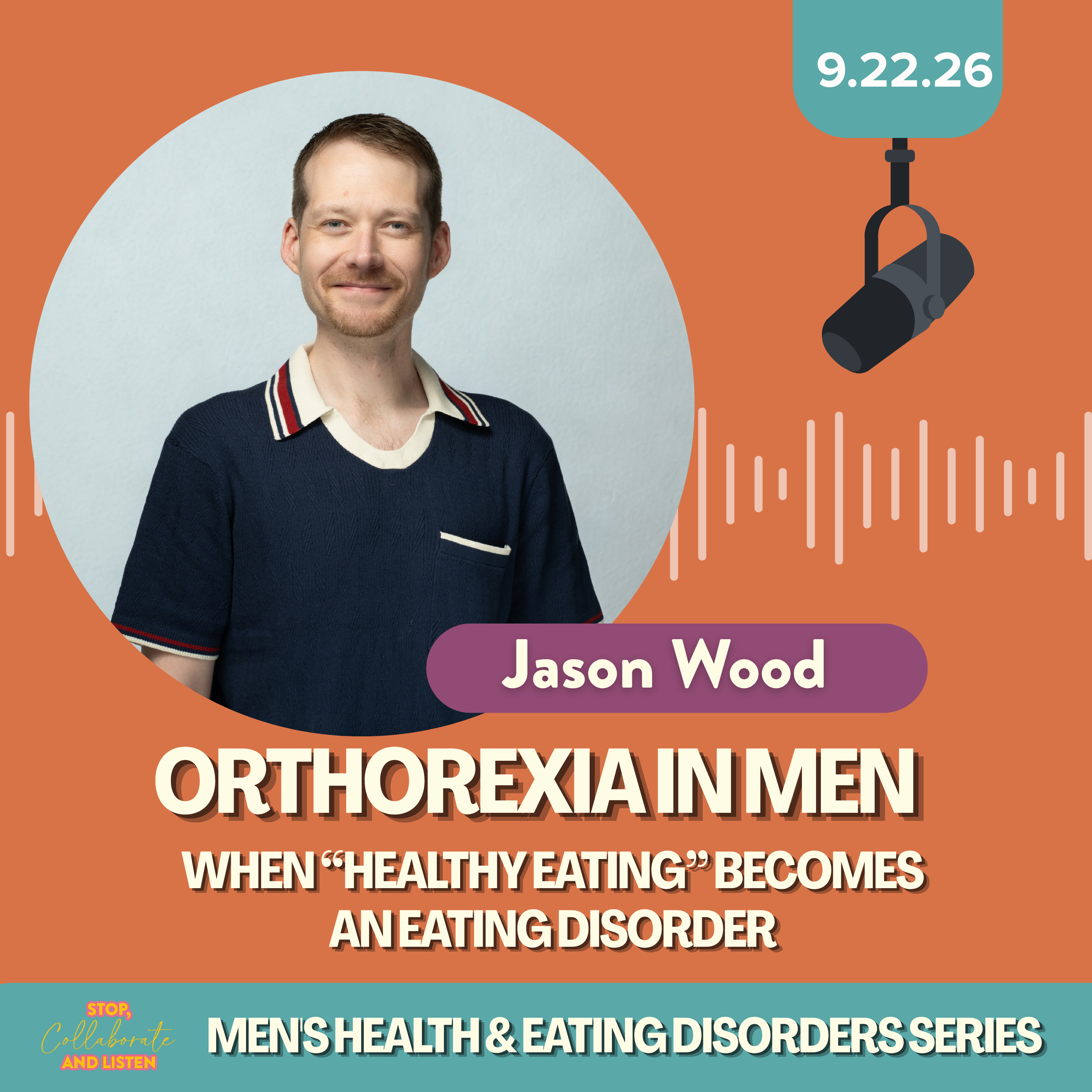
Ep 57: Orthorexia in Men: When ‘Healthy Eating’ Becomes an Eating Disorder w/Jason Wood
Sep 22, 20261 hourS2
What happens when “healthy eating” becomes so rigid that food stops being joyful—and starts controlling your life? In this episode, we’re joined by Jason Wood, Executive Director of ANAD, for an honest conversation about orthorexia, men’s body image, eating disorders, vulnerability, and recovery. Jason shares his personal experience with orthorexia and what it was like to recognize that his relationship with food had become increasingly rigid and consuming. We talk about how diet culture can shape men’s relationships with food and their bodies, why eating disorders in men can be difficult to recognize, and how the pursuit of “health” can sometimes become another way an eating disorder hides in plain sight. We also dig into something that can be especially complicated for men: vulnerability. Jason talks about the pressure many men experience to keep pain to themselves, the power of telling our stories, and how peer support and community can create safer spaces for people to seek help Things We Yap About: What orthorexia can look like—and why it can be difficult to recognize How diet culture influences men’s body image and relationships with food Why eating disorders in men are often overlooked or misunderstood The connection between “healthy eating,” rigidity, and disordered behaviors Masculinity and the pressure to keep emotional pain to yourself The role of vulnerability and storytelling in recovery The importance of peer support and community care Creating safer spaces for men to talk about eating disorders Eating disorders don't always look like restriction, weight loss, or a desire to be smaller. Sometimes they can hide behind the pursuit of health, fitness, discipline, or “clean” eating. And sometimes, finding the language to talk about what's happening is the first step toward getting support. Resources & Mentions: ANAD: https://anad.org/ ANAD Book Corner: https://anad.org/learning-library-old/book-recommendations/ Slip: Life in the Middle of Eating Disorder Recovery by Mallory Tenore Tarpley Starving for Survival: One Man’s Journey with Orthorexia by Jason Wood Running in Silence: My Drive for Perfection and the Eating Disorder That Fed It by Rachel Steil Rate & Review: If you loved this episode, share it with a friend and leave us a 5-star review — it really helps us reach more folks! Connect With Us: JOIN OUR NEWSLETTER: https://stopcollaboratelistenpod.substack.com/ IG: @stop.collaborateandlistenpod
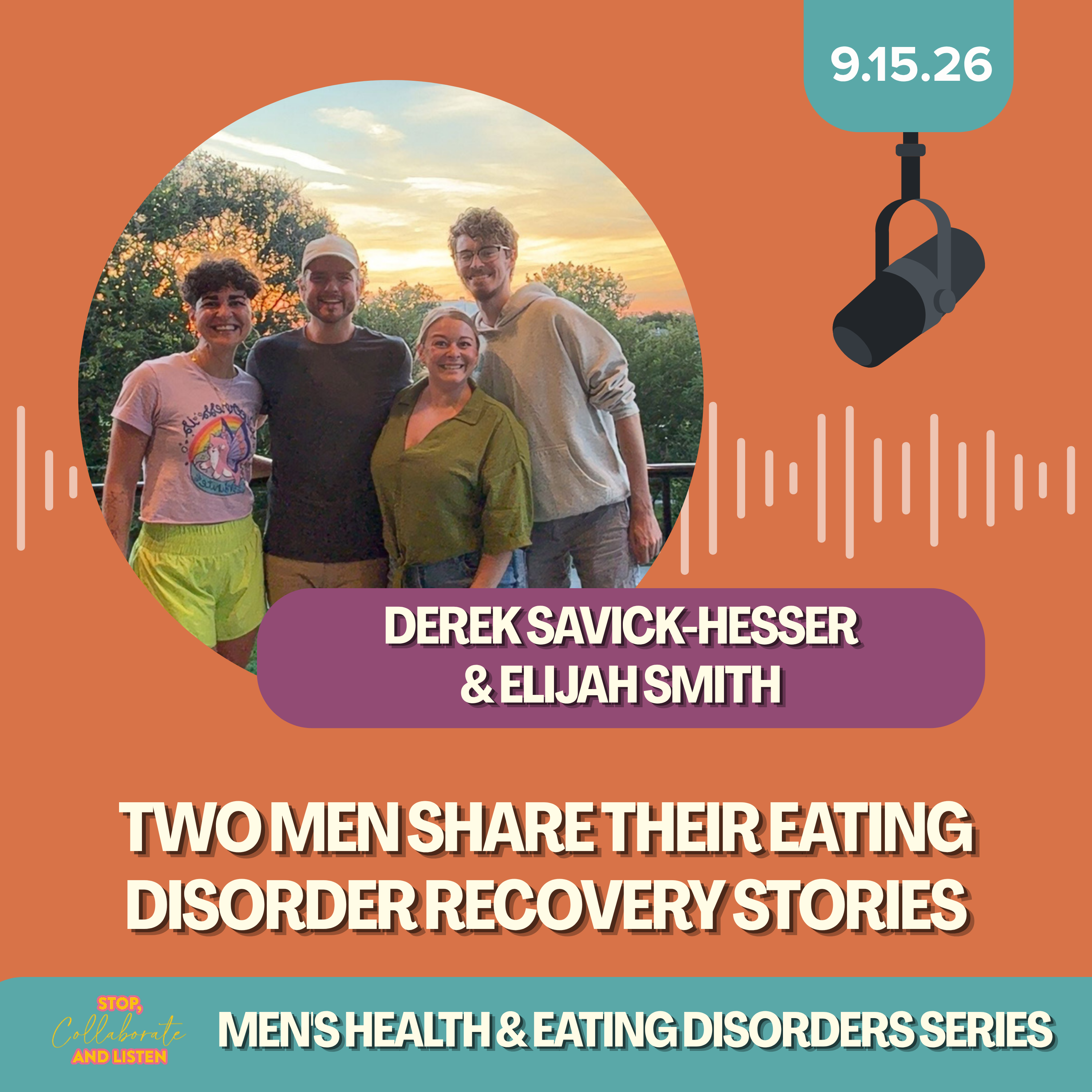
Two Men Share Their Eating Disorder Recovery Stories w/ Elijah Smith & Derek Savick-Hesser
Sep 15, 202657 minS2
What does an eating disorder look like when you don't see yourself represented in the stories you're told about eating disorders? Today, we are joined by Elijah Smith and Derek Savick-Hesser for an honest conversation about eating disorders, body image, mental health, masculinity, queerness, and recovery. Elijah and Derek share their personal experiences with disordered eating and eating disorder recovery, including the complicated relationship between gastrointestinal issues, food fears, ARFID, and body image. They also discuss what it was like to seek help as men, the importance of receiving a diagnosis that makes sense of your experience, and how community and representation can change the recovery process. From theater and the arts to queer community and supportive relationships, we explore the many forms that healing can take—and why recovery doesn't have to mean navigating these experiences alone. Things We Yap About: Men's experiences with eating disorders and body image How GI issues can complicate relationships with food and eating ARFID, food fears, and the intersection of physical and mental health The impact of masculinity and societal expectations on eating disorders Queerness, body image, and identity What it can be like to seek eating disorder treatment as a man The role of community, representation, and being seen How theater and the arts can support healing and self-acceptance The importance of patience and self-compassion in recovery What men struggling with body image or disordered eating should know about asking for help Rate & Review: If you loved this episode, share it with a friend and leave us a 5-star review — it really helps us reach more folks! Connect With Us: JOIN OUR NEWSLETTER: https://stopcollaboratelistenpod.substack.com/ IG: @stop.collaborateandlistenpod
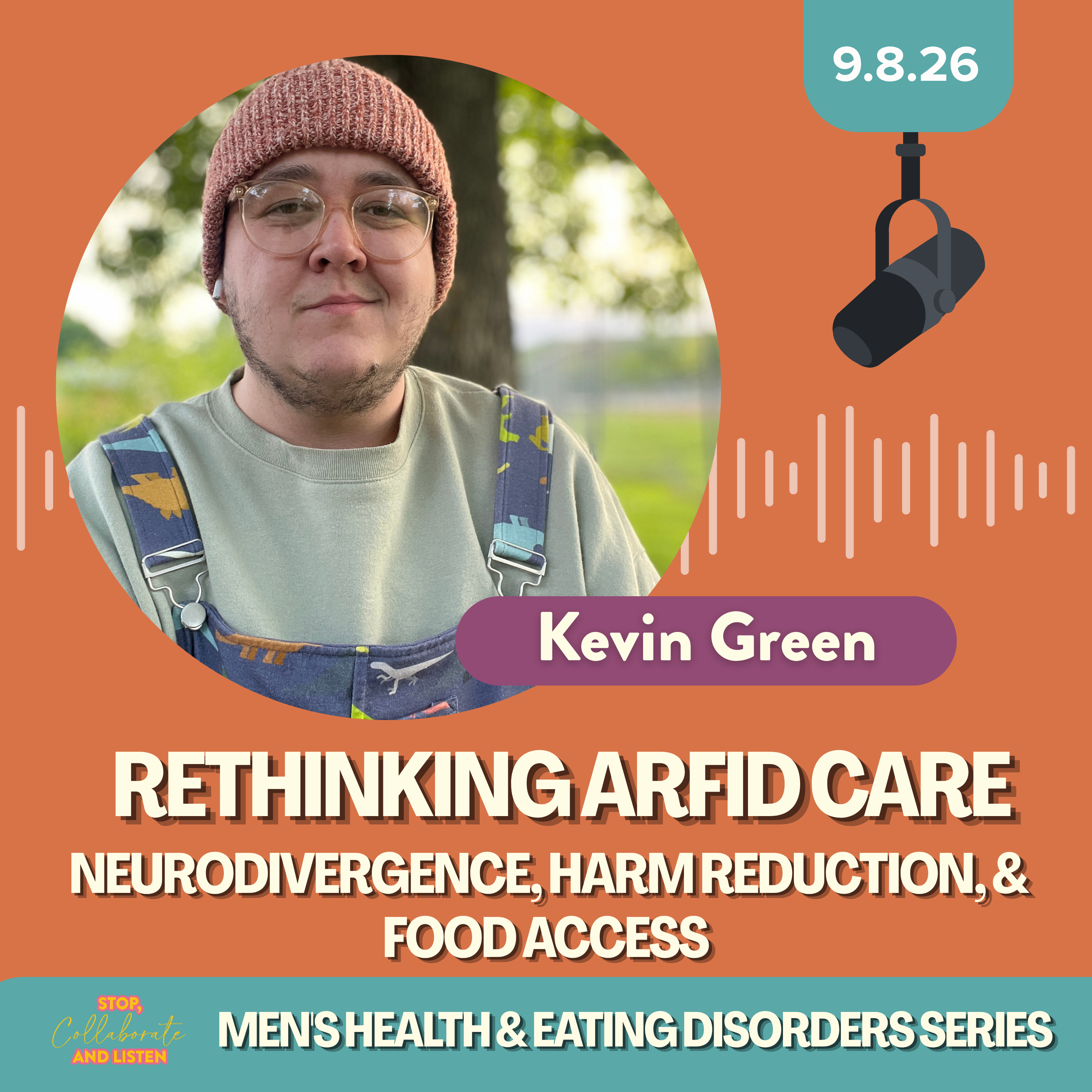
Rethinking ARFID: Neurodivergence, Harm Reduction, and Food Access with Kevin Green
Sep 8, 20261h 34mS2
ARFID isn’t just about "picky eating." But avoidant/restrictive food intake disorder is far more complex—and understanding it requires us to look beyond rigid diagnostic criteria and one-size-fits-all approaches to treatment. In this episode, we're joined by Kevin Green for a conversation about ARFID, neurodivergence, queerness, harm reduction, food access, and the limitations of traditional eating disorder treatment. We explore what ARFID can look like, why sensory needs and food preferences deserve to be taken seriously, and how clinicians and caregivers can support people without turning treatment into another experience of lost autonomy. We yap about food hierarchies, trauma-informed care, the limitations of the DSM, and why understanding someone as an intersectional human being—not simply a diagnosis—matters. Things We Yap About: What ARFID is and how it differs from "picky eating" The different presentations of ARFID The relationship between ARFID and neurodivergence How trauma and lived experience can influence eating Why the DSM doesn't always capture the full picture ARFID and the intersection of queerness and neurodivergence The limitations of traditional eating disorder treatment models Harm reduction approaches to eating disorder recovery Food hierarchies and the moralization of food Supporting autonomy and self-advocacy Practical ways to make eating more accessible Food safety and access for marginalized communities Trauma-informed and noncarceral approaches to care Resources & Mentions: ENOF Powder: https://simplyenof.com/ / use code kevin15 for 15% off your order Finch App: https://finchcare.com/ Hurts So Good: The Science and Culture of Pain on Purpose by Leigh Cowart RDs for Neurodiversity: https://www.rdsforneurodiversity.com/ Harm Reduction Episode : https://podcasts.apple.com/us/podcast/ep-9-harm-reduction-in-ed-care-controversial-or-compassionate/id1830467596?i=1000727474010 Rate & Review: If you loved this episode, share it with a friend and leave us a 5-star review — it really helps us reach more folks! Connect With Us: JOIN OUR NEWSLETTER: https://stopcollaboratelistenpod.substack.com/ IG: @stop.collaborateandlistenpod
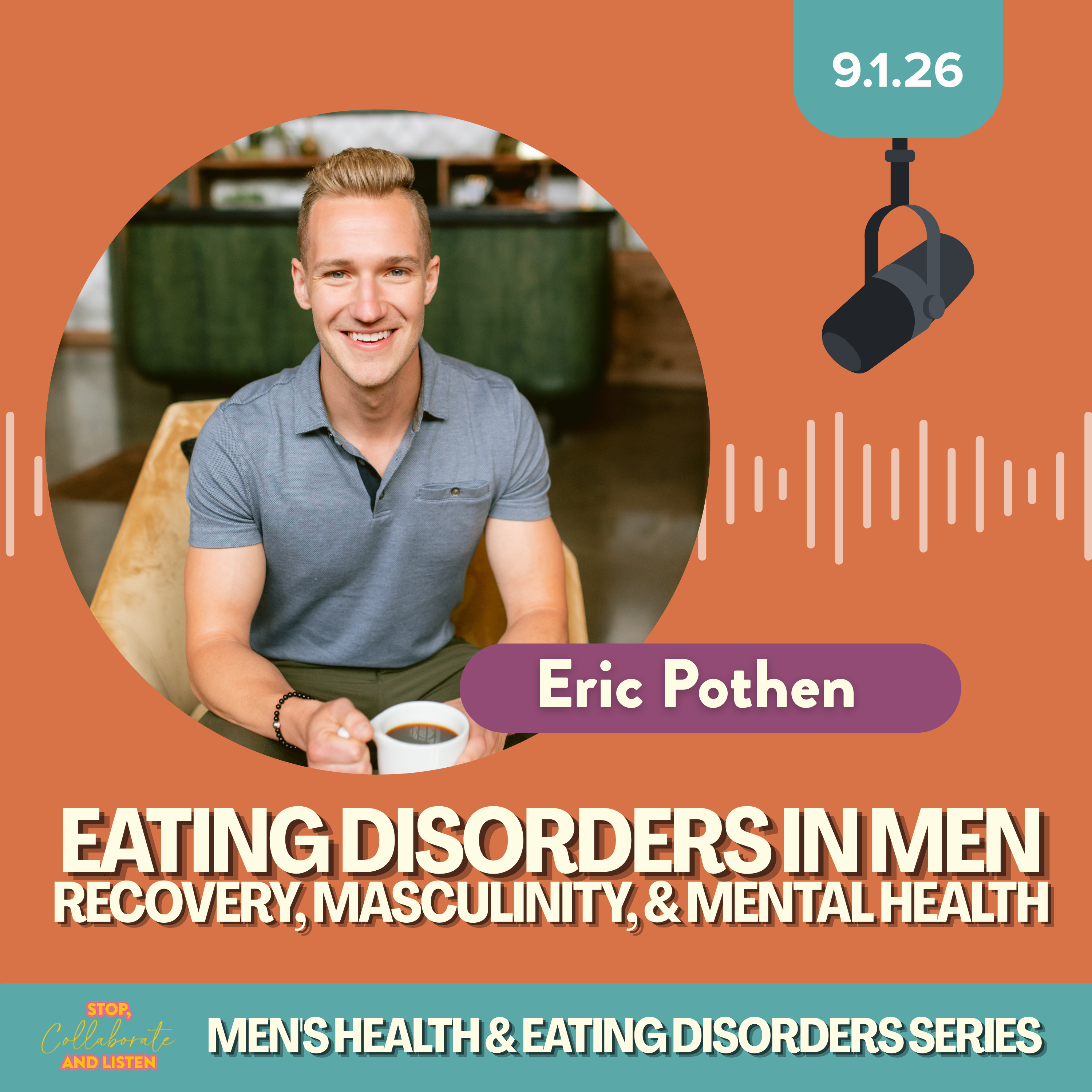
Eating Disorders in Men: Recovery, Masculinity, and Mental Health with Eric Pothen
Sep 1, 20261h 34mS2
Eating disorders are often portrayed as a problem that primarily affects women, and that stereotype can leave countless men feeling invisible, misunderstood, and unable to recognize that they need help. In the first episode of our Men's Health and Eating Disorders series , we're joined by Eric Pothen , advocate and creator behind Embracing You, to explore men's experiences with eating disorders, body image, masculinity, and recovery. Eric shares both his lived experience and professional insights into why eating disorders in men are so often missed or misunderstood. Together, we discuss how gender stereotypes can impact recognition, diagnosis, treatment, and recovery—and why creating more inclusive conversations about eating disorders matters. We also explore the role of social media, masculinity norms, LGBTQ+ experiences, vulnerability, and representation in shaping men's relationships with their bodies and mental health. In this episode, we yap about: Why eating disorders in men are often overlooked or misdiagnosed Common misconceptions about men and eating disorders How societal expectations around masculinity impact help-seeking Body image concerns and social media pressures The role of vulnerability and emotional expression in recovery Less frequently discussed eating disorder behaviors, including chewing and spitting Barriers men may face when accessing eating disorder treatment LGBTQ+ experiences, body ideals, and body image How clinicians and caregivers can create more welcoming treatment environments Why representation and community matter in recovery The importance of hope and harm reduction Resources & Mentions: Instagram: @ericpothen Website: Eric Pothen Podcast: Embracing You Rate & Review: If you loved this episode, share it with a friend and leave us a 5-star review — it really helps us reach more folks! Connect With Us: JOIN OUR NEWSLETTER: https://stopcollaboratelistenpod.substack.com/ IG: @stop.collaborateandlistenpod
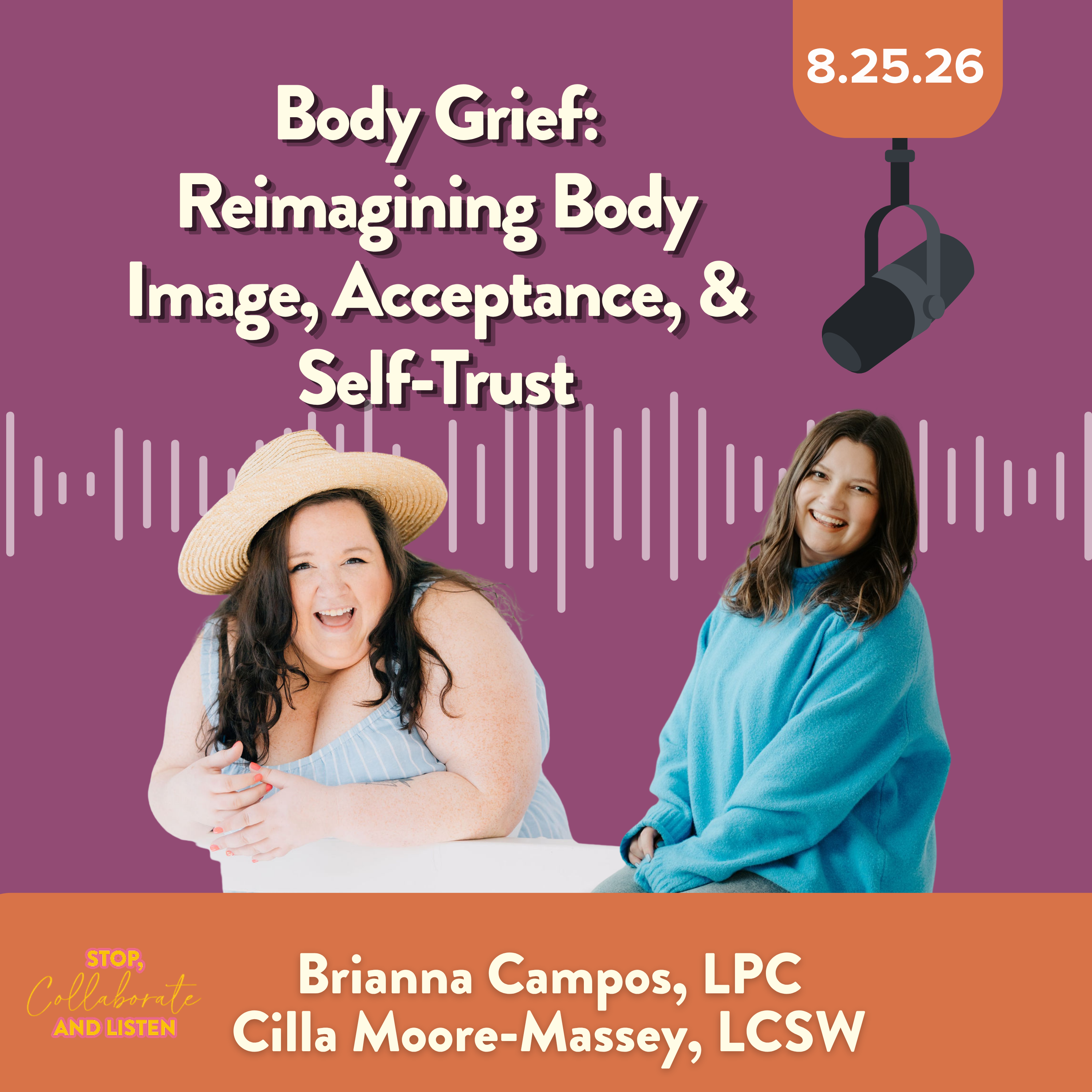
Ep 53: Body Grief: Reimagining Body Image & Self-Trust w/Bri Campos & Cilla Moore-Massey
Aug 25, 20261h 23mS2
What if some of what we experience as body image distress is actually grief? In this episode, we're joined by Bri Campos of Body Image With Bri and Cilla Moore-Massey for a conversation about body grief, body image, trauma, and what it means to build a different relationship with your body in a culture obsessed with appearance. We explore the many ways body grief can show up—including grieving changes in our bodies, identities, abilities, or the ways we once moved through the world. We also unpack why body image is about much more than whether you like what you see in the mirror. We talk about radical body acceptance, self-trust, somatic and embodiment work, systemic oppression, fatphobia, and the complicated process of taking up space in a world that often tells us to make ourselves smaller. In this episode, we yap about: What body grief is and the different ways it can show up Why body image is about perception, thoughts, feelings, and behaviors—not just appearance How trauma and lived experience shape our relationship with our bodies The difference between body confidence, body acceptance, and body relationship Why healing doesn't require loving your body every day How diet culture and societal expectations contribute to body grief The role of systemic oppression, fatphobia, and intersectionality in body image Why community, witnessing, and support can be powerful parts of healing How somatic and embodiment practices can help build safety and self-trust What it can mean to take up space as an act of autonomy and resistance Resources & Mentions: Bri's 7 Step Guide Bri’s Website Bri’s Podcast Bri’s Instagram Cilla’s Website Cilla’s Instagram Rate & Review: If you loved this episode, share it with a friend and leave us a 5-star review — it really helps us reach more folks! Connect With Us: JOIN OUR NEWSLETTER: https://stopcollaboratelistenpod.substack.com/ IG: @stop.collaborateandlistenpod
Every question we get asked before someone starts their trial.
If you have a concern about deliverability, AI quality, data privacy, or whether this will actually work for your specific situation, it's probably answered below.
What is the difference between Founder Solo and Founder Pro?
Founder Solo gives you 50 AI pitches per month using the credit model (Standard pitches cost 1 credit, Enriched pitches cost 2). Founder Pro raises that to 200 credits per month and adds full Booking Probability access, unlimited Magic Match, Apollo enrichment credits, and data export capabilities. Both plans use the same credit system, so you can stretch your monthly budget further by using Standard-mode drafting.
How do agency tiers work?
Agency tiers have no base fee. You pay per managed client and per talent profile. Agency Standard is $199 per client per month; Agency Pro is $399 per client per month. Both add $39 per talent profile per month. Your own team's user seats are always free.
What is a talent profile?
A talent profile represents one person (founder, executive, or spokesperson) you are booking onto podcasts. It includes their bio, topics, headshots, and outreach history. Team plans include 5 profiles; agency plans are pay-as-you-go.
Can I switch plans later?
Yes, at any time. Upgrades take effect immediately; downgrades apply at the end of the current billing period. Contact support if you need help migrating between plan families.
Do you offer a free trial?
Every paid plan includes a 15-day free trial. Your card is saved at signup but you will not be charged until day 16. Cancel any time from your dashboard.
What happens if I cancel?
You keep access until the end of your current billing period. No charges after that. Your data is retained for 30 days in case you reactivate.
Is the 20% annual discount automatic?
Yes. Select Annual on the pricing toggle and the discounted price is applied automatically at checkout. The annual price shown is the full year cost.
What if I have more than 50 profiles or 20 clients?
That is our Enterprise tier. Contact our sales team and we will build a custom plan with volume pricing, a dedicated account manager, and SLA guarantees.